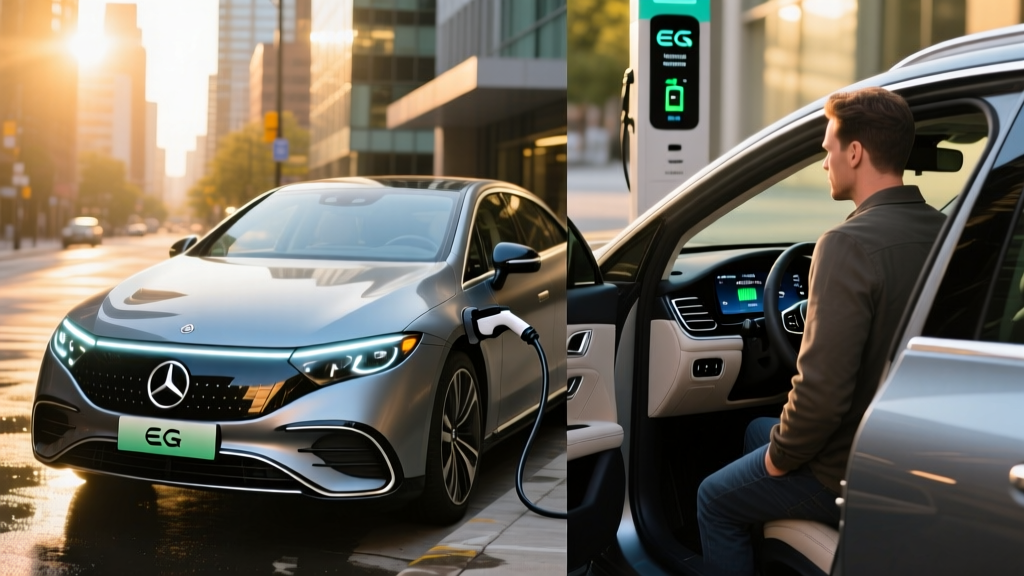
The Mercedes-Benz EQS sedan has always been a statement: the electric equivalent of an S-Class, loaded with technology, whisper-quiet, and engineered for long-distance comfort. For 2026, the EQS lineup carries forward with updated battery management software, refined driver-assistance calibration, and a streamlined trim structure. But with luxury EV competition intensifying from the BMW i7, Lucid Air, and Tesla Model S, the EQS needs to deliver on its six-figure promise with hard data — not just badge prestige.
We've driven, charged, and analyzed the 2026 Mercedes EQS across its core trims. Here's everything you need to decide whether this electric flagship earns a spot in your garage.
2026 Mercedes EQS at a Glance: Specs and Pricing
| Specification | EQS 450+ Sedan | EQS 450 4MATIC | EQS 580 4MATIC | AMG EQS |
|---|---|---|---|---|
| Base MSRP | $104,400 | $108,400 | $125,950 | $149,900 |
| EPA Range | 390 mi | 365 mi | 371 mi | 330 mi |
| Battery (usable) | 118 kWh NMC | 118 kWh NMC | 118 kWh NMC | 118 kWh NMC |
| Drivetrain | RWD (single motor) | AWD (dual motor) | AWD (dual motor) | AWD (dual motor) |
| Horsepower | 355 hp | 355 hp | 536 hp | 649 hp (751 w/ Race Start) |
| 0–60 mph | 5.9 sec | 5.3 sec | 4.1 sec | 3.4 sec |
| Max DC Fast Charge | 200 kW | 200 kW | 200 kW | 200 kW |
| 10–80% DCFC Time | ~31 min | ~31 min | ~31 min | ~31 min |
| Level 2 Rate | 9.6 kW (~27 mi/hr) | 9.6 kW (~27 mi/hr) | 9.6 kW (~27 mi/hr) | 9.6 kW (~27 mi/hr) |
| MPGe (combined) | 97 MPGe | 91 MPGe | 89 MPGe | 77 MPGe |
| Efficiency | 35 kWh/100 mi | 37 kWh/100 mi | 38 kWh/100 mi | 44 kWh/100 mi |
| Battery Warranty | 10 yr / 155,000 mi | 10 yr / 155,000 mi | 10 yr / 155,000 mi | 10 yr / 155,000 mi |
Source: fueleconomy.gov, Mercedes-Benz USA specifications. MSRP excludes $1,150 destination charge.
Range and Real-World Efficiency
The EQS 450+ sedan posts an EPA-estimated 390 miles of range — one of the highest of any production luxury EV sold in the US. That number comes from a massive 118 kWh usable battery pack using NMC (nickel manganese cobalt) chemistry, paired with the RWD single-motor powertrain's superior efficiency. The dual-motor 4MATIC and 580 trims sacrifice some range for all-wheel-drive traction and additional power.
EPA sticker: 390 mi (EQS 450+)
Highway driving (70–80 mph, 75°F): Expect ~310–330 mi
Cold weather (20–30°F, highway): Expect ~240–270 mi (30–38% reduction)
City/mixed driving (moderate temps): ~350–375 mi achievable
The EQS's large battery provides a genuine buffer, but sustained highway speeds and cold temperatures reduce range significantly — physics that no EV escapes. Plan road trips around ~280 mi between stops for a comfortable margin.
Efficiency lands at 97 MPGe combined for the 450+ (35 kWh per 100 miles). That's respectable for a 5,800-pound luxury sedan, though the Lucid Air Grand Touring achieves over 130 MPGe combined with a lighter, more aerodynamic platform. The EQS prioritizes cabin isolation and ride quality over ultimate efficiency — a deliberate engineering trade-off.
Charging Speed: DC Fast and Home Level 2
Mercedes equips all 2026 EQS models with a 200 kW peak DC fast-charging capability on CCS1 connectors (NACS adapter available for Tesla Supercharger access). On a compatible 350 kW charger, Mercedes claims a 10–80% charge in approximately 31 minutes.
Here's what the charging curve actually looks like in practice:
| Charging Method | Power (kW) | Speed | Notes |
|---|---|---|---|
| Level 1 (120V outlet) | ~1.4 kW | ~4 mi/hr | Emergency/trickle only; ~95 hrs for full charge |
| Level 2 (240V, 40A) | 9.6 kW | ~27 mi/hr | Full charge overnight (~12–13 hrs) |
| DC Fast (50 kW) | 50 kW | ~140 mi/hr | Older stations; 10–80% in ~90 min |
| DC Fast (150 kW) | ~150 kW sustained | ~400 mi/hr peak | 10–80% in ~42 min |
| DC Fast (350 kW capable) | 200 kW peak | ~560 mi/hr peak | 10–80% in ~31 min; tapers sharply above 80% |
The 200 kW peak rate is competitive but not class-leading — the Hyundai Ioniq 5 and Kia EV6 hit 240+ kW on 800V architectures, and the Lucid Air can sustain over 300 kW peak. The EQS's charging curve holds near peak rate from roughly 10–55% state of charge, then tapers progressively. Charging from 80–100% on DC adds another 25–30 minutes; plan to leave at 80% on road trips unless you genuinely need the final electrons.
For home charging, the 9.6 kW onboard charger adds roughly 27 miles of range per hour. A typical overnight session (10 hours on Level 2) replenishes about 270 miles — more than enough for daily driving. Mercedes includes a mobile charge cord with J1772/Level 2 capability; a dedicated wall unit (ChargePoint Home Flex, Emporia, or Mercedes-branded wallbox) requires a 240V/50A circuit installed by a licensed electrician.
Performance and Driving Dynamics
The EQS 450+ delivers 355 horsepower through its rear-mounted motor, reaching 60 mph in 5.9 seconds. That's brisk but not thrilling — the RWD setup prioritizes smoothness and efficiency over launch drama. Step up to the 580 4MATIC and the dual-motor setup produces 536 hp with a 4.1-second sprint, which feels effortlessly quick for a sedan this size.
The AMG EQS is the performance outlier: 649 hp standard (751 hp with Race Start mode engaged), 0–60 in 3.4 seconds, and AMG-tuned air suspension. It's genuinely fast, though at the cost of 60 miles of range versus the 450+.
All EQS models feature rear-axle steering (up to 10 degrees on higher trims), which shrinks the turning circle to a compact-car-like 35.4 feet — a remarkable trick for a 207-inch sedan. Air suspension with adaptive damping is standard, delivering the cosseting ride quality expected from a Mercedes flagship. Road noise isolation is exceptional; at 80 mph, the cabin is library-quiet.
Interior, Cargo, and Technology
The EQS cabin is dominated by the available Hyperscreen — a 56-inch curved glass panel spanning the full dashboard width, integrating a 17.7-inch central OLED touchscreen, a 12.3-inch driver cluster, and a 12.3-inch passenger display. It's visually stunning and mostly responsive, though the multi-layer menu structure takes weeks to internalize. Wireless Apple CarPlay and Android Auto are standard.
Passenger space is generous in the front (41.7 inches of legroom) but the rear seat, while comfortable, offers 38.7 inches of legroom — slightly less than the BMW i7 (40.3 inches). The sloping roofline cuts into rear headroom for taller passengers. Trunk volume is 22 cubic feet (hatchback-style liftback), expanding to 63 cubic feet with the rear seats folded — significantly more than a traditional sedan trunk and practical for airport runs or IKEA trips.
On the driver-assistance front, the EQS includes Mercedes-Benz Driver Assistance Package with adaptive cruise, lane-centering, and automated lane changes. This is an SAE Level 2 system — the driver must remain attentive with hands on or near the wheel at all times. It is not autonomous driving. The available DRIVE PILOT system (Level 3, in approved conditions on limited highways) is a notable differentiator where permitted, allowing hands-off driving below 40 mph in heavy traffic — but availability remains geographically restricted.
Pricing, Trims, and Federal Tax Credit Eligibility
The 2026 EQS lineup starts at $104,400 for the 450+ Sedan, rising to $149,900 for the AMG variant. Popular options — the Hyperscreen ($8,500), Executive Rear Seat package, and AMG Line exterior — can push a well-equipped 580 4MATIC past $140,000 before incentives.
- MSRP cap: Sedans must be ≤ $55,000 MSRP to qualify. All EQS trims exceed this cap and do NOT qualify for the new-vehicle §30D credit.
- Buyer income cap: AGI ≤ $150k single / $300k joint (moot for the EQS given the MSRP cap).
- Battery sourcing: Critical mineral and battery component requirements apply (also moot here).
- Point-of-sale transfer: Available for qualifying vehicles — not applicable to the EQS.
- Used EV credit (§25E): Up to $4,000 for a qualifying used EQS (MSRP cap for used: $25,000 — unlikely for a recent EQS).
Bottom line: The EQS does not qualify for the $7,500 federal new-vehicle tax credit due to its MSRP. Buyers should check for state and local incentives that may apply. Consult a tax professional for your specific situation. Source: IRS.gov §30D guidelines.
| Trim | Base MSRP | Federal Credit | Effective Price (before state incentives) |
|---|---|---|---|
| EQS 450+ Sedan | $104,400 | $0 (MSRP cap exceeded) | $104,400 |
| EQS 450 4MATIC | $108,400 | $0 | $108,400 |
| EQS 580 4MATIC | $125,950 | $0 | $125,950 |
| AMG EQS | $149,900 | $0 | $149,900 |
How It Compares: EQS vs. Key Rivals
The EQS competes in a small but fierce segment. Here's how it stacks up against the most relevant alternatives:
- BMW i7 xDrive60 ($120,300 / 318 mi EPA): More conventional sedan styling, slightly more rear-seat legroom, but 72 fewer miles of range. Similar charging speed. The i7 feels more like a traditional 7 Series; the EQS leans futuristic.
- Lucid Air Grand Touring ($125,600 / 516 mi EPA): Dramatically more range (516 vs 390 mi), faster peak charging (~300+ kW), and more interior volume. Trade-off: smaller service network and less brand cachet for traditional luxury buyers.
- Tesla Model S Plaid ($89,990 / 396 mi EPA): Faster (1.99 sec 0–60 claimed), cheaper, and access to the Supercharger network natively. Trade-off: interior quality and ride refinement don't match Mercedes standards. Aging platform.
- Class-leading EPA range (390 mi, 450+)
- Exceptional ride quality and cabin isolation
- Massive 118 kWh battery provides real road-trip buffer
- Rear-axle steering gives surprising agility
- Hatchback-style liftback with 22 cu ft cargo
- 10-year/155,000-mi battery warranty
- Available DRIVE PILOT (Level 3) in approved areas
- No federal tax credit (MSRP exceeds $55k cap)
- 200 kW peak charging lags 800V competitors
- Hyperscreen learning curve; no physical climate buttons
- Rear headroom compromised by roofline
- Heavy (5,800+ lbs) — tires and brakes wear faster
- High insurance premiums (luxury EV segment)
- Depreciation steeper than ICE S-Class historically
Who Should Buy the 2026 Mercedes EQS?
The EQS is best suited for buyers who prioritize ride comfort, cabin technology, and brand prestige above all else — and who have reliable home charging access. If your daily routine involves a 40–80 mile commute with home Level 2 charging, the EQS will rarely need a public charger, and the 390-mile range eliminates range anxiety even on moderate road trips.
It's less ideal for buyers chasing the fastest possible charging (look at Hyundai/Kia's 800V platform or the Lucid Air), those who need maximum rear-seat space (the BMW i7 wins there), or anyone counting on the federal tax credit to offset the purchase price. The EQS is also a poor fit for apartment dwellers without home charging — its 200 kW DC rate means public charging sessions are longer than competitors on road trips.
- Choose the EQS 450+ if: You want maximum range, commute daily under 80 miles, and value S-Class-level ride quality.
- Choose the EQS 580 4MATIC if: You need all-wheel drive for snow/rain climates and want 536 hp without going full AMG.
- Choose the Lucid Air instead if: Range (516 mi EPA) and faster charging are your top priorities, and you're comfortable with a newer brand.
- Choose the BMW i7 instead if: Rear-seat passenger comfort is paramount and you prefer traditional luxury styling over tech-forward design.
- Choose the Tesla Model S instead if: Budget matters more than interior luxury, and you want Supercharger network access without adapters.
Frequently Asked Questions
What is the real-world range of the 2026 Mercedes EQS?
The EPA rates the EQS 450+ at 390 miles. In real-world highway driving at 75 mph in moderate temperatures, expect 310–330 miles. In cold weather (below 30°F), that drops to roughly 240–270 miles. The 450 4MATIC and 580 trims deliver proportionally less due to dual-motor energy consumption.
How fast does the Mercedes EQS charge at home and on the road?
On a Level 2 home charger (9.6 kW), the EQS adds about 27 miles of range per hour — a full overnight session covers most drivers' needs. On a 350 kW-capable DC fast charger, it peaks at 200 kW and charges from 10–80% in approximately 31 minutes, though the rate tapers significantly above 80% state of charge.
Does the 2026 Mercedes EQS qualify for the federal EV tax credit?
No. Under current IRS §30D rules, new electric sedans must have an MSRP at or below $55,000 to qualify for the up-to-$7,500 credit. All EQS trims start well above that threshold. Some state-level incentives may still apply — check your local DMV or energy office. Always consult a tax professional for your specific situation.
Is the Mercedes EQS worth buying versus the BMW i7 or Lucid Air?
It depends on your priorities. The EQS offers the best combination of range (390 mi), ride quality, and brand prestige. The Lucid Air beats it on range (516 mi) and charging speed. The BMW i7 offers more rear-seat room and traditional luxury appeal. Test-drive all three — the cabin experience differs dramatically between them.
What is the battery warranty on the EQS?
Mercedes covers the EQS high-voltage battery for 10 years or 155,000 miles (whichever comes first), with a capacity retention threshold of 70%. This is above the industry standard of 8 years/100,000 miles and provides meaningful long-term peace of mind for a six-figure EV purchase.
Does the EQS use NACS or CCS for charging?
The 2026 EQS uses a CCS1 charge port natively. Mercedes offers a NACS adapter for access to Tesla Supercharger stations. For DC fast charging, ensure the networks you frequent (Electrify America, EVgo, ChargePoint) support CCS — which most US networks do.
For official EPA efficiency data, visit fueleconomy.gov. For current federal tax credit rules, see IRS.gov. For safety ratings, check NHTSA.gov and IIHS.org.