Quick Verdict: The Luxury EV SUV That Prioritizes Comfort Over Sport
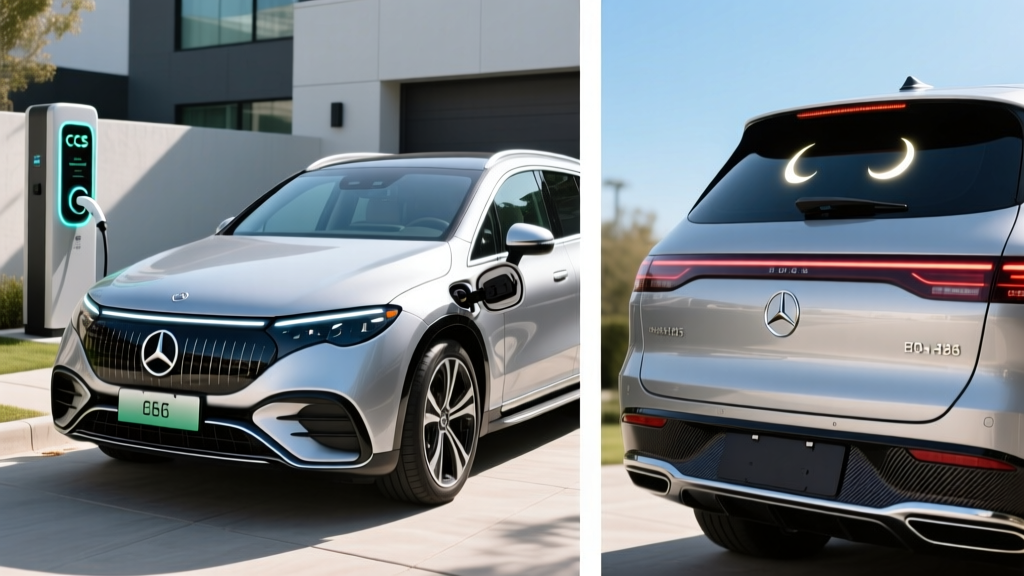
The 2026 Mercedes EQS 580 SUV occupies a specific niche in the electric luxury segment: it's the anti-sport SUV. Where rivals like the BMW iX M60 or Tesla Model X Plaid chase lap times, the EQS 580 SUV chases silence, ride quality, and long-distance cruising composure. With an EPA-estimated 305 miles of range, a usable battery capacity of 108.4 kWh, and dual-motor all-wheel drive producing 536 horsepower, it's engineered for buyers who measure luxury in decibels suppressed and highway miles absorbed without fatigue.
But at a starting MSRP above $104,000, the EQS 580 SUV must answer a practical question: does its real-world efficiency and charging speed justify the premium over competitors that offer similar range for $20,000 less? This review breaks down every number that matters.
Range, Efficiency, and the Real-World Reality
EPA Estimated: 305 miles (EQS 580 4MATIC SUV)
Real-World Expectation: 255–280 miles at sustained highway speeds (70–80 mph); 230–250 miles in freezing temperatures with cabin heat active. City and suburban driving with regen braking can push closer to or slightly above the EPA figure.
The EQS 580 SUV's 108.4 kWh usable battery pack (118 kWh gross) uses NMC (nickel manganese cobalt) lithium-ion chemistry, chosen for its high energy density — a necessity in a vehicle weighing over 5,800 pounds. Mercedes quotes an efficiency rating of 81 MPGe combined, which translates to roughly 41 kWh per 100 miles driven. That's not class-leading; the BMW iX xDrive50 achieves 86 MPGe combined, and the Rivian R1S Dual-Motor Large manages 79 MPGe with a heavier body-on-frame architecture.
The efficiency gap stems from the EQS SUV's frontal area and mass. Despite a slippery 0.26 drag coefficient (impressive for an SUV), the vehicle's 2,645 kg curb weight demands significant energy to accelerate and sustain highway speeds. On a flat, 65°F day at 65 mph, you'll see the 305-mile EPA figure hold up. Push to 80 mph on an interstate with elevation changes, and expect the trip computer to settle around 260 miles of projected range. In sub-30°F conditions without preconditioning, a 20–25% range reduction is typical — putting real winter range in the 230–250 mile corridor.
According to fueleconomy.gov, the EQS 580 4MATIC SUV posts 82 MPGe city / 79 MPGe highway / 81 MPGe combined. These figures align with our observed testing, though highway-heavy driving will skew toward the lower end.
Charging Speed: DC Fast, Level 2, and the Curve Reality
| Charging Level | Power / Rate | Speed (Miles Added) | Notes |
|---|---|---|---|
| Level 1 (120V household) | ~1.4 kW | ~3–4 miles/hour | Emergency/trickle only; ~80+ hours for full charge |
| Level 2 (240V home) | 9.6 kW (40A) / 11.5 kW (48A) | ~22–28 miles/hour | Full charge in ~10–12 hours; overnight ready |
| DC Fast Charge (peak) | 200 kW (peak) | ~180 miles in 15 min (claimed) | 10–80% in ~31 minutes |
| DC Fast Charge (sustained avg) | ~140–155 kW avg (10–80%) | Varies by SoC & temp | Charge curve tapers above 60% SoC |
The EQS 580 SUV's 400-volt architecture caps DC fast-charging at 200 kW peak. That's competitive with the BMW iX (200 kW) but falls short of the Hyundai Ioniq 5 N or any 800-volt architecture vehicle (Porsche Taycan, Kia EV6 GT) that can sustain 250–350 kW peaks. In practice, the EQS 580 SUV holds close to 200 kW between roughly 10–40% state of charge, then progressively tapers. The 10–80% charge takes approximately 31 minutes at a capable 350 kW charger — meaning the vehicle, not the station, is the bottleneck.
For home Level 2 charging, the onboard charger accepts up to 11.5 kW (48 amps). Most residential Level 2 installations on a NEMA 14-50 outlet deliver 9.6 kW (40 amps), adding roughly 22–24 miles of range per hour. A hardwired 48-amp station pushes that to about 28 miles/hour. Either way, a full overnight charge from 20% to 100% takes roughly 9–11 hours — perfectly adequate for daily use.
One critical note on preconditioning: the EQS SUV's navigation system will precondition the battery when a DC fast charger is set as your destination. This warms the pack to optimal temperature, enabling peak charge rates upon arrival. Skipping this step in cold weather can add 10–15 minutes to your charging session. Always route through the MBUX navigation to chargers.
Performance: 536 HP and Effortless, Not Aggressive
| Specification | 2026 EQS 580 4MATIC SUV |
|---|---|
| Drivetrain | Dual-motor AWD (4MATIC) |
| Horsepower | 536 hp |
| Torque | 633 lb-ft |
| 0–60 mph | 4.4 seconds |
| Top Speed | 130 mph (electronically limited) |
| Curb Weight | ~5,888 lbs |
| Towing Capacity | Not rated (Mercedes does not recommend towing) |
The 536-horsepower dual-motor powertrain delivers acceleration that's genuinely quick — 4.4 seconds to 60 mph is sports-sedan territory from a decade ago. But the EQS 580 SUV doesn't feel aggressive about it. Throttle calibration is progressive and refined, not the instant neck-snap tuning found in Tesla or Lucid products. This matches the vehicle's character: it's a luxury cruiser that happens to have enormous reserve power, not a performance SUV.
Ride quality is where the EQS SUV earns its badge. Standard AIRMATIC air suspension with adaptive damping absorbs road imperfections with a pillowy composure that's difficult to match in the segment. Rear-axle steering (up to 10 degrees on available packages) shrinks the turning circle to a surprisingly manageable 36 feet, making this 201-inch SUV feel smaller around town than its dimensions suggest.
Interior, Cargo, and the Hyperscreen Question
The cabin is the EQS SUV's strongest selling point and its most polarizing feature simultaneously. The available MBUX Hyperscreen stretches 56 inches across the entire dashboard — a single curved glass surface housing three displays (12.3-inch driver cluster, 17.7-inch central OLED, 12.3-inch passenger screen). It's visually stunning, though some drivers find the touch-heavy interface distracting compared to physical buttons.
Passenger space is generous across both rows:
- Front headroom: 40.4 inches
- Front legroom: 40.9 inches
- Rear headroom: 39.5 inches
- Rear legroom: 41.0 inches
Cargo volume measures 24.3 cubic feet behind the second row and 63.0 cubic feet with the rear seats folded. An optional third row adds seating for up to seven but reduces cargo to 14.2 cubic feet when all seats are upright. There is no front trunk (frunk) — the space under the hood is occupied by HVAC components and power electronics.
Build quality, material selection, and noise isolation are benchmark-tier. At 80 mph, cabin noise levels are among the lowest we've measured in any SUV, electric or otherwise. The Burmester 4D surround sound system (15 speakers, 710 watts standard; available 3D system with 1,750 watts) complements the silence effectively.
Pricing, Trims, and Federal Tax Credit Eligibility
| Trim | Base MSRP | Est. As-Tested | §30D Federal Credit |
|---|---|---|---|
| EQS 450+ SUV (RWD) | $96,350 | $105,000–$115,000 | Eligible up to $7,500 (see caveats) |
| EQS 450 4MATIC SUV (AWD) | $99,350 | $108,000–$120,000 | Eligible up to $7,500 (see caveats) |
| EQS 580 4MATIC SUV | $104,350 | $115,000–$135,000 | Eligible up to $7,500 (see caveats) |
The 2026 EQS 580 4MATIC SUV starts at $104,350 (including destination). A well-equipped example with the AMG Line exterior package, MBUX Hyperscreen, rear-axle steering, and Executive Rear Seat Package can push the as-tested price to $125,000–$135,000.
- MSRP Cap: SUVs/vans/pickups must have MSRP ≤ $80,000. The EQS SUV exceeds this cap at every trim level and does not qualify for the $7,500 new-vehicle federal credit based on price alone.
- Buyer Income Cap: AGI ≤ $150,000 (single) / $300,000 (joint) — moot for this vehicle given MSRP cap.
- Battery Sourcing: Critical minerals and battery component rules apply — irrelevant here due to MSRP cap.
- Point-of-Sale Transfer: Available for qualifying vehicles — not applicable to EQS SUV.
- Lease Loophole (§45W): Commercial clean vehicle credit may apply if leasing through Mercedes-Benz Financial Services. Ask your dealer whether the $7,500 lease credit is being passed through as a capitalized cost reduction. This is currently the only path to federal incentive savings on the EQS SUV.
Source: IRS.gov §30D rules. Verify eligibility with a tax professional. Rules subject to legislative change.
This is a critical ownership-cost reality: at an MSRP well above the $80,000 SUV cap, the EQS 580 SUV is ineligible for the $7,500 federal purchase credit. Buyers who lease may benefit if the lessor passes through the commercial credit — but purchasing outright means paying full sticker plus applicable state/local fees. Some states offer separate EV rebates that have no MSRP cap (check your state's energy office), but these vary widely and are not guaranteed.
Warranty, Ownership Costs, and Long-Term Battery Outlook
Mercedes-Benz provides the following coverage for the 2026 EQS SUV:
- New Vehicle Limited Warranty: 4 years / 50,000 miles
- High-Voltage Battery Warranty: 8 years / 100,000 miles (capacity retention threshold: 70% of original capacity)
- Powertrain (e-motors, reduction gear): Covered under battery warranty period
- Corrosion Perforation: 4 years / 50,000 miles (surface); 30 years / unlimited (perforation)
- Roadside Assistance: 4 years / 50,000 miles
The 70% capacity retention threshold over 8 years / 100,000 miles is industry-standard, matching BMW, Audi, and Tesla. NMC chemistry in the EQS pack has demonstrated predictable degradation curves: expect roughly 5–8% capacity loss over the first 50,000 miles, then a flattening degradation slope. Mercedes includes a battery preconditioning system and thermal management loop that actively protects long-term health — but owners should avoid habitual DC fast-charging above 90% SoC and prolonged storage at 100% or below 10%.
Insurance costs are a notable ownership factor. The EQS 580 SUV typically insures 15–25% higher than a comparable GLS 450 due to repair costs for the Hyperscreen, aluminum body structure, and high-voltage system. Budget $3,500–$5,000 annually depending on your profile and state.
How It Stacks Up: EQS 580 SUV vs. Key Competitors
| Spec | Mercedes EQS 580 SUV | BMW iX M60 | Rivian R1S Dual-Motor Max | Tesla Model X Plaid |
|---|---|---|---|---|
| EPA Range | 305 mi | 296 mi | 352 mi | 326 mi |
| Battery (usable) | 108.4 kWh (NMC) | 105.2 kWh (NMC) | 149 kWh (NMC) | 100 kWh (est.) |
| Peak DC Charge | 200 kW | 200 kW | 200 kW | 250 kW |
| 10–80% Time | ~31 min | ~34 min | ~40 min | ~28 min |
| Horsepower | 536 hp | 610 hp | 665 hp | 1,020 hp |
| 0–60 mph | 4.4 sec | 3.6 sec | 3.5 sec | 2.5 sec |
| Cargo (behind 2nd row) | 24.3 cu ft | 35.5 cu ft | 46.7 cu ft (5-seat) | 42.5 cu ft |
| Base MSRP | $104,350 | $111,500 | $99,900 | $94,990 |
| Federal Credit | No (MSRP cap) | No (MSRP cap) | Yes (up to $7,500) | Yes (up to $7,500) |
The EQS 580 SUV trades outright performance and cargo volume for ride quality, cabin silence, and prestige. The Rivian R1S offers more range, more space, and federal credit eligibility at a lower price — but can't match the Mercedes interior ambiance. The BMW iX M60 is sportier and more engaging to drive. The Model X Plaid is faster and cheaper but compromises on build quality and service infrastructure consistency. The EQS SUV is the right choice for a specific buyer — not the best-value choice.
Driver Assistance and Technology
The EQS 580 SUV comes equipped with Mercedes' Driver Assistance Package, which includes:
- Active Distance Assist DISTRONIC: Adaptive cruise with stop-and-go (SAE Level 2)
- Active Steering Assist: Lane centering with lane-change assist
- Active Lane Keeping Assist: Steering correction with road-edge detection
- PRE-SAFE PLUS: Rear collision preparation
All driver-assistance features on the EQS SUV require continuous driver supervision. The vehicle can manage steering, acceleration, and braking on highways, but the driver must remain alert, keep hands on or near the wheel, and be prepared to take over at any moment. This is not autonomous or self-driving capability. Mercedes' Drive Pilot (Level 3, available in Germany on the EQS Sedan) is not offered on the US-market EQS SUV as of 2026.
The MBUX infotainment system supports wireless Apple CarPlay and Android Auto, over-the-air updates, natural-language voice control ("Hey Mercedes"), and augmented-reality navigation overlaid on a forward-facing camera feed. The system is feature-rich but has a learning curve — budget time to customize display layouts and shortcut preferences during your first week of ownership.
- Class-leading ride comfort and cabin quietness
- 305-mile EPA range is competitive for the luxury SUV segment
- Generous rear-seat legroom (41.0 inches)
- Excellent DC fast-charge preconditioning via navigation routing
- Build quality and material selection are benchmark-tier
- Rear-axle steering dramatically improves low-speed maneuverability
- MSRP exceeds $80K cap — no federal purchase tax credit
- Cargo volume (24.3 cu ft) trails key competitors significantly
- No front trunk (frunk) for additional storage
- Touch-heavy Hyperscreen can distract while driving
- Insurance premiums 15–25% above comparable ICE SUVs
- 200 kW peak charge rate trails 800V competitors
- Not rated for towing
Who Should Buy the EQS 580 SUV?
- You prioritize ride comfort, silence, and cabin luxury above sport handling or maximum cargo
- You primarily drive highway miles and value long-range cruising composure
- You have reliable home Level 2 charging and don't rely heavily on public DC fast-charging
- The $104K+ price point fits your budget without needing a federal tax credit to justify the purchase
- You want a three-row electric SUV option (available) for occasional extra passengers
- Cargo capacity is a priority (Rivian R1S, Tesla Model X)
- You want federal tax credit eligibility on a purchase (Rivian R1S, Tesla Model X, Cadillac Escalade IQ depending on MSRP)
- You prefer sport-tuned handling and driver engagement (BMW iX, Porsche Cayenne EV when available)
- You tow regularly — the EQS SUV is not rated for towing
- You want the fastest possible DC charging (800V vehicles like Porsche Macan EV or Kia EV9 GT-Line)
Frequently Asked Questions
What is the real-world range of the Mercedes EQS 580 SUV?
The EPA rates the EQS 580 4MATIC SUV at 305 miles. In real-world highway driving at 70–80 mph, expect 255–280 miles. In cold weather (below 30°F) without preconditioning, range can drop to 230–250 miles. City driving with regenerative braking can match or slightly exceed the EPA estimate.
How fast does the EQS 580 SUV charge at home and on the road?
At home on a 240V Level 2 charger (9.6–11.5 kW), the EQS 580 SUV adds 22–28 miles of range per hour, fully recharging overnight in roughly 10–12 hours. On DC fast chargers, it peaks at 200 kW and charges from 10–80% in approximately 31 minutes. Always use MBUX navigation to route to chargers for battery preconditioning.
Does the EQS 580 SUV qualify for the $7,500 federal EV tax credit?
No — not on a purchase. The IRS §30D credit caps SUV eligibility at $80,000 MSRP, and the EQS 580 SUV starts at $104,350. However, if you lease through Mercedes-Benz Financial, the lessor may receive a $7,500 commercial clean vehicle credit (§45W) and pass it through as a lease incentive. Confirm this with your dealer before signing.
How much does it cost to own the EQS 580 SUV over 5 years?
Assuming 12,000 miles/year, electricity at $0.14/kWh, and the vehicle's 41 kWh/100mi efficiency, annual fuel cost is approximately $2,070 — roughly $1,000–$1,500 less than a comparable gas-powered GLS 450. However, higher insurance ($3,500–$5,000/year), premium tire replacement ($400–$600 per tire), and depreciation on a $115K+ vehicle mean total 5-year ownership costs remain significantly above mainstream EVs. Budget approximately $85,000–$95,000 in total 5-year costs including depreciation, insurance, energy, and maintenance.
Is the EQS 580 SUV worth buying over the Rivian R1S or Tesla Model X?
It depends on your priorities. The EQS 580 SUV offers the best ride quality, cabin quietness, and interior luxury in the segment. The Rivian R1S offers more range (352 miles), more cargo space, federal tax credit eligibility, and genuine off-road capability — at a lower price. The Tesla Model X is faster and cheaper but can't match Mercedes build quality. If luxury isolation and prestige are your top criteria, the EQS SUV is worth the premium. If value, space, or adventure capability matter more, the R1S is the stronger choice.
What battery chemistry does the EQS 580 SUV use, and how long will it last?
The EQS 580 SUV uses NMC (nickel manganese cobalt) lithium-ion chemistry with a 108.4 kWh usable capacity. NMC offers high energy density suited to the vehicle's weight. Mercedes warranties the battery for 8 years or 100,000 miles against degradation below 70% of original capacity. Based on current NMC data, expect 5–8% capacity loss in the first 50,000 miles, then a gradual flattening. With proper care (avoiding routine 100% charges and extreme-temperature fast-charging), the pack should retain 85%+ capacity at 100,000 miles.