Quick Verdict: The EQS 580 4MATIC SUV in 2026
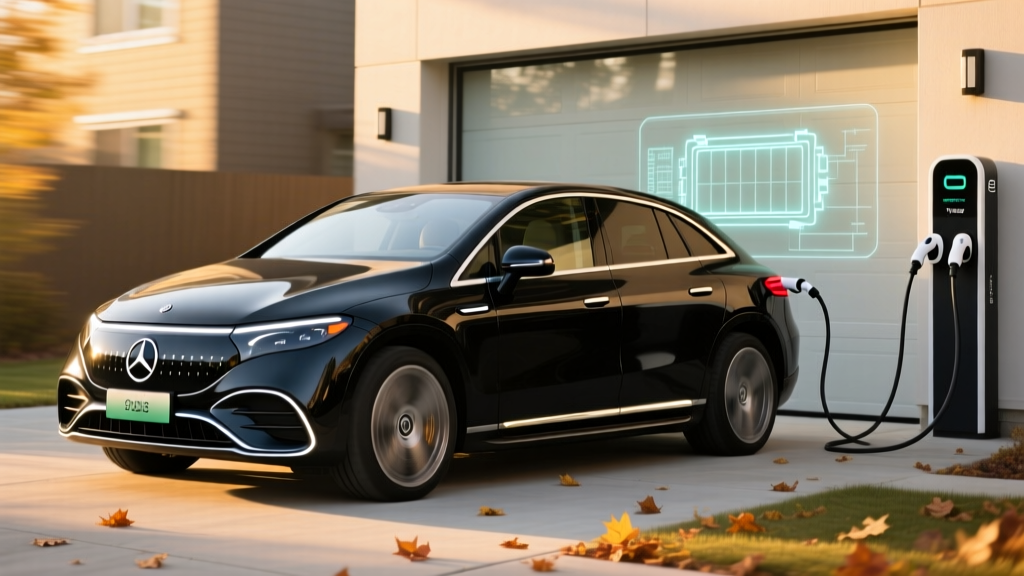
The Mercedes-Benz EQS 580 4MATIC SUV occupies a rare position in the luxury electric market: it pairs the hyperscreen-dominated interior and air suspension of a six-figure flagship with genuine three-row practicality. For 2026, Mercedes has refined the model with a slightly larger usable battery pack and improved thermal management, pushing the EPA-estimated range to 305 miles while maintaining the 536-horsepower dual-motor powertrain that defines the 580 badge.
At a starting MSRP of $105,550 (before destination), the EQS 580 4MATIC SUV is not an impulse purchase. But for buyers who need three rows, want a real 300-mile range buffer, and refuse to compromise on ride quality or cabin technology, it's one of the most complete packages available. The catch — as with most luxury EVs — is that federal tax credit eligibility is complicated, and real-world range on the highway falls noticeably short of the EPA sticker.
Range, Battery, and Efficiency: What the Numbers Actually Mean
The 2026 EQS 580 4MATIC SUV carries a 118 kWh usable lithium-ion battery pack (NMC chemistry — nickel-manganese-cobalt, the standard for Mercedes' high-density applications). This is one of the largest usable battery packs in any production EV, and it's the primary reason the EQS SUV achieves its range despite weighing over 5,800 pounds.
EPA Estimated: 305 miles (combined city/highway)
Real-World Highway: Expect approximately 255–275 miles at sustained 70–75 mph speeds. The EQS SUV's large frontal area and 5,887-lb curb weight hit efficiency hard on the interstate.
Cold Weather (below 32°F): Range drops to approximately 225–245 miles combined. The heat pump helps, but a 118 kWh pack still loses significant capacity in freezing temps.
City/Commuter Driving: 290–310+ miles is achievable thanks to aggressive regenerative braking and low-speed efficiency.
EPA-rated efficiency sits at 85 MPGe combined (approximately 40 kWh per 100 miles). That's not class-leading — the Tesla Model X Long Range achieves 102 MPGe — but the EQS prioritizes isolation and power over efficiency. For context, at the national average electricity rate of $0.17/kWh, charging this SUV costs roughly $6.80 per 100 miles of driving. Comparable to a 25 MPG gas SUV at $2.80/gallon, but with the convenience of home charging.
| Spec | Value |
|---|---|
| EPA Range | 305 miles |
| Battery (Usable) | 118 kWh, NMC chemistry |
| EPA Efficiency | 85 MPGe / 40 kWh/100 mi |
| Powertrain | Dual-motor AWD (4MATIC) |
| Horsepower | 536 hp / 633 lb-ft torque |
| 0–60 mph | 4.4 seconds |
| Max DC Fast Charge | 200 kW (peak) |
| 10–80% DC Charge Time | ~31 minutes |
| Level 2 Home Charge Rate | 9.6 kW (~27 mi/hr) |
| Base MSRP | $105,550 (+$1,150 destination) |
| Battery Warranty | 10 years / 155,000 miles |
Charging Speed: DC Fast, Level 2, and the Curve Reality
The EQS 580 4MATIC SUV supports a peak DC fast-charge rate of 200 kW via its CCS1 connector (NACS adapter available for Tesla Supercharger access). Mercedes rates the 10–80% charge time at approximately 31 minutes under optimal conditions — meaning a preconditioned battery at moderate ambient temperature.
| Level | Power | Miles Added per Hour | Use Case |
|---|---|---|---|
| Level 1 (120V) | ~1.4 kW | ~3 mi/hr | Emergency/trickle only |
| Level 2 (240V, 40A) | 9.6 kW | ~27 mi/hr | Daily home charging |
| DC Fast Charge | 200 kW peak | ~180 mi in 15 min (to ~60%) | Road trips |
The charge curve matters more than peak kW. The EQS SUV sustains roughly 180–200 kW from 10% to about 40% State of Charge, then tapers progressively. From 60–80%, you're seeing closer to 100–120 kW. This is typical for large NMC packs that prioritize cell longevity, but it means the full 10–80% session takes longer than the peak number suggests. Mercedes' navigation-based battery preconditioning activates automatically when you route to a DC fast charger, which is essential for achieving rated speeds in cooler weather.
At home on a 9.6 kW Level 2 charger (the most common residential installation on a 50-amp circuit), a full charge from empty takes approximately 12.5 hours. Most owners will plug in nightly and wake up with a full battery — the 118 kWh pack means even a partial overnight session adds substantial range.
Performance and Driving Dynamics
The dual-motor 4MATIC powertrain delivers 536 horsepower and 633 lb-ft of torque, routing the EQS 580 from 0–60 mph in 4.4 seconds. That's not supercar territory, but for a three-row SUV weighing nearly three tons, it's genuinely quick. The instant torque delivery makes highway merging effortless, and the air suspension with adaptive damping absorbs road imperfections with the kind of isolation that defines the Mercedes flagship experience.
Standard rear-axle steering (up to 4.5 degrees) shrinks the turning circle to a manageable 36.7 feet — critical for a vehicle with a 125.6-inch wheelbase. The regenerative braking system offers three levels via paddle shifters, including a true one-pedal driving mode that can bring the SUV to a complete stop without touching the brake pedal.
Interior, Cargo, and the Hyperscreen Experience
The MBUX Hyperscreen — a 56-inch curved glass panel spanning the entire dashboard — remains the EQS SUV's most polarizing feature. It integrates a 17.7-inch central OLED display, a 12.3-inch driver cluster, and a 12.3-inch passenger screen into a single unit. The system runs Mercedes' latest MBUX generation with over-the-air updates, wireless CarPlay/Android Auto, and an augmented-reality head-up display that overlays navigation arrows onto a live camera feed.
Passenger and cargo dimensions:
- First-row headroom: 40.4 inches | Legroom: 41.2 inches
- Second-row headroom: 39.6 inches | Legroom: 39.5 inches (with sliding second row)
- Third-row headroom: 37.8 inches | Legroom: 28.7 inches (best for children or short trips)
- Cargo behind third row: 14.4 cu ft
- Cargo behind second row (third row folded): 42.0 cu ft
- Max cargo (all rear seats folded): 74.2 cu ft
The third row is genuinely usable for adults on short drives, which puts the EQS SUV ahead of competitors like the BMW iX (two-row only). However, with all three rows in use, 14.4 cubic feet of cargo space is tight — a family of six won't fit much luggage without a roof box. The absence of a front trunk (frunk) is a missed opportunity for additional storage.
Pricing, Trims, and Federal Tax Credit Eligibility
The 2026 EQS 580 4MATIC SUV is offered in a single, well-equipped trim with optional packages:
| Configuration | MSRP |
|---|---|
| EQS 580 4MATIC SUV (base) | $105,550 |
| + Destination charge | $1,150 |
| + AMG Line Exterior Package | $3,250 |
| + Executive Rear Seat Package | $4,500 |
| + MBUX Hyperscreen (standard on 580) | Included |
| Typical as-tested price | $112,000–$118,000 |
Federal tax credit (§30D) eligibility: The EQS 580 4MATIC SUV's eligibility for the up-to-$7,500 federal tax credit under IRS §30D rules is constrained by multiple factors for 2026:
- MSRP cap: SUVs must be under $80,000. At $105,550, the EQS 580 4MATIC SUV exceeds this cap and does NOT qualify for the new-vehicle credit.
- Buyer income cap: Even if it qualified, AGI limits apply ($300K joint / $225K head of household / $150K individual).
- Battery sourcing: Critical mineral and battery component requirements must be met (moot given MSRP exclusion).
- Point-of-sale transfer: Available for qualifying vehicles — but again, the EQS 580 is excluded by price.
The EQS 580 4MATIC SUV does not qualify for the federal new-vehicle EV tax credit. Buyers should consult a tax professional regarding state and local incentives, which vary by jurisdiction. Some states (California, Colorado, New York) offer additional credits that may apply, though many also have MSRP caps. The DOE's fueleconomy.gov maintains a current list of qualifying vehicles.
Ownership Costs, Warranty, and Long-Term Outlook
Mercedes backs the EQS 580 4MATIC SUV's battery pack with a 10-year / 155,000-mile warranty (whichever comes first), guaranteeing a minimum of 70% state of health over that period. The general vehicle warranty covers 4 years / 50,000 miles, and complimentary maintenance is included for the first 2 years / 20,000 miles.
Insurance premiums for the EQS 580 tend to run 25–40% higher than equivalent gas-powered GLS models, driven by repair costs for the aluminum-intensive body structure and the Hyperscreen assembly. Expect annual premiums in the $3,800–$5,200 range depending on location and driving record.
Tire wear is a real ownership consideration. The EQS 580 4MATIC's weight and instant torque consume tires faster than gas equivalents — budget for replacement every 20,000–30,000 miles on the 21-inch or 22-inch wheel options. Mercedes specifies EV-rated tires with higher load ratings and foam-lined construction for noise reduction.
Competitive Landscape: Is It Worth Buying?
- Class-leading 118 kWh battery delivers genuine 300+ mile range in mixed driving
- Air suspension and rear-axle steering provide exceptional ride quality and maneuverability
- Three-row seating with usable adult space in the second row
- MBUX Hyperscreen is visually impressive and increasingly responsive
- 10-year/155,000-mile battery warranty exceeds most competitors
- 200 kW DC fast charging with effective preconditioning
- $105,550+ MSRP eliminates federal tax credit eligibility entirely
- No front trunk (frunk) — wasted packaging opportunity
- Third-row cargo space (14.4 cu ft) is very limited with all seats up
- Real-world highway range drops to ~255–275 miles
- Hyperscreen can be distracting and generates noticeable cabin heat in direct sunlight
- Insurance and tire costs significantly above segment average
vs. Tesla Model X Long Range: The Model X offers more range (348 mi EPA), faster charging, Supercharger access, and a lower starting price (~$82,000). But it can't match the EQS on ride isolation, interior materials, or third-row comfort. If driving dynamics and luxury matter more than maximum range, the EQS wins.
vs. BMW iX xDrive50: The iX is a sharper driver's car with a more intuitive infotainment system, but it only offers two rows. For three-row buyers, the EQS SUV is the default choice in the German luxury EV space.
vs. Rivian R1S: The R1S offers genuine off-road capability, more cargo flexibility, and a lower price point (~$80,000). But it lacks the air-suspension refinement and cabin isolation of the Mercedes. The R1S is the adventure choice; the EQS is the boulevard choice.
Choose the EQS 580 if: You need three rows, prioritize ride quality and cabin isolation above all else, have reliable home charging, and your budget comfortably exceeds $110,000 without relying on tax credits.
Look elsewhere if: You want maximum range per dollar (Model X), need serious off-road capability (R1S), want a driver-focused experience (iX), or require federal tax credit eligibility (any EV under $80,000 MSRP for SUVs).
Frequently Asked Questions
What is the real-world range of the EQS 580 4MATIC SUV?
The EPA rates it at 305 miles combined, but expect approximately 255–275 miles on the highway at 70+ mph, and 225–245 miles in freezing weather. City driving with regenerative braking can achieve 290–310 miles.
How fast does the EQS 580 4MATIC SUV charge?
On a DC fast charger, it peaks at 200 kW and charges from 10–80% in approximately 31 minutes with preconditioning. At home on a Level 2 (9.6 kW) charger, it adds about 27 miles of range per hour, with a full charge taking roughly 12.5 hours.
Does the EQS 580 4MATIC SUV qualify for the federal EV tax credit?
No. Under current IRS §30D rules, new SUVs must have an MSRP under $80,000 to qualify. The EQS 580 starts at $105,550 and is excluded. Check your state for local incentives that may apply.
Is the third row practical for adults?
The second row offers generous legroom (39.5 inches), but the third row's 28.7 inches of legroom is best suited for children or adults on short trips. With all rows in use, cargo space drops to 14.4 cubic feet.
How does the EQS 580 compare to the EQS sedan?
The EQS sedan offers more range (up to 390 miles EPA) and a lower price, but only seats five. The SUV trades some efficiency for three-row utility, a higher driving position, and slightly more cargo volume with the rear seats folded.
What is the battery warranty?
Mercedes provides a 10-year / 155,000-mile battery warranty, guaranteeing at least 70% state of health retention. This is among the longest battery warranties in the luxury EV segment.