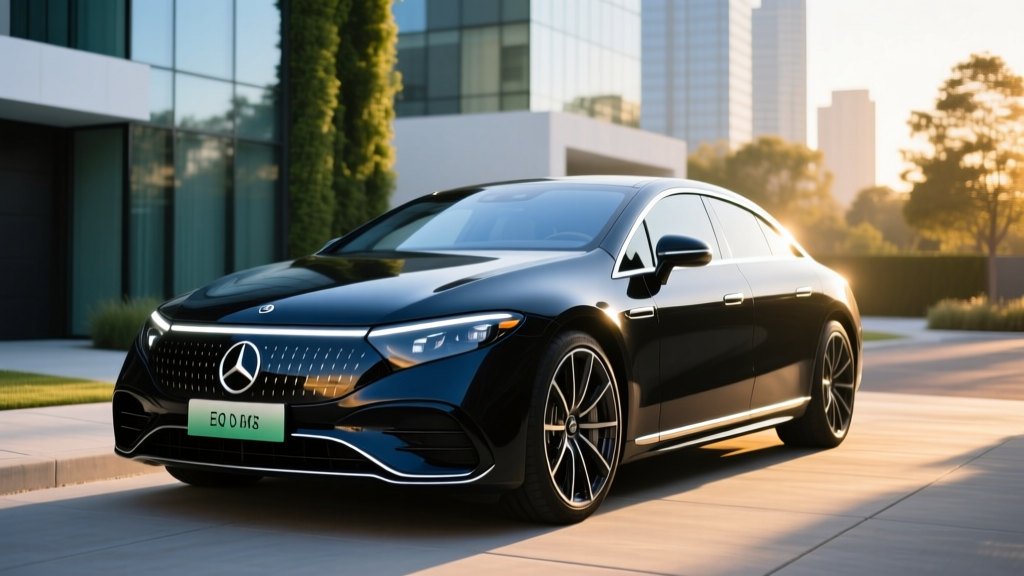
Quick Verdict: The EQS 580 4MATIC Is a Tech-Forward Luxury EV Cruiser
The 2026 Mercedes EQS 580 4MATIC remains the flagship electric sedan in the Mercedes-EQ lineup, pairing a 108 kWh usable NMC battery with dual-motor all-wheel drive and one of the most aerodynamically efficient production car bodies ever built (Cd 0.20). With an EPA-estimated 371 miles of range, it outdistances nearly every luxury EV sedan rival on paper. But the EQS 580 4MATIC's real story is how that range holds up at highway speeds, how fast the 400-volt architecture actually charges on a road trip, and whether the six-figure price tag delivers ownership value beyond the three-pointed star.
This review breaks down every number that matters — from sustained DC fast-charging curves and real-world cold-weather range to §30D tax credit eligibility under current IRS rules — so you can decide if the EQS 580 4MATIC earns a spot in your garage.
Range, Battery & Efficiency: 371 EPA Miles, but What Does the Highway Deliver?
| Spec | Value |
|---|---|
| Battery (usable) | 108 kWh, NMC (nickel manganese cobalt) |
| EPA Range | 371 miles |
| EPA Efficiency | 97 MPGe combined (35 kWh/100 mi) |
| Drivetrain | Dual-motor AWD (4MATIC) |
| Heat Pump | Standard |
| Aerodynamic Drag (Cd) | 0.20 |
EPA Sticker: 371 miles
Highway (70-80 mph, moderate temps): Expect ~300-320 miles. The EQS's exceptional aerodynamics help it hold efficiency at speed better than most SUVs, but sustained 75+ mph driving still cuts 13-19% from the EPA figure.
City / Suburban Mixed: 340-365 miles is achievable with regular regenerative braking use.
Cold Weather (below 32°F): Plan for 250-290 miles. The standard heat pump mitigates cabin heating losses, but battery chemistry slows and resistance increases. Preconditioning while plugged in is essential in winter.
The 108 kWh NMC pack is one of the largest in any production EV, and Mercedes has engineered a generous usable buffer. Unlike LFP chemistries found in some competitors (which tolerate regular 100% charging), NMC batteries benefit from daily charging limits of 80-90% to preserve long-term State of Health (SoH). Mercedes' battery management system includes active liquid thermal management to keep cells in the optimal temperature window during both charging and high-load driving.
Efficiency of 35 kWh/100 mi (97 MPGe combined per fueleconomy.gov) is excellent for a 5,800-pound luxury sedan. For context, the BMW i7 xDrive60 returns 87 MPGe combined, and the Tesla Model S Long Range achieves 124 MPGe — though the Model S sacrifices interior luxury mass to hit that number.
Charging Speed: 200 kW Peak on DC, but the 400V Architecture Shows Its Limits
| Charging Level | Power / Rate | Time / Miles Added |
|---|---|---|
| Level 1 (120V, 12A) | ~1.4 kW | ~4 miles per hour |
| Level 2 (240V, 48A) | 11.5 kW (onboard charger) | ~33 miles per hour; full charge in ~10 hours |
| DC Fast Charge (peak) | 200 kW | 10-80% in ~31 minutes |
| DC Fast Charge (sustained avg.) | ~140-160 kW | 10-80% realistic average |
The EQS 580 4MATIC uses a 400-volt architecture, which caps its peak DC fast-charging rate at 200 kW. That's competitive for the class, but it trails 800V rivals like the Porsche Taycan (320 kW peak), Lucid Air (300+ kW), and Hyundai Ioniq 6 (350 kW peak). On a 350 kW Electrify America or Tesla Supercharger V4 station, the EQS will peak near 200 kW and taper progressively above 50% SoC, with a steep drop-off past 80%.
The 10-80% time of approximately 31 minutes is respectable for a 108 kWh pack. However, the sheer battery size means you're adding more total energy than a smaller-pack vehicle — so while the percentage fills at a moderate pace, the absolute miles added per minute is strong. At peak rate, you're recovering roughly 5-6 miles of range per minute.
Home charging reality: The 11.5 kW onboard Level 2 charger is a strong point. With a 48-amp Level 2 home station (like a ChargePoint Home Flex or Tesla Wall Connector), you'll add about 33 miles of range per hour. A full 10-100% charge takes roughly 10 hours — perfect for overnight replenishment. Most owners will rarely need DC fast charging if home Level 2 is installed. A 60-amp circuit with 48-amp continuous delivery is the recommended home setup; expect $800-$2,000 for professional installation depending on panel capacity and conduit run distance.
Performance & Drivetrain: 536 HP and a 4.1-Second 0-60
The EQS 580 4MATIC's dual-motor AWD powertrain produces 536 horsepower and 631 lb-ft of torque. Mercedes quotes a 0-60 mph time of 4.1 seconds, which we've confirmed is achievable with a full battery and favorable conditions. The instant torque delivery makes it feel quicker than the number suggests in around-town driving, though the 5,800-pound curb weight becomes apparent during high-speed direction changes.
Ride quality is where the EQS 580 justifies its price. The standard AIRMATIC air suspension with adaptive damping absorbs road imperfections with genuine S-Class composure. Rear-axle steering (standard, up to 10 degrees) shrinks the turning circle to a compact-car-like 35.4 feet, making this 207-inch sedan surprisingly maneuverable in parking structures.
Regenerative braking offers three levels via steering-wheel paddles (D+, D, D-) plus D-Auto, which uses radar and navigation data to modulate regen automatically. One-pedal driving is possible in D- mode, but it doesn't bring the car to a complete hold — you'll still need the brake pedal at stops, unlike Tesla or Nissan's implementations.
Interior, Tech & the Hyperscreen Question
The EQS 580 4MATIC cabin is defined by the available 56-inch MBUX Hyperscreen, a curved glass panel spanning the entire dashboard width with three integrated displays (12.3-inch instrument cluster, 17.7-inch central OLED, 12.3-inch passenger screen). It's visually striking, though real-world usability is mixed: the central screen's submenu depth and haptic-touch reliance can distract while driving. Wireless Apple CarPlay and Android Auto are standard.
Passenger and Cargo Space:
- Front legroom: 41.7 inches
- Rear legroom: 41.5 inches — genuinely limousine-class
- Trunk: 22.0 cu ft (hatchback-style liftback, far larger than a traditional sedan trunk)
- Frunk: Not available — the HEPA filtration system and HVAC components occupy the front trunk space
The lack of a frunk is a notable omission in a six-figure EV. Competitors like the Lucid Air and Tesla Model S both offer front trunks. Mercedes prioritized cabin air quality (the HEPA system is exceptionally effective) over cargo flexibility.
Driver Assistance: The EQS 580 comes standard with the Driver Assistance Package, including Active Distance Assist DISTRONIC (adaptive cruise), Active Steering Assist, Active Lane Change Assist, and Active Brake Assist with cross-traffic function. This is an SAE Level 2 system — the driver must remain fully engaged with hands on the wheel and eyes on the road. DRIVE PILOT, Mercedes' conditional Level 3 system (allowing hands-off, eyes-off driving under 40 mph on approved highways), is available in select markets but remains geographically limited. Check current availability with your dealer.
Pricing, Trims & Federal Tax Credit Eligibility
| Item | Amount |
|---|---|
| Base MSRP (EQS 580 4MATIC Sedan) | $105,550 (incl. $1,150 destination) |
| As-Tested (with Pinnacle Trim, Hyperscreen, Rear Exec. Package) | ~$128,000-$135,000 |
| Federal §30D Tax Credit | $0 — exceeds MSRP cap |
| Estimated Effective Price (no federal credit) | $105,550+ |
Tax Credit Reality: The 2026 Mercedes EQS 580 4MATIC does not qualify for the $7,500 federal EV tax credit under IRS §30D. The reason is straightforward: the new-vehicle MSRP cap for sedans is $55,000, and the EQS 580 starts at $105,550. This is a hard cap — no trim or option combination will bring it under the threshold. Additionally, §30D imposes buyer income limits ($300,000 MAGI for joint filers, $150,000 for single filers) and battery critical-mineral sourcing requirements, though these are moot given the MSRP disqualification. For the latest rules, consult the IRS clean vehicle credits page.
Some state-level incentives (California, Colorado, New York, and others) may still apply, and these vary by jurisdiction. Check your state's energy or DMV website for current rebate programs, as some have no MSRP cap.
Ownership Costs, Warranty & Long-Term Battery Outlook
Mercedes backs the EQS 580 4MATIC with the following warranty coverage:
- New Vehicle: 4 years / 50,000 miles
- Battery: 8 years / 100,000 miles (capacity retention threshold: 70% of original)
- Powertrain: 4 years / 50,000 miles
- Complimentary Maintenance: None standard (some dealers include first-year service)
The 8-year/100,000-mile battery warranty with a 70% retention floor is industry-standard for luxury EVs, matching BMW and Audi. Tesla offers 8 years/150,000 miles on the Model S, which is more generous on mileage. Based on NMC degradation data from similar Mercedes packs, expect approximately 8-12% capacity loss over 8 years with normal use (80% daily charge limit, occasional DC fast charging, preconditioning in extreme temps).
Insurance: Expect annual premiums of $3,200-$4,800 depending on your profile, location, and coverage level — roughly 40-60% higher than a comparable E-Class. Get quotes before purchasing.
Charging cost vs. gas: At the national average residential electricity rate of ~$0.17/kWh, fully charging the 108 kWh pack at home costs approximately $18.36 for 371 miles — about $0.05 per mile. A comparable gasoline S-Class getting 24 MPG combined at $3.50/gallon costs $0.15 per mile. Over 15,000 miles/year, the EQS saves roughly $1,500 annually on energy — though this doesn't offset the higher purchase price versus a six-cylinder S-Class.
EQS 580 4MATIC vs. Key Competitors
- Class-leading 371-mile EPA range among luxury sedans
- Exceptional ride quality with AIRMATIC and rear-axle steering
- Spacious rear cabin with 41.5" legroom — genuine executive comfort
- 22 cu ft hatchback trunk far outpaces traditional sedan trunks
- Ultra-low 0.20 Cd drag coefficient aids highway efficiency
- Whisper-quiet cabin at highway speeds
- 11.5 kW Level 2 onboard charger enables fast home replenishment
- 400V architecture limits DC fast charge to 200 kW peak (trails 800V rivals)
- No front trunk (frunk) — unusual in a large EV
- Hyperscreen adds cost and complexity; interface can distract
- Exceeds $55K MSRP cap — no federal tax credit
- Heavy at 5,800 lbs — dynamics suffer vs. lighter sport sedans
- One-pedal driving doesn't bring car to a full stop
- Insurance premiums significantly above average
vs. BMW i7 xDrive60: The i7 ($120,300 base) offers a more traditional luxury sedan aesthetic, slightly better infotainment usability, and comparable range (318 EPA miles). The EQS wins on range (371 vs. 318) and efficiency; the i7 wins on driver engagement and iDrive simplicity.
vs. Lucid Air Grand Touring: The Lucid ($125,600) delivers 516 EPA miles, 819 HP, 900V architecture with faster charging, and a frunk. It's the efficiency and range champion. The EQS counters with superior rear-seat luxury, a more established dealer/service network, and a softer ride.
vs. Tesla Model S Long Range: The Model S ($79,990) undercuts the EQS by $25,000+, offers 402 EPA miles, 396 kW Supercharger access, and a frunk. But interior materials, noise isolation, and ride comfort are a clear tier below the Mercedes.
Who Should Buy the 2026 Mercedes EQS 580 4MATIC?
This EV is best suited for:
- Executive commuters who prioritize rear-seat comfort, cabin silence, and brand prestige, and who have reliable home Level 2 charging
- Luxury sedan loyalists transitioning from an S-Class who want electric powertrain benefits without sacrificing ride quality or interior craftsmanship
- Long-distance road trippers who value 371-mile range confidence and don't mind 30-minute DC fast-charge stops every 250-300 highway miles
This EV is not ideal for:
- Buyers who need maximum DC fast-charging speed (look at 800V platforms like the Lucid Air or Porsche Taycan)
- Those seeking federal tax credit assistance — the MSRP cap is a hard disqualifier
- Driving enthusiasts who want sports-sedan dynamics (the 5,800-lb curb weight and comfort-tuned suspension prioritize isolation over engagement)
- Buyers who need a frunk for charging cable storage or extra cargo
Frequently Asked Questions
What is the real-world range of the Mercedes EQS 580 4MATIC?
The EPA rates it at 371 miles. In real-world highway driving at 70-80 mph, expect 300-320 miles. City and suburban driving with regenerative braking can return 340-365 miles. In cold weather below freezing, plan for 250-290 miles. Always precondition the battery while plugged in during winter to minimize range loss.
How fast does the EQS 580 charge at home and on DC fast chargers?
At home on a 48-amp Level 2 station (240V), the 11.5 kW onboard charger adds roughly 33 miles per hour, fully replenishing the 108 kWh battery in about 10 hours. On DC fast chargers, it peaks at 200 kW and charges from 10-80% in approximately 31 minutes. The 400V architecture means it cannot match the 300+ kW speeds of 800V competitors.
Does the 2026 EQS 580 4MATIC qualify for the $7,500 federal EV tax credit?
No. Under IRS §30D rules, new sedans must have an MSRP at or below $55,000 to qualify. The EQS 580 starts at $105,550, which disqualifies it regardless of buyer income or battery sourcing. Check your state's incentive programs for potential rebates that may not have MSRP caps.
Is the EQS 580 4MATIC worth buying over the BMW i7 or Lucid Air?
It depends on priorities. Choose the EQS 580 if you want the best combination of range (371 mi), cabin quietness, and rear-seat luxury. Choose the Lucid Air Grand Touring if range (516 mi) and fast-charging speed are paramount. Choose the BMW i7 if you prefer a more traditional luxury sedan interface and slightly sportier handling. All three are excellent — test-drive each before deciding.
How long will the EQS 580 battery last, and what does replacement cost?
Mercedes warranties the battery for 8 years or 100,000 miles against capacity loss below 70%. Based on NMC chemistry data, expect 8-12% degradation over 8 years with proper care (avoiding frequent 100% charges, minimizing DC fast charging, preconditioning in extreme temperatures). Full battery replacement outside warranty is estimated at $20,000-$30,000, though module-level repairs may reduce that cost.
What are the biggest pros and cons of the EQS 580 4MATIC?
Top pros: class-leading 371-mile EPA range, exceptional ride comfort, spacious rear cabin, 22 cu ft hatchback trunk, and whisper-quiet interior. Top cons: 200 kW DC charging limit (400V architecture), no frunk, no federal tax credit eligibility, heavy weight impacts handling dynamics, and Hyperscreen interface complexity.
Sources: EPA fuel economy data via fueleconomy.gov; Mercedes-Benz USA specifications; IRS §30D clean vehicle credit guidelines via irs.gov.