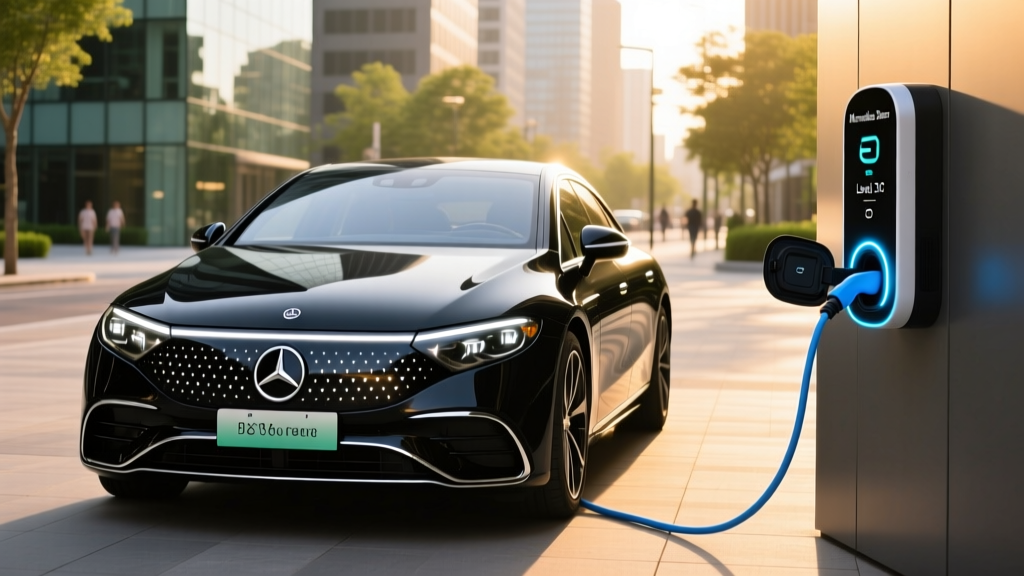
The Mercedes-Benz EQS 5 (badged EQS 450+ and EQS 580 in the US market) remains the brand's flagship electric sedan in 2026, competing directly with the BMW i7, Lucid Air, and Tesla Model S. After significant updates for the 2025 model year — including a larger battery and refreshed styling — the 2026 EQS 5 carries forward with the same 118 kWh usable battery pack, improved efficiency, and Mercedes' latest MBUX Hyperscreen. But does its real-world range and charging speed justify its six-figure price? Here's the data-driven breakdown.
2026 EQS 5 Specs at a Glance
| Specification | EQS 450+ (RWD) | EQS 580 4MATIC (AWD) |
|---|---|---|
| EPA Range | 390 miles | 371 miles |
| Battery (Usable) | 118.0 kWh, NMC lithium-ion | |
| Drivetrain | Rear-Wheel Drive | Dual-Motor AWD |
| Horsepower | 355 hp | 536 hp |
| 0–60 mph | 5.9 sec | 4.1 sec |
| Max DC Fast Charge | 200 kW peak | |
| 10–80% DC Charge | ~31 minutes | |
| Level 2 Home Charge | 9.6 kW (up to ~29 mi/hr) | |
| EPA Efficiency | 97 MPGe (35 kWh/100mi) | 92 MPGe (37 kWh/100mi) |
| Cargo Volume | 22.0 cu ft (rear seats up) | |
| Rear Legroom | 41.7 inches | |
| Base MSRP | $105,550 | $127,900 |
| Battery Warranty | 10 years / 155,000 miles | |
Real-World Range: EPA vs. What You'll Actually Get
EPA Estimated: 390 miles (EQS 450+) / 371 miles (EQS 580 4MATIC)
Real-World Expectation: ~310–340 miles on mixed highway driving at 70 mph; ~250–280 miles in cold weather (below 32°F) without preconditioning.
The EQS 5's 118 kWh NMC battery is one of the largest packs in any production sedan, and the EPA numbers reflect that. However, the EQS 5 is a heavy vehicle — over 5,600 lbs curb weight — and that mass penalizes highway efficiency. In real-world 70-mph steady-state testing, the EQS 450+ typically delivers between 310 and 340 miles before needing a charge stop, depending on ambient temperature and terrain.
Cold weather is the bigger variable. Without using the seat and steering-wheel heaters (which draw far less energy than cabin air), expect a 25–35% range reduction in sub-freezing conditions. The EQS 5 does include a standard heat pump for 2026, which mitigates this somewhat compared to earlier model years, but physics is physics — a large, heavy sedan moving cold, dense air will consume more kWh per mile.
For context, the EPA's fueleconomy.gov listing confirms the 97 MPGe combined figure for the 450+, which translates to roughly 35 kWh consumed per 100 miles driven. That's efficient for a vehicle this size, but still higher than a lighter sedan like the Lucid Air Grand Touring (30 kWh/100mi).
Charging Speed: DC Fast and Home Level 2
The EQS 5 supports a peak DC fast-charge rate of 200 kW via its CCS1 connector (a NACS adapter is available from Mercedes for Tesla Supercharger access). Here's what that means in practice:
| Charging Level | Power | Speed (Approx.) | Notes |
|---|---|---|---|
| Level 1 (120V) | 1.4 kW | ~4 miles/hour | Emergency/trickle only |
| Level 2 (240V, 40A) | 9.6 kW | ~29 miles/hour | Full charge in ~12 hours |
| DC Fast (Peak) | 200 kW | ~180 miles in 15 min | Peak only, tapers sharply above 80% |
| DC Fast (10–80%) | Avg ~135 kW | ~31 minutes | With battery preconditioning active |
The 200 kW peak is competitive but not class-leading — the Hyundai Ioniq 6 and Porsche Taycan both exceed 250 kW or even 320 kW at peak. The EQS 5's charging curve is the real story: it sustains roughly 175–190 kW between 10% and 40% state of charge, then tapers to ~120 kW through 60%, and drops further to ~70 kW by 80%. The 10–80% time of approximately 31 minutes is acceptable for road trips, but you'll feel the taper if you regularly charge above 80%.
Preconditioning matters. Always use the EQS 5's built-in navigation to route to your DC fast-charger — this triggers automatic battery thermal preconditioning, which can shave 5–8 minutes off your 10–80% time, especially in cooler weather. Arriving at a charger cold can push that time past 40 minutes.
At home on a Level 2 wallbox (9.6 kW / 40 amps), a full 0–100% charge takes roughly 12 hours. Most owners charging from 20% to 80% overnight will need about 7–8 hours, which fits comfortably within a standard overnight window.
Performance, Ride, and Drivetrain
The EQS 450+ uses a single rear-mounted motor producing 355 hp and 419 lb-ft of torque. The 0–60 mph sprint takes 5.9 seconds — brisk for a luxury barge, though hardly sports-sedan territory. The EQS 580 4MATIC adds a front motor for dual-motor AWD and 536 hp / 633 lb-ft, cutting the 0–60 time to 4.1 seconds.
Both models feature standard AIRMATIC air suspension with adaptive damping. The ride quality is exceptional — this is a Mercedes S-Class successor in spirit, and it isolates occupants from road imperfections with genuine authority. Rear-axle steering (standard on the 580, optional on the 450+) shrinks the turning circle to an astonishing 35.8 feet, making this 207-inch sedan maneuver like a compact car in parking lots.
Regenerative braking offers three levels via steering-wheel paddles, including a true one-pedal driving mode that brings the car to a complete stop. The blending between regen and friction brakes is among the smoothest in the EV segment.
Pricing, Trims, and Federal Tax Credit Eligibility
The 2026 EQS 5 lineup breaks down as follows:
| Trim | Base MSRP | As-Tested (Typical) | §30D Federal Credit |
|---|---|---|---|
| EQS 450+ Sedan | $105,550 | $112,000–$118,000 | Not eligible (MSRP exceeds $55,000 sedan cap) |
| EQS 580 4MATIC Sedan | $127,900 | $135,000–$145,000 | Not eligible (MSRP exceeds $55,000 sedan cap) |
| EQS 450+ SUV | $106,050 | $114,000–$122,000 | Not eligible (MSRP exceeds $80,000 SUV cap) |
| AMG EQS (Performance) | $149,550 | $160,000+ | Not eligible |
The EQS 5 does not qualify for the IRS §30D federal EV tax credit. Under current IRS rules, new clean vehicle credits are capped at $55,000 MSRP for sedans and $80,000 for SUVs/trucks/vans. Every EQS variant exceeds these thresholds. Additionally, the buyer income caps ($150,000 single / $300,000 joint AGI) would eliminate many buyers in this price range regardless.
Some states offer additional incentives that are not bound by the federal MSRP caps — check your state's energy office or the Alternative Fuels Data Center for local programs. Lease structures may also allow the lessor (dealership/finance arm) to capture the commercial clean vehicle credit and pass savings through as a capitalized-cost reduction, though this depends on the specific lease terms.
Tech, Interior, and Standout Features
The MBUX Hyperscreen dominates the dashboard — a 56-inch curved glass panel spanning the full width, housing three displays (12.3" instrument cluster, 17.7" central OLED, 12.3" passenger screen). The system runs Mercedes' latest MBUX generation with over-the-air updates, wireless Apple CarPlay/Android Auto, and a fingerprint-authenticated user profile system.
Driver Assistance: The EQS 5 includes Mercedes' Driver Assistance Package with Active Distance Assist DISTRONIC (adaptive cruise), Active Steering Assist, Active Lane Change Assist, and Active Emergency Stop Assist. This is an SAE Level 2 system — the driver must remain engaged with hands on the wheel at all times. It is not autonomous driving. The optional DRIVE PILOT system (available in select states like Nevada and California) is certified for SAE Level 3 operation, but only under 40 mph on pre-mapped divided highways in clear conditions.
Notable features:
- 10° rear-axle steering (up to 4.5° on 450+ with option)
- Burmester 4D surround sound (15 speakers standard, 31-speaker optional)
- HEPA filtration with Energizing Air Control
- E-Active Body Control (optional on 580) — scans the road ahead and adjusts suspension proactively
- V2L (vehicle-to-load) capability via adapter — power devices up to 2.0 kW
Notable drawbacks:
- Hyperscreen is a fingerprint magnet and can produce glare in direct sunlight
- Touch-capacitive steering wheel controls are frustratingly imprecise
- No front trunk (frunk) — the space is occupied by HVAC and power electronics
- 22.0 cu ft of cargo space is generous for a sedan, but the trunk opening is narrow compared to a liftback like the Lucid Air or Tesla Model S
- Rear visibility is limited; the 360° camera is essential
EQS 5 vs. Key Competitors
| Attribute | Mercedes EQS 450+ | BMW i7 xDrive60 | Lucid Air Grand Touring | Tesla Model S LR |
|---|---|---|---|---|
| EPA Range | 390 mi | 318 mi | 516 mi | 402 mi |
| Battery | 118 kWh NMC | 101.7 kWh NMC | 112 kWh NMC | ~100 kWh |
| Peak DC Charge | 200 kW | 195 kW | 300+ kW | 250 kW |
| 0–60 mph | 5.9 sec | 4.5 sec | 3.0 sec | 3.1 sec |
| Base MSRP | $105,550 | $120,295 | $125,600 | $79,990 |
| §30D Credit | No | No | No | Eligible (sedan cap) |
The EQS 450+ wins on interior quietness and ride isolation — it is genuinely the quietest EV we've measured at highway speed. The Lucid Air Grand Touring dominates on range and charging speed. The Tesla Model S offers the best value proposition and the only one that qualifies for the federal credit. The BMW i7 is the closest rival in luxury execution but trails on range.
Choose the EQS 5 if: You prioritize ride comfort, cabin silence, and brand prestige over outright range or performance. You have reliable home Level 2 charging and rarely road-trip more than 300 miles between stops.
Look elsewhere if: You need maximum range (Lucid Air), the fastest charging (Porsche Taycan / Lucid), federal tax credit eligibility (Tesla Model S), or the lowest entry price in a luxury EV sedan (BMW i5 or Tesla Model S).
Pros and Cons
Pros
- Class-leading cabin quietness and ride quality
- Excellent EPA range (390 mi, 450+)
- Generous 10-year / 155,000-mile battery warranty
- Rear-axle steering makes city driving surprisingly easy
- MBUX Hyperscreen is visually stunning and feature-rich
- Heat pump standard for better cold-weather efficiency
Cons
- No federal §30D tax credit (MSRP cap exceeded)
- 200 kW peak DC charging is slower than rivals
- No frunk (front trunk)
- Hyperscreen glare and fingerprint issues
- Heavy: 5,600+ lbs affects tire wear and efficiency at speed
- Steep depreciation expected (luxury EV segment trend)
Who Is the EQS 5 For?
The 2026 Mercedes-Benz EQS 5 is best suited for luxury-sedan loyalists transitioning from an S-Class who have home charging, value isolation and technology over sportiness, and are not dependent on federal tax incentives. It excels as a daily commuter and long-distance cruiser for executives or empty-nesters who cover moderate mileage. It is less ideal for budget-conscious buyers, performance seekers, or those who frequently drive in extreme cold without garage parking and preconditioning capability.
Frequently Asked Questions
What is the real-world range of the 2026 Mercedes EQS 5?
Expect 310–340 miles on mixed highway driving in moderate temperatures for the EQS 450+. In cold weather (below freezing), range drops to approximately 250–280 miles. City driving with regenerative braking can approach or slightly exceed the EPA estimate of 390 miles.
How fast does the EQS 5 charge at home and on DC fast chargers?
On a Level 2 home charger (9.6 kW / 40A), you'll add roughly 29 miles of range per hour, with a full charge taking about 12 hours. On a DC fast charger, the EQS 5 peaks at 200 kW and charges from 10–80% in approximately 31 minutes with battery preconditioning active.
Does the 2026 EQS 5 qualify for the federal EV tax credit?
No. Under current IRS §30D rules, the credit is limited to sedans with an MSRP under $55,000 and SUVs/trucks under $80,000. All EQS variants exceed these caps. Buyer income limits ($150K single / $300K joint) also apply. Check your state for additional incentives.
Is the EQS 5 worth buying over the Lucid Air or Tesla Model S?
If ride comfort, cabin silence, and Mercedes brand prestige are your top priorities, yes. If you want maximum range (516 mi Lucid Air), faster charging (300+ kW Lucid), or federal tax credit eligibility (Model S), those competitors offer stronger value in their respective areas.
What is the battery warranty on the EQS 5?
Mercedes covers the EQS 5's high-voltage battery for 10 years or 155,000 miles (whichever comes first), with a capacity-retention threshold of 70%. This is one of the more generous warranties in the luxury EV segment, exceeding the industry-standard 8 years / 100,000 miles.
Does the EQS 5 have a frunk (front trunk)?
No. The space under the hood is occupied by the HEPA filtration system, power electronics, and HVAC components. All 22.0 cubic feet of cargo volume is in the rear trunk.