Quick Verdict: The Efficiency King of Electric Luxury Sedans
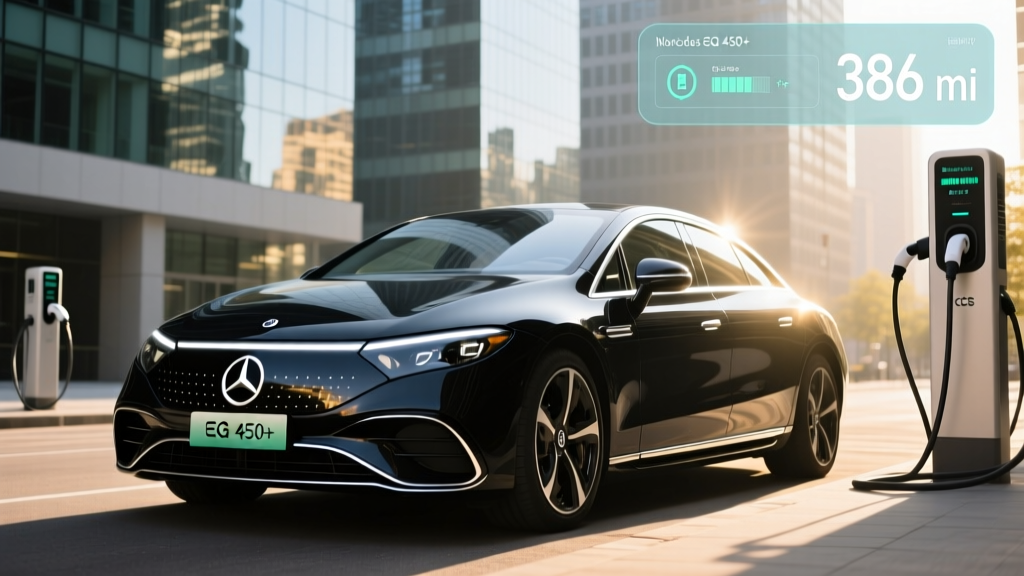
The Mercedes EQS 450+ occupies a rare position in the EV market: a full-size luxury flagship that also happens to be one of the most aerodynamically efficient production cars ever built. With a drag coefficient of just 0.20 and an EPA-estimated range that rivals vehicles costing significantly less, the EQS 450+ (rear-wheel drive, single motor) is the volume play in Mercedes' electric sedan lineup. For 2026, it continues to offer the brand's Hyperscreen dashboard, SAE Level 2 driver-assistance suite, and a ride quality that sets the segment benchmark. But at a six-figure starting price, buyers need to weigh whether the efficiency gains and luxury credentials justify the premium over competitors like the Tesla Model S, Lucid Air, and BMW i7.
This review focuses on the EQS 450+ RWD variant—the most popular configuration for its range and price advantage. We'll break down exact charging speeds, real-world range expectations, and whether this flagship qualifies for federal incentives.
Range & Efficiency: What the EPA Number Doesn't Tell You
Real-World Expectation: ~330–350 miles highway (70 mph); ~280–310 miles in cold weather (below 32°F with cabin heating)
Efficiency: 97 MPGe combined / 35 kWh per 100 miles
The EQS 450+ achieves its impressive EPA range through a combination of class-leading aerodynamics, a large battery pack, and careful thermal management. The EPA's official figures rate the 450+ at 97 MPGe combined, translating to roughly 35 kWh consumed per 100 miles of driving. That puts it ahead of the BMW i7 xDrive60 (82 MPGe) and competitive with the Lucid Air Pure (100+ MPGe depending on configuration).
However, EPA numbers reflect a blended cycle. On sustained highway driving at 70–75 mph, expect range to drop to approximately 330–350 miles. In winter conditions—particularly below freezing where battery chemistry slows and cabin heating draws significant energy—real-world range can fall to 280–310 miles. The EQS's heat pump system (standard) mitigates some of this loss compared to resistive heating, but no EV is immune to cold-weather degradation. Owners in northern climates should plan road trips around roughly 280 miles of usable range in deep winter.
The 450+ AWD variant (dual motor) sacrifices roughly 20–30 miles of range due to the additional drivetrain mass and friction, landing around 355 miles EPA. The AMG EQS and higher-output 580 4MATIC trim drop further, to approximately 330–340 miles EPA.
Battery, Charging & Home Setup
| Spec | Value |
|---|---|
| Battery Chemistry | NMC (Nickel Manganese Cobalt) |
| Total Capacity | 120 kWh (107.8 kWh usable) |
| Max DC Fast-Charge Rate | 200 kW peak |
| 10–80% DC Charge Time | ~31 minutes (optimal conditions) |
| Level 2 AC Charge Rate | 9.6 kW (onboard charger) |
| Level 2 Miles Added Per Hour | ~28–30 miles/hr at 9.6 kW |
| Level 1 (120V) Charge Rate | ~1.4 kW / ~4 miles/hr |
| Charge Port | CCS1 (NACS adapter available via Mercedes) |
The EQS 450+ uses a 120 kWh gross (107.8 kWh usable) NMC lithium-ion battery pack. Mercedes reserves approximately 12 kWh as a top-and-bottom buffer to protect long-term battery health—a larger buffer than many competitors, which contributes to the pack's longevity but slightly reduces the usable capacity relative to total size.
DC Fast Charging Reality: The 200 kW peak charge rate sounds competitive, but as with all EVs, peak rate is not sustained rate. The EQS maintains close to 200 kW from roughly 10% to 30% state of charge, then progressively tapers. From 10–80%, the average rate is closer to 140–155 kW, resulting in a 10–80% time of about 31 minutes under ideal battery preconditioning. If you arrive at a DC fast charger with a cold battery (below ~60°F), expect charge times to extend significantly—the EQS's navigation-based battery preconditioning helps when you route through a charger in the nav system, warming the pack ahead of arrival.
Home Level 2 Charging: The 9.6 kW onboard charger is adequate but not class-leading (the Lucid Air offers up to 19.2 kW). On a 48-amp Level 2 home charger—which requires a 60-amp dedicated circuit—you'll recover roughly 28–30 miles of range per hour. A full 0–100% charge takes approximately 11–12 hours. For daily driving of 30–50 miles, an overnight charge easily replenishes the battery. Most EQS owners will rarely need to charge from empty at home.
For 2026, Mercedes offers a NACS adapter for access to Tesla's Supercharger network, expanding DC fast-charging options significantly. The native CCS1 port works with Electrify America, EVgo, and other major networks.
Performance & Drivetrain
| Spec | EQS 450+ RWD | EQS 450 4MATIC |
|---|---|---|
| Drivetrain | Rear-Wheel Drive | All-Wheel Drive (Dual Motor) |
| Horsepower | 355 hp | 355 hp |
| Torque | 419 lb-ft | 590 lb-ft |
| 0–60 mph | 5.9 seconds | 5.3 seconds |
| Top Speed | 130 mph (electronically limited) | 130 mph |
The EQS 450+ is not a performance EV—and it doesn't pretend to be. The single rear motor delivers 355 horsepower and 419 lb-ft of torque, yielding a 5.9-second 0–60 mph time. That's brisk enough for confident highway merging and passing, but it won't pin you to the seat like a Lucid Air Sapphire or Tesla Model S Plaid. The 450 4MATIC adds a front motor for all-wheel drive and bumps torque to 590 lb-ft (horsepower stays at 355), dropping the 0–60 time to 5.3 seconds.
Where the EQS shines is ride quality. The standard AIRMATIC air suspension absorbs road imperfections with a composure that few EVs match. Rear-axle steering (standard on most trims, offering up to 10 degrees of rear-wheel turn) makes this 17-foot sedan surprisingly maneuverable in parking lots and city streets. The turning circle shrinks from 39.4 feet to as little as 35.8 feet with the maximum rear-steer angle—a genuine practicality advantage.
Regenerative braking offers multiple modes: D+ (coasting), D (moderate regen), D– (strong regen), and D Auto (which uses radar and navigation data to modulate regen based on traffic and upcoming curves). The D Auto mode is among the best implementations in the industry, but the EQS does not offer true one-pedal driving to a complete stop in the way a Nissan LEAF or Chevrolet Bolt does. You'll still use the brake pedal at low speeds.
Interior, Technology & Cargo
The EQS cabin is a showcase of Mercedes' current design philosophy, dominated by the available MBUX Hyperscreen—a 56-inch curved glass panel spanning the entire dashboard that integrates a 12.3-inch instrument cluster, 17.7-inch central OLED touchscreen, and 12.3-inch front-passenger display. The Hyperscreen is standard on higher trims and optional on the base 450+. The alternative is a more traditional floating 12.8-inch central OLED screen, which some buyers may prefer for its simplicity.
The MBUX infotainment system runs a "zero-layer" interface, placing navigation, media, and climate controls at the top level without nested menus. Wireless Apple CarPlay and Android Auto are standard. The system supports over-the-air updates, and the voice assistant ("Hey Mercedes") handles complex natural-language commands with high accuracy.
Driver Assistance (SAE Level 2): The EQS comes equipped with Mercedes' Driver Assistance Package, which includes adaptive cruise control with stop-and-go, active lane-keeping, active blind-spot monitoring, and evasive steering assist. The available Drive Pilot system is a conditional SAE Level 3 system approved in Nevada and California for speeds up to 40 mph in heavy traffic on suitable highways—meaning the driver can legally disengage (eyes off road) under very specific conditions. This is one of the few production vehicles with any Level 3 capability in the U.S., though its operational design domain is extremely narrow. For all other driving, the EQS remains a Level 2 vehicle requiring continuous driver engagement.
| Dimension | Measurement |
|---|---|
| Front Legroom | 41.7 inches |
| Rear Legroom | 42.2 inches |
| Front Headroom | 39.0 inches |
| Rear Headroom | 37.8 inches |
| Trunk (Cargo) Volume | 22.0 cu ft (seats up) / 63.0 cu ft (seats folded) |
| Frunk (Front Trunk) | Not available (hood is sealed, service access only) |
Rear-seat space is generous, with limousine-like legroom that outpaces the Tesla Model S and rivals the BMW 7 Series. However, the sloping roofline cuts into rear headroom for taller passengers. The 22.0 cu ft trunk is competitive, though the absence of a frunk (front trunk) is a missed opportunity for additional storage that many competitors offer.
Pricing, Trims & Federal Tax Credit Eligibility
| Trim | Drivetrain | Base MSRP | As-Tested (Typical) |
|---|---|---|---|
| EQS 450+ Premium | RWD | ~$105,550 | $110,000–$118,000 |
| EQS 450+ Exclusive | RWD | ~$110,050 | $115,000–$125,000 |
| EQS 450+ Pinnacle | RWD | ~$115,550 | $120,000–$132,000 |
| EQS 450 4MATIC | AWD | ~$108,550 | $115,000–$125,000 |
| EQS 580 4MATIC | AWD | ~$125,000 | $135,000–$148,000 |
Note: MSRP figures reflect estimated 2026 model-year pricing including destination charge. Final pricing confirmed at time of purchase.
Does the Mercedes EQS 450+ Qualify for the Federal EV Tax Credit?
- MSRP Cap: The §30D credit requires sedans to have an MSRP at or below $55,000. Every EQS trim exceeds this cap significantly.
- Income Cap: Buyer AGI must not exceed $150,000 (single) / $300,000 (joint) — moot for this vehicle due to MSRP cap.
- Battery Sourcing: Critical minerals and battery component requirements must be met — moot for this vehicle due to MSRP cap.
- Point-of-Sale Transfer: Available for eligible vehicles — the EQS does not qualify.
The EQS does not qualify for the federal §30D new-vehicle EV tax credit. Per IRS guidelines, the $55,000 MSRP cap for sedans eliminates every EQS variant. This is a significant consideration when comparing to lower-priced luxury EVs that do qualify. Some buyers may offset costs through state-level incentives (check your state's energy office for current programs), employer EV benefits, or utility company rebates for home charger installation.
For buyers considering a used EQS, the §25E used clean vehicle credit offers up to $4,000 (or 30% of the sale price, whichever is less) on vehicles priced at $25,000 or below, subject to income caps. A 2022–2023 EQS may eventually fall into this range on the used market, though depreciation on these models has been steep.
Ownership Costs & Warranty
| Coverage | Term |
|---|---|
| New Vehicle Limited Warranty | 4 years / 50,000 miles |
| High-Voltage Battery Warranty | 10 years / 155,000 miles (whichever comes first) |
| Battery Capacity Retention Guarantee | 70% minimum SoH over warranty period |
| Powertrain (Electric Drive Unit) | 4 years / 50,000 miles (under new-vehicle warranty) |
| Roadside Assistance | 4 years / 50,000 miles |
| Corrosion Perforation | 4 years / 50,000 miles |
Mercedes provides a 10-year / 155,000-mile warranty on the high-voltage battery, guaranteeing it will retain at least 70% of its original capacity (State of Health) over that period. This is competitive with BMW's 8-year/100,000-mile coverage and slightly better than some rivals. If the battery drops below 70% SoH within the warranty window, Mercedes will repair or replace it at no cost.
For out-of-warranty battery replacement, current estimates for the EQS's 120 kWh pack range from $25,000 to $35,000+ including labor—though real-world NMC degradation data from early EQS owners suggests the large buffer and thermal management system keep degradation modest. Typical degradation for this chemistry and pack size is 5–8% over the first 100,000 miles under normal use patterns.
Estimated 5-Year Operating Costs: Charging at home on the U.S. average electricity rate of ~$0.16/kWh, the EQS costs approximately $5.60 per 100 miles (35 kWh × $0.16). That's roughly $840 per year for 15,000 miles of driving. Comparable gasoline S-Class models would cost $2,500–$3,000+ annually in fuel. However, insurance premiums for the EQS run 25–40% higher than a comparable ICE luxury sedan, adding $800–$1,500/year depending on your profile and state.
Pros, Cons & Who Should Buy
- Class-leading 385-mile EPA range (RWD, 19" wheels)
- Exceptional ride quality with standard air suspension
- Available Level 3 Drive Pilot (limited conditions, NV/CA only)
- Spacious rear cabin with 42.2" legroom
- Ultra-quiet cabin with excellent NVH isolation
- 10-year/155,000-mile battery warranty
- Rear-axle steering for tight turning radius
- Strong 97 MPGe combined efficiency
- No federal tax credit eligibility (MSRP exceeds $55K sedan cap)
- 200 kW peak DC charge rate trails Lucid Air (300+ kW) and Porsche Taycan (270+ kW)
- No frunk (front trunk) — missed storage opportunity
- Hyperscreen adds cost and complexity; glare can be distracting
- Heavy depreciation in first 2–3 years of ownership
- 5.9-second 0–60 is leisurely for the price point
- Level 3 Drive Pilot only works in very narrow conditions
- 9.6 kW Level 2 charger is slower than some competitors
Who This EV Suits Best
Choose the EQS 450+ if: You prioritize ride comfort, cabin quietness, and maximum range over outright performance. You want a luxury daily driver for commuting and occasional road trips of 300+ miles. You value rear-seat space for adult passengers. You live in a state with additional EV incentives that offset the lack of federal credit.
Look elsewhere if: You need the fastest possible DC charging (consider Lucid Air or Porsche Taycan). You want performance-first dynamics (consider Tesla Model S Plaid or BMW i7 M70). You need a frunk for cargo flexibility. You want to leverage the $7,500 federal tax credit (consider lower-priced luxury EVs). You regularly tow (the EQS is not rated for towing).
How It Stacks Up Against Key Competitors
| Spec | Mercedes EQS 450+ | Lucid Air Pure | Tesla Model S LR | BMW i7 xDrive60 |
|---|---|---|---|---|
| EPA Range | 385 mi | 419 mi | 402 mi | 318 mi |
| Battery (usable) | 107.8 kWh | 88 kWh | ~95 kWh | 101.7 kWh |
| Peak DC Charge | 200 kW | 250+ kW | 250 kW | 195 kW |
| 10–80% DC Time | ~31 min | ~22 min | ~27 min | ~34 min |
| 0–60 mph | 5.9 sec | 5.2 sec | 3.1 sec | 4.5 sec |
| Horsepower | 355 hp | 430 hp | 670 hp | 536 hp |
| Base MSRP | ~$105,550 | ~$78,900 | ~$82,990 | ~$120,300 |
| Federal §30D Credit | No | Possible (check sourcing) | Possible (check sourcing) | No |
The EQS 450+ holds its own on range and comfort but faces pressure on value. The Lucid Air Pure delivers more range, faster charging, and more power for roughly $27,000 less—and may qualify for the federal credit depending on battery sourcing. The Tesla Model S Long Range is dramatically faster and cheaper, though its interior quality and ride comfort don't match the Mercedes. The BMW i7 is the closest competitor in luxury execution but sacrifices range and costs more. For buyers who define luxury as serenity and isolation rather than performance, the EQS 450+ remains compelling.
Frequently Asked Questions
What is the real-world range of the Mercedes EQS 450+?
On the EPA combined cycle, the EQS 450+ is rated at 385 miles with 19-inch wheels. In real-world highway driving at 70 mph, expect 330–350 miles. In cold weather (below freezing), plan for 280–310 miles. Choosing the available 21-inch wheels reduces EPA range by approximately 20–30 miles.
How fast does the EQS 450+ charge at home and on the road?
At a DC fast charger, the EQS 450+ peaks at 200 kW and charges from 10–80% in approximately 31 minutes under ideal conditions. At home on a Level 2 charger (9.6 kW / 48 amps), it adds roughly 28–30 miles of range per hour, with a full 0–100% charge taking 11–12 hours.
Does the Mercedes EQS qualify for the $7,500 federal EV tax credit?
No. Under IRS §30D rules, new sedans must have an MSRP of $55,000 or less to qualify. Every EQS trim exceeds this cap. Some state-level incentives may partially offset the purchase price—check your state's clean vehicle program.
Is the EQS 450+ worth buying over the Lucid Air or Tesla Model S?
It depends on your priorities. If ride comfort, cabin quietness, and Mercedes build quality matter most, the EQS 450+ delivers an experience neither the Lucid nor Tesla can match. If you prioritize value, performance, or faster charging, the Lucid Air Pure and Tesla Model S Long Range are more compelling on paper. The EQS is the comfort choice; its rivals are the performance and value choices.
What is the biggest drawback of the Mercedes EQS 450+?
The combination of no federal tax credit eligibility, steep depreciation, and a 200 kW charge rate that trails newer competitors makes the EQS harder to justify on pure economics. Additionally, the lack of a frunk and the Hyperscreen's added complexity are common owner complaints. The car excels at luxury and efficiency but is outpaced on value and charging speed.
How long will the EQS battery last?
Mercedes warranties the high-voltage battery for 10 years or 155,000 miles, guaranteeing at least 70% capacity retention. Based on NMC chemistry degradation patterns and the EQS's large buffer (~12 kWh reserved), most owners can expect 90%+ capacity retention at 100,000 miles under normal charging habits (avoiding frequent 100% charges and DC fast-charging exclusively).
Sources: fueleconomy.gov (EPA), IRS §30D Clean Vehicle Credit, Mercedes-Benz USA specifications.