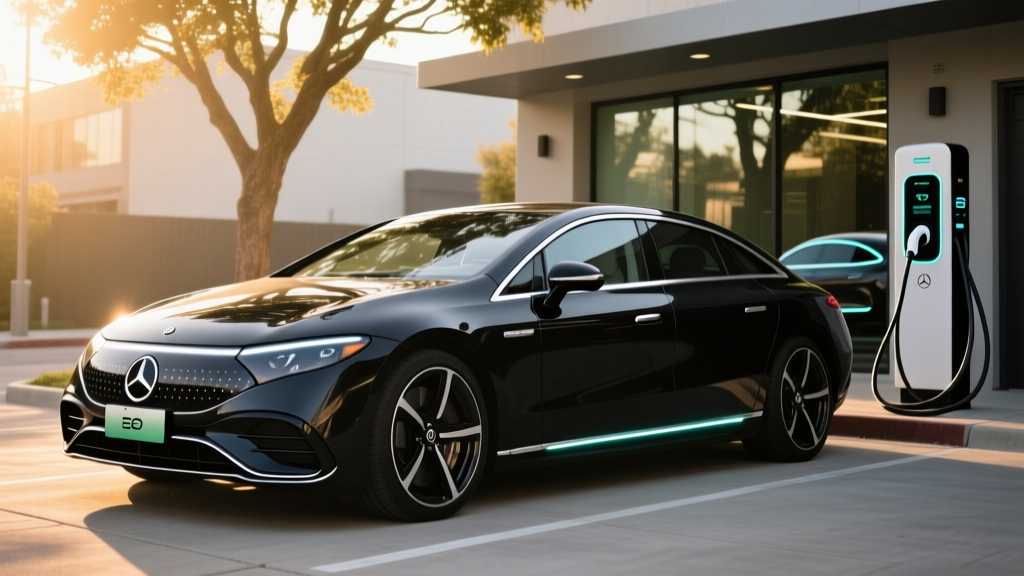
The Mercedes-Benz EQS has long occupied a peculiar space in the luxury EV market: staggering engineering ambition wrapped in a design that has polarized buyers since its debut. For the 2026 model year, Mercedes has refined its flagship electric sedan with updated battery chemistry, revised infotainment, and subtle exterior tweaks aimed at addressing the most common criticisms. But at a starting price above $104,000 — and in a segment now crowded with the Lucid Air, Tesla Model S, and BMW i7 — does the 2026 EQS justify its premium?
We spent time with the 2026 EQS lineup to deliver a data-driven verdict on range, charging, performance, and real-world ownership. Here is everything you need to know before you buy.
2026 Mercedes EQS at a Glance: Core Specifications
| Specification | EQS 450+ Sedan | EQS 450 4MATIC | EQS 580 4MATIC | AMG EQS |
|---|---|---|---|---|
| EPA Range | 390 miles | 365 miles | 345 miles | 315 miles |
| Battery (Usable) | 108 kWh (NMC lithium-ion) | |||
| Horsepower | 355 hp | 355 hp | 536 hp | 751 hp |
| 0–60 mph | 5.9 sec | 5.3 sec | 4.1 sec | 3.4 sec |
| Drivetrain | RWD (single motor) | AWD (dual motor) | AWD (dual motor) | AWD (dual motor) |
| Max DC Fast Charge | 200 kW (CCS1 / NACS via adapter) | |||
| 10–80% DC Charge Time | ~31 minutes | |||
| Level 2 Home Charging | 9.6 kW (~28 mi/hr added) | |||
| MPGe (Combined) | 97 MPGe | 92 MPGe | 89 MPGe | 79 MPGe |
| Efficiency | 35 kWh/100 mi | 37 kWh/100 mi | 38 kWh/100 mi | 43 kWh/100 mi |
| Base MSRP | $104,400 | $108,400 | $125,950 | $152,550 |
Sources: EPA Fueleconomy.gov, Mercedes-Benz USA. All figures are manufacturer-estimated or EPA-rated for the 2026 model year.
Range and Efficiency: EPA vs. the Real World
The headline number for the 2026 EQS 450+ is its EPA-estimated 390 miles of range — a figure made possible by its massive 108 kWh usable battery pack and a drag coefficient (Cd) of just 0.20, one of the lowest of any production car. The NMC (nickel manganese cobalt) lithium-ion chemistry prioritizes energy density over cycle life, which is the right trade-off for a luxury flagship where range matters more than 3,000-cycle longevity.
- EPA Sticker: 390 miles
- Mixed driving (city/suburban): ~350–370 miles — regenerative braking recovers energy in stop-and-go traffic
- Highway cruising (70–75 mph): ~300–320 miles — aero drag dominates at sustained speed despite the slippery shape
- Cold weather (below 32°F): ~270–300 miles — expect 20–25% range loss from cabin heating and reduced battery efficiency, even with the EQS's standard heat pump
- Worst-case (highway + cold + hills): ~250–270 miles — plan charging stops accordingly on winter road trips
The 97 MPGe combined rating for the 450+ is respectable for a 5,700-pound sedan, though the Lucid Air Grand Touring achieves 131 MPGe combined with a smaller battery thanks to superior powertrain efficiency. Where the EQS wins is sheer battery capacity: 108 kWh usable gives you a buffer that smaller packs simply cannot match on long, cold-weather drives.
Charging Performance: DC Fast Charging and Home Setup
The 2026 EQS supports DC fast charging at a peak rate of 200 kW via its CCS1 port (or NACS, as Mercedes has adopted the Tesla-standard connector for 2025 and beyond). Mercedes quotes a 10–80% charge time of approximately 31 minutes under optimal conditions — battery preconditioned, moderate ambient temperature, and a capable 350 kW charger.
| Charging Level | Power (kW) | Charge Time | Miles Added per Hour |
|---|---|---|---|
| Level 1 (120V household) | ~1.4 kW | ~77 hours (0–100%) | ~4 mi/hr |
| Level 2 (240V home/public) | 9.6 kW | ~11.5 hours (0–100%) | ~28 mi/hr |
| DC Fast (peak) | 200 kW | ~31 min (10–80%) | ~185 mi in 15 min (peak) |
| DC Fast (sustained avg.) | ~140–160 kW | — | Average over 10–80% session |
Charging curve reality check: The 200 kW peak is achieved only between roughly 10% and 30% State of Charge. Beyond 50%, the charge rate tapers progressively — dropping to around 100 kW by 70% and below 50 kW past 85%. This is standard behavior for NMC chemistry with large packs, but it means the last 20% of a charge session takes nearly as long as the first 50%. On road trips, plan to charge from 10% to 80% and move on rather than waiting for a full top-off.
For home charging, the onboard 9.6 kW AC charger is adequate but not class-leading. A full overnight charge from 20% to 100% takes about 9 hours on a Level 2 wallbox (such as a ChargePoint Home Flex or Tesla Universal Wall Connector on a 48-amp circuit). Given the 108 kWh pack, a 200-amp electrical panel is generally sufficient, but homes with older 100-amp service may need a panel upgrade — budget $1,500–$3,000 for that work on top of the $500–$1,200 charger installation.
Performance and Driving Dynamics
The EQS lineup spans a wide performance envelope. The base 450+ with its single rear motor delivers 355 horsepower and a 5.9-second 0–60 mph time — brisk for daily driving but not sports-sedan territory. The 450 4MATIC adds a front motor for all-wheel drive and shaves the sprint to 5.3 seconds.
The 580 4MATIC is the sweet spot for performance-oriented buyers: 536 hp, 4.1 seconds to 60, and dual-motor torque vectoring that makes the car feel smaller than its 207-inch length suggests. At the top, the AMG EQS delivers a supercar-rivaling 751 hp (with RACE START enabled) and a 3.4-second 0–60, though the 315-mile EPA range and 79 MPGe are the trade-off.
All models feature standard rear-axle steering (up to 10 degrees), which dramatically reduces the turning circle to 35.8 feet — comparable to a compact hatchback. This is not a marketing gimmick; it transforms the EQS in parking garages and tight urban streets. Air suspension with adaptive damping is standard across the lineup, delivering the pillowy ride quality expected of an S-Class successor while keeping body roll well-controlled in corners.
Interior, Tech, and the Hyperscreen Question
The 2026 EQS interior remains one of the most technologically dense cabins in any production vehicle. The available MBUX Hyperscreen — a 56-inch curved glass panel spanning the entire dashboard — integrates a 17.7-inch central OLED touchscreen, a 12.3-inch driver display, and a 12.3-inch passenger screen into a single seamless unit. The 2026 model year brings faster processing, improved voice recognition, and wireless Apple CarPlay/Android Auto across all trims.
Standout tech features:
- MBUX Hyperscreen with OLED displays (standard on 580, optional on 450 trims)
- Augmented-reality head-up display with navigation overlay
- Burmester 4D surround sound (15 speakers standard, 31-speaker high-end optional)
- HEPA-grade Energizing Air Control with fragrance diffusion
- Rear-axle steering (10°) for exceptional low-speed maneuverability
- DRIVER ASSIST PLUS with active lane change, route-based speed adaptation
Notable drawbacks:
- Hyperscreen is a fingerprint magnet and can produce reflections in bright sunlight
- Climate controls are buried in touchscreen menus — no physical knobs
- Rear-seat headroom is tighter than expected due to the sloping roofline (37.9 inches vs. the S-Class's 39.4)
- Trunk opening is narrow despite 22 cu ft of cargo volume — large suitcases require careful loading
- Driver-assist systems are competent but not class-leading; GM's Super Cruise still outperforms on hands-free highway driving
- Class-leading 390-mile EPA range (450+)
- Exceptional ride comfort and cabin isolation
- Massive 108 kWh battery provides real-world range buffer
- Rear-axle steering makes it surprisingly maneuverable
- Ultra-low 0.20 Cd drag coefficient aids highway efficiency
- Build quality and materials befitting the S-Class lineage
- Starting price above $104,000 — steep even for luxury segment
- Does NOT qualify for the $7,500 federal EV tax credit (§30D MSRP cap)
- Hyperscreen UI has a learning curve and lacks physical controls
- 200 kW peak DC charging is slower than Lucid Air (300+ kW) and Porsche Taycan (320 kW)
- Rear headroom compromised by fastback roofline
- Depreciation steeper than Tesla or Porsche EV competitors
Pricing, Trims, and Federal Tax Credit Eligibility
The 2026 Mercedes EQS lineup starts at $104,400 for the 450+ Sedan and climbs to $152,550 for the AMG EQS. A well-equipped 580 4MATIC — the trim we consider the best value in the range — lands around $135,000–$140,000 after popular options like the Hyperscreen ($8,000), Executive Rear Seat package ($3,500), and AMG Line exterior ($2,500).
| Trim | Base MSRP | Typical As-Tested | Federal §30D Credit | Effective Price |
|---|---|---|---|---|
| EQS 450+ Sedan | $104,400 | $112,000–$118,000 | $0 (exceeds MSRP cap) | $104,400–$118,000 |
| EQS 450 4MATIC | $108,400 | $116,000–$124,000 | $0 (exceeds MSRP cap) | $108,400–$124,000 |
| EQS 580 4MATIC | $125,950 | $135,000–$145,000 | $0 (exceeds MSRP cap) | $125,950–$145,000 |
| AMG EQS | $152,550 | $160,000–$170,000 | $0 (exceeds MSRP cap) | $152,550–$170,000 |
The 2026 Mercedes EQS does not qualify for the $7,500 federal EV tax credit. Under current IRS §30D rules, new clean vehicle credits are capped at an MSRP of $55,000 for sedans. Every EQS trim far exceeds this threshold. Additionally, buyers must meet income caps ($150,000 single / $300,000 joint) and the vehicle must satisfy battery component and critical mineral sourcing requirements.
Some state-level incentives may apply — check your local DMV or energy office — but federal credit is off the table for this model. Always consult a tax professional for your specific situation.
Space, Practicality, and Daily Ownership
The EQS rides on a dedicated EV platform (EVA2) with a flat floor, yielding generous interior dimensions:
- Front legroom: 41.7 inches
- Rear legroom: 40.1 inches
- Front headroom: 40.4 inches
- Rear headroom: 37.9 inches (the fastback slope costs rear passengers ~1.5 inches vs. the S-Class)
- Cargo volume (trunk): 22.0 cu ft — large for a sedan but the opening is narrow
- Frunk: None — the EVA2 platform does not include a front trunk
For daily ownership, the EQS excels as a commuter and long-distance cruiser. The ride quality is genuinely superb — air suspension absorbs road imperfections with the composure expected of a six-figure Mercedes. Cabin noise at highway speed is remarkably low, aided by acoustic glass and foam-filled tires on higher trims.
Who this EV suits best:
- Executive commuters who prioritize ride comfort, cabin technology, and brand prestige over outright performance
- Long-distance road trippers who value the 390-mile range buffer and can plan around 31-minute DC fast-charge stops
- Tech-forward luxury buyers who want the Hyperscreen experience and are willing to learn a complex UI
Who should look elsewhere:
- Budget-conscious EV shoppers — the lack of federal tax credit and high MSRP put this out of reach for most
- Performance-first drivers — the Porsche Taycan and Tesla Model S Plaid deliver sharper dynamics
- Families needing maximum rear space — the EQS SUV or BMW iX offer more headroom and cargo flexibility
How the 2026 EQS Stacks Up Against Key Rivals
The luxury EV sedan segment gives buyers several compelling alternatives. Here is how the EQS 450+ compares against its most direct competitors:
| Metric | 2026 Mercedes EQS 450+ | 2026 Lucid Air Grand Touring | 2026 Tesla Model S LR | 2026 BMW i7 xDrive60 |
|---|---|---|---|---|
| EPA Range | 390 mi | 516 mi | 405 mi | 318 mi |
| Battery (Usable) | 108 kWh (NMC) | 112 kWh (NMC) | 100 kWh (est.) | 101.7 kWh (NMC) |
| Peak DC Charge | 200 kW | 300+ kW | 250 kW | 195 kW |
| 0–60 mph | 5.9 sec | 3.0 sec | 3.1 sec | 4.5 sec |
| Horsepower | 355 hp | 819 hp | 670 hp | 536 hp |
| Base MSRP | $104,400 | $138,000 | $74,990 | $124,200 |
| Federal §30D Credit | No (MSRP cap) | No (MSRP cap) | Partial eligibility* | No (MSRP cap) |
*Tesla Model S Long Range may qualify for partial or full §30D credit depending on battery sourcing and MSRP configuration; verify on fueleconomy.gov before purchase.
The Lucid Air dominates on range and charging speed. The Tesla Model S wins on value and Supercharger network access. The BMW i7 competes most directly on traditional luxury feel. The EQS carves its niche through cabin technology (Hyperscreen), ride comfort, and the sheer size of its battery — which translates to range confidence in cold weather where efficiency drops.
Battery Warranty and Long-Term Ownership
Mercedes backs the 2026 EQS battery with an 8-year / 100,000-mile warranty, guaranteeing a minimum of 70% State of Health (capacity retention) over that period. The general vehicle warranty is 4 years / 50,000 miles, with 4 years of complimentary scheduled maintenance.
NMC chemistry typically degrades faster than LFP (lithium iron phosphate) over thousands of cycles, but the EQS's large 108 kWh pack means you are using a smaller percentage of total capacity for daily driving — which reduces stress on the cells. Owners who charge primarily at home on Level 2 and avoid frequent DC fast charging or sitting at 100% SoC for extended periods should see well over 85% capacity retention at the 8-year mark based on current NMC degradation data from similar platforms.
Battery replacement cost out of warranty is significant — expect $20,000–$30,000 for a full pack replacement at a Mercedes dealer. This is a long-tail risk worth factoring into second-ownership or high-mileage plans.
Frequently Asked Questions
What is the real-world range of the 2026 Mercedes EQS?
The EPA rates the EQS 450+ at 390 miles. In real-world mixed driving, expect 350–370 miles. Sustained highway driving at 70+ mph drops that to 300–320 miles. In freezing temperatures, plan for 270–300 miles due to cabin heating demands and reduced battery efficiency, even with the standard heat pump.
How fast does the 2026 EQS charge at home and on the road?
At home on a Level 2 (240V, 48-amp) charger, the EQS adds about 28 miles of range per hour — a full charge from 20% takes roughly 9 hours. On DC fast chargers, it peaks at 200 kW and charges from 10–80% in approximately 31 minutes, though sustained average power is closer to 140–160 kW due to charge-curve taper above 50% SoC.
Does the 2026 Mercedes EQS qualify for the $7,500 federal EV tax credit?
No. Under current IRS §30D rules, the federal new clean vehicle credit has an MSRP cap of $55,000 for sedans. Every 2026 EQS trim starts well above that threshold. State-level incentives may be available — check your local energy office. Always consult a tax professional for your specific eligibility.
Is the 2026 EQS worth buying vs. the Lucid Air or Tesla Model S?
It depends on priorities. Choose the EQS if you value ride comfort, cabin luxury, Hyperscreen technology, and a massive 108 kWh battery for cold-weather range confidence. Choose the Lucid Air if range (516 mi EPA) and charging speed (300+ kW) are paramount. Choose the Tesla Model S if you want the best value, Supercharger network access, and strong performance at a lower entry price.
What are the biggest pros and cons of the 2026 EQS?
Pros: class-leading 390-mile range (450+), exceptional ride quality, advanced Hyperscreen tech, rear-axle steering for tight spaces, ultra-quiet cabin. Cons: high starting price with no federal tax credit, 200 kW DC charging is slower than rivals, Hyperscreen lacks physical climate controls, rear headroom is tight for the class, and long-term depreciation is steeper than some competitors.
Does the EQS have a front trunk (frunk)?
No. The EVA2 platform used by the EQS does not include a front trunk. All cargo space is in the rear trunk (22.0 cu ft). This is a common trade-off on platforms adapted from or shared with ICE architectures, though the EQS is EV-dedicated — Mercedes opted to use the front space for HVAC and power electronics.
What driver-assistance features does the 2026 EQS offer?
The EQS comes with Mercedes' DRIVER ASSIST PLUS, a Level 2 system (per SAE classification) that includes adaptive cruise control, active lane-keeping, automatic lane change on highways, and route-based speed adaptation. The driver must remain engaged and keep hands on the wheel at all times. This is not a self-driving system — it is a driver-assist feature comparable to Tesla Autopilot or BMW Driving Assistant Professional.
Disclaimer: Pricing, specifications, and tax credit rules are based on 2026 model-year data available at time of publication. Federal and state incentive rules change frequently. Verify all figures with Mercedes-Benz USA, the IRS, and fueleconomy.gov before purchasing. Consult a licensed electrician for home charging installation and a tax professional for credit eligibility.