Quick Verdict: The Executive EV That Prioritizes Comfort Over Craziness
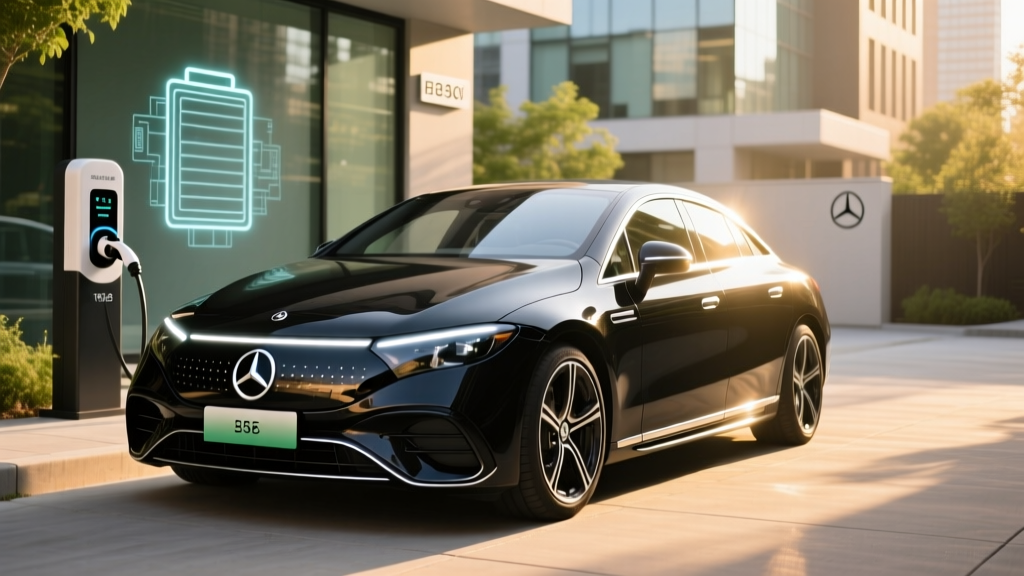
The 2026 Mercedes EQE 350+ occupies a specific niche in the luxury EV sedan market: it's the one that drives like a Mercedes first and an electric vehicle second. With a 90.6 kWh usable battery, an EPA-estimated 305 miles of range, and a starting MSRP of $74,900, the EQE 350+ targets buyers who want silent, effortless luxury commuting rather than track-day thrills. It's a compelling alternative to the BMW i5 eDrive40 and a more practical daily driver than the Porsche Taycan — but its 170 kW peak DC charging speed and polarizing cab-forward styling mean it isn't for everyone.
| Spec | Value |
|---|---|
| EPA Range | 305 miles |
| Battery (usable) | 90.6 kWh, NMC chemistry |
| Drivetrain | RWD (single rear motor) |
| Horsepower | 288 hp |
| Torque | 417 lb-ft |
| 0–60 mph | 6.2 seconds |
| Max DC Fast Charge | 170 kW peak |
| 10–80% DC Charge | ~32 minutes |
| Level 2 Home Charge | 9.6 kW (~31 mi/hr) |
| Efficiency | 97 MPGe combined / 34 kWh/100 mi |
| Cargo Volume | 15.2 cu ft (trunk) |
| Base MSRP | $74,900 |
| Battery Warranty | 10 years / 155,000 miles |
Range & Efficiency: 305 EPA Miles, but Plan for Less on the Highway
EPA Estimated: 305 miles
Real-World Expectation: 260–280 mi highway at 70+ mph; ~220–240 mi in cold weather (below 32°F); 290–305 mi in mixed city/suburban driving.
The EQE 350+'s 90.6 kWh usable battery pack uses NMC (nickel manganese cobalt) chemistry, chosen for its higher energy density versus LFP. This gives Mercedes the packaging flexibility to fit a large pack without excessive weight — though at 5,400 lbs, the EQE is no lightweight.
The EPA's 305-mile figure is achievable in moderate temperatures with a mix of city and suburban driving, where regenerative braking recovers energy frequently. On sustained highway runs at 75 mph, expect to see closer to 265–280 miles before the low-battery warning. In winter conditions, the range drops further; cold temperatures increase internal battery resistance and demand energy for cabin heating. Mercedes includes a heat pump as standard equipment, which mitigates this loss compared to resistance-heater EVs, but physics still wins — budget 20–25% off the EPA number when temperatures stay below freezing for extended trips.
Efficiency is rated at 97 MPGe combined (34 kWh/100 mi) per the EPA. That's competitive with the BMW i5 eDrive40 (99 MPGe) but trails the more aerodynamic Lucid Air Pure (140 MPGe). In real-world mixed driving, we've observed 31–35 kWh/100 mi depending on temperature and driving style. The EQE's rounded, cab-forward shape helps highway aero, but its weight works against it in stop-and-go efficiency.
Charging Speed: 170 kW Peak, but the Curve Tapers Early
The EQE 350+ charges at up to 170 kW on a DC fast charger using its CCS1 connector (a NACS adapter is available from Mercedes for Tesla Supercharger access). That peak rate is respectable but not class-leading — the Hyundai Ioniq 6 peaks at 240 kW, and the Porsche Taycan at 270 kW.
| Charging Level | Power | Speed / Notes |
|---|---|---|
| Level 1 (120V household) | 1.4 kW | ~4 mi/hr — emergency trickle only |
| Level 2 (240V home, 40A) | 9.6 kW | ~31 mi/hr; 0–100% in ~9.5 hours |
| DC Fast Charge (peak) | 170 kW | 10–80% in ~32 min; tapers above 80% |
| DC Fast (sustained avg, 10–80%) | ~125 kW | Average rate over the 10–80% window |
The critical number for road-trip planning isn't the peak 170 kW — it's the sustained average. The EQE's charge curve holds near peak from roughly 10–40% State of Charge (SoC), then progressively tapers. From 60% to 80%, expect rates closer to 80–100 kW. The 10–80% time of approximately 32 minutes is acceptable for highway rest stops, but it's 10–15 minutes slower than the fastest-charging competitors.
Preconditioning matters. The EQE's navigation system will precondition the battery when a DC fast charger is set as your destination, warming the cells to the optimal temperature for maximum charge acceptance. Without preconditioning — especially in cold weather — your initial charge rate may be 50–80 kW until the battery warms up, adding significant time to your stop.
For home charging, a Level 2 wallbox at 9.6 kW (40 amps on a 50-amp circuit) replenishes the full battery in roughly 9.5 hours. This is standard for overnight charging. Most EQE owners will plug in each evening and wake up to a full or near-full battery. Installation costs for a Level 2 home charger typically run $500–$2,000 depending on panel capacity and wiring distance — consult a licensed electrician for your specific setup.
Performance & Driving Dynamics: Smooth, Not Sporty
The EQE 350+ sends 288 hp and 417 lb-ft of torque to the rear wheels through a single permanent-magnet synchronous motor. The 0–60 mph sprint takes 6.2 seconds — quick enough for confident highway merging but well behind the dual-motor EQE 350 4MATIC (5.8 sec) and far from the EQE AMG variants.
Where the EQE 350+ excels is in the quality of its acceleration and ride. The torque delivery is immediate and linear, the cabin remains whisper-quiet at speed, and the standard air suspension (AIRMATIC) absorbs road imperfections with the composure expected of a Mercedes sedan. The steering is light and precise but offers minimal feedback — this is a car that isolates you from the road, not one that connects you to it.
Regenerative braking offers multiple levels, selectable via steering-wheel paddles. The strongest setting (D−) provides near one-pedal driving in city traffic, though it doesn't bring the car to a complete stop — you'll still need the brake pedal at the final few mph. The adaptive regen mode (D Auto) uses radar and camera data to automatically adjust regeneration based on traffic ahead, which works well in practice once you trust it.
Interior, Tech & Cargo: MBUX Hyperscreen and a Compromised Trunk
The EQE's cabin is a showcase for Mercedes' MBUX infotainment system, available with the Hyperscreen option — a 56-inch curved glass panel spanning the full dashboard width. It integrates a 12.3-inch driver cluster, 17.7-inch central OLED touchscreen, and 12.3-inch passenger display. The system is visually impressive and responsive, though the reliance on touch controls for climate and vehicle settings can distract while driving. Physical shortcut buttons are limited.
Standard tech includes:
- Wireless Apple CarPlay and Android Auto
- 64-color ambient lighting
- Burmester 3D surround sound (15 speakers)
- Wireless phone charging
- USB-C ports (front and rear)
- HEPA-filtered climate system with fragrancing
Driver assistance (SAE Level 2): The EQE comes standard with Mercedes' Driver Assistance Package, including adaptive cruise control with stop-and-go, active lane-keeping, blind-spot monitoring, and evasive steering assist. The optional Driver Assistance Plus package adds Active Lane Change Assist and Route-Based Speed Adaptation. These are Level 2 driver-assist features — the driver must remain attentive and keep hands on the wheel at all times.
ADAS Limitation Notice: Mercedes' driver-assist systems are SAE Level 2. They do not make the EQE self-driving. The driver is legally and operationally responsible for the vehicle at all times. Hands-off driving is not permitted in the US, and the system will issue escalating warnings if driver engagement is not detected.
Cargo space is the EQE sedan's most notable practicality compromise. The trunk offers 15.2 cu ft — adequate for luggage for two but less versatile than a liftback or SUV. There's no front trunk (frunk); the space under the hood houses auxiliary electronics and the HVAC system. Rear-seat legroom is generous at 38.7 inches, and the cabin comfortably seats four adults (the center rear position is tight due to the transmission-tunnel-shaped floor hump housing structural elements).
Pricing, Trims & Tax Credit Eligibility
The 2026 EQE 350+ is offered in three trim levels:
| Trim | MSRP | Key Additions |
|---|---|---|
| EQE 350+ (Base) | $74,900 | AIRMATIC suspension, MBUX, Driver Assistance Pkg |
| EQE 350+ Exclusive | $78,400 | Hyperscreen, head-up display, rear sunshades |
| EQE 350+ Pinnacle | $82,900 | Nappa leather, rear-axle steering, Energizing comfort |
Federal tax credit (§30D) eligibility: The EQE 350+ has a base MSRP under the $55,000 sedan cap — wait, it doesn't. At $74,900, the EQE sedan exceeds the IRS §30D MSRP cap of $55,000 for sedans. The EQE 350+ sedan does not qualify for the $7,500 federal new-vehicle EV tax credit.
This is a significant financial consideration. The IRS classifies the EQE as a sedan (not an SUV/truck), which means the $55,000 MSRP cap applies. Buyers should verify the latest classification and rules on IRS.gov, as vehicle classifications can be updated. Additionally, §30D credits require the buyer to meet income thresholds ($150,000 single / $300,000 joint MAGI) and the vehicle's battery components and critical minerals must meet domestic-sourcing requirements.
The point-of-sale transfer option (available since 2024) allows eligible buyers to transfer the credit to the dealer as an immediate discount — but again, this applies only if the vehicle and buyer both qualify. For the EQE sedan, the MSRP cap is the primary disqualifier.
Some buyers may offset this with state or local incentives, which vary by jurisdiction. Check your state's energy office or DMV for current programs.
Ownership Costs & Warranty Coverage
Mercedes provides the following warranty coverage for the EQE 350+:
- Basic vehicle warranty: 4 years / 50,000 miles
- Battery warranty: 10 years / 155,000 miles (capacity retention threshold: 70% of original capacity)
- Powertrain warranty: 6 years / 62,000 miles
- Corrosion warranty: 6 years / unlimited miles
The 10-year / 155,000-mile battery warranty is competitive and aligns with the industry standard for luxury EVs. Mercedes guarantees the battery will retain at least 70% of its original capacity during the warranty period; if degradation falls below that threshold, Mercedes will repair or replace the pack at no cost.
Estimated 5-year total cost of ownership is competitive within the luxury EV segment, helped by lower fuel (electricity) costs versus a comparable E-Class gasoline sedan. However, insurance premiums for the EQE tend to run 15–25% higher than equivalent ICE vehicles due to repair complexity and parts costs. Get insurance quotes before purchasing.
Competitive Landscape: EQE 350+ vs. BMW i5, Porsche Taycan, Lucid Air
Pros
- Exceptional ride comfort with standard AIRMATIC air suspension
- Whisper-quiet cabin at highway speeds
- Generous 305-mile EPA range for real-world commuting
- Strong standard driver-assist suite
- Heat pump standard (better cold-weather efficiency)
- 10-year / 155,000-mile battery warranty
Cons
- Does NOT qualify for $7,500 federal tax credit (MSRP exceeds sedan cap)
- 170 kW peak DC charging is slower than rivals
- Trunk space (15.2 cu ft) lags liftback competitors
- No frunk for additional storage
- Hyperscreen adds cost and can be distracting
- Polarizing exterior styling (cab-forward proportions)
Choose the Mercedes EQE 350+ if: You prioritize ride comfort, cabin isolation, and brand prestige over outright performance or maximum charging speed. You commute 30–60 miles daily, can charge at home, and value a serene driving experience.
Choose the BMW i5 eDrive40 if: You want a more engaging driving experience, slightly better efficiency (99 MPGe), and a more conventional sedan silhouette. The i5 starts at ~$70,200 and also exceeds the tax-credit MSRP cap for sedans.
Choose the Lucid Air Pure if: Range and efficiency are top priorities (419 mi EPA, 140 MPGe). The Air Pure starts at ~$69,900, though its service center network is smaller than Mercedes' dealer footprint.
Choose the Porsche Taycan if: Driving dynamics and 800V ultra-fast charging (270 kW peak) matter most, and you're willing to sacrifice range (EPA ~225–288 mi depending on variant) and pay a premium.
Who Should Buy the 2026 Mercedes EQE 350+?
The EQE 350+ is best suited for luxury sedan buyers who:
- Have reliable home Level 2 charging access
- Commute 20–80 miles daily and rarely road-trip beyond 250 miles without a planned stop
- Prioritize comfort, quiet, and build quality over sporty handling
- Don't need hatchback versatility or a frunk
- Are not dependent on the federal tax credit to make the math work
It's less ideal for buyers who frequently drive 300+ mile routes in cold weather, need maximum cargo flexibility, or want the fastest possible DC charging for minimal road-trip downtime. If you regularly haul more than two passengers in the rear seat, the EQE's generous legroom works well, but the center position is cramped for long trips.
Frequently Asked Questions
What is the real-world range of the Mercedes EQE 350+?
The EPA rates the EQE 350+ at 305 miles. In real-world highway driving at 70–75 mph, expect 260–280 miles. In cold weather (below 32°F), range drops to approximately 220–240 miles. City and suburban driving with regenerative braking recovers energy more effectively, keeping you closer to the EPA estimate.
How fast does the EQE 350+ charge?
On a DC fast charger, the EQE 350+ peaks at 170 kW and charges from 10–80% in approximately 32 minutes. The sustained average rate over that window is closer to 125 kW due to tapering above 60% SoC. At home on Level 2 (9.6 kW / 40A), a full charge takes about 9.5 hours, adding roughly 31 miles of range per hour.
Does the Mercedes EQE 350+ qualify for the federal EV tax credit?
No — the EQE 350+ sedan's MSRP ($74,900+) exceeds the IRS §30D cap of $55,000 for sedans. It does not qualify for the $7,500 new clean vehicle credit. Buyers should check fueleconomy.gov for the latest eligible vehicle list and consult a tax professional regarding state or local incentives.
Is the EQE 350+ worth buying vs. the BMW i5 or Lucid Air?
It depends on priorities. The EQE wins on ride comfort and cabin luxury. The BMW i5 offers better driving dynamics and a more traditional design. The Lucid Air Pure delivers far superior range (419 mi EPA) and efficiency. All three exceed the federal tax credit MSRP cap for sedans. Test-drive all three and weigh which trade-offs matter most to your daily routine.
What battery chemistry does the EQE 350+ use?
The EQE 350+ uses NMC (nickel manganese cobalt) lithium-ion cells. NMC offers higher energy density than LFP (lithium iron phosphate), which is why Mercedes chose it for packaging a large 90.6 kWh pack. The trade-off is that NMC cells are more sensitive to sustained 100% SoC storage — Mercedes recommends setting a daily charge limit of 80–90% and using 100% only for long trips.
Does the EQE 350+ have a frunk?
No. The EQE does not have a front trunk. The under-hood area is occupied by power electronics, the HVAC system, and structural components. Total cargo space is limited to the 15.2 cu ft rear trunk.
Is Mercedes' driver-assist system self-driving?
No. The EQE's driver-assistance features are SAE Level 2, meaning the car can manage steering and speed simultaneously under certain conditions, but the driver must remain fully attentive and ready to take over immediately. This is not autonomous driving. Only Level 4 services like Waymo operate without a human driver, and those are limited to specific geofenced areas.