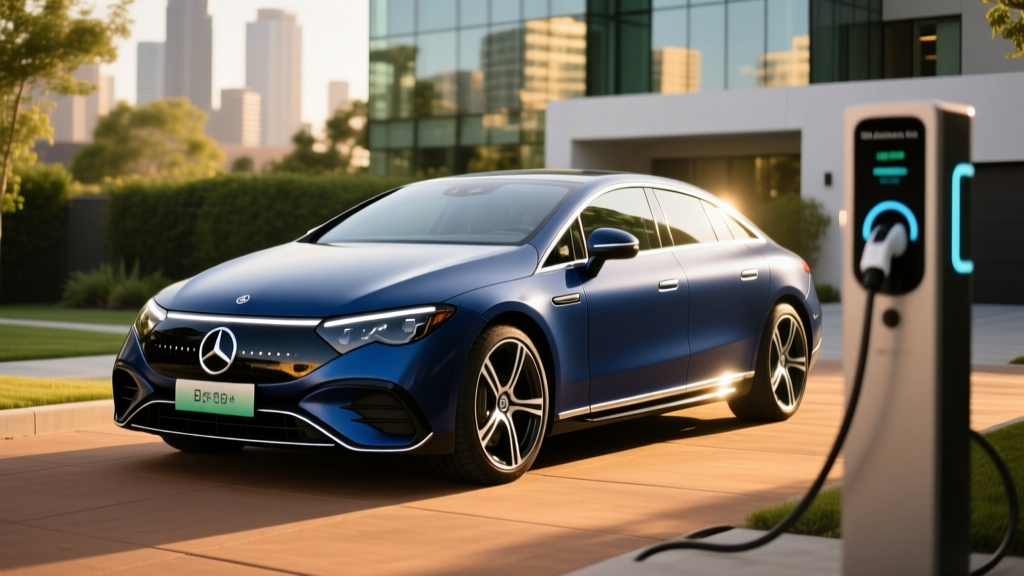
The Mercedes-Benz EQE 350+ occupies a specific niche in the luxury EV sedan market: it prioritizes ride comfort, cabin isolation, and highway cruising efficiency over outright performance or cutting-edge battery chemistry. For 2026, the EQE 350+ continues as the rear-wheel-drive entry point into the EQE lineup, pairing a 90.6 kWh NMC (nickel manganese cobalt) battery pack with a single rear-mounted motor. It is not the fastest sedan in its class, nor does it offer the longest range, but it delivers a compelling blend of Mercedes build quality, advanced driver assists, and genuine long-distance capability.
This review covers the 2026 EQE 350+ with exact EPA figures, real-world range expectations, charging-curve behavior, and a thorough look at whether it qualifies for the federal EV tax credit under current IRS §30D rules.
2026 EQE 350+ Quick Specs
| Specification | 2026 EQE 350+ Sedan |
|---|---|
| EPA Range | 305 miles |
| Battery (usable) | 90.6 kWh, NMC chemistry |
| Drivetrain | Rear-wheel drive (single motor) |
| Horsepower | 288 hp |
| Torque | 417 lb-ft |
| 0-60 mph | 6.2 seconds |
| MPGe (combined) | 94 MPGe |
| Efficiency | 36 kWh/100 mi |
| Max DC Fast Charge | 170 kW (CCS1) |
| 10-80% DC Charge Time | ~32 minutes |
| Level 2 Charge Rate | 9.6 kW (~28 mi/hr) |
| Cargo Volume | 15.0 cu ft (trunk) |
| Rear Legroom | 38.0 inches |
| Base MSRP | $76,050 (incl. destination) |
| Battery Warranty | 8 years / 100,000 miles |
Range and Efficiency: EPA vs. Real World
The EPA rates the 2026 EQE 350+ at 305 miles of combined range. That figure places it slightly behind the BMW i5 eDrive40 (295 miles with a smaller battery but lighter weight) and well behind the Lucid Air Pure (419 miles), though the Lucid commands a significantly higher starting price.
- Mixed city/highway (mild weather): ~280-295 miles
- Sustained highway (70-75 mph): ~250-270 miles
- Cold weather (below 32°F, highway): ~210-235 miles (25-30% reduction)
- Optimal city driving (regenerative braking, 45-55°F): ~300-310 miles
The EQE 350+ benefits from a standard heat pump, which helps mitigate winter range loss compared to EVs without one. However, its 4,900-lb curb weight and relatively high 36 kWh/100 mi consumption mean highway efficiency suffers more than lighter competitors.
Efficiency is the EQE 350+'s weak point relative to its battery size. At 94 MPGe combined (per EPA data on fueleconomy.gov), it consumes more energy per mile than a Tesla Model S (124 MPGe) or even the larger EQS 450+. The 90.6 kWh battery is generous, but the EQE's aerodynamic drag and weight blunt its advantage.
Charging Speed and Infrastructure
The EQE 350+ uses a CCS1 connector for DC fast charging and a J1772 inlet for Level 1/Level 2 AC charging. It does not natively support NACS (Tesla's connector), though Mercedes-Benz has confirmed NACS adoption for future model years. For 2026, a CCS-to-NACS adapter is included for access to Tesla Supercharger V3 stalls (limited to the stall's adapter-compatible output, typically ~150 kW).
| Charging Level | Power (kW) | Speed (miles/hr) | Notes |
|---|---|---|---|
| Level 1 (120V, 12A) | 1.4 kW | ~4 mi/hr | Emergency/trickle only |
| Level 2 (240V, 40A) | 9.6 kW | ~28 mi/hr | Full charge in ~10 hours |
| DC Fast (peak) | 170 kW | ~490 mi/hr (peak) | 10-80% in ~32 min |
| DC Fast (sustained avg.) | ~110 kW | ~315 mi/hr (avg.) | Real-world average across session |
The 170 kW peak DC charge rate is modest by 2026 standards. Competitors like the Hyundai Ioniq 6 (peak 240 kW on 800V architecture) and the Porsche Taycan (peak 270 kW) charge significantly faster. The EQE's charge curve is relatively flat — it holds near 170 kW only between roughly 10-40% state of charge, then tapers progressively. Expect a 10-80% session to take approximately 32 minutes at a capable 350 kW Electrify America or EVgo station, but plan for 35-40 minutes at older 150 kW hardware.
Level 2 home charging at 9.6 kW is competitive. A full 0-100% charge takes roughly 10 hours, which is practical for overnight replenishment on a hardwired 48-amp Level 2 home charger. Mercedes includes a portable dual-voltage charge cord, but most owners will want a dedicated wallbox.
Performance, Ride, and Drivetrain
The single rear-mounted motor produces 288 horsepower and 417 lb-ft of torque. The 0-60 mph sprint takes 6.2 seconds — adequate for merging and passing, but decidedly relaxed for a $76,000 luxury sedan. The BMW i5 eDrive40 (335 hp, 5.7 seconds to 60) and Tesla Model S Dual Motor (670 hp, 3.1 seconds) both outperform it substantially.
Where the EQE 350+ shines is ride quality. Standard AIRMATIC air suspension delivers a compliant, isolated ride that absorbs highway imperfections with minimal cabin disturbance. The steering is light and precise, though feedback is minimal. This is a grand-touring sedan, not a sports sedan, and buyers who prioritize comfort over engagement will find it rewarding.
The standard regenerative braking system offers three modes (D+, D, D-) via steering-wheel paddles, plus an intelligent D Auto mode that adjusts regen based on navigation data, traffic, and speed limits. It does not offer true one-pedal driving to a complete stop, which frustrates some EV veterans accustomed to the Chevrolet Bolt or Nissan LEAF approach.
Interior, Tech, and Cargo
The EQE cabin is built around the MBUX Hyperscreen (optional on 350+, standard on higher trims), a sweeping 56-inch curved glass panel spanning the dashboard. It houses a 12.3-inch instrument cluster, a 17.7-inch central touchscreen, and a 12.3-inch passenger display. The standard setup uses a 12.8-inch central touchscreen, which is still generous and responsive.
Notable tech features include:
- MBUX with "Hey Mercedes" voice control — natural-language processing for climate, navigation, and media
- Augmented-reality navigation — overlays directional arrows on a live camera feed
- Burmester 3D surround sound — 15 speakers, Dolby Atmos capable
- Active Ambient Lighting — 64 colors, integrated with driver-assist warnings
- Wireless Apple CarPlay and Android Auto
- HEPA-filtered climate system with fragrancing (Energizing Comfort)
Cargo capacity is 15.0 cubic feet in a conventional trunk (not a hatchback or liftback). This is smaller than the Tesla Model S (28 cu ft with its hatchback design) and the BMW i5 (17.4 cu ft). The EQE also lacks a front trunk (frunk), which is a missed opportunity for additional storage. Rear-seat legroom at 38.0 inches is generous and competitive with the segment.
Driver Assistance: SAE Level 2 (Not Self-Driving)
The EQE 350+'s Driver Assistance Package (standard) provides adaptive cruise control, lane-centering, automatic lane changes (with confirmation), and evasive steering assist. This is SAE Level 2 — the driver must remain fully engaged, hands on or near the wheel, and eyes on the road at all times. Mercedes-Benz's Active Distance Assist DISTRONIC and Active Steering Assist are excellent systems, but they are not autonomous. Mercedes does not currently offer a Level 3 or Level 4 consumer system in the U.S. market.
- Navigate city streets without driver input
- Handle construction zones or faded lane markings reliably
- Operate without driver supervision (hands-off is not permitted)
- Function as a robotaxi or Level 4 autonomous system
Pricing, Trims, and Federal Tax Credit Eligibility
The 2026 EQE 350+ Sedan starts at $76,050 (including $1,150 destination). Key trim configurations:
| Configuration | MSRP | Federal Tax Credit | Effective Price |
|---|---|---|---|
| EQE 350+ (base) | $76,050 | See eligibility below | $76,050 (if ineligible) |
| EQE 350+ w/ Premium Pkg | $80,550 | See eligibility below | $80,550 (if ineligible) |
| EQE 350+ w/ Hyperscreen + Pinnacle | $87,400 | See eligibility below | $87,400 (if ineligible) |
Federal Tax Credit (§30D) — Critical Caveats: Under current IRS §30D rules, the EQE 350+ faces significant eligibility hurdles:
- MSRP cap: Sedans must be under $55,000 MSRP. The EQE 350+ at $76,050 exceeds this cap — it does NOT qualify for the new-vehicle §30D credit.
- Buyer income cap: Even if MSRP-eligible, AGI limits apply ($150K single / $300K joint) — moot here due to MSRP.
- Battery sourcing: Critical minerals and battery component requirements phase in annually — also moot due to MSRP disqualification.
- Lease loophole (§45W): If you lease the EQE 350+ through Mercedes-Benz Financial, the lessor may receive a $7,500 commercial clean vehicle credit and pass some or all of the savings to you as a capitalized-cost reduction. This is the primary way to access federal incentives on this vehicle. Confirm lease incentive amounts with your dealer.
Bottom line: If you purchase the EQE 350+, expect to pay full MSRP (minus any state/local incentives and dealer discounts). Leasing is the pathway to federal incentive savings.
Ownership Costs and Warranty
Mercedes-Benz provides a standard new-vehicle warranty of 4 years / 50,000 miles. The high-voltage battery and electric powertrain are covered for 8 years / 100,000 miles, with a capacity-retention threshold of 70% (if the battery degrades below 70% of original capacity within the warranty period, Mercedes will repair or replace it).
| Cost Category | EQE 350+ (5-Year Estimate) |
|---|---|
| Purchase price (base) | $76,050 |
| Electricity (15,000 mi/yr, $0.16/kWh avg.) | ~$4,320 |
| Insurance (avg.) | ~$14,500 |
| Maintenance (scheduled) | ~$1,800 |
| Estimated depreciation (5 yr) | ~$34,000 |
| Total 5-Year Cost (est.) | ~$130,670 |
Depreciation is the largest ownership cost. Luxury EV sedans have experienced steep depreciation curves in the 2024-2026 period, and the EQE is no exception. Buyers who plan to keep the vehicle 7+ years will fare better. Insurance premiums are above average for the segment — expect $250-$320/month depending on profile and state.
Pros and Cons
- Exceptional ride comfort with standard AIRMATIC air suspension
- Whisper-quiet cabin at highway speeds — best-in-class NVH
- Strong standard driver-assist suite (adaptive cruise, lane center, evasive steering)
- Heat pump standard — reduces cold-weather range penalty
- Generous 90.6 kWh battery provides genuine 250+ mi highway range
- MBUX infotainment is responsive, feature-rich, and well-integrated
- Exceeds $55K MSRP cap — ineligible for §30D purchase credit
- 170 kW peak DC charging is slow for the 2026 luxury segment
- Trunk-only cargo (15 cu ft) with no frunk — less practical than hatchback rivals
- Heavy at ~4,900 lbs — efficiency suffers vs. lighter competitors
- 6.2-sec 0-60 is leisurely for the price point
- No true one-pedal driving to a full stop
- Hyperscreen is an expensive option, not standard on base trim
Who Should Buy the EQE 350+?
- You prioritize ride comfort and cabin quietness over performance
- Your typical commute is 40-80 miles round-trip with occasional 200+ mile road trips
- You have access to home Level 2 charging and don't rely exclusively on DC fast charging
- You value Mercedes-Benz build quality, dealer network, and brand prestige
- You plan to lease (accessing §45W incentive) rather than purchase outright
- You need maximum range (consider Lucid Air Pure or Tesla Model S)
- Fast DC charging is critical for your road-trip habits (consider Hyundai Ioniq 6 or Porsche Taycan)
- You need hatchback cargo versatility (consider Tesla Model S or BMW i5)
- You want to purchase and claim the §30D credit — the EQE's MSRP disqualifies it
Frequently Asked Questions
What is the real-world range of the 2026 EQE 350+?
In mixed driving at moderate temperatures, expect 280-295 miles. Sustained highway driving at 70-75 mph reduces this to approximately 250-270 miles. In cold weather (below freezing), plan for 210-235 miles. The standard heat pump helps, but the EQE's weight and consumption work against it.
How fast does the EQE 350+ charge?
DC fast charging peaks at 170 kW, delivering a 10-80% charge in approximately 32 minutes at a capable station. The sustained average across a session is closer to 110 kW due to charge-curve taper above 50% SoC. Home Level 2 charging at 9.6 kW adds roughly 28 miles per hour, or a full charge in about 10 hours.
Does the EQE 350+ qualify for the federal EV tax credit?
No — not for purchase. The §30D new-vehicle credit has a $55,000 MSRP cap for sedans, and the EQE 350+ starts at $76,050. However, leasing may allow access to the §45W commercial credit, which the leasing company can pass through as a cap-cost reduction. Confirm current lease incentives with your dealer. State and local incentives may also apply — check AFDC's state incentive database for your area.
Is the EQE 350+ worth buying vs. the BMW i5 or Tesla Model S?
It depends on priorities. The BMW i5 eDrive40 offers better efficiency, slightly quicker acceleration, a hatchback trunk, and a lower starting price (~$67K). The Tesla Model S delivers far superior range (402 mi), faster charging, and more cargo space — but its interior quality and ride comfort don't match the Mercedes. The EQE 350+ wins on cabin isolation, ride quality, and brand cachet. It loses on charging speed, cargo practicality, and value.
What is the battery warranty on the EQE 350+?
Mercedes-Benz covers the high-voltage battery and electric powertrain for 8 years or 100,000 miles, whichever comes first. The capacity-retention guarantee is 70% — if the battery falls below 70% of its original 90.6 kWh usable capacity during the warranty period, Mercedes will repair or replace it at no cost.
Does the EQE 350+ have a frunk (front trunk)?
No. The EQE 350+ does not have a front trunk. All cargo space is in the rear trunk, which offers 15.0 cubic feet. This is a notable omission for a dedicated EV platform and reduces overall cargo versatility compared to rivals like the Tesla Model S.
Is the EQE 350+ self-driving?
No. The EQE 350+ features SAE Level 2 driver assistance, which includes adaptive cruise control and lane-centering. The driver must remain fully engaged at all times. It cannot navigate autonomously, handle complex intersections, or operate without human supervision.
Sources: EPA fuel economy data via fueleconomy.gov; Mercedes-Benz USA EQE specification pages; IRS §30D guidance via irs.gov.