Quick Verdict: Luxury EV Sedan With a Range Caveat
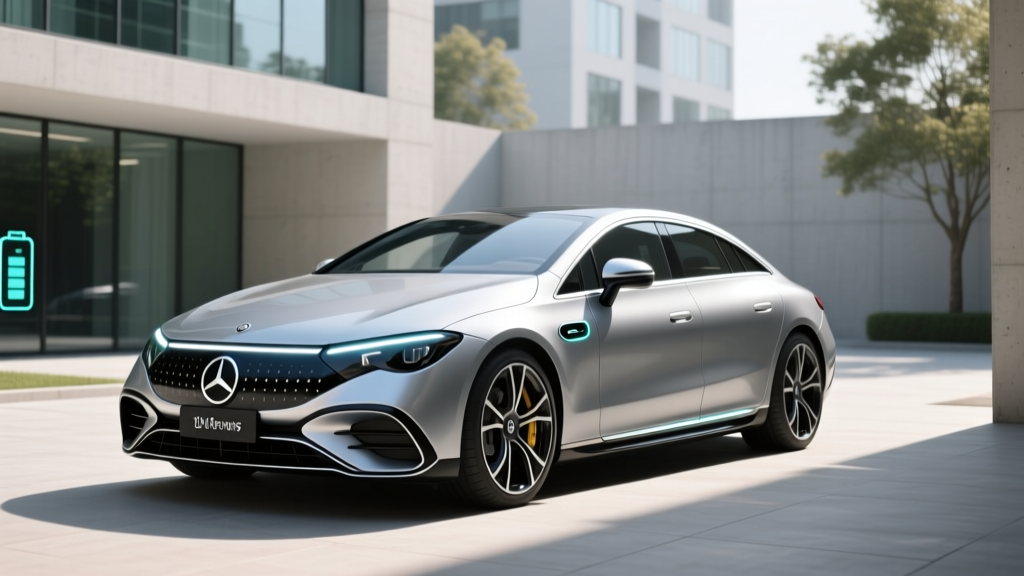
The Mercedes-Benz EQE 350 4MATIC occupies a specific niche: a midsize luxury electric sedan that prioritizes cabin refinement, ride quality, and technology over maximum range. With an EPA-estimated 220 miles and dual-motor all-wheel drive, it serves the luxury commuter who values isolation and build quality above road-trip endurance. But at a starting MSRP near $78,000 and limited federal tax credit eligibility, buyers need to weigh whether Mercedes' engineering polish justifies the efficiency trade-off versus rivals like the BMW i5 xDrive40 or Tesla Model S.
Spec Sheet: EQE 350 4MATIC at a Glance
| Specification | Value |
|---|---|
| EPA Range | 220 miles |
| Battery (usable) | 90.6 kWh, NMC (nickel manganese cobalt) |
| Drivetrain | Dual-motor AWD (4MATIC) |
| Horsepower | 288 hp |
| 0–60 mph | 5.8 seconds |
| Max DC Fast Charge | 170 kW (CCS) |
| 10–80% DC Time | ~32 minutes |
| Level 2 Home Charging | 9.6 kW (~26 mi/hr) |
| MPGe (combined) | 91 MPGe |
| Efficiency | 37 kWh/100 mi |
| Cargo Volume | 15.0 cu ft (trunk) |
| Rear Legroom | 37.0 inches |
| Battery Warranty | 10 years / 155,000 miles (70% capacity retention) |
| Base MSRP (2025) | $77,900 |
Sources: EPA Fuel Economy, Mercedes-Benz USA spec sheets.
Battery, Range, and Efficiency: What the Numbers Mean
The EQE 350 4MATIC uses a 90.6 kWh (usable) NMC lithium-ion battery pack. NMC chemistry offers higher energy density than LFP (lithium iron phosphate), which is why Mercedes fits this capacity into a sedan footprint. However, NMC cells typically degrade slightly faster over time and are more sensitive to sustained high states of charge — Mercedes recommends daily charging to 80% unless you need full range for a trip.
At 37 kWh per 100 miles (91 MPGe combined), the EQE is less efficient than the BMW i5 xDrive40 (33 kWh/100 mi) and significantly thirstier than the Tesla Model S Dual Motor (28 kWh/100 mi). The penalty is weight: the EQE 350 4MATIC tips the scales at roughly 5,300 pounds, and its aerodynamic profile, while sleek, can't fully offset the mass in highway driving.
For context, a 220-mile EPA range covers most daily commutes comfortably. But if your routine includes 150-mile round trips in winter or frequent 300-mile road trips, you'll be relying on DC fast charging more often than owners of 300+ mile EVs. That's the core trade-off here.
Charging Speed: Home and Public Networks
| Charging Method | Power | Speed | Notes |
|---|---|---|---|
| Level 1 (120V outlet) | 1.4 kW | ~4 mi/hr | Emergency/top-up only |
| Level 2 (240V home) | 9.6 kW | ~26 mi/hr | Full charge in ~9.5 hrs |
| DC Fast (CCS) | 170 kW peak | 10–80% in ~32 min | Tapers above 80% |
At home on a Level 2 wallbox (9.6 kW), the EQE adds roughly 26 miles of range per hour. A full 10–100% charge takes about 9.5 hours — plan on overnight charging. Most owners will set a charge limit to 80% for daily use, which cuts that to roughly 7.5 hours and preserves long-term battery health.
On DC fast chargers, the EQE 350 4MATIC peaks at 170 kW via its CCS connector. That's competitive for 2025 but trails the 200+ kW capabilities of the Hyundai Ioniq 6 or Tesla Model S (which uses NACS). The charge curve holds near peak power from roughly 10–40% state of charge, then tapers progressively. Expect 10–80% in about 32 minutes under ideal conditions (preconditioned battery, warm weather, 350 kW-capable station). Above 80%, charging slows dramatically — plan extra time if you need a full charge on a road trip.
Preconditioning matters: The EQE's navigation system can warm the battery en route to a charger, but only if you've entered the charging station as your destination. Arriving with a cold battery can add 10–15 minutes to your charge session.
Performance and Driving Dynamics
The dual-motor 4MATIC powertrain delivers 288 horsepower and 564 lb-ft of torque. The 0–60 mph time of 5.8 seconds is respectable but not thrilling — the Tesla Model S Dual Motor hits 60 in 3.1 seconds for similar money. Where the EQE differentiates is ride quality. The standard steel suspension (air suspension is optional) is tuned for comfort over sportiness, absorbing highway imperfections with the isolation expected of a Mercedes sedan.
Regenerative braking offers three levels via steering-wheel paddles, from aggressive one-pedal driving to coasting mode. The system is smooth, but unlike some competitors, it doesn't offer an adaptive mode that automatically adjusts regen based on traffic ahead — you select your preference manually.
Pricing, Trims, and Federal Tax Credit Eligibility
| Trim | MSRP | Federal Credit Eligible? |
|---|---|---|
| EQE 350 4MATIC (base) | $77,900 | No — exceeds $55,000 sedan cap |
| EQE 350 4MATIC Premium | $81,050 | No |
| EQE 350 4MATIC Exclusive | $85,600 | No |
Federal tax credit reality: The EQE 350 4MATIC does not qualify for the $7,500 IRS §30D federal EV tax credit. Under current rules, sedans must have an MSRP below $55,000 to be eligible. The EQE's base price of $77,900 places it well above that threshold. Additionally, buyer income caps apply ($150,000 single / $300,000 joint for new EVs), and battery sourcing/critical mineral requirements must be met. Since the EQE fails the MSRP cap, income and sourcing are moot — no trim qualifies.
Some buyers may find relief through state or local incentives, which vary by jurisdiction. Check your state's energy office or utility provider for rebates. Additionally, the used EV tax credit (up to $4,000) may apply if you purchase a pre-owned EQE from a dealer, subject to a $25,000 sale price cap and lower income limits ($75,000 single / $150,000 joint). Given the EQE's depreciation, a 2–3 year old example may fall within that price range by 2026–2027.
Source: IRS §30D New Clean Vehicle Credit.
Interior, Cargo, and Technology
The EQE's cabin is a showcase of Mercedes' MBUX infotainment system, centered on a 12.8-inch OLED touchscreen. The available Hyperscreen option (a 56-inch curved glass panel spanning the dash) adds a passenger display and elevates the visual experience, though it's a $8,000+ option that some buyers find distracting. Wireless Apple CarPlay and Android Auto are standard, as is a Burmester audio system.
Cargo space is limited to 15.0 cubic feet in the trunk — less than the Tesla Model S (28 cu ft with rear hatch) and even some compact sedans. The EQE lacks a front trunk (frunk), which is a missed opportunity for small-item storage. Rear legroom is generous at 37.0 inches, comfortably fitting adults on longer trips.
Driver assistance: The EQE comes standard with Active Brake Assist, Active Lane Keeping Assist, and Active Blind Spot Assist. The optional Driver Assistance Package adds Active Distance Assist DISTRONIC (adaptive cruise) and Active Steering Assist. This is SAE Level 2 automation — the driver must remain engaged and hands on the wheel. It's competent for highway cruising but not a substitute for attention.
Pros and Cons
- Exceptional ride quality and cabin isolation
- Generous 10-year / 155,000-mile battery warranty
- MBUX infotainment is responsive and feature-rich
- Standard AWD provides all-weather confidence
- Strong regenerative braking with one-pedal capability
- 220-mile EPA range trails competitors
- No federal tax credit due to MSRP cap
- 170 kW DC charging is slower than 200+ kW rivals
- 15.0 cu ft cargo space is tight for the class
- 5,300-lb weight impacts efficiency (37 kWh/100 mi)
- Hyperscreen option is expensive and polarizing
Who Should Buy the EQE 350 4MATIC?
This EV suits the luxury commuter who drives 50–100 miles daily, has reliable home Level 2 charging, and prioritizes cabin refinement over maximum range. It's a strong choice if you value Mercedes' build quality, want AWD for snow or rain, and rarely take road trips exceeding 150 miles one-way.
It's a weaker fit if you frequently drive 300+ miles between charges, need maximum cargo space, or want to leverage the federal tax credit. In those cases, the Tesla Model S (405-mile range, hatchback utility), BMW i5 xDrive40 (295-mile range, better efficiency), or Lucid Air Pure (419-mile range, though pricier) may serve you better.
FAQ: Common EQE 350 4MATIC Questions
What is the real-world range of the EQE 350 4MATIC?
Expect 190–210 miles in mild weather, 175–190 miles at highway speeds (75+ mph), and 150–175 miles in freezing temperatures. The EPA's 220-mile estimate assumes mixed driving in moderate conditions.
How fast does it charge at home and on public networks?
At home on Level 2 (9.6 kW), it adds ~26 miles per hour, with a full 10–100% charge in ~9.5 hours. On DC fast chargers, it peaks at 170 kW, achieving 10–80% in roughly 32 minutes under ideal conditions.
Does the EQE 350 4MATIC qualify for the federal EV tax credit?
No. The $7,500 IRS §30D credit requires sedans to have an MSRP below $55,000. The EQE's $77,900 base price exceeds this cap, making all trims ineligible regardless of buyer income or battery sourcing.
Is it worth buying vs. the BMW i5 or Tesla Model S?
If ride comfort and cabin luxury are your top priorities, the EQE delivers. But the BMW i5 xDrive40 offers 295 miles of range and better efficiency for less money, while the Tesla Model S provides 405 miles, faster charging, and hatchback utility. Test-drive all three to weigh comfort vs. practicality.
What's the battery warranty coverage?
Mercedes covers the EQE's battery for 10 years or 155,000 miles, whichever comes first, with a 70% capacity retention guarantee. If the battery degrades below 70% of original capacity within that period, Mercedes will repair or replace it.
Can I tow with the EQE 350 4MATIC?
The EQE is not rated for towing. If you need towing capability, consider the Mercedes EQS SUV, Rivian R1S, or Tesla Model X.