Quick Verdict: The Mercedes EQC in 2026
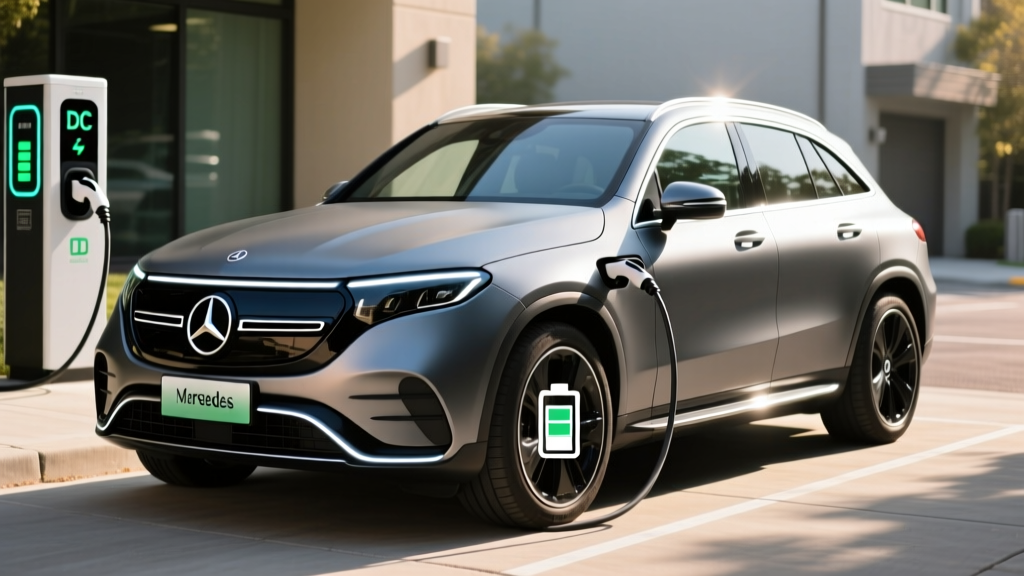
The Mercedes EQC occupies an unusual space in the luxury EV market. Originally launched as Mercedes-Benz's first dedicated electric SUV, the EQC was never officially sold in the United States — a fact that still surprises many shoppers searching for it today. For 2026, Mercedes has shifted its electric SUV strategy toward the EQB (compact), EQE SUV (midsize), and EQS SUV (full-size), leaving the EQC effectively discontinued for the US market. However, the EQC remains available in European and select international markets, and it continues to appear in cross-shopping research, gray-market imports, and used-EV discussions.
This review covers the EQC's final production specifications, real-world ownership data gathered from European fleets and owners, and how it stacks up against the Mercedes models that replaced it in the American lineup. If you're considering a used EQC import, evaluating it against a new EQB or EQE SUV, or simply researching Mercedes' EV evolution, this profile gives you the exact numbers you need.
Mercedes EQC — Key Specifications
| Spec | Value |
|---|---|
| EPA-Est. Range (WLTP adj.) | ~220 mi (WLTP: 417 km / 259 mi) |
| Battery Capacity | 80 kWh usable (NMC lithium-ion) |
| Drivetrain | Dual-motor AWD (4MATIC) |
| Horsepower | 402 hp (300 kW) |
| 0–60 mph | 4.8 seconds |
| Max DC Fast Charge | 110 kW (CCS2) |
| 10–80% DC Charge Time | ~40 minutes |
| Level 2 AC Charge Rate | 11 kW onboard charger |
| Efficiency | ~2.2 kWh/mi (WLTP: 19.7 kWh/100 km) |
| Cargo Volume | 17.7 cu ft (rear seats up) / 51.5 cu ft (folded) |
| Curb Weight | ~5,350 lbs (2,425 kg) |
| Battery Warranty | 8 years / 100,000 mi (70% capacity retention) |
Range and Efficiency: EPA vs. Real World
The EQC was never EPA-rated for the US market, so we rely on its WLTP rating of 417 km (approximately 259 miles) and cross-reference with European real-world testing and EV Database independent estimates. The realistic mixed-driving range lands around 220 miles in moderate temperatures, dropping to approximately 175–190 miles in sustained highway driving at 70+ mph or in cold weather below 32°F.
Real-World Range Expectations
WLTP Rated: 259 mi (417 km)
Real-World Mixed: ~220 mi (moderate temps, city/highway blend)
Highway (70 mph sustained): ~185–195 mi
Cold Weather (below 32°F): ~170–185 mi
Best-Case City (mild weather, regen-heavy): ~240 mi
The EQC's efficiency of roughly 2.2 kWh per mile (or 45 MPGe equivalent) is uncompetitive by 2026 standards. Vehicles like the BMW iX xDrive50 achieve around 2.0 kWh/mi with a larger battery and more range, while the Tesla Model Y Long Range delivers over 300 miles on a smaller, lighter package. The EQC's heavy curb weight — over 5,300 lbs — and its adapted-ICE platform (shared with the GLC) contribute to this efficiency penalty.
Charging Speed and Infrastructure
The EQC's 110 kW peak DC fast-charging rate was respectable at its 2019 launch but falls well behind 2026 competitors. Most current luxury EVs charge at 150–350 kW, with 10–80% times between 15 and 25 minutes.
Mercedes EQC Charging Specifications
| Charge Level | Power | Connector | Speed / Time |
|---|---|---|---|
| Level 1 (120V) | ~1.4 kW | Type 2 / J1772 adapter | ~4 mi/hr |
| Level 2 (240V) | 11 kW | Type 2 (CCS2 in Europe) | ~30 mi/hr; 0–100% in ~7.5 hrs |
| DC Fast Charge | 110 kW peak | CCS2 (CCS1 adapter needed for US) | 10–80% in ~40 min; ~90 mi in 20 min |
The EQC's charge curve is relatively flat between 10% and 50% State of Charge (SoC), holding near its 110 kW peak. Above 60% SoC, the curve tapers progressively — dropping to roughly 70 kW by 70% and below 40 kW past 85%. This taper is typical of NMC chemistry with conservative thermal management, but it means the last 20% of charging takes disproportionately long.
For home charging, the 11 kW onboard charger is a bright spot. On a 48-amp Level 2 home station (such as a ChargePoint Home Flex or Wallbox Pulsar Plus wired to a 60-amp circuit), you'll recover a full battery overnight in about 7.5 hours. Note that European-spec EQCs use Type 2 / CCS2 connectors; any US-based owner would need a CCS2-to-CCS1 adapter for DC fast charging on American networks like Electrify America or EVgo.
Performance and Driving Dynamics
The EQC 400 4MATIC pairs two asynchronous electric motors for a combined 402 hp and 564 lb-ft of torque. The 0–60 mph sprint completes in 4.8 seconds — quick for a family SUV but no longer class-leading. The front motor handles low-load cruising for efficiency, while the rear motor engages under hard acceleration or when AWD traction is needed.
Driving dynamics reflect the EQC's GLC roots. The ride is comfortable and well-damped, with Mercedes' signature isolation from road imperfections. However, the heavy battery pack mounted low gives a planted feel without the agility of purpose-built EV platforms. Body roll is noticeable in corners, and the steering is numb by sporty-SUV standards. This is a cruiser, not a canyon carver — and that's perfectly aligned with its target buyer.
Regenerative braking offers three levels selectable via steering-wheel paddles: D+ (coast), D (mild regen), D- (moderate regen), and D Auto (adaptive, using radar and navigation data to modulate regen). The D Auto mode is well-implemented, approaching one-pedal driving in stop-and-go traffic, though it doesn't quite bring the car to a full stop like Tesla or Hyundai's one-pedal systems.
Interior, Tech, and Cargo
The EQC's interior is unmistakably Mercedes — dual 10.25-inch displays (instrument cluster and infotainment) housed under a single glass panel, turbine-style air vents, and available MBUX (Mercedes-Benz User Experience) with natural-language voice control ("Hey Mercedes"). The MBUX system in the EQC includes EV-specific features like route planning with charging stops, battery preconditioning for DC fast charging, and energy-flow visualization.
Driver assistance includes Active Distance Assist DISTRONIC (adaptive cruise), Active Steering Assist (lane centering), Active Brake Assist, and Active Blind Spot Assist. These systems collectively constitute an SAE Level 2 driver-assist suite — the driver must remain engaged with hands on the wheel and eyes on the road at all times. This is not autonomous driving.
⚠️ Driver-Assist Limitation
The EQC's Active Steering Assist and DISTRONIC are SAE Level 2 systems. They do NOT drive the car autonomously. The driver must supervise at all times, maintain hands on the steering wheel, and be prepared to take over immediately. Hands-off detection uses torque sensing, not capacitive — meaning you need to apply slight steering input periodically.
Cargo space measures 17.7 cubic feet behind the rear seats and 51.5 cubic feet with the 40/20/40 split rear seats folded. There is no front trunk (frunk) — the space under the hood houses the front motor and power electronics. Rear-seat legroom is 38.2 inches, adequate for adults but tighter than the EQE SUV's 40.5 inches.
Pricing, Tax Credits, and Ownership Cost
Because the EQC was never officially imported to the United States, there is no US MSRP. In European markets, the EQC launched at approximately €71,000 (~$78,000 at 2026 exchange rates) and reached end-of-production pricing around €73,000–€76,000 depending on options.
EQC Pricing Context (2026)
| Market / Scenario | Approximate Price |
|---|---|
| European MSRP (final production) | €73,000–€76,000 (~$80,000–$83,000) |
| Used EQC (Europe, 2020–2023 models) | €32,000–€48,000 (~$35,000–$52,000) |
| US Federal Tax Credit (§30D) — New | Not eligible (not sold in US; MSRP exceeds SUV cap) |
| US Federal Tax Credit (§30D) — Used | Potentially up to $4,000 under §25E if imported and meeting requirements |
Federal tax credit reality: The EQC does not qualify for the new-vehicle IRS §30D credit because it was never sold through US dealerships. Even hypothetically, its price would exceed the $80,000 MSRP cap for SUVs, and its battery sourcing (LG Energy Solution cells manufactured in South Korea/Poland) would face critical-mineral and battery-component phase-in requirements under current rules. A used EQC imported to the US might qualify for the §25E used-EV credit (up to $4,000 or 30% of sale price, whichever is less) if the buyer meets income caps ($75,000 single / $150,000 joint) and the vehicle sale price is under $25,000 — a threshold many used EQCs exceed. Consult a tax professional for your specific situation.
How the EQC Compares to 2026 Alternatives
For US buyers who were drawn to the EQC's concept — a compact luxury electric SUV from Mercedes — the brand now offers several alternatives that surpass the EQC in nearly every metric:
| Model | EPA Range | Battery | DC Charge (10–80%) | Base MSRP (2026) |
|---|---|---|---|---|
| Mercedes EQB 350 4MATIC | 205 mi | 66.5 kWh NMC | ~30 min (100 kW) | ~$54,000 |
| Mercedes EQE 350+ SUV | 305 mi | 90.6 kWh NMC | ~32 min (170 kW) | ~$75,000 |
| BMW iX xDrive50 | 324 mi | 111.5 kWh NMC | ~31 min (200 kW) | ~$87,000 |
| Tesla Model Y Long Range | 310 mi | ~75 kWh NMC | ~25 min (250 kW) | ~$48,000 |
| Genesis GV60 Performance | 248 mi | 77.4 kWh NMC | ~18 min (350 kW) | ~$62,000 |
The EQE 350+ SUV is the spiritual successor to the EQC in the Mercedes US lineup, offering 305 miles of range, faster charging, and a purpose-built EVA2 platform — though at a significantly higher price. The EQB is closer in size and price but sacrifices range. Against non-Mercedes competitors, the EQC's 220-mile real-world range and 110 kW charging are decisively outclassed.
✅ Pros
- Refined, quiet ride quality typical of Mercedes
- High-quality interior materials and MBUX integration
- Strong 402 hp dual-motor AWD performance
- Adaptive regen (D Auto) works well in traffic
- Competitive used-EV pricing in European markets
❌ Cons
- Never officially sold in the US — no dealer support or warranty service
- 220-mile real-world range is below 2026 class average
- 110 kW DC charging is slow vs. 200–350 kW competitors
- Heavy, adapted-ICE platform hurts efficiency (2.2 kWh/mi)
- No frunk; cargo space is modest (17.7 cu ft)
- CCS2 connector requires adapter for US DC fast-charging networks
Who Should Consider the EQC?
Decision Framework
Consider the EQC if: You're based in Europe or a market where it's still sold/supported, you want a luxury-branded compact EV SUV at a used-car discount, your daily commute is under 100 miles round-trip, and you have reliable home Level 2 charging.
Look elsewhere if: You're a US buyer (no dealer network, no warranty support, CCS2 connector issues), you regularly drive more than 180 miles between charges, you need fast DC charging for road trips, or you want eligibility for the full $7,500 federal tax credit on a new vehicle.
Battery Longevity and Warranty
The EQC uses an 80 kWh (usable) NMC (nickel-manganese-cobalt) lithium-ion battery pack manufactured by LG Energy Solution. NMC chemistry offers high energy density but is more sensitive to sustained high-SoC storage and extreme temperatures than LFP (lithium iron phosphate) alternatives.
Mercedes' battery warranty covers 8 years or 100,000 miles (160,000 km), whichever comes first, guaranteeing a minimum of 70% state of health (SoH). Real-world degradation data from European fleet operators and owner forums suggests approximately 8–12% capacity loss over the first 60,000 miles, which is within the expected curve for NMC packs with liquid thermal management. The EQC's conservative charge taper and thermal conditioning help preserve long-term health, but owners should avoid routinely charging to 100% or leaving the vehicle at high SoC in extreme heat.
Out-of-warranty battery replacement costs are estimated at $18,000–$24,000 based on European service pricing — a significant sum that should factor into any used-EQ C purchase decision.
Frequently Asked Questions
What is the real-world range of the Mercedes EQC?
In mixed driving at moderate temperatures, expect approximately 220 miles from a full charge. Highway driving at sustained speeds above 70 mph reduces this to roughly 185–195 miles. Cold weather (below 32°F) can drop range to 170–185 miles due to cabin heating demand and reduced battery efficiency. The WLTP sticker figure of 259 miles (417 km) is optimistic for real-world use.
How fast does the EQC charge at home and on DC fast chargers?
On a DC fast charger, the EQC peaks at 110 kW and charges from 10% to 80% in approximately 40 minutes — adding roughly 90 miles of range in 20 minutes. At home on a Level 2 (240V, 48-amp) station, the 11 kW onboard charger recovers about 30 miles per hour, fully charging the 80 kWh battery in roughly 7.5 hours. Level 1 (120V) charging adds only about 4 miles per hour and is suitable only for emergency top-ups.
Does the Mercedes EQC qualify for the US federal EV tax credit?
No. The EQC was never officially sold in the United States and therefore does not qualify for the IRS §30D new-vehicle credit of up to $7,500. A used EQC imported to the US could theoretically qualify for the §25E used-EV credit (up to $4,000) if the sale price is under $25,000 and the buyer meets income requirements ($75,000 single / $150,000 joint filers). Battery-sourcing and critical-mineral rules also apply. Consult a tax professional before relying on credit eligibility.
Is the EQC worth buying versus a Mercedes EQB or EQE SUV?
For US buyers, no — the EQB and EQE SUV offer full US dealer support, warranty coverage, EPA certification, NACS/CCS1 charging compatibility, and available federal tax credits. The EQE SUV in particular delivers 305 miles of EPA range and 170 kW DC charging. In European markets where the EQC is still available as a used vehicle, it can offer good luxury-EV value at €35,000–€48,000, provided you accept the range and charging-speed limitations.
What connector does the EQC use, and can I charge it in the US?
European-spec EQCs use the Type 2 connector for AC charging and CCS2 for DC fast charging. US charging infrastructure uses CCS1 (and increasingly NACS/Tesla connectors). You would need a CCS2-to-CCS1 adapter for DC fast charging on networks like Electrify America. This adds complexity and potential reliability concerns that US-spec vehicles avoid entirely.
How long will the EQC's battery last?
Mercedes warrants the 80 kWh NMC battery for 8 years or 100,000 miles at a minimum 70% state of health. Real-world data from European owners shows approximately 8–12% degradation over 60,000 miles. With proper care — avoiding frequent 100% charges, using preconditioning, and limiting DC fast-charging frequency — the battery should retain usable capacity well beyond 120,000 miles. Out-of-warranty replacement is estimated at $18,000–$24,000.