Quick Answer: There is no vehicle officially badged "GLB Electric." The electric version of the Mercedes-Benz GLB is the Mercedes-Benz EQB, a compact luxury electric SUV built on the same MFA2 platform as the gas GLB. For the 2026 model year, the EQB 350 4MATIC delivers an EPA-estimated 205–221 miles of range, peaks at roughly 100 kW DC fast charging (10–80% in ~32 minutes), and starts near $54,200 before incentives. It qualifies for partial or full federal §30D tax credit eligibility depending on battery sourcing and buyer income, though buyers should verify current-year IRS rules.
What Is the GLB Electric? Meet the Mercedes-Benz EQB
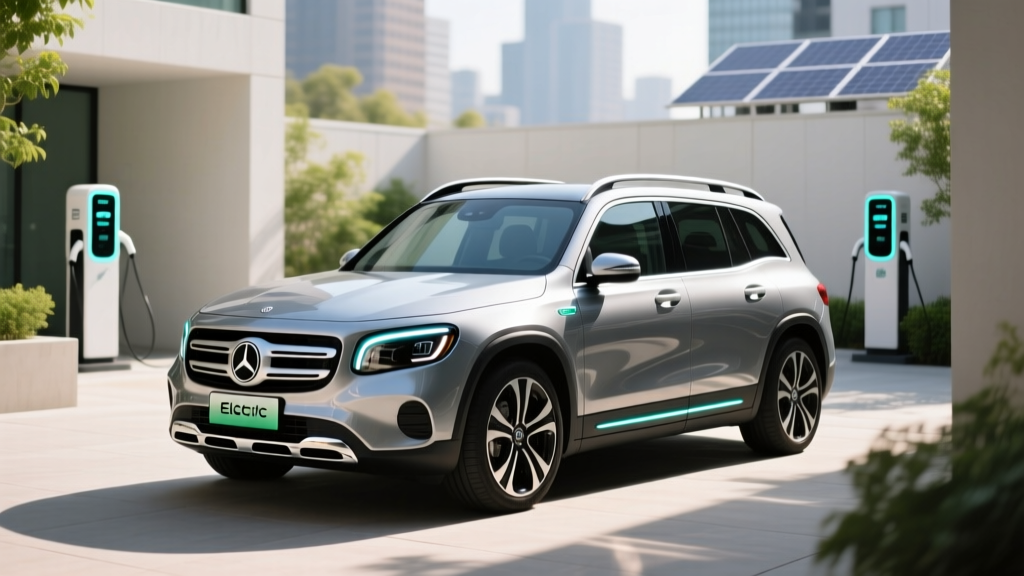
When shoppers search for "GLB electric," they're looking for the Mercedes-Benz EQB. Mercedes uses the EQ prefix for its battery-electric lineup, and the EQB is the zero-emission counterpart to the GLB compact SUV. It shares the GLB's boxy silhouette, available third row, and cabin layout, but swaps the turbocharged four-cylinder for a dual-motor all-wheel-drive powertrain and a lithium-ion battery pack.
The 2026 EQB 350 4MATIC produces 288 horsepower and 385 lb-ft of torque from its front and rear electric motors. The usable battery capacity sits at approximately 66.5 kWh (NMC chemistry), which is modest for the segment and a primary reason the EQB's range trails rivals like the Tesla Model Y, Genesis Electrified GV70, and BMW iX1.
| Spec | Value |
|---|---|
| EPA Range | 205–221 mi (trim/wheel dependent) |
| Battery (usable) | ~66.5 kWh, NMC |
| Peak DC Fast Charge | 100 kW |
| 10–80% DC Charge Time | ~32 minutes |
| Level 2 (AC) Charge Rate | 9.6 kW (11 kW optional) |
| Horsepower | 288 hp |
| Torque | 385 lb-ft |
| 0–60 mph | ~5.8 seconds |
| MPGe (combined) | ~84 MPGe |
| Base MSRP | ~$54,200 |
| Drivetrain Warranty | 4 yr / 50,000 mi |
| Battery Warranty | 8 yr / 100,000 mi (≥70% capacity) |
Real-World Range: What to Expect Beyond the EPA Sticker
The EPA estimate of 205–221 miles applies to the combined driving cycle. In real-world conditions, your actual range will vary based on speed, temperature, terrain, and climate-control usage.
Real-World Range Expectations:
- Mild-weather city/suburban: 215–230 mi — regenerative braking and low speeds help
- Highway (70–75 mph sustained): ~175–195 mi — aerodynamic drag cuts efficiency sharply
- Cold weather (below 32°F): ~150–175 mi — battery chemistry slows, cabin heating draws power
- Worst case (cold + highway + hilly): ~135–155 mi
The EQB does not come standard with a heat pump in all markets; without one, cold-weather range loss is more pronounced. Confirm whether your trim includes the heat pump option, as it can recover 15–25 miles of winter range.
The 66.5 kWh battery is the limiting factor here. Competitors like the Tesla Model Y Long Range (75 kWh usable, 310 mi EPA) and Hyundai Ioniq 5 (77.4 kWh, 303 mi EPA) offer substantially more range because they carry more energy. If your daily round-trip commute exceeds 80 miles or you regularly drive in cold climates, the EQB's range requires deliberate trip planning.
Charging Speed and Infrastructure
The EQB's 400-volt architecture caps DC fast charging at 100 kW peak. That's adequate for a 66.5 kWh pack but trails the 150–250 kW rates of rivals on 800V architectures.
| Level | Power | Miles Added per Hour | Notes |
|---|---|---|---|
| Level 1 (120V household) | ~1.4 kW | ~4 mi/hr | Emergency/trickle only |
| Level 2 (240V home) | 9.6 kW | ~28 mi/hr | Full charge in ~7 hr |
| Level 2 (240V, 11 kW option) | 11 kW | ~32 mi/hr | Full charge in ~6 hr |
| DC Fast Charge | 100 kW peak | ~180 mi/hr (peak) | 10–80% in ~32 min; tapers above 80% |
Charging-curve reality: The 100 kW peak is not sustained for the full session. Expect peak rates between 10–50% State of Charge, then a taper to ~60 kW by 65% and ~30 kW above 80%. If you're road-tripping and charging from 20–80%, plan for roughly 30–35 minutes at the charger.
The EQB uses the CCS1 connector for DC fast charging. As of 2026, Mercedes-Benz has begun transitioning to the NACS (Tesla Supercharger) connector on newer models, but EQB owners may need a CCS-to-NACS adapter to access Tesla Supercharger stations. Verify adapter compatibility with your model year before relying on it.
Home Level 2 charging requires a 240V circuit rated for at least 48 amps (for 9.6 kW continuous draw on a 60-amp breaker). Installation costs typically range from $800 to $2,500 depending on panel proximity and whether a panel upgrade is needed. Consult a licensed electrician for a site-specific quote.
EQB vs Gas GLB: Cost Comparison and Ownership Economics
The gas-powered Mercedes-Benz GLB 250 4MATIC starts around $43,000 and delivers an EPA-estimated 25 MPG combined. Here's how the two stack up over five years and 75,000 miles of driving.
| Cost Category | EQB 350 4MATIC | GLB 250 4MATIC |
|---|---|---|
| Base MSRP | $54,200 | $43,000 |
| Federal Tax Credit (§30D) | Up to $3,750–$7,500* | $0 |
| Effective Purchase Price | ~$46,700–$50,450 | $43,000 |
| Fuel/Energy (75k mi) | ~$3,900 (home L2) | ~$9,750 (premium gas) |
| Maintenance (5 yr) | ~$1,200 | ~$3,500 |
| Insurance (5 yr est.) | ~$12,000 | ~$10,500 |
| Estimated Depreciation | ~$22,000 | ~$19,000 |
| 5-Year Total | ~$85,800–$89,550 | ~$86,750 |
*Federal §30D credit eligibility depends on battery critical-mineral sourcing, buyer income caps ($150k single / $300k joint), and MSRP limits ($80k for SUVs). Verify current-year rules at IRS.gov. Point-of-sale transfer is available through registered dealers.
The EQB's higher sticker is partially offset by the tax credit and dramatically lower fuel and maintenance costs. Electric motors don't require oil changes, spark plugs, or transmission fluid. Brake wear is also reduced thanks to regenerative braking. However, EV insurance premiums tend to run 10–20% higher due to battery repair costs.
Based on data from fueleconomy.gov, the EQB's electricity cost per mile is roughly $0.05 when charging at home on a national-average residential rate of $0.16/kWh, compared to $0.13/mile for the GLB 250 on premium gasoline at $3.75/gallon. That's roughly $5,850 in fuel savings over 75,000 miles.
Federal Tax Credit Eligibility: What You Need to Know
The EQB sits in a complex position for the §30D Clean Vehicle Credit. Here's a checklist of what determines eligibility:
- MSRP cap: The EQB's ~$54,200 base price is under the $80,000 SUV cap ✓
- Buyer income cap: AGI must not exceed $150,000 (single) or $300,000 (married filing jointly) — verify on your tax return
- Battery sourcing: A portion of the credit ($3,750) requires critical minerals from the US or FTA partners; the other $3,750 requires battery components manufactured or assembled in North America. The EQB's battery supply chain may only partially qualify — check the latest fueleconomy.gov tax credit listings
- Point-of-sale transfer: As of 2024+, eligible buyers can transfer the credit to the dealer at purchase, reducing the out-of-pocket price immediately rather than waiting for tax filing
- Final assembly: Must occur in North America — the EQB is assembled in Hungary, which may disqualify it from the full credit. Confirm VIN eligibility at the IRS portal
Because the EQB is built in Kecskemét, Hungary, it faces a significant hurdle: §30D requires final assembly in North America. This has historically limited or eliminated EQB eligibility for the federal credit. Some buyers may qualify for state or utility incentives instead. Always verify your specific VIN at the IRS clean vehicle portal before committing to a purchase.
Common Misconceptions About the EQB
| Myth | Fact |
|---|---|
| "The EQB has 300+ miles of range" | The EPA rates it at 205–221 miles. No trim exceeds 225 miles. |
| "It charges as fast as a Tesla" | The EQB peaks at 100 kW. A Model Y peaks at 250 kW. The EQB's 10–80% time is roughly double. |
| "I don't need home charging" | Public DC charging at $0.35–$0.50/kWh eliminates most cost savings. Home L2 at $0.16/kWh is where the economics work. |
| "The third row is practical" | The EQB's optional third row fits children under ~5'4". Adults will find it cramped — it's a 5+2 layout, not a true 7-seater. |
| "EV batteries need replacing every 5 years" | NMC batteries in modern EVs degrade ~10–15% over 8 years. The EQB's battery warranty guarantees ≥70% capacity for 8 years / 100,000 miles. |
Decision Framework: Is the EQB the Right EV for You?
Choose the Mercedes-Benz EQB if:
- You want a compact luxury electric SUV with Mercedes build quality and MBUX infotainment
- Your daily driving is under 80 miles round-trip with reliable home Level 2 charging
- You occasionally need a third row for small children
- You value the GLB's boxy design and want the same vehicle with zero tailpipe emissions
- You live in a mild climate where cold-weather range loss is manageable
Look elsewhere if:
- You need 300+ miles of range for frequent road trips — consider the Tesla Model Y, Hyundai Ioniq 5, or BMW iX
- You rely exclusively on public DC fast charging — the EQB's 100 kW peak means longer stops
- You live in a cold climate with harsh winters — the range drops to ~150 mi without a heat pump
- You need a genuinely usable third row for adults — look at the Kia EV9 or Rivian R1S
- Federal tax credit eligibility is a dealbreaker — the Hungary assembly may disqualify the EQB
First-Time EV Buyer Checklist
If the EQB is your first electric vehicle, address these practical items before signing:
- Home charging audit: Confirm your electrical panel has capacity for a 240V/48A circuit. Get a quote from a licensed electrician — budget $800–$2,500 for installation.
- Commute math: Calculate your daily round-trip miles. If it exceeds 50% of the EQB's real-world range (~100 mi in winter), consider a longer-range alternative.
- Public charging map: Check PlugShare or the Mercedes me app for DC fast chargers along your regular routes. The EQB's CCS connector is widely supported at Electrify America, EVgo, and ChargePoint stations.
- Insurance quotes: Get quotes before purchasing. EV insurance can run 10–20% higher than equivalent gas models.
- State incentives: Many states offer rebates or HOV lane access for EVs. Check your state's energy office or DSIRE database for current programs.
Frequently Asked Questions
Is the Mercedes EQB the same as the GLB?
The EQB is the electric version of the GLB. They share the same MFA2 platform, exterior dimensions, and cabin layout. The EQB replaces the gas engine with dual electric motors and a 66.5 kWh battery pack. The driving experience, cargo space, and interior are very similar, though the EQB is heavier due to the battery.
How long does it take to charge the EQB at home?
On a Level 2 (240V) home charger at 9.6 kW, a full charge from 0–100% takes approximately 7 hours. Most owners charge overnight from 20–80%, which takes roughly 4 hours. A standard 120V outlet (Level 1) adds only ~4 miles per hour and is not practical for daily use.
Does the EQB qualify for the $7,500 federal tax credit?
Likely not the full amount. The EQB is assembled in Hungary, and §30D requires North American final assembly. This has historically disqualified the EQB from the federal credit. Some partial eligibility may apply depending on battery sourcing, and state-level incentives may be available. Always verify your VIN at the IRS clean vehicle portal before purchasing.
What is the real-world highway range of the EQB?
Expect approximately 175–195 miles at sustained highway speeds (70–75 mph) in mild weather. In cold weather (below freezing), highway range can drop to 135–155 miles. The EPA combined rating of 205–221 miles includes city driving where regenerative braking recovers energy.
Can the EQB tow?
The EQB 350 4MATIC has a maximum towing capacity of approximately 3,500 pounds when properly equipped, similar to the gas GLB. Towing significantly reduces range — expect a 30–50% reduction depending on trailer weight and aerodynamics.
Is the EQB a good first EV?
It can be, if your commute is moderate and you have home charging. The MBUX interface is familiar, the ride quality is excellent, and maintenance is minimal. However, the sub-225-mile range and 100 kW charging speed mean you'll need to plan road trips more carefully than with a Tesla Model Y or Hyundai Ioniq 5. If range anxiety is a primary concern, a longer-range EV may be a better first electric car.