Quick Answer: Is a Mercedes Electric Vehicle Worth It in 2026?
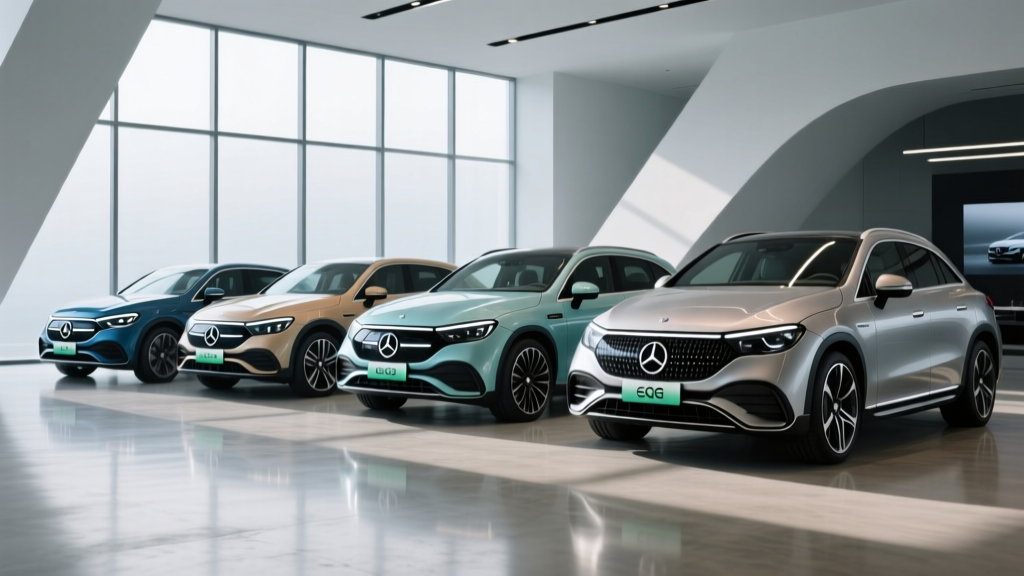
Mercedes-Benz currently sells three core battery-electric models in the U.S.: the EQE sedan (EPA range up to 303 miles, starting ~$76,050), the flagship EQS sedan (up to 390 miles EPA, starting ~$105,550), and the EQS SUV (up to 330 miles EPA, starting ~$105,750). All use a 90.6 kWh usable NMC battery pack (108.4 kWh gross) on the EVA2 platform. Expect real-world highway range to fall 15–25% below EPA stickers, especially in cold weather. None of these models currently qualify for the full $7,500 federal §30D tax credit due to battery-sourcing requirements — always verify current IRS rules before purchase. A Mercedes EV makes sense if you prioritize luxury refinement, quiet highway cruising, and have reliable Level 2 home charging. If budget is paramount or you lack home charging access, consider whether the premium over a Tesla Model S or Hyundai Ioniq 6 is justified.
The 2026 Mercedes Electric Vehicle Lineup at a Glance
Mercedes-Benz has consolidated its EV strategy around the EVA2 platform. The compact EQA and EQB remain available in some markets but have limited U.S. presence. Here's what you can actually buy stateside for the 2026 model year:
| Model | Trim | Battery (usable kWh) | EPA Range | Peak DC Charge | 10–80% Time | 0–60 mph | Base MSRP |
|---|---|---|---|---|---|---|---|
| EQE Sedan | EQE 350+ | 90.6 (NMC) | 303 mi | 170 kW | ~32 min | 6.2 sec | $76,050 |
| EQE Sedan | EQE 350 4MATIC | 90.6 (NMC) | 277 mi | 170 kW | ~32 min | 5.0 sec | $79,050 |
| EQE Sedan | AMG EQE | 90.6 (NMC) | 230 mi | 170 kW | ~32 min | 3.3 sec | $108,550 |
| EQS Sedan | EQS 450+ | 108.4 (NMC) | 390 mi | 200 kW | ~31 min | 5.9 sec | $105,550 |
| EQS Sedan | EQS 450 4MATIC | 108.4 (NMC) | 365 mi | 200 kW | ~31 min | 5.1 sec | $108,550 |
| EQS SUV | EQS 450+ | 108.4 (NMC) | 330 mi | 200 kW | ~31 min | 6.3 sec | $105,750 |
| EQS SUV | EQS 580 4MATIC | 108.4 (NMC) | 305 mi | 200 kW | ~31 min | 4.4 sec | $120,750 |
Sources: fueleconomy.gov, Mercedes-Benz USA press specifications. MSRP excludes destination charge (~$1,150). Specs reflect 2026 model year.
Real-World Range Reality Check
EPA Sticker vs. What You'll Actually Get: The EQS 450+ sedan posts an impressive 390-mile EPA estimate, making it one of the longest-range luxury EVs on the market. But real-world highway driving at 70–80 mph typically yields 310–340 miles in mild weather. In sub-freezing temperatures, expect 260–290 miles due to cabin heating demands and reduced battery efficiency. The EQE 350+ similarly drops from its 303-mile sticker to roughly 240–265 miles on highway road trips. Always plan DC fast-charging stops around 200–220 miles of usable range to maintain a comfort buffer.
Charging Speed and Infrastructure: What Mercedes EV Owners Need to Know
Mercedes uses the CCS1 connector across its U.S. EV lineup, though the brand has announced NACS (Tesla-style) adoption for future models. As of 2026, Mercedes EVs charge on Electrify America, EVgo, ChargePoint, and other CCS networks. Mercedes also offers a Mercedes me Charge subscription that bundles access across multiple networks with a single account and payment method.
| Charging Level | Power | Connector | Miles Added/Hour | Best For |
|---|---|---|---|---|
| Level 1 (120V) | ~1.4 kW | J1772 | ~4–5 mi/hr | Overnight top-up only |
| Level 2 (240V, 48A) | ~11.5 kW | J1772 | ~35–40 mi/hr | Daily home charging |
| DC Fast (EQE) | Peak 170 kW | CCS1 | ~170 mi in 15 min | Road trips |
| DC Fast (EQS) | Peak 200 kW | CCS1 | ~200 mi in 15 min | Road trips |
Charging curve reality: Peak kW figures are just that — peaks. The EQS sustains roughly 150–180 kW between 10–40% State of Charge (SoC), then tapers progressively. Above 80% SoC, charging drops below 50 kW to protect the battery. This is why Mercedes (and all automakers) quote 10–80% times rather than 0–100%. For daily driving, set your charge limit to 80% and only charge to 100% before long trips.
Home charging setup: A Level 2 home charger is practically mandatory for Mercedes EV ownership. Expect to pay $800–$1,500 for a quality Level 2 wallbox (Mercedes recommends the Wallbox Pulsar Plus or ChargePoint Home Flex) plus $500–$2,500 for professional electrician installation depending on your panel capacity and wiring run distance. If your home has a 200-amp electrical panel with spare capacity, installation is straightforward. Older homes with 100-amp panels may need a $2,000–$4,000 panel upgrade.
Mercedes EV vs. Gas Mercedes: The Real Cost Comparison
Let's compare the EQE 350+ sedan ($76,050) against the closest gas equivalent, the E 350 sedan (~$58,000), over a 5-year/75,000-mile ownership period. This comparison reveals where EV ownership saves money and where it doesn't.
| Cost Factor | EQE 350+ (EV) | E 350 (Gas) | Notes |
|---|---|---|---|
| Purchase Price | $76,050 | $58,000 | EV premium: ~$18,050 |
| Federal Tax Credit (§30D) | $0–$3,750* | $0 | *Battery sourcing rules may limit credit |
| Fuel/Energy (5 yrs) | $4,200 | $9,750 | EV at $0.14/kWh avg; gas at $3.50/gal, 26 MPG combined |
| Maintenance (5 yrs) | $2,100 | $4,800 | No oil changes, fewer brake replacements on EV |
| Insurance (5 yrs) | $14,500 | $11,200 | EV premiums typically 15–30% higher |
| Estimated Depreciation | $34,200 | $23,200 | Luxury EVs depreciate faster currently |
| 5-Year Total Cost | ~$96,850 | ~$83,750 | EV costs ~$13,100 more over 5 years |
Fuel costs based on fueleconomy.gov data and national averages. Insurance estimates from industry aggregates. Depreciation based on current luxury EV resale trends. Your actual costs will vary by state, driving pattern, and electricity rate.
The bottom line: A Mercedes EV saves roughly $5,500–$8,200 on energy and maintenance over five years, but the higher purchase price, steeper depreciation, and elevated insurance premiums typically erase those savings. You buy a Mercedes EV for the driving refinement, instant torque, and silent cruising — not for total-cost-of-ownership superiority over a gas E-Class. If pure economics drive your decision, a mainstream EV like the Hyundai Ioniq 6 or Tesla Model 3 offers a far stronger cost case.
Federal Tax Credit and Incentive Landscape for Mercedes EVs
The federal §30D clean vehicle credit offers up to $7,500 for qualifying new EVs, but Mercedes-Benz models face significant hurdles under current IRS rules:
- MSRP Cap: Sedans must be under $55,000; SUVs/vans/pickups under $80,000. All Mercedes EQ sedans exceed the $55,000 cap. The EQS SUV starting at $105,750 exceeds the $80,000 SUV cap.
- Battery Sourcing Requirements: Critical minerals and battery components must meet phased-in domestic/free-trade-agreement sourcing thresholds. Mercedes has historically struggled to meet these thresholds.
- Buyer Income Limits: AGI caps of $150K (single), $225K (head of household), $300K (joint filers).
- Point-of-Sale Transfer: If eligible, the credit can be applied at purchase as an immediate price reduction rather than waiting for tax filing.
As of the 2026 model year, no Mercedes electric vehicle qualifies for the full $7,500 federal credit due to the MSRP caps on sedans and battery-sourcing limitations. Some buyers may qualify for partial credits or state-level incentives — check IRS.gov and your state energy office for current eligibility. Never assume credit availability; verify with a tax professional before purchase.
First-Time Mercedes EV Buyer: What to Know Before You Sign
Transitioning from a gas Mercedes to an electric one involves more than swapping fuel types. Here's what the dealership won't emphasize:
| Common Misconception | The Reality |
|---|---|
| "I'll get the full EPA range" | Highway driving at 75+ mph cuts range 15–25%. Cold weather (below 32°F) adds another 10–20% loss. Plan for ~70% of sticker in worst-case conditions. |
| "Fast charging is always fast" | Peak 170–200 kW only sustains for a portion of the session. Battery temperature, SoC, and charger capability all affect actual speed. Expect 30–35 minutes for 10–80%, not 15. |
| "I don't need home charging" | Public DC fast charging costs $0.35–$0.55/kWh (comparable to gas). Level 2 public charging is often slow and unreliable. Home Level 2 at $0.10–$0.18/kWh is where the economics work. |
| "The battery will need replacing" | Mercedes warranties the high-voltage battery for 10 years/155,000 miles against degradation below 70% capacity. Real-world data shows NMC packs losing ~10–15% capacity over 8–10 years with normal use. |
| "Autopilot-style features mean self-driving" | Mercedes Drive Pilot is an SAE Level 2 system (Level 3 in limited, approved conditions in Nevada/California). You must remain attentive and ready to take over at all times. |
Mercedes Drive Pilot: Automation Level Explained
Mercedes offers Drive Pilot, which has received SAE Level 3 certification in Nevada and California under specific conditions (highway traffic below 40 mph, clear weather, mapped routes). This is a significant distinction from competitors' Level 2 systems — Level 3 means the car assumes driving responsibility under those narrow conditions, and you may look away from the road. However, outside those approved conditions, Drive Pilot operates as a standard Level 2 system requiring full driver attention. Never treat any Mercedes system as "self-driving" in the Waymo/robotaxi sense.
Who Should Buy a Mercedes Electric Vehicle? Decision Framework
Choose a Mercedes EV If:
- You have Level 2 home charging (or can install it) and drive under 250 miles daily
- You value cabin quietness, ride quality, and luxury materials over sporty handling
- You want the longest-range luxury sedan available (EQS 450+ at 390 miles EPA)
- You're a current Mercedes owner who values brand continuity and dealer service relationships
- You can absorb the ~$15,000–$20,000 five-year cost premium over a gas equivalent for the EV experience
Look Elsewhere If:
- You lack home charging access and rely solely on public infrastructure
- You frequently drive 400+ mile highway trips in cold climates (charging stops add 45–90 minutes)
- Total cost of ownership is your primary purchase driver — consider Hyundai, Tesla, or a PHEV
- You need a third row or maximum cargo space — the EQS SUV is large but expensive; the Rivian R1S or Kia EV9 offer more utility per dollar
- You expect federal tax credits to meaningfully reduce the purchase price
Mercedes EV Ownership Costs: Energy, Insurance, and Maintenance
Energy costs: Charging a Mercedes EQE at home costs roughly $12–$16 for a full 90.6 kWh charge (at $0.14/kWh national average), yielding about 270 real-world miles. That's approximately $0.05–$0.06 per mile. Compare to an E 350 gas sedan at $0.13–$0.15 per mile. If you rely on public DC fast charging at $0.45/kWh, your per-mile cost rises to $0.15–$0.17 — essentially matching gasoline.
Insurance: Luxury EV insurance premiums run 15–30% higher than gas equivalents. Expect $2,600–$3,200/year for an EQE and $3,200–$4,000/year for an EQS, depending on your driving record, location, and coverage level. Get quotes before purchasing — insurance can add $6,000–$9,000 over five years versus the gas alternative.
Maintenance: EVs eliminate oil changes, transmission fluid, spark plugs, and exhaust system repairs. Mercedes EVs still require cabin air filter replacement, brake fluid checks, tire rotation, and wiper service. Budget $400–$500/year for scheduled maintenance — roughly half what a gas E-Class or S-Class requires. Brake pad life extends dramatically thanks to regenerative braking; many EV owners report original brake pads at 80,000+ miles.
Tires: This is the maintenance item EV owners underestimate. Mercedes EVs are heavy (the EQS weighs over 5,600 lbs) and deliver instant torque. Expect tire replacement every 25,000–35,000 miles rather than the 40,000–50,000 miles typical of gas sedans. Budget $1,200–$1,800 per set for OEM-spec tires.
Frequently Asked Questions
What is the longest-range Mercedes electric vehicle available?
The EQS 450+ sedan achieves an EPA-estimated 390 miles, the highest of any current Mercedes EV. Real-world highway driving typically yields 310–340 miles in mild conditions and 260–290 miles in freezing temperatures. It remains one of the longest-range luxury EVs sold in the U.S.
Does any Mercedes EV qualify for the $7,500 federal tax credit?
As of the 2026 model year, no Mercedes electric vehicle qualifies for the full §30D credit. Sedans (EQE, EQS) exceed the $55,000 MSRP cap, and the EQS SUV exceeds the $80,000 SUV cap. Battery-sourcing requirements present an additional barrier. Always verify current rules at IRS.gov before purchasing.
How long does it take to charge a Mercedes EV at home?
With a Level 2 (240V, 48A) home charger delivering ~11.5 kW, a full charge from 10% to 80% takes approximately 7–8 hours for the EQE (90.6 kWh battery) and 8–9 hours for the EQS (108.4 kWh battery). Most owners plug in overnight and wake to a full charge. Level 1 (120V) charging is impractically slow at 40+ hours for a full charge.
What is the Mercedes EV battery warranty?
Mercedes-Benz warranties its high-voltage traction batteries for 10 years or 155,000 miles (whichever comes first) against capacity loss below 70% of original. This is competitive with BMW and Audi but trails Hyundai/Kia's 10-year/100,000-mile warranty. Battery replacement outside warranty, if ever needed, is estimated at $20,000–$35,000 depending on the model.
Is a Mercedes EV cheaper to own than a gas Mercedes?
Not typically over a 5-year period. While you'll save $5,500–$8,200 on fuel and maintenance, the higher purchase price (~$15,000–$18,000 premium), faster depreciation, and elevated insurance premiums usually result in a net cost increase of $10,000–$15,000. The EV value proposition is about the driving experience, not financial savings, in the luxury segment.
Can I road-trip a Mercedes EV cross-country?
Yes, with planning. The CCS charging network (Electrify America, EVgo) covers major interstate corridors. Expect 30–35 minute charging stops every 200–250 miles. A Los Angeles to New York trip adds roughly 5–7 hours of total charging time versus a gas car. Use the Mercedes me navigation system, which routes through available chargers and preconditions the battery for optimal charging speed upon arrival.