The Short Answer on the Mercedes Electric GLC
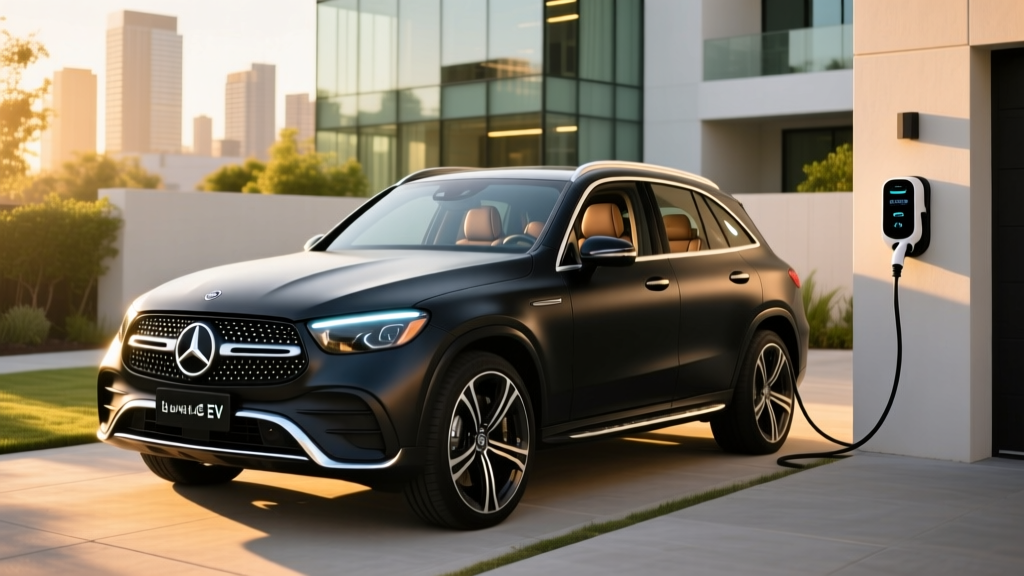
The 2026 Mercedes-Benz GLC EV (internationally known as the EQC successor on the dedicated EVA2 platform) is a compact luxury electric SUV targeting buyers cross-shopping the BMW iX3, Audi Q6 e-tron, and Tesla Model Y. Expect an EPA-estimated range of approximately 310 miles from an 85 kWh (usable) NMC battery, DC fast charging up to 175 kW (10–80% in roughly 29 minutes), and a starting MSRP around $59,900. Federal §30D tax-credit eligibility is uncertain due to battery-sourcing rules — consult a tax professional before relying on the $7,500 credit. For buyers with Level 2 home charging and daily commutes under 80 miles, the GLC EV can eliminate gas stops entirely while delivering Mercedes-grade refinement.
Range, Battery, and Real-World Efficiency
The GLC EV rides on Mercedes' modular EVA2 architecture, sharing underpinnings with the larger EQE and EQS but scaled for the compact luxury segment. The battery pack uses NMC (nickel-manganese-cobalt) chemistry, chosen for its higher energy density over LFP — important in a vehicle where packaging space is at a premium.
| Spec | Value |
|---|---|
| Battery (usable) | ~85 kWh, NMC chemistry |
| EPA-estimated range | ~310 miles (est.) |
| Combined MPGe | ~95 MPGe (est.) |
| Efficiency | ~35 kWh/100 mi |
| DC fast-charge peak | 175 kW |
| 10–80% DC charge time | ~29 minutes |
| Level 2 (AC) charge rate | 11 kW (9.6 kW on some 240V circuits) |
| Level 2 0–100% time | ~8.5 hours |
| Drivetrain | Dual-motor AWD (4MATIC) |
| Horsepower | ~402 hp |
| 0–60 mph | ~4.8 seconds |
| Base MSRP | ~$59,900 |
| Battery warranty | 8 years / 100,000 miles |
Real-World Range Expectations
The EPA sticker is a laboratory estimate. In actual driving:
- Highway (70–75 mph, mild weather): expect ~260–280 miles
- Cold weather (below 32°F): expect ~220–250 miles (NMC packs lose 15–25% in deep cold without preconditioning)
- City / mixed driving (moderate climate): ~290–310 miles — regenerative braking recovers energy in stop-and-go traffic
The GLC EV's heat pump (standard on EVA2 models) helps mitigate cold-weather cabin-heating drain, but battery chemistry still limits low-temperature performance. Always precondition the battery via the Mercedes me app before DC fast charging in cold weather — this can shave 5–10 minutes off your charge session.
Charging: Home, Public, and What It Actually Costs
Charging speed is measured in kW (kilowatts) — the rate of energy flow — while battery capacity is measured in kWh (kilowatt-hours) — the total energy stored. Think of kW as the width of a hose and kWh as the size of the bucket.
| Level | Power | Miles Added per Hour | Typical Use |
|---|---|---|---|
| Level 1 (120V household) | ~1.4 kW | ~4–5 mi/hr | Emergency / trickle only |
| Level 2 (240V home) | 9.6–11 kW | ~30–35 mi/hr | Daily home charging |
| DC Fast Charge | Up to 175 kW | ~180+ mi in 15 min | Road trips |
The GLC EV uses the NACS (North American Charging Standard) connector, giving it native access to the Tesla Supercharger network — currently the most reliable DC fast-charging infrastructure in the U.S. It also supports CCS1 via adapter for Electrify America, EVgo, and other networks.
Charging-curve reality check: The 175 kW peak rate is only sustained between roughly 10–40% state of charge. Above 60%, the rate tapers significantly — by 80%, expect roughly 60–80 kW. This is normal lithium-ion behavior to protect cell health, but it means a 10–90% session will take closer to 40 minutes, not the 29-minute 10–80% figure.
Cost to Charge at Home vs. Fueling a Gas GLC
Using the national average electricity rate of ~$0.16/kWh and the gas GLC 300's combined 26 MPG with fuel at $3.40/gallon:
| GLC EV (Home Charging) | GLC 300 (Gas) | |
|---|---|---|
| Energy consumed | ~4,200 kWh | ~462 gallons |
| Cost per mile | ~$0.056 | ~$0.131 |
| Annual cost | ~$672 | ~$1,570 |
| 5-year cost | ~$3,360 | ~$7,850 |
Home charging saves roughly $4,490 over five years vs. the gas GLC 300. Public DC fast charging at $0.35–$0.48/kWh narrows this gap — at $0.42/kWh, the EV's per-mile cost rises to ~$0.147, nearly matching gas. Buyers who rely primarily on public charging should model costs carefully.
GLC EV vs. Gas GLC 300: Total Ownership Costs
The purchase-price gap between the electric and gas GLC is significant, but operating costs favor the EV. Here's a five-year projection assuming 12,000 miles/year, home charging, and manufacturer-recommended maintenance:
| Category | GLC EV (~$59,900) | GLC 300 (~$48,250) |
|---|---|---|
| Purchase price | $59,900 | $48,250 |
| Federal tax credit (§30D) | Up to $7,500* | $0 |
| Home charger install | $1,200–$2,500 | $0 |
| Energy/fuel (5 years) | $3,360 | $7,850 |
| Maintenance (5 years) | ~$1,500 | ~$3,800 |
| Insurance (5 years) | ~$12,500 | ~$10,200 |
| Estimated depreciation | ~$28,000 | ~$22,000 |
| Total (5 years) | ~$98,960–$100,260 | ~$92,100 |
*§30D credit eligibility depends on battery-sourcing and critical-mineral requirements, buyer income caps ($150K single / $300K joint), and the $80K SUV MSRP cap. Check current rules at IRS.gov and consult a tax professional. The credit may be applied at point of sale as a discount.
Key takeaway: The GLC EV costs roughly $6,000–$8,000 more over five years when factoring higher purchase price, insurance premiums (EVs typically run 15–22% higher), and steeper depreciation. The break-even point depends heavily on local electricity rates, gas prices, annual mileage, and whether you qualify for the full tax credit. At 15,000+ miles/year with cheap home electricity, the math shifts in the EV's favor.
Tax Credits, Incentives, and What You Actually Qualify For
The federal §30D Clean Vehicle Credit offers up to $7,500 for qualifying new EVs, but the rules are complex and change frequently. As of 2026, eligibility hinges on:
- MSRP cap: SUVs must have an MSRP at or below $80,000 — the GLC EV base trim qualifies, but loaded editions may exceed this
- Buyer income cap: AGI ≤ $150,000 (single) or ≤ $300,000 (joint)
- Battery sourcing: A percentage of critical minerals and battery components must be sourced from the U.S. or FTA partners — Mercedes has been transitioning supply chains, but eligibility varies by model year and production batch
- Point-of-sale transfer: You can apply the credit as an upfront discount at the dealer rather than waiting for a tax refund
Many states offer additional rebates (California's CVRP, Colorado's state credit, etc.), but amounts and eligibility vary by jurisdiction. Check your state energy office or the Department of Energy's incentive tracker for current local programs.
Real-World Ownership: What First-Time EV Buyers Must Know
| Myth | Fact |
|---|---|
| "The battery will need replacing in 5 years" | Mercedes warranties the pack for 8 years/100,000 miles against degradation below 70% capacity. Real-world EVA2 platform data shows ~8–12% degradation over 100K miles with normal use. |
| "I can charge from any outlet" | A standard 120V outlet adds only ~4–5 miles per hour — impractical for daily use. A 240V Level 2 home charger ($1,200–$2,500 installed) is strongly recommended. |
| "EVs don't need maintenance" | Tires wear 15–20% faster due to vehicle weight and instant torque. Cabin air filters, brake fluid, coolant, and wiper fluid still require service. But oil changes, spark plugs, and transmission fluid are eliminated. |
| "I'll never be able to road-trip" | With NACS access to 20,000+ Superchargers and 175 kW DC capability, a 600-mile trip requires one 25–30-minute stop. Route planning via Mercedes me or A Better Routeplanner makes this manageable. |
| "The range is exactly what the sticker says" | EPA range is a lab estimate. Highway driving at 75 mph, cold weather, and mountain grades reduce it by 15–30%. Plan for ~250 usable miles on road trips in moderate conditions. |
Home Charging Access Is the Deciding Factor
If you can install a Level 2 charger at home (garage or driveway with a 240V circuit), the GLC EV integrates seamlessly into daily life — wake up every morning with a "full tank." If you live in an apartment without charging access or rely solely on public infrastructure, the ownership experience becomes significantly less convenient and more expensive. Before purchasing, verify:
- Your electrical panel has capacity for a 40–50A circuit (older homes may need a $1,500–$3,000 panel upgrade)
- Your HOA or landlord permits charger installation
- Reliable DC fast chargers exist within 10–15 minutes of your home for backup
Climate Considerations
The GLC EV's heat pump and battery preconditioning system help in cold weather, but NMC chemistry inherently loses capacity in sub-freezing temperatures. Owners in northern climates (Minnesota, Maine, Colorado winters) should budget for 20–25% winter range loss and plan charging stops accordingly. Garage parking mitigates this significantly.
Decision Framework: Is the Mercedes Electric GLC Right for You?
Choose the GLC EV if:
- You have Level 2 home charging access (or can install it)
- Your daily commute is under 80 miles round-trip
- You value Mercedes interior quality, MBUX tech, and ride refinement
- You road-trip 2–4 times per year and can plan around Supercharger stops
- You qualify for the §30D credit and/or state incentives, narrowing the price gap
- You drive 12,000+ miles per year, maximizing fuel savings
Stick with the gas GLC 300 (or consider a PHEV) if:
- You lack home charging access and public chargers are sparse in your area
- You frequently tow (the gas GLC handles 3,500 lbs; the EV's rating is lower and range drops sharply under load)
- Your budget is firm below $55,000
- You regularly drive 400+ miles in a single day through charging-desert regions
- You live in extreme cold (regularly below 0°F) and cannot garage the vehicle
How the GLC EV Stacks Up Against Competitors
The compact luxury EV SUV segment is crowded. Here's how the GLC EV compares on paper against key rivals:
| Mercedes GLC EV | BMW iX3 | Audi Q6 e-tron | Tesla Model Y LR | |
|---|---|---|---|---|
| EPA range | ~310 mi | ~285 mi | ~308 mi | ~330 mi |
| Battery | 85 kWh NMC | 80 kWh NMC | 94 kWh NMC | 78 kWh NMC |
| DC fast charge | 175 kW | 150 kW | 270 kW | 250 kW |
| 0–60 mph | ~4.8s | ~6.8s | ~5.0s | ~4.8s |
| Base MSRP | ~$59,900 | ~$58,000 | ~$63,800 | ~$48,990 |
| Connector | NACS | CCS1/NACS | NACS | NACS |
The GLC EV prioritizes comfort and cabin luxury over outright charging speed — the Audi Q6 e-tron's 270 kW capability and Tesla's 250 kW both outpace it on road trips. But for daily driving and Mercedes brand loyalists, the GLC EV's refinement, MBUX integration, and ride quality are the draw.
Frequently Asked Questions
Does the Mercedes electric GLC qualify for the $7,500 federal tax credit?
Possibly, but it depends on current §30D battery-sourcing rules, your income, and the specific trim's MSRP. Mercedes has been working to localize battery supply chains, but eligibility can change between production batches. Always verify at IRS.gov and with your dealer before assuming the credit applies.
How long does it take to charge the GLC EV at home?
On a Level 2 (240V) home charger at 11 kW, a full 0–100% charge takes approximately 8.5 hours. Most owners plug in overnight and wake up fully charged. On a standard 120V outlet (Level 1), expect over 60 hours for a full charge — only practical as a trickle or emergency option.
What happens if the battery degrades?
Mercedes covers the high-voltage battery for 8 years or 100,000 miles against capacity loss below 70%. Based on EVA2 platform data from EQE/EQS models, real-world degradation is typically 8–12% over 100,000 miles with normal charging habits (avoiding frequent 100% charges and deep discharges). Out-of-warranty replacement costs are estimated at $15,000–$22,000, though prices are expected to decline as battery technology matures.
Is the GLC EV all-wheel drive?
Yes. The U.S.-spec GLC EV comes standard with dual-motor 4MATIC all-wheel drive, producing approximately 402 horsepower. This provides confident traction in rain and light snow, though dedicated winter tires still outperform all-season tires in severe cold.
Can I tow with the Mercedes electric GLC?
The GLC EV is expected to carry a towing rating of approximately 3,500 pounds (matching the gas GLC), but be aware that towing reduces range by 30–50% depending on trailer weight and aerodynamics. For frequent towing, the gas GLC remains the more practical choice due to refueling convenience.
How does the GLC EV compare to a plug-in hybrid GLC?
Mercedes has not offered a PHEV variant of the current GLC generation in the U.S. market. If you need a bridge solution, competitors like the BMW X3 xDrive30e (PHEV, ~35 miles electric-only range, ~$54,000) offer partial electrification with gas backup. The GLC EV eliminates gas entirely but requires charging infrastructure.
Specifications in this article are based on manufacturer-announced data and EPA estimates available as of early 2026. Final production specs, pricing, and tax-credit eligibility may vary. Always confirm with your local Mercedes-Benz dealer and a qualified tax professional before purchasing. Sources: fueleconomy.gov, IRS.gov §30D Clean Vehicle Credits, Mercedes-Benz USA press materials.