Quick Answer: Is the Mercedes Electric G Wagon Worth It?
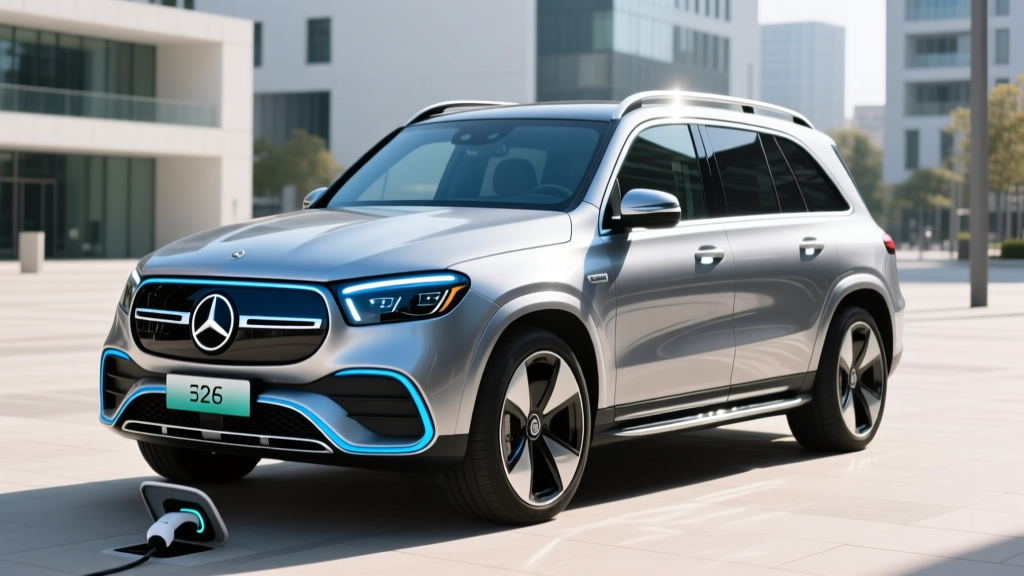
The 2026 Mercedes-Benz G 580 with EQ Technology — commonly called the Mercedes electric G Wagon — starts at $164,900 (including destination). It delivers an EPA-estimated 239 miles of range from a 116 kWh (usable) battery, peaks at 200 kW DC fast charging (10–80% in roughly 32 minutes), and produces 579 hp via four individual motors. Compared to the gas G 550 ($149,500 MSRP, 17 MPG combined), the electric G Wagon costs roughly $15,400 more upfront but saves an estimated $2,000–$2,500 per year in fuel and maintenance. It is not eligible for the federal §30D EV tax credit due to its MSRP exceeding the IRS cap. The electric G Wagon is best suited for buyers who want the iconic G-Class silhouette with silent, instant torque and daily electric commuting — provided they have reliable home Level 2 charging access.
Range and Efficiency: What to Expect in the Real World
The G 580's 116 kWh usable lithium-ion (NMC chemistry) battery is one of the largest packs in any production passenger vehicle. Mercedes publishes an EPA-estimated range of 239 miles, which translates to roughly 48 kWh/100 mi in combined driving — an efficiency figure that reflects the G Wagon's 6,600+ lb curb weight and brick-like aerodynamics.
EPA Range: 239 miles
Real-World Expectation: Plan for approximately 190–210 miles on sustained highway driving at 70+ mph. In cold weather (below 32°F), expect a further 15–25% reduction, putting winter highway range near 150–175 miles. The G Wagon's flat front and heavy mass make it particularly sensitive to speed and temperature — efficiency drops sharply above 65 mph.
For context, the gas-powered 2026 G 550 achieves an EPA-rated 17 MPG combined, yielding roughly 340 miles from its 22.5-gallon tank. The electric G Wagon trades that long-haul range for zero tailpipe emissions and dramatically lower per-mile energy cost — but road trips will require planning around DC fast-charging stops.
Charging Speed, Connectors, and Infrastructure
The G 580 supports DC fast charging at a peak rate of 200 kW via the NACS connector (Mercedes transitioned the G 580 to the Tesla-standard plug for the North American market). At a compatible Supercharger or Electrify America station, the 10–80% charge takes approximately 32 minutes under ideal battery-temperature conditions.
| Charging Level | Power (kW) | Connector | Miles Added per Hour | Time for 10–80% |
|---|---|---|---|---|
| Level 1 (120V household) | 1.4 kW | NACS / J1772 adapter | ~3 mi/hr | Not practical (~80+ hrs) |
| Level 2 (240V home) | 11.5 kW | NACS / J1772 adapter | ~24 mi/hr | ~9.5 hours (full charge) |
| DC Fast Charge | 200 kW peak | NACS | ~230 mi/hr (peak) | ~32 min (10–80%) |
Charging-curve reality: Like all large-battery EVs, the G 580 does not sustain peak kW throughout the session. Expect the charge rate to taper noticeably above 50% SoC, and drop sharply past 80%. Mercedes includes battery preconditioning via the MBUX navigation system — always route to a charger through the onboard nav to activate thermal prep and achieve advertised speeds.
For home charging, Mercedes recommends a 48-amp Level 2 wall connector on a dedicated 60-amp circuit. Most G Wagon owners will charge overnight and wake to a full battery. Installation costs typically range from $800 to $2,500 depending on panel proximity; a 200-amp panel upgrade (if needed) can add $1,500–$3,000. Consult a licensed electrician for final specifications.
Performance and Powertrain Specs
Four independently controlled permanent-magnet motors — one at each wheel — give the G 580 a combined output of 579 hp and 813 lb-ft of torque. The result is a 0–60 mph time of 4.6 seconds, which is remarkably brisk for a vehicle weighing over three tons. The gas G 550, with its 4.0L twin-turbo V8, produces 443 hp and hits 60 mph in roughly 5.4 seconds.
| Spec | G 580 EQ (Electric) | G 550 (Gas) |
|---|---|---|
| Powertrain | Quad-motor AWD | 4.0L Twin-Turbo V8 AWD |
| Horsepower | 579 hp | 443 hp |
| Torque | 813 lb-ft | 413 lb-ft |
| 0–60 mph | 4.6 sec | ~5.4 sec |
| EPA Range / Tank | 239 mi | ~340 mi (17 MPG × 22.5 gal) |
| Efficiency | 48 kWh/100 mi (~70 MPGe) | 17 MPG combined |
| Curb Weight | ~6,600 lbs | ~5,500 lbs |
| Base MSRP | $164,900 | $149,500 |
The quad-motor setup also enables the signature G-Turn feature: the G 580 can rotate 360° in place by spinning left-side and right-side wheels in opposite directions — useful for tight trail obstacles and dramatic parking-lot exits. Mercedes also includes G-Steering (torque-vectoring for tighter turning circles) and G-Roar, an artificial sound profile meant to replicate V8 character. Whether you find G-Roar gimmicky or engaging is a matter of personal taste.
Cost Breakdown: Electric G Wagon vs. Gas G 550
Let's compare five-year ownership costs for both models. Assumptions: 12,000 miles/year, $3.80/gallon gasoline (premium required), $0.14/kWh average home electricity, and $0.45/kWh public DC fast charging (with 70% home / 30% public charging mix).
| Cost Category (5-Year) | G 580 EQ (Electric) | G 550 (Gas) |
|---|---|---|
| Purchase Price (MSRP) | $164,900 | $149,500 |
| Federal EV Tax Credit (§30D) | $0 (exceeds MSRP cap) | $0 |
| Fuel / Energy (5 yrs) | ~$13,400 | ~$25,500 |
| Maintenance (5 yrs est.) | ~$2,500 | ~$5,500 |
| Insurance (5 yrs est.) | ~$22,000 | ~$19,500 |
| Estimated Depreciation | ~$72,000 | ~$58,000 |
| Total 5-Year Cost (est.) | ~$274,800 | ~$258,000 |
Key takeaways: The G 580 saves approximately $12,100 in energy and $3,000 in maintenance over five years (no oil changes, fewer brake replacements thanks to regenerative braking). However, the $15,400 higher purchase price, steeper insurance premiums (common for high-value EVs), and greater projected depreciation largely offset those savings. Per IRS §30D rules, the G 580 does not qualify for the federal EV tax credit because its MSRP exceeds the $80,000 SUV cap, and buyers at this price point typically exceed the modified adjusted gross income limits ($300,000 joint / $150,000 single). Some states may offer additional incentives — check your local DMV or energy office.
Myths vs. Facts: Common Misconceptions About the Electric G Wagon
| Myth | Fact |
|---|---|
| "The electric G Wagon can't handle off-road terrain." | The G 580 retains the G-Class's three locking differentials (simulated via torque vectoring), 9.9 inches of ground clearance, and a wading depth of 33.5 inches — actually deeper than the gas version thanks to sealed battery enclosures. |
| "You'll get the full 239-mile EPA range on the highway." | Highway driving at 75 mph reduces range to roughly 190–210 miles. Cold weather compounds the loss. Always plan road trips with a 20% buffer. |
| "It qualifies for the $7,500 federal EV tax credit." | The G 580's MSRP ($164,900) far exceeds the §30D cap of $80,000 for SUVs. No federal credit applies. See IRS guidelines. |
| "The battery will need replacing in a few years." | Mercedes warrants the high-voltage battery for 10 years or 155,000 miles (whichever comes first), guaranteeing a minimum 70% state of health. NMC chemistry with active thermal management supports long cycle life. |
| "It charges as fast as a Tesla Model X." | The G 580 peaks at 200 kW — respectable, but below the ~250 kW peak of Tesla's latest architecture. Expect 10–80% in ~32 min vs. ~20 min for a Model X at a V3 Supercharger. |
Real-World Ownership: What First-Time EV Buyers Should Know
Home charging is essential. With a 116 kWh battery, Level 1 (120V) charging adds only about 3 miles per hour — completely impractical for daily use. You will need a Level 2 home charger (240V, 48A) to recharge overnight. Budget $1,200–$3,500 for equipment and professional installation. If your home has a 100-amp electrical panel, a panel upgrade may be required, adding cost and permitting time.
Road trips require planning. The G 580's 239-mile EPA range (and ~190-mile real-world highway range) means stops every 150–170 miles on long drives. Use the MBUX-integrated route planner, which factors in charging stations and preconditioning. The NACS connector grants access to Tesla's Supercharger network, the most reliable public charging infrastructure in North America.
Tires wear faster. The G 580's 6,600-lb weight and instant torque accelerate tire wear. Expect replacement every 25,000–35,000 miles with OE-spec tires (roughly $1,800–$2,400 per set). Budget accordingly.
Insurance costs more. High-value EVs typically carry 10–20% higher insurance premiums than their gas counterparts. Get quotes before purchasing to avoid surprises.
Decision Framework: Should You Buy the Mercedes Electric G Wagon?
Choose the G 580 EQ (Electric) if:
- You have reliable Level 2 home charging (garage or driveway with 240V access)
- Your daily driving is under 150 miles and you want silent, instant-torque acceleration
- You value the G-Turn feature and the novelty of a quad-motor electric powertrain
- You want to reduce per-mile fuel costs by roughly 45–50% versus the gas G 550
- You rarely take road trips exceeding 200 miles between stops, or you're willing to plan charging stops
Choose the G 550 (Gas) if:
- You lack home charging access and rely on street parking or apartment living
- You regularly tow (the G 550 is rated for 7,000 lbs vs. the G 580's 5,500-lb limit)
- You take frequent long road trips through areas with sparse DC fast-charging infrastructure
- You want a lower purchase price and better near-term depreciation outlook
- The V8 exhaust note is part of the experience you're paying for
Battery Warranty, Longevity, and Replacement
Mercedes covers the G 580's high-voltage battery with a 10-year / 155,000-mile warranty, guaranteeing the pack will retain at least 70% of its original capacity. Based on current NMC chemistry data from similar Mercedes EQ-platform vehicles, degradation typically follows a curve: roughly 5–8% loss in the first two years, then 1–2% annually thereafter. At the 10-year mark, most packs retain 80–85% state of health under normal use.
If a full replacement is ever needed out of warranty, expect costs in the $25,000–$35,000 range for a pack of this capacity — though prices continue to decline as battery manufacturing scales. Individual module replacement (rather than the entire pack) may reduce costs for localized cell failures.
Frequently Asked Questions
Is the Mercedes electric G Wagon currently available to buy?
Yes. The 2026 G 580 with EQ Technology is in production and available at US Mercedes-Benz dealerships. Pricing starts at $164,900 including destination. Wait times vary by market — some dealers have inventory, while others have allocation backlogs of several months.
Does the electric G Wagon qualify for any tax credits?
Not at the federal level. The IRS §30D credit caps eligible SUVs at $80,000 MSRP, and the G 580 starts at $164,900. Buyer income limits also apply. Check your state's energy office for potential local incentives — some states offer rebates that are not income- or price-capped.
How does the G 580 handle off-road compared to the gas G-Class?
Very well. The quad-motor setup enables individual wheel torque control that simulates locking differentials. Ground clearance is 9.9 inches, approach/departure angles are competitive, and the sealed battery allows a 33.5-inch wading depth. The G-Turn feature is exclusive to the electric model and useful for tight trail situations.
What is the real-world highway range?
Expect roughly 190–210 miles at sustained highway speeds (70–75 mph) in moderate temperatures. In cold weather (below freezing), reduce that to approximately 150–175 miles. The boxy aerodynamics and heavy weight make the G 580 more range-sensitive to speed than sleeker EVs.
Can I charge at Tesla Superchargers?
Yes. The G 580 uses the NACS connector natively in North America, granting access to Tesla's Supercharger network — the largest and most reliable DC fast-charging network in the US. You can also use Electrify America, EVgo, and other networks with the appropriate adapter (if CCS1 is needed).
How does insurance compare to the gas G 550?
Expect insurance premiums to run 10–20% higher on the G 580 due to its higher MSRP, specialized repair requirements, and EV parts costs. Get quotes from at least three insurers before committing to a purchase.
What's the maintenance schedule like?
The G 580 requires significantly less routine maintenance than the gas G 550. No oil changes, no spark plugs, no transmission fluid (in the traditional sense). Expect cabin air filter replacements, brake fluid checks, tire rotations, and windshield washer fluid. Regenerative braking extends brake pad life substantially — many EV owners go 80,000+ miles on original pads.