Quick Answer: Mercedes-Benz's current electric drive lineup centers on the 2026 EQE Sedan (EPA range up to 303 miles, starting ~$76,050) and the flagship EQS Sedan (EPA range up to 390 miles, starting ~$105,550). Both use a 400-volt architecture with peak DC fast-charging around 170–200 kW (10–80% in roughly 30–32 minutes). Real-world highway range typically falls 10–15% below EPA estimates, and cold weather can cut range by an additional 20–30%. Federal §30D tax credit eligibility is limited by battery-sourcing rules — most Mercedes EVs do not currently qualify for the full $7,500 credit due to critical-mineral and component requirements. Lease customers, however, may benefit from the commercial clean vehicle credit passed through by dealers.
What "Mercedes Electric Drive" Actually Means in 2026
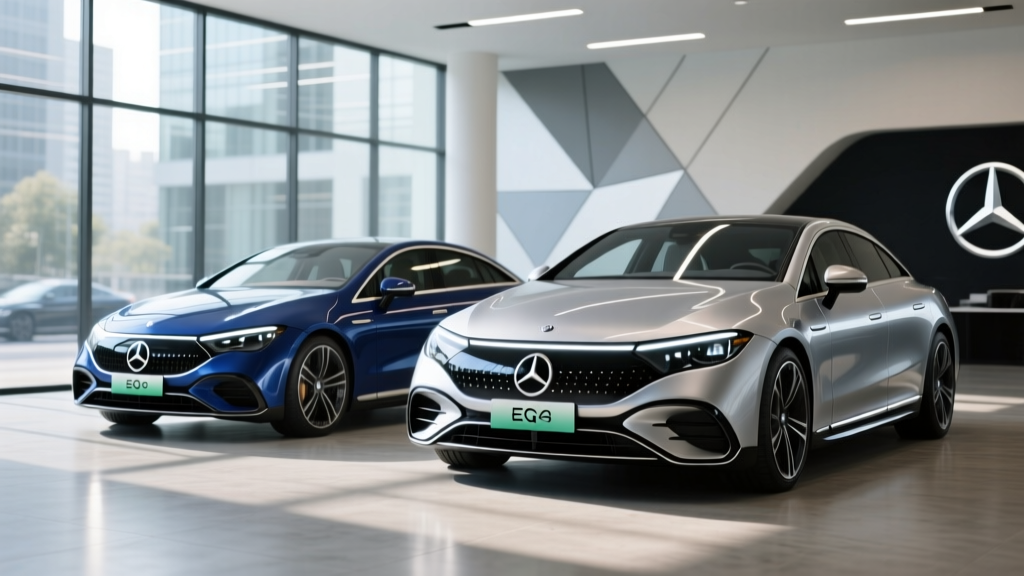
The term "Mercedes electric drive" refers to the brand's battery-electric vehicle (BEV) powertrain family, marketed under the EQ sub-brand. For the 2026 model year, the core U.S. lineup includes the midsize EQE Sedan and SUV, the full-size EQS Sedan and SUV, and the performance-oriented AMG EQE and EQS variants. Mercedes also offers the EQB compact crossover, though it rides on a modified ICE platform rather than the dedicated EVA2 architecture underpinning the EQE and EQS.
All current Mercedes electric drive vehicles use permanently excited synchronous motors (or a combination of PSM and induction on dual-motor 4MATIC trims), liquid-cooled lithium-ion batteries with NMC (nickel manganese cobalt) chemistry, and a 400-volt electrical architecture. This is a critical distinction from rivals like the Hyundai Ioniq 5, Lucid Air, and Porsche Taycan, which use 800-volt systems enabling faster peak charge rates.
2026 EQE and EQS: Spec-by-Spec Breakdown
| Spec | 2026 EQE 350+ Sedan | 2026 EQE 350 4MATIC | 2026 EQS 450+ Sedan | 2026 EQS 580 4MATIC |
|---|---|---|---|---|
| EPA Range | 303 mi | 277 mi | 390 mi | 345 mi |
| Battery (usable) | 90.6 kWh (NMC) | 90.6 kWh (NMC) | 118.0 kWh (NMC) | 118.0 kWh (NMC) |
| Horsepower | 288 hp | 288 hp | 355 hp | 536 hp |
| 0–60 mph | 6.2 sec | 5.8 sec | 5.9 sec | 4.1 sec |
| Peak DC Charge Rate | 170 kW | 170 kW | 200 kW | 200 kW |
| 10–80% DC Time | ~32 min | ~32 min | ~31 min | ~31 min |
| Level 2 Rate (kW) | 9.6 kW | 9.6 kW | 9.6 kW | 9.6 kW |
| MPGe (combined) | 94 MPGe | 87 MPGe | 97 MPGe | 87 MPGe |
| Base MSRP | $76,050 | $79,050 | $105,550 | $120,550 |
| Battery Warranty | 10 yr / 155,000 mi | 10 yr / 155,000 mi | 10 yr / 155,000 mi | 10 yr / 155,000 mi |
Real-World Range Reality: The EQS 450+'s 390-mile EPA figure is among the highest of any luxury sedan, but expect roughly 330–350 miles in mixed highway driving at 70–75 mph. In winter conditions (below 32°F), NMC batteries lose efficiency to cabin heating and increased internal resistance — plan for 270–300 miles from the EQS 450+ and 210–240 miles from the EQE 350+ on cold highway trips. These figures are consistent with EPA data on fueleconomy.gov.
Mercedes Electric Drive vs. Gas and Hybrid Alternatives
Most cross-shopping buyers compare the EQE to the Mercedes E-Class (gas) and the EQS to the S-Class. Here's how the numbers stack up on an annual-cost basis, assuming 12,000 miles/year, $3.50/gallon regular unleaded, and $0.16/kWh national average electricity rate:
| Metric | 2026 EQE 350+ | 2026 E 350 (Gas) | 2026 EQS 450+ | 2026 S 500 4MATIC |
|---|---|---|---|---|
| Combined Efficiency | 94 MPGe (36 kWh/100mi) | 28 MPG combined | 97 MPGe (35 kWh/100mi) | 24 MPG combined |
| Annual Energy/Fuel Cost | ~$691 | ~$1,500 | ~$672 | ~$1,750 |
| 5-Year Energy/Fuel Cost | ~$3,455 | ~$7,500 | ~$3,360 | ~$8,750 |
| Est. Annual Maintenance | ~$400 | ~$900 | ~$450 | ~$1,100 |
| Base MSRP | $76,050 | $62,300 | $105,550 | $118,300 |
The EQE commands a ~$13,750 premium over the gas E 350, but saves roughly $4,045 in fuel and $2,500 in maintenance over five years — netting about $7,200 in unrecovered upfront cost. The EQS vs. S-Class comparison is closer on MSRP, and the EV actually wins on five-year operating costs by approximately $7,890. However, depreciation remains the wild card: luxury EVs have experienced steeper resale-value declines than their ICE counterparts, with some three-year-old EQ models retaining only 40–45% of original MSRP, compared to 50–55% for equivalent gas sedans.
Total Cost of Ownership: The Full Picture
| 5-Year Cost Category | EQE 350+ | E 350 (Gas) | Notes |
|---|---|---|---|
| Purchase Price (base) | $76,050 | $62,300 | Before incentives |
| Federal Tax Credit (§30D) | $0–$3,750* | $0 | *Sourcing-dependent; lease may qualify for $7,500 pass-through |
| Energy/Fuel | $3,455 | $7,500 | 12k mi/yr |
| Maintenance | $2,000 | $4,500 | No oil changes, fewer brake replacements (regen) |
| Insurance (est. avg) | $12,500 | $9,800 | EV premiums typically 15–30% higher |
| Home Charger Install | $1,200–$2,500 | $0 | Level 2, 240V/48A; panel upgrade may add $1,500+ |
| Est. Depreciation | $38,000 | $28,000 | ~50% vs ~45% retention |
| 5-Year Total (approx.) | $95,205–$96,705 | $84,100 | Depreciation dominates both |
The takeaway: the Mercedes electric drive saves meaningfully on fuel and maintenance, but higher insurance premiums, steeper depreciation, and the upfront charger-installation cost mean the five-year total rarely breaks even against a gas equivalent — unless you secure a favorable lease with dealer-passed commercial credit or drive significantly above 12,000 miles/year.
Charging at Home and on the Road
Mercedes electric drive vehicles come with a J1772/CCS1 charge port (the EQE and EQS have not yet adopted NACS as of the 2026 model year, though Mercedes has announced future NACS compatibility). Home charging on a Level 2, 240-volt, 48-amp circuit delivers 9.6 kW — enough to fully replenish the EQE's 90.6 kWh battery in about 9.5 hours and the EQS's 118 kWh pack in roughly 12 hours overnight.
On the road, the 400-volt architecture limits peak DC fast-charging to 170 kW (EQE) and 200 kW (EQS). At a 350 kW Electrify America or Tesla Supercharger stall (with CCS adapter), the EQS will add roughly 180–200 miles of range in 30 minutes. However, the charge curve tapers significantly above 80% state of charge — going from 80% to 100% can take nearly as long as the 10–80% portion. Preconditioning the battery via the MBUX navigation-routed charging feature is essential: if you navigate to a DC fast charger, the car will warm or cool the battery to optimal temperature, potentially shaving 5–10 minutes off your stop.
For buyers without reliable home charging access, the 170–200 kW peak rate and 30+ minute 10–80% time make frequent public charging viable but noticeably slower than 800V competitors like the Hyundai Ioniq 5 (peak 240 kW, 10–80% in ~18 minutes) or the Lucid Air (peak 300+ kW). If apartment living or street parking is your reality, carefully evaluate your local DC fast-charging infrastructure before committing.
Federal Tax Credit Eligibility: What You Actually Get
- MSRP Cap: Sedans must be ≤$55,000; SUVs/vans/pickups ≤$80,000. The EQE and EQS sedans exceed the $55,000 cap and are ineligible for §30D purchase credits.
- Income Cap: AGI ≤$150,000 (single), $225,000 (head of household), $300,000 (joint).
- Battery Sourcing: Critical minerals and battery components must meet escalating domestic/free-trade-partner thresholds. Mercedes sources cells from global suppliers, and as of 2026, most EQ models do not meet the full critical-mineral requirement — limiting any potential credit to $3,750 (component portion only) even if MSRP qualified.
- Lease Loophole: Under IRS commercial clean vehicle rules, leased EVs may qualify for a $7,500 credit assigned to the lessor, who can pass savings to the lessee as a capitalized-cost reduction. Many Mercedes dealers advertise this — confirm the exact pass-through amount in writing before signing.
Bottom line: if you plan to purchase an EQE or EQS, expect little or no federal tax credit. Leasing is currently the more incentive-friendly path for Mercedes electric drive vehicles.
Common Misconceptions About Mercedes EVs
| Myth | Fact |
|---|---|
| "The EQS gets 390 miles in real driving." | EPA 390 mi is achievable in mild-weather city/mixed driving. Sustained 75-mph highway driving yields ~330–350 mi; cold weather drops this to ~270–300 mi. |
| "Mercedes EVs charge as fast as Teslas." | At 170–200 kW peak, the EQE/EQS charge roughly 40–50% slower than 800V-platform vehicles. A Tesla Model S on V3 Superchargers (250 kW) charges faster in practice. |
| "The battery will need replacing in 5–7 years." | Mercedes warrants the battery for 10 years/155,000 miles at ≥70% capacity. NMC degradation data from similar platforms shows ~8–12% capacity loss at 100,000 miles under normal use. |
| "I'll save $7,500 on taxes if I buy." | EQE/EQS sedans exceed the $55,000 MSRP cap for §30D. Leasing is the viable credit path. |
| "All-wheel drive doesn't affect range much." | The 4MATIC dual-motor trims sacrifice 25–45 miles of EPA range vs. single-motor RWD versions due to added weight and drivetrain losses. |
Decision Framework: Is Mercedes Electric Drive Right for You?
Choose a Mercedes EQE/EQS if:
- You have home Level 2 charging and a daily commute under 80 miles round-trip (covering 95%+ of driving on a single overnight charge).
- You prioritize cabin luxury, NVH refinement, and MBUX tech over outright charging speed or sporty handling.
- You're open to leasing to capture the $7,500 commercial credit pass-through.
- You value the 10-year/155,000-mile battery warranty and Mercedes dealer service network.
Look elsewhere if:
- You frequently road-trip 300+ miles and need the fastest possible DC charging — consider the Lucid Air (300+ kW peak) or Hyundai Ioniq 5 (800V, 18-min 10–80%).
- You need a sub-$55,000 EV that qualifies for the full §30D purchase credit — explore the Tesla Model 3, Chevrolet Equinox EV, or Hyundai Ioniq 5.
- You lack home charging and your area has sparse DC fast-charging infrastructure — a plug-in hybrid like the Mercedes GLE 350e (48 miles electric-only range, gas backup) may be more practical.
- Depreciation sensitivity is high — consider certified pre-owned EQ models, where the first owner has already absorbed the steepest value drop.
Frequently Asked Questions
Does Mercedes still make the B-Class Electric Drive?
No. The B-Class Electric Drive (later badged B 250e) was discontinued after the 2017 model year. It was a compliance EV with only 87 miles of range and a 28 kWh usable battery. The current Mercedes electric drive lineup consists of the EQB, EQE (sedan and SUV), EQS (sedan and SUV), and AMG performance variants on those platforms.
How much does it cost to charge a Mercedes EQE at home?
At the U.S. average residential electricity rate of ~$0.16/kWh, fully recharging the EQE 350+'s 90.6 kWh battery from 10% to 100% costs approximately $13.05. That translates to roughly $0.058 per mile — about one-third the per-mile fuel cost of a gas E 350 at $3.50/gallon.
Can I use Tesla Superchargers with a Mercedes EQE or EQS?
As of 2026, Mercedes EQ vehicles retain CCS1 ports. Tesla has opened select Supercharger locations to non-Tesla EVs via the Tesla app, but availability is limited to specific stalls equipped with a CCS-compatible cable or Magic Dock adapter. Mercedes has announced plans to adopt NACS on future models, but current EQE and EQS owners should plan primarily around Electrify America, EVgo, and ChargePoint networks for DC fast charging.
What happens if the battery degrades past the warranty threshold?
Mercedes' battery warranty guarantees ≥70% state of health (SoH) for 10 years or 155,000 miles. If your battery drops below this threshold within the warranty period, Mercedes will repair or replace modules to restore capacity above 70%. Out-of-warranty full battery replacement costs range from $20,000 to $35,000 depending on the model, though individual module replacement is significantly less expensive. In practice, NMC batteries in liquid-cooled packs with active thermal management (as used in the EQE/EQS) typically show 8–12% degradation at 100,000 miles based on fleet data from similar platforms.
Is the AMG EQE worth the premium over the standard EQE?
The AMG EQE 43 produces 469 hp (0–60 in 4.0 seconds) starting at ~$106,900, while the EQE 350+ offers 288 hp (0–60 in 6.2 seconds) at $76,050. The AMG variant sacrifices roughly 40 miles of EPA range and charges at the same 170 kW peak rate. Unless straight-line performance and AMG-specific suspension tuning are priorities, the standard EQE delivers the core luxury-EV experience at a $30,000+ discount with meaningfully better range.