The Quick Answer: Should You Buy the 2026 Mercedes CLA EV?
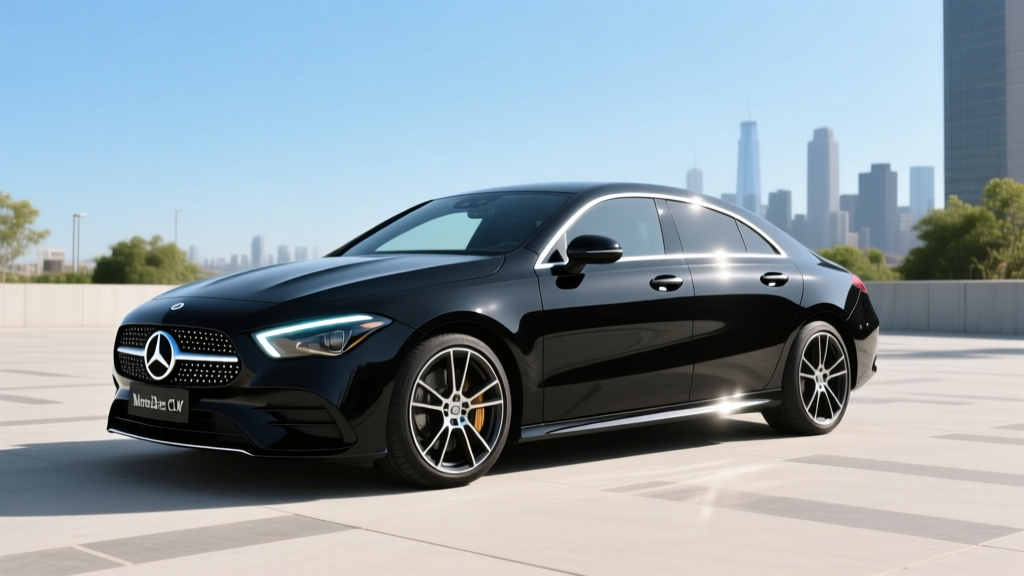
The 2026 Mercedes-Benz CLA EV (built on the new MMA platform) is a premium electric compact sedan targeting an EPA-estimated range of over 400 miles on its rear-wheel-drive variant, with an 85 kWh usable battery and peak DC fast-charging at 250 kW (10–80% in approximately 17 minutes). Pricing is expected to start near $46,000 for the CLA 250 EV. It qualifies for the $7,500 federal §30D tax credit only if it meets battery-sourcing and critical-mineral requirements at the time of your purchase — verify current eligibility on IRS.gov before committing. If you have reliable home Level 2 charging and drive under 50 miles daily, the CLA EV will cost roughly $1,800–$2,400 less per year to fuel than the gas CLA 250, with lower scheduled maintenance. If you lack home charging access or regularly drive in extreme cold, consider the CLA hybrid or a competing EV with broader public charging compatibility.
Range, Battery, and Charging: What the Numbers Actually Mean
The 2026 CLA EV rides on Mercedes-Benz's modular MMA architecture, purpose-built for electrification. Two battery packs are offered: an 85 kWh (usable) NMC (nickel-manganese-cobalt) pack for extended-range variants, and a smaller 58 kWh LFP (lithium iron phosphate) pack for the entry-level model. Here is how the powertrain lineup breaks down:
| Specification | CLA 250 EV (RWD) | CLA 350 4MATIC EV (AWD) | CLA Entry LFP (RWD) |
|---|---|---|---|
| Battery (usable) | 85 kWh NMC | 85 kWh NMC | 58 kWh LFP |
| EPA Range (est.) | ~404 mi | ~350 mi | ~270 mi |
| Horsepower | 268 hp | 349 hp | 201 hp |
| 0–60 mph | ~6.2 sec | ~4.7 sec | ~7.4 sec |
| Peak DC Charge Rate | 250 kW | 250 kW | 170 kW |
| 10–80% DCFC Time | ~17 min | ~17 min | ~22 min |
| Level 2 (AC) Charge Rate | 22 kW | 22 kW | 11 kW |
| Efficiency (target) | ~5.2 mi/kWh | ~4.1 mi/kWh | ~4.7 mi/kWh |
| Est. Base MSRP | $46,000 | $53,000 | $42,000 |
Real-World Range vs. EPA Sticker
Mercedes claims a WLTP range exceeding 750 km for the RWD variant, which translates to the ~404-mile EPA estimate after the EPA's more conservative testing cycle. In real-world conditions, expect:
- Highway driving (75 mph): ~330–350 miles (aerodynamic drag reduces efficiency by 15–18%)
- Cold weather (20°F / -7°C): ~280–310 miles (cabin heating and battery resistance reduce range by 25–30%)
- Combined mixed driving (city/highway, moderate temps): ~370–390 miles
The CLA EV includes a standard heat pump, which recovers waste heat from the drivetrain to warm the cabin — this reduces cold-weather range loss compared to vehicles using resistive heating. Preconditioning the battery while plugged in (via the Mercedes me app) before departure further mitigates cold-weather impact.
Charging Curve Reality: 250 kW Is a Peak, Not a Constant
The 250 kW peak charge rate applies only between roughly 10% and 30% state of charge. As the battery fills, the charge rate tapers to protect cell longevity:
- 10–30%: ~250 kW (peak)
- 30–60%: ~180–200 kW
- 60–80%: ~120–150 kW
- 80–100%: ~40–60 kW (slow trickle)
Average sustained power across the 10–80% session is approximately 175 kW, which is why the 10–80% time is 17 minutes rather than the ~11 minutes a sustained 250 kW would theoretically deliver. The 800-volt electrical architecture (shared with the Porsche Taycan and Hyundai Ioniq 5) is what enables these high charge rates.
CLA EV vs. Gas CLA 250: A Real Cost Comparison
The most common question from Mercedes shoppers: does going electric actually save money on a compact luxury sedan? Let's compare the 2026 CLA EV against the gas-powered CLA 250 over five years and 75,000 miles.
| Cost Factor | 2026 CLA EV (RWD) | 2026 CLA 250 (Gas) | Difference |
|---|---|---|---|
| Base MSRP | $46,000 | $44,500 | EV +$1,500 |
| Federal Tax Credit (§30D) | Up to $7,500* | $0 | EV –$7,500 |
| Net Purchase Price | $38,500* | $44,500 | EV saves $6,000 |
| Fuel/Energy (5 yr / 75k mi) | $4,200** | $10,500*** | EV saves $6,300 |
| Scheduled Maintenance (5 yr) | $1,200 | $3,800 | EV saves $2,600 |
| Insurance (5 yr avg.) | $12,500 | $10,800 | EV +$1,700 |
| Estimated Depreciation (5 yr) | $19,000 | $18,500 | EV +$500 |
| 5-Year Total Cost | $75,400 | $88,100 | EV saves ~$12,700 |
* Assumes full §30D eligibility — verify battery-sourcing compliance on IRS.gov. Income caps apply: $150K single / $300K joint. MSRP cap for sedans: $55,000.
** Based on national average electricity cost of $0.16/kWh and 70% home / 30% public DCFC charging mix.
*** Based on $3.50/gal premium unleaded and 28 MPG combined (fueleconomy.gov).
Where the Gas CLA Still Wins
The gas CLA 250 retains advantages in upfront simplicity: no home charger installation ($500–$2,000), no range planning for road trips, and slightly lower insurance premiums due to established repair networks. If you drive fewer than 8,000 miles per year, the fuel savings narrow significantly, and the gas model may break even or win on total cost.
Ownership Costs Breakdown: What First-Time EV Buyers Miss
Home Charging Installation
The CLA EV's 22 kW onboard AC charger is among the fastest in its class, but extracting that speed at home requires a 100-amp dedicated circuit and a hardwired Level 2 station — most residential panels and standard 50-amp NEMA 14-50 outlets max out at 11.5 kW (48 amps). Budget accordingly:
| Home Charging Setup | Equipment Cost | Electrician + Permit | Total | Charge Speed |
|---|---|---|---|---|
| NEMA 14-50 outlet (basic) | $300–$600 | $500–$1,200 | $800–$1,800 | Up to 11.5 kW (~44 mi/hr) |
| Hardwired 60A station | $500–$900 | $800–$1,800 | $1,300–$2,700 | Up to 14.4 kW (~55 mi/hr) |
| Hardwired 100A (full 22 kW) | $800–$1,500 | $1,500–$3,500* | $2,300–$5,000 | 22 kW (~85 mi/hr) |
* A 100-amp EV circuit may require a panel upgrade ($2,000–$4,000 additional) if your home has a 100-amp or 150-amp main service. Consult a licensed electrician for a load calculation.
Maintenance Savings Are Real — But Specific
The CLA EV eliminates oil changes, spark plugs, transmission fluid, and exhaust system maintenance. Regenerative braking extends brake pad life to 100,000+ miles in typical driving. Remaining maintenance costs:
- Cabin air filter: $80–$120 every 20,000 miles
- Tire rotation: $40–$60 every 7,500 miles (EVs wear tires 15–20% faster due to instant torque and heavier weight)
- Brake fluid flush: $120–$180 every 2 years
- Windshield washer fluid, wiper blades: standard
Insurance Premiums
EV insurance runs 10–20% higher than equivalent gas models due to battery replacement costs and specialized repair requirements. For the CLA EV, expect annual premiums of $2,200–$2,800 depending on your state, driving record, and coverage level. Shop quotes from providers with dedicated EV policies (some offer battery-specific coverage or bundled home-charger riders).
Federal Tax Credit Eligibility: The §30D Checklist
The CLA EV is a sedan, so the MSRP cap is $55,000. The CLA 250 EV at ~$46,000 clears this threshold, but higher trims with options packages may exceed it. Verify your eligibility against these requirements:
- MSRP cap: ≤ $55,000 for sedans (including destination charge)
- Buyer income cap (modified AGI): ≤ $150,000 single / $225,000 head of household / $300,000 joint
- Battery sourcing: Required percentage of critical minerals and battery components must be sourced from the U.S. or free-trade-agreement countries (thresholds increase annually — check the IRS qualified vehicles list for current-year compliance)
- Point-of-sale transfer: You can transfer the credit to the dealer at purchase, reducing your out-of-pocket cost immediately — the dealer handles the IRS paperwork
- Final assembly: Must occur in North America (the CLA EV is assembled at Mercedes' plant in Kecskemét, Hungary — this may disqualify it from §30D; check the VIN on the IRS list before purchasing)
⚠ Critical Caveat: Assembly Location
As of early 2026, the CLA EV is produced in Hungary. Under §30D rules, final assembly in North America is required for the new-vehicle credit. Mercedes-Benz has announced plans to localize MMA-platform production, but until a U.S.-assembled VIN appears on the IRS qualified list, the $7,500 credit should be considered uncertain. Factor this into your budget — do not assume the credit applies. Some buyers may qualify for a leased-vehicle credit (§45W), which the lessor receives and may pass through as a reduced monthly payment; consult your dealer and a tax professional.
Myths vs. Facts: Common CLA EV Misconceptions
| Myth | Fact |
|---|---|
| "The battery will need replacing in 5 years." | Mercedes warranties the high-voltage battery for 8 years / 100,000 miles with a capacity-retention threshold of 70%. Industry data shows NMC batteries losing 10–15% capacity over 8 years under normal use. |
| "I can't road-trip in an EV." | The CLA EV charges on both NACS (Tesla Supercharger) and CCS networks via its standard charge port. At 250 kW peak, a 10–80% top-up takes ~17 minutes — comparable to a gas stop with a restroom break. |
| "EVs are worse in the cold." | Range drops 25–30% in sub-freezing temps, but the CLA EV's heat pump and battery preconditioning mitigate this. Precondition while plugged in to preserve range. |
| "Public charging is unreliable." | Tesla Supercharger uptime exceeds 99% nationally. Electrify America and EVgo reliability has improved but varies by station — apps like PlugShare show real-time status and user reviews. |
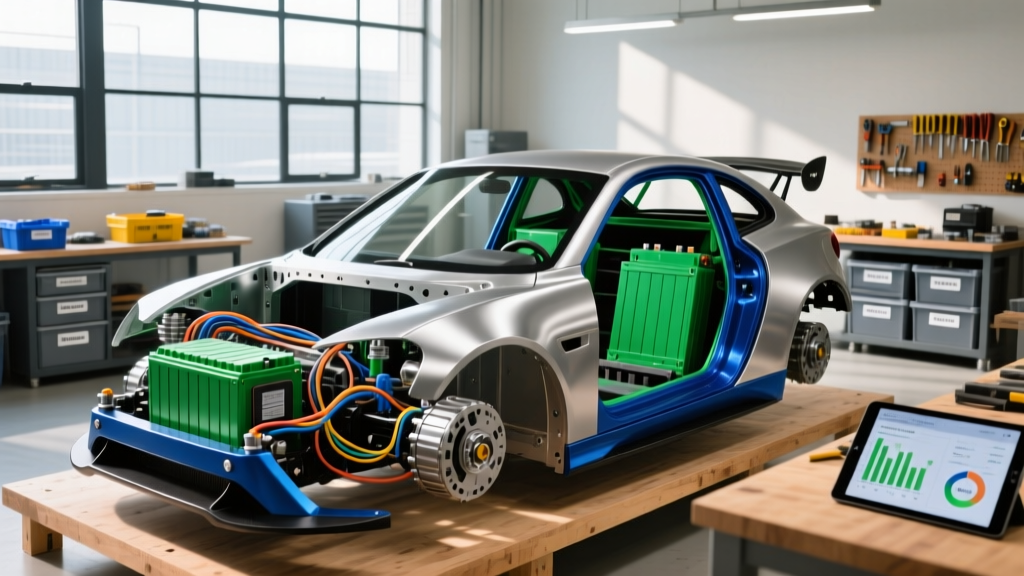
| "The CLA EV is just a converted gas car." | The MMA platform is EV-native, with a flat floor, optimized weight distribution, and 800V architecture. It is not a retrofit of the MFA2 gas platform. |
Decision Framework: Is the CLA EV Right for You?
Buy the CLA EV if:
- You have access to home Level 2 charging (garage, driveway, or workplace)
- Your daily commute is under 80 miles round-trip
- You value low running costs and can absorb a slightly higher purchase price
- You want a compact luxury sedan with 400+ mile range capability
- You primarily drive in moderate climates or can precondition in cold weather
Consider the gas CLA 250 or CLA hybrid instead if:
- You rely exclusively on street parking with no charging access
- You regularly drive 300+ miles between stops in rural areas with sparse DCFC coverage
- You live in a region with extreme cold (frequent sub-0°F temps) and cannot garage the vehicle
- Your annual mileage is under 6,000 miles (fuel savings won't offset the EV premium)
- The §30D credit is unavailable due to assembly location and the price gap matters to your budget
Consider a competitor if:
- Tesla Model 3: Better Supercharger network access, lower starting price (~$39,000), but less traditional luxury interior
- BMW i4: Similar luxury positioning, ~307-mile EPA range, available U.S. assembly for tax credit eligibility
- Hyundai Ioniq 6: 360-mile EPA range, faster 10–80% charging (~18 min at 350 kW), ~$10,000 less expensive, but non-luxury brand
Frequently Asked Questions
What is the real-world range of the 2026 Mercedes CLA EV?
The EPA-estimated range for the RWD CLA 250 EV is approximately 404 miles. In real-world mixed driving at moderate temperatures, expect 370–390 miles. Highway-only driving at 75 mph yields roughly 330–350 miles. In sustained cold weather (below 20°F), expect 280–310 miles unless you precondition the battery while plugged in.
Does the CLA EV use NACS or CCS for charging?
Mercedes-Benz has adopted the NACS (North American Charging Standard) connector for all new U.S.-market EVs starting with the MMA platform. The CLA EV can charge at Tesla Superchargers natively and at CCS stations using an adapter. The 800V architecture supports peak rates of 250 kW on compatible chargers.
How long does the CLA EV battery last, and what does replacement cost?
Mercedes warranties the high-voltage battery for 8 years or 100,000 miles, guaranteeing at least 70% of original capacity. Based on industry NMC degradation data, expect 85–90% capacity retention at 8 years under normal use. Out-of-warranty battery replacement costs are estimated at $12,000–$18,000, though full replacement is rare — individual module repair is often possible at lower cost.
Can I charge the CLA EV on a standard 120V household outlet?
Yes, Level 1 charging on a standard 120V/15A outlet delivers approximately 1.4 kW, adding about 5–6 miles of range per hour. This is sufficient only for overnight top-ups if your daily driving is under 30 miles. For practical daily use, a 240V Level 2 installation is strongly recommended.
Is the CLA EV eligible for the $7,500 federal tax credit?
Eligibility depends on final assembly location and battery-sourcing compliance. As of early 2026, the CLA EV is assembled in Hungary, which may disqualify it from the §30D new-vehicle credit. Check the VIN against the IRS qualified vehicles list before purchasing. Leasing may unlock the §45W commercial credit, which the lessor can pass through as a lease discount.
How does the CLA EV compare to the gas CLA on performance?
The CLA 250 EV (268 hp) matches the gas CLA 250 (221 hp) with a ~6.2-second 0–60 time versus ~6.4 seconds. The AWD CLA 350 EV (349 hp) reaches 60 mph in approximately 4.7 seconds. Electric motors deliver instant torque from 0 RPM, making the EV feel noticeably quicker in city driving despite similar 0–60 figures.