Quick Answer: Is the Mercedes CLA Electric Vehicle Worth It?
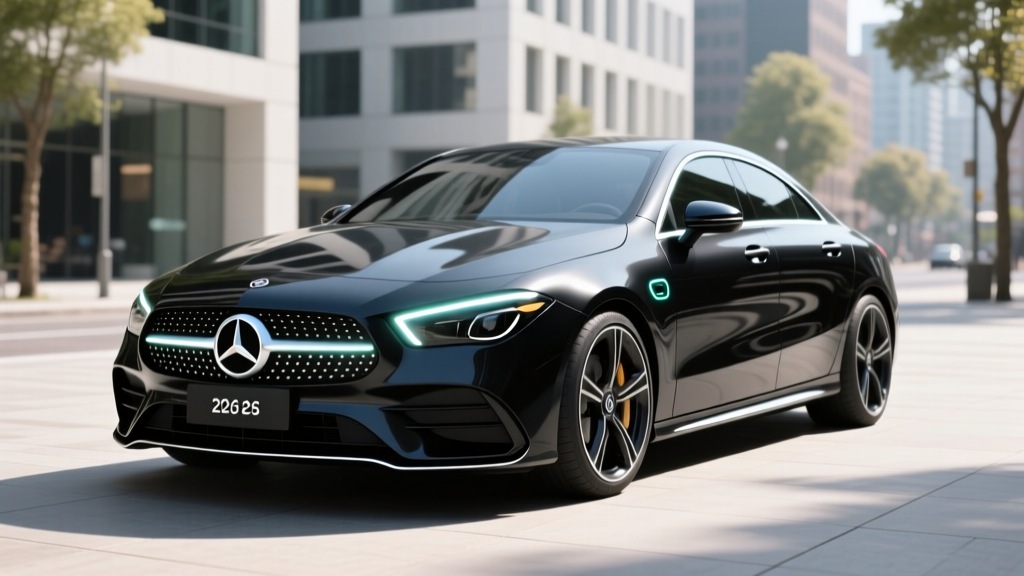
The 2026 Mercedes-Benz CLA EV (built on the new MMA platform) is a compact luxury electric sedan targeting an EPA-estimated range of over 400 miles on its highest-capacity battery, with 800-volt architecture enabling DC fast charging at up to 250 kW (10–80% in approximately 18 minutes). Starting MSRP is expected around $45,000–$48,000 before incentives. It competes directly with the Tesla Model 3, BMW i4, and Hyundai Ioniq 6. Federal §30D tax credit eligibility depends on battery sourcing and buyer income — check the latest IRS guidance before assuming a flat $7,500.
What the 2026 Mercedes CLA Electric Vehicle Actually Offers
The CLA EV is not a compliance car or a converted gas chassis. It rides on Mercedes' dedicated Mercedes-Benz Modular Architecture (MMA), engineered from the ground up for electric propulsion. This matters for packaging efficiency, weight distribution, and interior volume — areas where "oil-can" conversions typically compromise.
Mercedes has confirmed two battery options for the CLA EV lineup:
- Standard-range: ~58 kWh usable capacity (LFP chemistry), targeting approximately 300+ miles EPA
- Long-range: ~85 kWh usable capacity (NMC chemistry with silicon-oxide anode), targeting approximately 400+ miles EPA
The LFP pack is significant: lithium iron phosphate offers superior cycle life and thermal stability, though at the cost of lower energy density. Mercedes is targeting cell-level energy density of over 250 Wh/kg for the NMC variant — competitive with the best in class. The 800V electrical architecture (shared with the Porsche Taycan and Hyundai E-GMP vehicles) is a genuine differentiator at this price point, enabling sustained high-power charging rather than brief peak spikes.
| Specification | Standard Range (LFP) | Long Range (NMC) |
|---|---|---|
| Battery Capacity (usable) | ~58 kWh | ~85 kWh |
| Chemistry | LFP | NMC (Si-Oxide anode) |
| EPA Range (est.) | ~300 mi | ~400+ mi |
| Real-World Highway Range (est.) | ~250–270 mi | ~340–370 mi |
| Max DC Fast Charge | ~200 kW | ~250 kW |
| 10–80% DC Charge Time | ~22 min | ~18 min |
| Level 2 AC Charge Rate | 11 kW | 11 kW |
| 0–60 mph (est.) | ~6.5 sec | ~5.2 sec |
| Horsepower | ~268 hp | ~340 hp |
| Drivetrain | RWD | RWD / AWD optional |
| Starting MSRP (est.) | ~$45,000 | ~$50,000–$55,000 |
| Battery Warranty | 8 yr / 100,000 mi | 8 yr / 100,000 mi |
Real-World Range Reality Check
EPA estimates are measured under controlled conditions. In real-world highway driving at 70–75 mph, expect the long-range CLA EV to deliver roughly 340–370 miles on a full charge. In cold weather (below 32°F), lithium-ion batteries lose efficiency and cabin heating draws significant power — plan for 20–30% range reduction, bringing the long-range model to approximately 280–310 miles. The CLA EV's standard heat pump mitigates some of this loss compared to resistive heating systems.
Charging: Where the 800V Architecture Pays Off
The single biggest practical advantage of the CLA EV's 800-volt system is sustained charging power. Many 400V EVs peak at their maximum kW for only a few minutes before the charge curve tapers aggressively to protect the battery. The CLA EV's higher voltage allows it to sustain higher amperage deeper into the state-of-charge window.
Here's what charging looks like across levels:
| Charging Level | Power | Miles Added per Hour | Best For |
|---|---|---|---|
| Level 1 (120V household) | ~1.4 kW | ~4–5 mi/hr | Overnight top-up only |
| Level 2 (240V home/work) | 11 kW | ~35–40 mi/hr | Daily charging, full overnight fill |
| DC Fast Charge (CCS/NACS) | Up to 250 kW | ~700+ mi/hr (peak) | Road trips, quick stops |
On a 350 kW Electrify America or Tesla Supercharger (with NACS adapter or native NACS port, depending on Mercedes' final connector strategy for North America), the long-range CLA EV should add roughly 200 miles of range in 10 minutes under optimal conditions — meaning a pre-conditioned battery and a state of charge below 30%.
Preconditioning matters. The CLA EV's navigation-linked battery thermal management will warm or cool the pack en route to a charger, ensuring you hit peak charge rates on arrival. Without preconditioning, a cold battery can cut peak charge rates by 40–50%.
Cost Breakdown: CLA EV vs. Gas CLA vs. Competition
The purchase price is only the opening move. Here's how the CLA EV stacks up over five years of ownership against its gas-powered CLA sibling and key EV competitors.
| Cost Category | Mercedes CLA EV (Long Range) | Mercedes CLA 250 (Gas) | Tesla Model 3 LR |
|---|---|---|---|
| Purchase Price (MSRP) | $52,000 | $43,000 | $47,000 |
| Federal Tax Credit (§30D) | $0–$7,500* | $0 | $0–$7,500* |
| Fuel/Energy (60k mi) | $3,800 | $7,200 | $3,600 |
| Maintenance (5 yr) | $1,200 | $3,500 | $1,100 |
| Insurance (5 yr avg) | $9,500 | $7,800 | $9,000 |
| Estimated Depreciation | $22,000 | $18,000 | $19,000 |
| 5-Year Total (pre-credit) | $88,500 | $79,500 | $80,700 |
* §30D credit eligibility depends on battery critical-mineral sourcing, buyer AGI caps ($150K single / $300K joint), and MSRP limits ($55,000 for sedans). Credit may be transferred to the dealer at point of sale. Always verify current rules at IRS.gov.
Energy costs assume a national average of $0.16/kWh for home charging and $0.35/kWh for public DC fast charging (mixed 70/30 split), and $3.50/gallon for the gas CLA at 30 MPG combined. The CLA EV's efficiency — estimated at roughly 2.5–3.0 miles per kWh (approximately 110–120 MPGe combined, per fueleconomy.gov methodology) — is competitive with the segment's best.
EV vs. Gas: The Practical Decision Framework
The CLA EV makes financial and practical sense for some buyers and not others. Here's a clear framework based on real ownership variables:
Should You Buy the Mercedes CLA Electric Vehicle?
Choose the CLA EV if:
- You have access to Level 2 home charging (garage, driveway, or workplace)
- Your daily commute is under 80 miles round-trip (covers 95%+ of daily driving on a single charge)
- You live in a region with moderate winters or have access to preconditioned garage parking
- You value the 800V fast-charging capability for road trips (2–3 DC fast charges per year)
- You qualify for the §30D tax credit or your state offers additional EV incentives
Stick with the gas CLA 250 or consider a PHEV if:
- You rent an apartment with no charging access and public infrastructure is sparse in your area
- You regularly drive 300+ miles in single trips through charging-desert regions
- You experience sustained sub-zero winters and cannot garage the vehicle
- Your budget is firmly under $40,000 and you cannot absorb the upfront premium
| Factor | CLA EV | CLA 250 (Gas) |
|---|---|---|
| Fuel Cost per Mile | $0.05–$0.06 | $0.12–$0.14 |
| "Refueling" Time (typical) | 8–10 hrs (home L2) / 18 min (DC 10–80%) | 5 minutes |
| Maintenance Items | Cabin filter, wipers, brake fluid, tires | Oil, filters, spark plugs, transmission fluid, brakes |
| Regenerative Braking | Yes — extends brake pad life to 100K+ mi | No |
| Cold-Weather Penalty | 20–30% range loss | ~5–10% fuel economy loss |
| Frunk Storage | Yes (estimated ~1.5 cu ft) | No |
| Federal Tax Credit | Up to $7,500 (if eligible) | None |
Common Misconceptions About the CLA EV — Corrected
Buyer confusion around EVs persists. Let's address the most common myths specific to the CLA EV and compact luxury EVs in general:
| Myth | Fact |
|---|---|
| "The battery will need replacing in 5 years." | Mercedes warranties the battery for 8 years / 100,000 miles with a minimum 70% capacity retention threshold. Industry data shows modern NMC and LFP packs retaining 85–90% capacity at 150,000 miles under normal use. |
| "I can just plug it into a regular outlet and it's fine." | Level 1 (120V) charging adds only ~4–5 miles per hour. For a 85 kWh pack, a full charge would take 60+ hours. A Level 2 (240V) home charger is effectively required for daily use. |
| "The tax credit is guaranteed $7,500." | The §30D credit requires meeting critical-mineral and battery-component sourcing thresholds, buyer income caps, and MSRP limits. Many luxury EVs face partial or zero credit depending on the model year's sourcing rules. Verify at IRS.gov. |
| "Electricity from coal makes EVs worse than gas cars." | Even on the dirtiest US grids, EVs produce fewer lifecycle emissions than comparable gas cars (per Argonne National Laboratory GREET model). On cleaner grids, the advantage widens dramatically. The CLA EV's efficiency (~3.0 mi/kWh) amplifies this benefit. |
| "EV insurance is always double." | EV insurance premiums average 10–20% higher than gas equivalents, not double. Shop multiple carriers — companies like Geico, Progressive, and EV-specific insurers have narrowed the gap. |
Home Charging: What First-Time EV Buyers Must Know
The CLA EV experience lives or dies on home charging. Here's the honest breakdown:
| Item | Low Estimate | High Estimate |
|---|---|---|
| Level 2 Charger (hardware) | $400 | $700 |
| Electrician labor (240V/50A circuit) | $600 | $1,500 |
| Permit & inspection | $100 | $300 |
| Electrical panel upgrade (if needed) | $1,500 | $3,500 |
| Total (no panel upgrade) | $1,100 | $2,500 |
| Total (with panel upgrade) | $2,600 | $6,000 |
Panel upgrade reality: Most homes built after 1990 have a 200-amp electrical panel, which can usually accommodate a 50-amp EV circuit. Older homes with 100-amp panels will likely need an upgrade. Always get a quote from a licensed electrician before committing to a charger purchase — the panel assessment determines your actual install cost.
Recommended Level 2 chargers compatible with the CLA EV's 11 kW onboard charger include the ChargePoint Home Flex, Emporia Vue, and Tesla Wall Connector (if the CLA EV ships with a NACS port or you use a J1772 adapter). All support scheduled charging to take advantage of off-peak utility rates.
What First-Time EV Buyers Should Know Before Signing
Beyond the CLA EV specifically, here are the non-obvious ownership realities that separate informed buyers from surprised ones:
- Tire wear is real. EVs are heavier and deliver instant torque. Expect tire replacement every 25,000–35,000 miles. Budget $800–$1,200 for a set of EV-rated tires (e.g., Michelin Pilot Sport EV, Hankook iON).
- Charging-curve taper is normal. The CLA EV will charge fastest between 10–50% SoC. Above 80%, charging slows dramatically to protect the battery. On road trips, charge to 80% and go — the last 20% can take as long as the first 70%.
- Over-the-air updates change the car. Mercedes' MB.OS platform will push firmware updates that can alter range estimates, charging behavior, and feature availability. Your car may improve — or change — after purchase.
- Depreciation is the wildcard. EV depreciation has been volatile. Early data suggests luxury EVs lose 40–50% of value in three years, though this is stabilizing as the market matures. Lease if depreciation concerns you.
- Public charging is improving but imperfect. Networks like Electrify America and EVgo have expanded, but reliability varies. Use apps like PlugShare and A Better Routeplanner to verify charger availability on road trips. The CLA EV's NACS compatibility (if confirmed) will unlock Tesla Supercharger access — the most reliable DC network in North America.
Frequently Asked Questions
Is the Mercedes CLA EV available to order now?
The 2026 CLA EV was announced and shown as a near-production concept. US deliveries are expected to begin in late 2025 or early 2026. Final EPA range, pricing, and trim configurations will be confirmed closer to launch. Monitor Mercedes-Benz.com for official US specifications.
Does the CLA EV qualify for the $7,500 federal tax credit?
Eligibility under IRS §30D depends on the battery's critical-mineral and component sourcing percentages for the specific model year, the buyer's adjusted gross income (capped at $150K single / $225K head-of-household / $300K joint), and the vehicle's MSRP (capped at $55,000 for sedans). If the CLA EV Long Range exceeds $55,000 MSRP, it would be ineligible regardless of sourcing. The credit can be transferred to the dealer as a point-of-sale discount. Confirm current eligibility at fueleconomy.gov.
How does the CLA EV compare to the Tesla Model 3 and BMW i4?
The Tesla Model 3 Long Range offers ~341 miles EPA at ~$47,000, with access to the Supercharger network and class-leading software. The BMW i4 eDrive40 offers ~301 miles EPA at ~$57,000, with superior build quality. The CLA EV positions between them: targeting 400+ miles on the long-range variant with 800V charging speed, Mercedes interior quality, and a price point around $50,000–$55,000. The deciding factors will be final EPA numbers, actual DC charging curves, and MB.OS execution.
Can I road-trip the CLA EV cross-country?
Yes, with planning. At 400+ miles EPA, the long-range CLA EV can cover 250–300 real-world miles between DC fast-charge stops at highway speeds. On a typical 2,500-mile cross-country trip, expect 7–9 charging stops of 18–25 minutes each. Route planning apps like A Better Routeplanner will optimize stops based on the CLA EV's specific charge curve and efficiency.
What happens if the battery degrades significantly?
Mercedes warranties the high-voltage battery for 8 years or 100,000 miles against capacity loss below 70%. If your battery falls below that threshold within the warranty period, Mercedes will repair or replace it at no cost. Out-of-warranty replacement costs for an 85 kWh pack are estimated at $12,000–$18,000 based on current luxury EV battery pricing — though costs are declining year over year.