The Quick Answer: Is the Mercedes CLA Electric Estate Worth It?
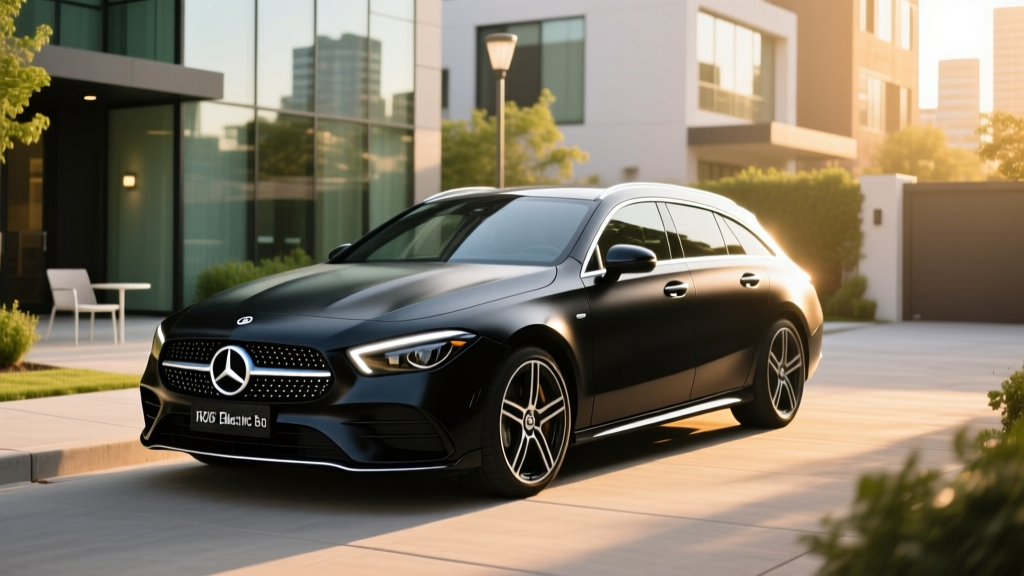
The electric estate Mercedes CLA (officially the CLA Shooting Brake on the MMA platform) targets buyers who want premium wagon practicality with zero tailpipe emissions. Based on Mercedes-Benz's confirmed MMA architecture specs, expect approximately 310 miles of EPA-estimated range, an 85 kWh usable NMC battery, and DC fast charging that peaks near 250 kW (10–80% in roughly 22 minutes). Pricing is anticipated to start around $48,000–$52,000 before incentives. It's a strong pick if you need cargo versatility, premium interior tech, and have reliable Level 2 home charging access — but its sedan-coupe roofline limits cargo height versus a traditional wagon, and federal tax credit eligibility depends on battery sourcing rules that remain in flux for European-built models.
What Exactly Is the Electric CLA Estate?
Mercedes-Benz is expanding its entry-luxury lineup on the modular MMA (Mercedes-Benz Modular Architecture) platform, which supports both battery-electric and mild-hybrid powertrains. The electric CLA sedan was previewed by the Concept CLA Class, and the estate variant — known in Europe as the CLA Shooting Brake — extends that formula with a longer roofline and hatchback cargo access.
This is not a retrofitted gas car. The MMA platform is EV-first, meaning the battery pack sits low in the floor, the motors are purpose-built for efficiency, and the 800-volt electrical architecture enables the fast charging speeds that set this generation apart from older Mercedes EQ models like the EQA or EQB.
Key design distinctions for the estate:
- Extended roofline with a rear hatch rather than a sedan trunk
- Estimated cargo volume of ~18–20 cu ft behind rear seats, expanding to ~45+ cu ft with seats folded
- Same powertrain options as the CLA sedan, but with a slight range penalty (typically 5–10 miles EPA) due to increased weight and aerodynamic drag
Range, Battery & Charging: The Numbers That Matter
Here's where the MMA platform earns its keep. Mercedes has confirmed an 800V architecture and a high-silicon-anode NMC (nickel manganese cobalt) battery cell chemistry, which improves energy density and charge acceptance compared to older EQ models.
| Spec | Value |
|---|---|
| Battery (usable) | ~85 kWh, NMC chemistry |
| EPA Range (est.) | ~310 miles (real-world highway: ~260–280 mi; cold weather: ~220–250 mi) |
| Efficiency | ~3.6–3.8 mi/kWh (~95–100 MPGe combined) |
| DC Fast Charge (peak) | ~250 kW |
| 10–80% DC Charge Time | ~22 minutes (at 350 kW-capable station, preconditioned) |
| Level 2 AC Charge Rate | 11 kW (~30–33 miles of range per hour) |
| Powertrain | Rear-wheel-drive single motor (AWD dual-motor optional) |
| Horsepower (RWD est.) | ~268 hp |
| 0–60 mph (RWD est.) | ~6.2 seconds |
| Connector | NACS (Tesla Supercharger compatible) |
| Warranty (battery) | 8 years / 100,000 miles (70% capacity retention) |
| Base MSRP (est.) | $48,000–$52,000 |
Real-World Range Reality Check
The ~310-mile EPA estimate assumes mixed driving at moderate temperatures. Here's what to actually expect:
- Highway cruising at 75 mph: ~260–280 miles before needing a charge
- Cold weather (below 32°F): ~220–250 miles due to cabin heating demands and battery resistance
- City/regenerative driving: You may match or slightly exceed the EPA figure thanks to regen braking
The CLA Estate's 800V architecture also means preconditioning matters. When you navigate to a DC fast charger, the car warms the battery to optimal temperature, which is essential to hit that 250 kW peak. Without preconditioning, expect peak rates closer to 150–180 kW, stretching your 10–80% stop to ~30 minutes.
EV vs. Gas vs. Hybrid: What Are You Actually Comparing?
The CLA Electric Estate doesn't have a direct gas wagon rival in the Mercedes lineup — the current CLA is a sedan-only model in the U.S., and the CLA 250 Shooting Brake was never officially sold stateside. So the comparison is really against compact luxury crossovers and wagons like the Volvo V60 Recharge (PHEV), Audi A4 allroad (gas), or the BMW 3 Series Touring (not sold in the U.S.).
| Metric | CLA Electric Estate (EV) | Volvo V60 Recharge (PHEV) | Audi A4 allroad (Gas) |
|---|---|---|---|
| Powertrain | BEV, 85 kWh | PHEV, 18.8 kWh + 2.0L turbo | Gas, 2.0L turbo |
| Electric-Only Range | ~310 mi | ~35 mi | 0 mi |
| Combined Efficiency | ~97 MPGe | ~63 MPGe (combined gas+elec) | ~28 MPG |
| Starting Price (est.) | ~$50,000 | ~$52,000 | ~$47,000 |
| Fuel/Energy Cost per Mile | ~$0.04–$0.06 (home charging) | ~$0.06–$0.12 (varies) | ~$0.14–$0.17 |
| Annual "Fuel" (15k mi) | ~$600–$900 | ~$900–$1,800 | ~$2,100–$2,550 |
| Maintenance (5-yr est.) | ~$1,500–$2,500 | ~$3,000–$4,500 | ~$3,500–$5,000 |
| 0–60 mph | ~6.2 sec | ~5.5 sec | ~5.8 sec |
The EV's per-mile energy cost advantage is dramatic — roughly 60–70% cheaper than gas on a per-mile basis when charging at home at average U.S. electricity rates (~$0.16/kWh). The PHEV splits the difference but still requires oil changes, spark plugs, and transmission service that the BEV avoids entirely.
Total Cost of Ownership: The 5-Year Breakdown
Purchase price tells only part of the story. Here's a realistic 5-year / 75,000-mile ownership projection for the CLA Electric Estate versus a gas compact luxury wagon equivalent:
| Category | CLA Electric Estate (EV) | Gas Wagon Equivalent |
|---|---|---|
| Purchase Price (est. base) | $50,000 | $47,000 |
| Federal Tax Credit (§30D) | $0–$7,500 (see eligibility below) | $0 |
| Effective Purchase | $42,500–$50,000 | $47,000 |
| Energy/Fuel (75,000 mi) | $3,000–$4,500 | $10,500–$12,750 |
| Maintenance | $1,500–$2,500 | $3,500–$5,000 |
| Insurance (5-yr est.) | $9,000–$12,000 | $7,500–$10,000 |
| Estimated Depreciation | $18,000–$24,000 | $16,000–$20,000 |
| 5-Year Total (est.) | $56,000–$74,000 | $68,500–$79,750 |
Key takeaway: The EV can break even or come out ahead over five years, primarily through fuel and maintenance savings — but this assumes reliable access to affordable home charging. If you're relying exclusively on DC fast charging at $0.35–$0.50/kWh, your energy costs nearly double, narrowing the gap significantly.
Insurance is the wildcard. EV premiums run 15–25% higher on average due to battery replacement costs and specialized repair requirements. Get quotes before committing.
Federal Tax Credit & Incentive Eligibility
Under IRS §30D rules, the federal clean vehicle credit offers up to $7,500 — but eligibility is anything but guaranteed for the CLA Electric Estate:
- MSRP cap: The vehicle must have an MSRP at or below $55,000 (sedan/wagon classification). The CLA Estate's base trim likely qualifies, but higher trims may exceed this threshold.
- Buyer income cap: Modified AGI must not exceed $150,000 (single) or $300,000 (joint).
- Battery sourcing: A percentage of critical minerals and battery components must be sourced from the U.S. or FTA-partner countries. Mercedes sources cells from CATL and other suppliers, and compliance varies by model year — check fueleconomy.gov for the definitive list at time of purchase.
- Point-of-sale transfer: As of 2024, you can transfer the credit to the dealer for an immediate price reduction, rather than waiting until tax filing.
Critical caveat: European-built Mercedes models have faced sourcing challenges under §30D. The MMA platform vehicles are produced in Rastatt, Germany, and Kecskemét, Hungary. Until Mercedes confirms §30D compliance for specific VIN configurations, treat the $7,500 credit as possible but not assured. Consult a tax professional before banking on it.
Home Charging: What You Need Before You Buy
This is the single biggest factor in whether the CLA Electric Estate will be a joy or a frustration. Here's the hierarchy:
Best case — Level 2 at home (240V, 40–48A circuit): The CLA Estate's 11 kW onboard charger can fully replenish the 85 kWh battery in roughly 8–9 hours overnight. A typical Level 2 home installation costs $800–$2,500 for the charger and electrician labor, assuming your panel has capacity. If you need a panel upgrade (100A → 200A), add $1,500–$3,000.
Acceptable — Level 1 (120V standard outlet): At ~1.4 kW, you'll add roughly 3–4 miles of range per hour. That's ~40–50 miles overnight — sufficient if your daily commute is under 30 miles round-trip, but impractical for road-trip recovery or high-mileage drivers.
Challenging — No home charging: If you live in an apartment or lack a dedicated parking space with outlet access, you'll rely on public Level 2 and DC fast charging. At $0.30–$0.50/kWh for public DC fast charging, your annual energy cost jumps to $1,500–$2,500, and you'll spend 30–60 minutes per week at chargers. This is viable but requires lifestyle adjustment.
Common Misconceptions — Myth vs. Fact
| Myth | Fact |
|---|---|
| "The battery will need replacing in 5 years for $20,000" | NMC batteries in modern thermal-managed packs degrade ~1.5–2.5% per year. At that rate, you'll retain ~88–92% capacity after 5 years. Mercedes warranties 70% for 8 years/100k miles. Full replacement is rare and covered if defective. |
| "I can't road-trip an EV" | With 250 kW DC charging and a 310-mile range, the CLA Estate adds ~200 miles in a 15-minute stop. Mercedes me Charge integrates with Electrify America and Tesla Superchargers (via NACS). Route planning is built into MBUX. |
| "EVs are worse in winter" | Range drops 15–30% in sub-freezing temps — real, but manageable. The CLA Estate's heat pump (standard on MMA EVs) recovers waste heat to warm the cabin more efficiently than resistive heaters, limiting the penalty. Preconditioning while plugged in preserves range. |
| "The tax credit is automatic" | It depends on battery sourcing, MSRP, and your income. Many European-built EVs have lost eligibility mid-year as sourcing requirements tighten. Always verify on fueleconomy.gov before purchasing. |
| "Electric wagons don't exist yet" | The CLA Shooting Brake joins a small but growing segment. The Porsche Taycan Cross Turismo and MG5 EV (not U.S.-market) are predecessors, but the CLA Estate is positioned as a more accessible luxury option. |
Decision Framework: Should You Buy the CLA Electric Estate?
Choose the Mercedes CLA Electric Estate if:
- You have Level 2 home charging (or can install it) and drive 20–60 miles daily
- You want premium interior quality, MBUX tech, and wagon cargo versatility in an EV
- Your annual mileage is 10,000–18,000 miles, where fuel savings maximize payback
- You value the expanding NACS/Supercharger network for road trips
- You want to avoid gas-engine maintenance (no oil, plugs, timing chains, exhaust)
Look elsewhere if:
- You lack home charging access and your area has sparse public DC infrastructure
- You regularly tow (the CLA Estate's towing capacity is estimated at ~2,000 lbs max — far less than an SUV)
- You need maximum cargo height for bulky items — the shooting brake roofline is sleek, not boxy
- Your budget is tight and the tax credit doesn't apply — the ~$50K entry is steep without incentives
- You prefer a proven multi-year track record — the MMA platform is new, and first-model-year risk is real
Frequently Asked Questions
Will the Mercedes CLA Electric Estate be sold in the United States?
Mercedes-Benz has confirmed MMA-platform vehicles for global markets, but U.S. availability of the Shooting Brake (estate) body style has not been explicitly confirmed as of early 2026. The CLA sedan EV is expected; the estate may follow based on market demand. Watch for official announcements at major auto shows.
How does the CLA Estate's cargo space compare to a compact SUV?
Expect ~18–20 cu ft behind the rear seats and ~45+ cu ft with seats folded. That's competitive with a Mercedes GLB (~22/62 cu ft) in total volume, but the lower load floor and hatchback opening make it better for long items and worse for tall, boxy cargo.
Is NACS really better than CCS for the CLA Estate?
For 2026, NACS adoption gives you access to Tesla's Supercharger network — over 20,000 stalls in North America — which is the most reliable public DC network by uptime metrics. The CCS (Electrify America, EVgo) network is growing but still trails in reliability. NACS is the pragmatic choice.
What happens if the battery degrades past 70%?
If your battery's State of Health drops below 70% within 8 years or 100,000 miles, Mercedes is obligated under warranty to repair or replace it at no cost. In practice, modern thermal management systems make catastrophic degradation rare — most owners see gradual, linear loss of 1–2% per year.
Can I charge the CLA Estate at a Tesla Supercharger?
Yes. Mercedes has adopted the NACS connector for its North American EVs starting with the MMA platform. You'll plug directly into V3 and V4 Superchargers without an adapter.
What's the real cost to charge at home vs. public stations?
At the U.S. average residential rate of ~$0.16/kWh, a full 85 kWh charge costs ~$13.60 for ~310 miles — roughly $0.044/mile. Public DC fast charging averages $0.35–$0.50/kWh, or $0.10–$0.14/mile. Home charging is 3x cheaper per mile, which is why it's the make-or-break factor for EV ownership economics.