The Mercedes CLA 350 EV at a Glance
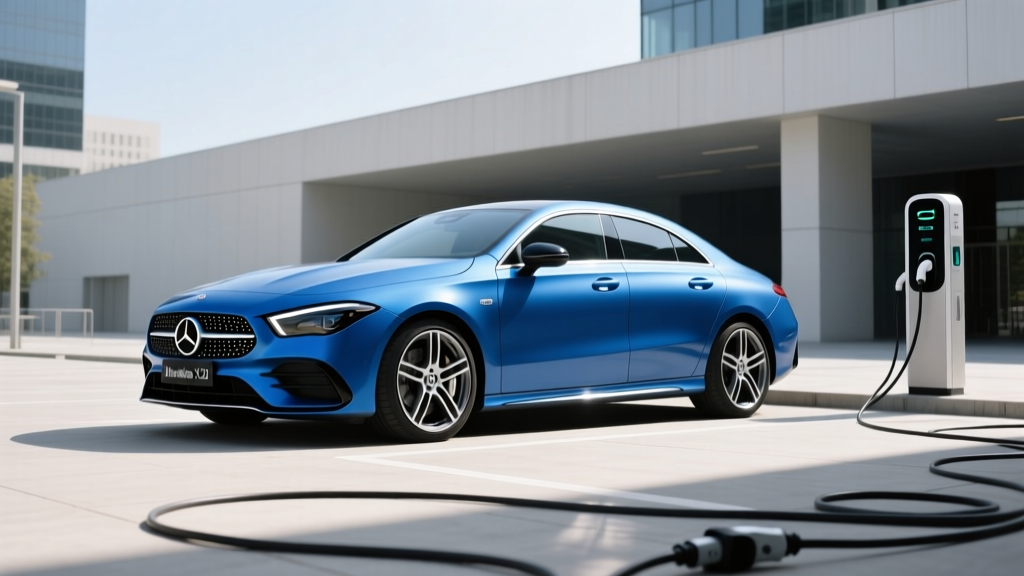
The 2026 Mercedes-Benz CLA 350 EV is the brand's entry-level electric sedan, built on the new MMA (Mercedes Modular Architecture) platform. It targets buyers who want premium compact EV motoring without stepping up to the EQE or EQS. Based on Mercedes' announced specifications, the CLA 350 EV is expected to deliver an EPA-estimated range of approximately 300+ miles from an ~85 kWh usable battery (NMC chemistry), with DC fast charging up to 250 kW (10–80% in roughly 25 minutes). Pricing is anticipated to start around $48,000–$52,000 MSRP before incentives. The vehicle is positioned against the Tesla Model 3, BMW i4, and Hyundai Ioniq 6.
Note: As of early 2026, Mercedes-Benz has announced the CLA EV concept and preliminary specifications. Final EPA certification and U.S. pricing will be confirmed closer to the on-sale date. Figures below reflect announced and estimated data.
Range, Battery, and Efficiency: What the Numbers Mean
The CLA 350 EV sits on Mercedes' dedicated MMA platform, which supports both 400V and 800V architectures. The CLA EV variant is expected to use the 800V system, enabling faster DC charging and improved efficiency. The battery pack is projected at approximately 85 kWh usable capacity, utilizing NMC (nickel manganese cobalt) chemistry — the standard for Mercedes' long-range EVs, prioritizing energy density over the LFP chemistry found in some competitors' base trims.
Real-World Range Expectations
EPA estimate: ~300–320 miles (pending final certification)
Highway driving (70–75 mph): Expect ~250–275 miles
Cold weather (below 30°F): Expect ~220–250 miles without preconditioning
Combined mixed driving: ~280–300 miles typical
The MMA platform includes a standard heat pump, which mitigates cold-weather range loss compared to older EQ models. Preconditioning the battery via the Mercedes me app before DC fast charging is essential to hit peak charge rates.
| Spec | Value |
|---|---|
| Battery (usable) | ~85 kWh (NMC) |
| EPA Range | ~300–320 mi (estimated) |
| Efficiency | ~3.5–3.8 mi/kWh (~105–115 MPGe est.) |
| DC Fast Charge (peak) | 250 kW |
| 10–80% DC Charge | ~25 minutes |
| Level 2 AC Charge | 11 kW (onboard charger) |
| Level 2 10–100% Time | ~8–9 hours |
| 0–60 mph | ~6.0 seconds (est.) |
| Horsepower | ~268 hp (single motor RWD est.) |
| Drivetrain | RWD (AWD 4MATIC available) |
| Starting MSRP | ~$48,000–$52,000 (est.) |
| Battery Warranty | 8 years / 100,000 miles |
Charging: Home Setup, Public Networks, and What It Costs
Charging infrastructure access is the single biggest variable in EV ownership satisfaction. The CLA 350 EV uses the NACS (North American Charging Standard) connector, aligning with Mercedes' 2025+ commitment to NACS across its U.S. EV lineup. This means direct access to the Tesla Supercharger network (now open to NACS-equipped non-Tesla vehicles) as well as Electrify America, EVgo, and other NACS-compatible networks.
| Level | Power | Miles Added per Hour | Best For |
|---|---|---|---|
| Level 1 (120V outlet) | ~1.4 kW | ~4–5 mi/hr | Overnight top-ups, emergencies |
| Level 2 (240V, 48A) | ~11.5 kW | ~38–42 mi/hr | Daily home charging |
| DC Fast Charge | Up to 250 kW | ~600+ mi/hr (peak) | Road trips, rapid top-ups |
Home Charging Installation Costs
Most CLA 350 EV owners will want a Level 2 home charger. Budget for the following:
| Item | Cost Range |
|---|---|
| Level 2 charger (hardware) | $400–$750 |
| Electrician labor (240V/50A circuit) | $500–$2,000 |
| Permit & inspection | $50–$250 |
| Electrical panel upgrade (if needed) | $1,500–$3,500 |
| Total (no panel upgrade) | $950–$3,000 |
| Total (with panel upgrade) | $2,450–$6,500 |
Always get a quote from a licensed electrician before purchasing. Homes with existing 200A panels and spare breaker slots will be at the lower end. Older homes with 100A service often require a panel upgrade, which adds significant cost but increases your home's electrical capacity for future needs.
Cost to Charge vs. Gasoline
At the U.S. average electricity rate of ~$0.17/kWh (per EIA data), fully charging the CLA 350 EV's 85 kWh battery costs roughly $14.45 — equating to about $0.048 per mile. Compare that to a gas-powered Mercedes CLA 250 getting ~30 MPG combined at $3.40/gallon: $0.113 per mile. That's a fuel cost savings of roughly $650–$900 per year at 12,000 miles driven annually.
CLA 350 EV vs. Gas CLA vs. Competitors: The Numbers
The CLA 350 EV doesn't exist in a vacuum. Here's how it stacks up against the internal-combustion CLA and key EV rivals:
| Vehicle | Est. Price | Range / MPG | Energy Cost/Mile | 0–60 mph |
|---|---|---|---|---|
| Mercedes CLA 350 EV | ~$50,000 | ~310 mi (EPA est.) | ~$0.048 | ~6.0s |
| Mercedes CLA 250 (gas) | ~$44,000 | ~30 MPG combined | ~$0.113 | ~6.7s |
| Tesla Model 3 Long Range | ~$48,000 | 341 mi (EPA) | ~$0.044 | 4.2s |
| BMW i4 eDrive40 | ~$57,000 | 307 mi (EPA) | ~$0.050 | 5.5s |
| Hyundai Ioniq 6 SEL | ~$46,000 | 316 mi (EPA) | ~$0.043 | 5.1s |
The CLA 350 EV carries a modest price premium over the gas CLA 250, but the fuel savings and lower maintenance costs (no oil changes, fewer brake replacements thanks to regenerative braking) narrow the gap over a typical 5-year ownership period. Against the Tesla Model 3, the CLA trades some range and performance for Mercedes' interior quality, brand cachet, and dealership service network. The BMW i4 is similarly positioned but starts higher. The Ioniq 6 undercuts on price with competitive range.
Federal Tax Credit and Incentives: What You Actually Qualify For
The IRS §30D federal tax credit can reduce the effective purchase price by up to $7,500, but eligibility depends on several requirements that change frequently:
- MSRP cap: Sedans must be priced at or below $55,000. The CLA 350 EV's estimated starting price of ~$48,000–$52,000 should qualify at base trims, but higher trims or options may push over the cap.
- Buyer income limits: Adjusted gross income must not exceed $150,000 (single), $225,000 (head of household), or $300,000 (joint filers).
- Battery sourcing: Critical minerals and battery components must meet escalating domestic/free-trade-partner sourcing thresholds. Mercedes' supply chain compliance will determine partial ($3,750) or full ($7,500) credit eligibility.
- Point-of-sale transfer: As of 2024+, buyers can transfer the credit to the dealer at purchase, reducing the upfront price rather than waiting for a tax refund. This is available for the CLA 350 EV if it qualifies.
- Assembly: The vehicle must undergo final assembly in North America. Mercedes has indicated the MMA-based CLA EV will be produced at its Rastatt, Germany plant, which would disqualify it from the §30D new-vehicle credit. This is a critical factor — verify final assembly location before purchasing.
If the CLA 350 EV is assembled outside North America, buyers would need to rely on state-level incentives (which vary significantly — check your state's energy office or AFDC incentive database) or lease structures that may pass through a commercial clean vehicle credit.
5-Year Total Cost of Ownership Breakdown
Here's a realistic 5-year / 60,000-mile ownership comparison between the CLA 350 EV and the gas CLA 250. Assumes no federal tax credit (due to likely foreign assembly), average electricity and gas prices, and standard insurance rates.
| Category | CLA 350 EV | CLA 250 (Gas) |
|---|---|---|
| Purchase price (MSRP est.) | $50,000 | $44,000 |
| Fuel / electricity | $2,880 | $6,800 |
| Maintenance | $1,200 | $3,000 |
| Insurance (5-yr total) | $9,500 | $8,200 |
| Depreciation (est.) | $22,500 | $19,800 |
| Total 5-Year Cost | $86,080 | $81,800 |
The EV costs approximately $4,280 more over 5 years in this scenario, primarily due to the higher purchase price and steeper depreciation. However, if a $7,500 credit applies (e.g., if production moves to North America or a lease structure qualifies), the EV's total cost drops to ~$78,580 — saving roughly $3,220 vs. the gas model. State incentives, lower local electricity rates, or higher gas prices in your area can further shift the math.
Real-World Ownership Considerations
Home Charging Access
The CLA 350 EV's ownership experience is dramatically better with reliable Level 2 home charging. If you live in a single-family home with garage or driveway access, a 240V/48A wallbox will fully replenish the battery overnight. Apartment and condo dwellers should check whether their building has EV charging infrastructure or is willing to install it — without home charging, relying solely on public DC fast charging adds time and cost (public DC rates often run $0.30–$0.50/kWh, roughly tripling the per-mile energy cost).
Climate and Driving Patterns
The CLA 350 EV's heat pump helps in cold weather, but NMC batteries still lose 15–25% range in sustained sub-freezing temperatures. If your commute is under 60 miles round-trip and you can charge at home, this is manageable. For frequent road-trippers, the 250 kW DC fast charging capability and NACS connector provide access to the broadest U.S. fast-charging network, though real-world charge-curve taper means you'll see peak rates only between roughly 10–40% SoC, with speeds declining significantly above 80%.
Insurance and Maintenance
EV insurance premiums tend to run 10–20% higher than comparable gas vehicles due to higher repair costs and battery replacement risk. Get quotes before committing. On the maintenance side, expect savings: no oil changes, no spark plugs, no transmission fluid, and regenerative braking significantly extends brake pad life (many EV owners report 80,000+ miles on original pads).
Common Misconceptions — Myth vs. Fact
| Myth | Fact |
|---|---|
| "The battery will need replacing in 5 years." | Mercedes warranties the battery for 8 years/100,000 miles (minimum 70% capacity retention). Industry data shows NMC packs typically retain 85–90% capacity at 100,000 miles with normal use. |
| "You can't road-trip an EV." | With NACS access to 20,000+ Supercharger stalls and 250 kW charging, a 10–80% stop takes ~25 minutes — comparable to a gas station rest stop. Route planning via the Mercedes me app automates this. |
| "EVs are worse in the cold." | Range drops 15–25% in extreme cold, but the heat pump and battery preconditioning mitigate this. Remote cabin preheating while plugged in means you leave with a warm car and full range. |
| "The CLA EV will qualify for the $7,500 tax credit." | Likely not for new purchases if assembled in Germany. Lease structures or state incentives may offset this. Always verify before buying. |
| "EVs cost more to insure and always will." | Insurance premiums are currently 10–20% higher, but the gap is narrowing as repair networks expand and actuarial data matures. Shop multiple carriers. |
Decision Framework: Is the CLA 350 EV Right for You?
Choose the Mercedes CLA 350 EV if:
- You want a premium compact EV sedan with Mercedes interior quality and MBUX tech
- You have access to Level 2 home charging (or can install it)
- Your daily driving is under 200 miles and you road-trip 1–3 times per year
- NACS Supercharger access is a priority for your region
- You value brand prestige and dealership service over maximum range-per-dollar
Consider alternatives if:
- You need the lowest possible cost-per-mile → Tesla Model 3 or Hyundai Ioniq 6
- You need guaranteed federal tax credit eligibility → Look for North American-assembled EVs (Model 3, certain GM and Ford models)
- You frequently drive 300+ mile stretches in cold weather → Consider a longer-range option or a PHEV bridge
- You don't have home charging access → A PHEV like the Mercedes C 300e may be more practical until public infrastructure matures
First-Time EV Buyer FAQ
What's the difference between kW and kWh?
kW (kilowatts) measures power — how fast energy flows, like water pressure in a hose. It determines your charging speed. kWh (kilowatt-hours) measures energy — how much is stored, like the size of a gas tank. The CLA 350 EV's ~85 kWh battery holds the energy; it charges at up to 250 kW. Think: kWh = tank size, kW = pump speed.
How long will the CLA 350 EV battery last?
Mercedes warranties the high-voltage battery for 8 years or 100,000 miles against degradation below 70% of original capacity. Based on industry data from similar NMC packs, expect 85–90% state of health at 100,000 miles. Full battery replacement, if needed out of warranty, currently runs $12,000–$18,000, though prices continue to decline.
Can I charge the CLA 350 EV at Tesla Superchargers?
Yes. Mercedes has adopted the NACS connector for its U.S. EVs, meaning direct plug-in access to Tesla Supercharger stalls that support non-Tesla NACS vehicles. You'll use the Tesla app or Mercedes me app to initiate and pay for sessions.
What if my home electrical panel can't support a Level 2 charger?
Homes with 100A service or fully loaded panels may need an upgrade to 200A, costing $1,500–$3,500. Alternatively, some utilities offer smart-panel solutions (like Span) that manage loads without a full upgrade. A licensed electrician can assess your specific situation — always get a professional evaluation before purchasing charging equipment.
Is the CLA 350 EV self-driving?
No. The CLA 350 EV will feature Mercedes' latest driver-assistance suite (likely branded as Driver Assistance Package with active lane-keeping, adaptive cruise, and automated lane changes). This is SAE Level 2 automation — you must remain attentive, keep hands available, and be prepared to take over at any time. Mercedes' Drive Pilot system (Level 3, available in limited markets and conditions on the S-Class/EQS) is not expected on the CLA platform at launch.
Should I buy or lease?
If the CLA 350 EV doesn't qualify for the §30D purchase credit due to foreign assembly, leasing may be advantageous. Dealers can sometimes apply the commercial clean vehicle credit to leases, effectively passing savings to the lessee as a reduced monthly payment. Compare total lease cost vs. purchase-with-incentives in your state before deciding.