The Short Answer: Why Are Mercedes-Benz US EV Deliveries Paused?
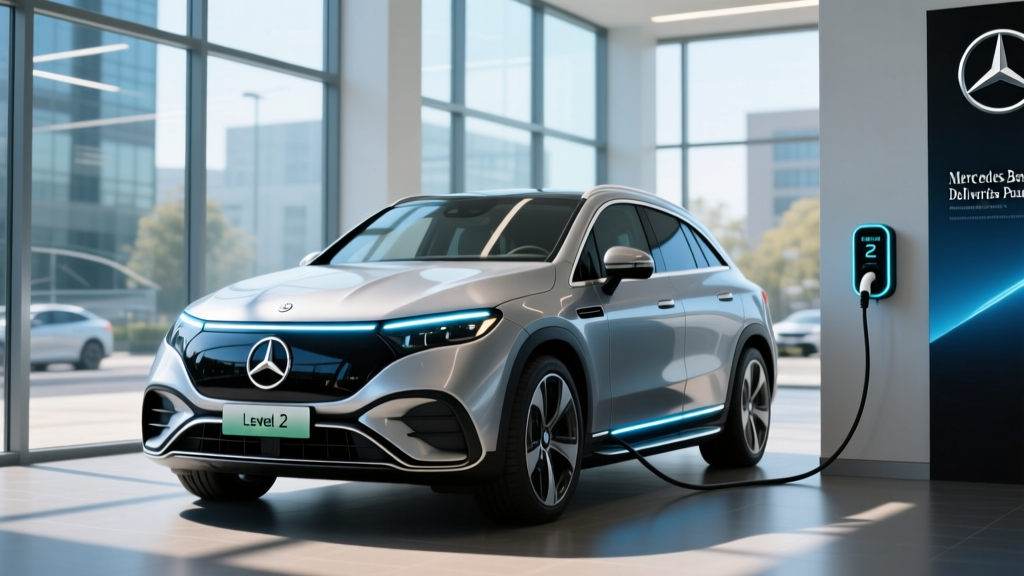
Mercedes-Benz has temporarily paused deliveries of select all-electric EQ models in the United States due to a combination of supply-chain recalibration, software-validation delays for the MBUX Hyperscreen and Drive Pilot systems, and shifting market demand. As of early 2026, the pause primarily affects the EQS Sedan, EQS SUV, and EQE Sedan — models built on the dedicated EVA2 platform. Gasoline and hybrid Mercedes-Benz vehicles, along with the newer MMA-platform CLA EV (announced for late 2026), are unaffected. Reservation holders should expect 8–16 week delays depending on trim and configuration, while walk-in buyers may find limited dealer inventory of pre-pause units.
Which Mercedes-Benz EV Models Are Affected?
Not every Mercedes electric vehicle is caught in the delivery pause. The disruption is concentrated on the EVA2-platform lineup — the first generation of Mercedes dedicated EVs launched between 2022 and 2024. Here is what the current situation looks like model by model:
| Model | Platform | EPA Range | Delivery Status (2026) | Starting MSRP |
|---|---|---|---|---|
| EQS 450+ Sedan | EVA2 | 350 mi | Paused — 8-12 wk delay | $105,550 |
| EQS 580 4MATIC Sedan | EVA2 | 330 mi | Paused — 10-14 wk delay | $126,350 |
| EQS 450+ SUV | EVA2 | 305 mi | Paused — 12-16 wk delay | $108,050 |
| EQS 580 4MATIC SUV | EVA2 | 285 mi | Paused — 12-16 wk delay | $127,550 |
| EQE 350+ Sedan | EVA2 | 305 mi | Paused — 8-10 wk delay | $76,050 |
| EQE 350 4MATIC SUV | EVA2 | 279 mi | Limited — some inventory | $78,050 |
| EQB (compact SUV) | MFA2 (shared) | 251 mi | Available — no pause | $54,500 |
| CLA EV (upcoming) | MMA (new) | ~400 mi (est.) | Announced — late 2026 | TBA |
The EQB, built on a shared platform with the GLB, continues to ship normally. The next-generation MMA-platform vehicles — starting with the CLA EV — remain on track for late-2026 production, and Mercedes has indicated these will not face the same software-validation bottlenecks because the new MB.OS architecture was designed with over-the-air update capability from the ground up.
What Caused the Mercedes-Benz US EV Deliveries Pause?
Three converging factors explain the slowdown:
1. Software Validation for MBUX and Drive Pilot
Mercedes-Benz's SAE Level 3 Drive Pilot system — which allows hands-off, eyes-off driving at speeds up to 40 mph under specific highway conditions — requires extensive validation for US-spec vehicles. Unlike the German market where Drive Pilot launched in 2023, US regulatory approval varies by state (Nevada and California have approved it), and each state's requirements demand separate software calibration and testing cycles. The MBUX Hyperscreen's integration with the vehicle's ADAS stack has also required additional validation passes, slowing the final pre-delivery quality gate.
SAE Level Reminder: Mercedes Drive Pilot is certified as SAE Level 3 — meaning the car assumes full driving responsibility under defined conditions (marked highways, under 40 mph, good weather). This is a step above Tesla Autopilot, Ford BlueCruise, and GM Super Cruise, which are all SAE Level 2 and require continuous driver supervision. However, Level 3 is still far from full self-driving (Level 4/5).
2. Supply-Chain Recalibration
Mercedes-Benz has been adjusting battery cell procurement as it transitions from NMC 811 chemistry (used in early EVA2 models) toward updated NMC formulations with improved energy density and reduced cobalt content. Cell supply from CATL and Farasis Energy has been restructured, creating temporary production gaps at the Sindelfingen and Bremen plants that supply the US market.
3. Market Demand Reset
US luxury EV demand softened through late 2025 as lease deals on competing models (BMW iX, Audi e-tron GT, Tesla Model S) intensified and interest rates remained elevated. Mercedes has acknowledged that it is aligning production volume with realistic sell-through rates rather than building inventory that sits on dealer lots. This is a strategic slowdown as much as a technical one.
Real-World Ownership Costs: Mercedes EQ vs. Gas and Hybrid Alternatives
If you are waiting on a paused EQ delivery, you are likely weighing whether to hold or consider alternatives. Here is a concrete 5-year cost comparison using the EQS 450+ Sedan against its closest internal-combustion sibling, the S 500 4MATIC, and a plug-in hybrid option, the S 580e PHEV.
| Cost Factor (5 Years) | EQS 450+ Sedan | S 500 4MATIC (Gas) | S 580e PHEV |
|---|---|---|---|
| Base MSRP | $105,550 | $118,300 | $122,600 |
| Federal Tax Credit (§30D) | $0 (MSRP/income limits vary; sourcing likely disqualifies) | $0 | $0 (MSRP exceeds cap) |
| Fuel / Electricity (75,000 mi) | $4,875 (at $0.13/kWh, 3.2 mi/kWh) | $11,250 (at $3.75/gal, 25 MPG) | $7,200 (blended) |
| Maintenance (5 yr) | $2,100 | $5,800 | $4,500 |
| Insurance (5 yr avg.) | $14,500 | $11,200 | $12,800 |
| Est. Depreciation (5 yr) | $52,000 (49%) | $47,000 (40%) | $55,000 (45%) |
| Total 5-Year Cost | $179,025 | $193,550 | $202,100 |
Sources: fueleconomy.gov for EPA efficiency data; insurance estimates via industry averages for luxury sedans; depreciation based on historical S-Class and EQS residual values. Actual costs vary by state, driving pattern, and electricity rate.
Key Takeaways from the Numbers
- The EQS saves roughly $14,500 over 5 years compared to the gas S 500, driven primarily by fuel and maintenance savings.
- Insurance is $3,300 more for the EQS — a common pattern for luxury EVs due to higher repair costs and specialized parts.
- Depreciation is steeper on the EQS (49% vs. 40%), reflecting the broader luxury EV resale softness. This is the single biggest cost headwind.
- Federal tax credit is unlikely for the EQS: the §30D credit has an MSRP cap of $55,000 for sedans, which the EQS far exceeds. Even if Mercedes resolved battery-sourcing requirements, the price cap eliminates eligibility. See IRS §30D guidelines for current rules.
What Reservation Holders Should Do Right Now
If you have an existing reservation or order for a paused EQ model, here is a practical decision framework:
Should You Wait or Pivot?
WAIT if:
- Your configuration is locked and your dealer has confirmed a build slot within 16 weeks
- You specifically want Drive Pilot (Level 3) — no competitor currently offers this in the US market
- You have home Level 2 charging (a 48-amp, 11.5 kW setup adds ~35 miles per hour of charging, fully replenishing the EQS's 108.4 kWh usable battery overnight)
- Your current vehicle is functional and you are not under time pressure
PIVOT to an alternative if:
- Your delivery window has been pushed beyond 20 weeks with no firm build date
- You rely exclusively on public DC fast charging (the EQS peaks at 200 kW on DC, achieving 10–80% in ~31 minutes — adequate but not class-leading vs. the Hyundai Ioniq 5's 240 kW / 18-minute 10–80%)
- You need a vehicle for a lease-cycle swap or relocation within 3 months
- Cold-weather range loss is a major concern (expect 25–30% range reduction at 20°F; the EQS 450+ drops from its EPA 350 mi to roughly 245–265 mi in deep winter highway driving)
Alternatives to Consider During the Pause
If you decide not to wait, here are the closest competitive EVs and PHEVs in the luxury large-sedan and SUV segments, with real-world data:
| Model | Type | EPA Range | DC Fast Charge (10-80%) | 0-60 mph | Base MSRP | Availability |
|---|---|---|---|---|---|---|
| BMW i7 xDrive60 | BEV | 318 mi | ~34 min (195 kW peak) | 4.5 sec | $120,295 | Available now |
| BMW iX xDrive50 | BEV (SUV) | 324 mi | ~31 min (195 kW peak) | 4.4 sec | $87,250 | Available now |
| Audi e-tron GT | BEV | 238 mi | ~22 min (270 kW peak) | 3.9 sec | $108,695 | Available now |
| Tesla Model S Long Range | BEV | 402 mi | ~25 min (250 kW peak) | 3.1 sec | $79,990 | Available now |
| Mercedes S 580e | PHEV | 33 mi (electric) + 440 mi total | N/A (Level 2 only, ~2.5 hr) | 5.0 sec | $122,600 | Available now |
| BMW 750e xDrive | PHEV | 34 mi (electric) + 430 mi total | N/A (Level 2 only) | 4.8 sec | $107,995 | Available now |
Charging Reality Check
The EQS's 108.4 kWh usable battery (NMC chemistry) and 200 kW peak DC charge rate mean you will spend roughly 31 minutes at a 350 kW-capable Electrify America or Tesla Supercharger (via NACS adapter, which Mercedes now includes for 2025+ models) going from 10% to 80%. Above 80% State of Charge, the charge curve tapers sharply — adding the final 20% can take another 25+ minutes. For road-trip planning, budget 35–40 minutes per stop if you want to charge past 80%.
At home on a Level 2 charger (11.5 kW / 48 amps), a full 0–100% charge takes approximately 9.5 hours. This is standard for the large luxury EV segment and means overnight charging is practical if you have a dedicated 240V circuit.
Common Misconceptions About the Pause
| Myth | Fact |
|---|---|
| "Mercedes is abandoning EVs in the US." | False. Mercedes has invested over $1 billion in its Tuscaloosa, Alabama plant for EV production and is launching the MMA-platform CLA EV in late 2026. The pause is a temporary recalibration, not a strategic retreat. |
| "The EQS battery is defective." | Unsubstantiated. There are no NHTSA recalls or widespread battery failure reports for the EQS. The pause is related to software validation and supply-chain timing, not battery safety. The EQS battery carries an 8-year/100,000-mile warranty with a 70% capacity retention threshold. |
| "I can't get any Mercedes EV right now." | The EQB compact SUV remains available with no delivery pause. Some dealers have pre-pause EQE SUV and EQE Sedan inventory. Check with your local dealer for in-stock units. |
| "The federal tax credit applies if I wait." | The §30D credit has a $55,000 MSRP cap for sedans and $80,000 for SUVs/vans. Every EQS and most EQE trims exceed these caps, making them ineligible regardless of delivery timing. See IRS guidelines for current income and sourcing requirements. |
| "EVs cost more to own than gas cars in every scenario." | Not for high-mileage luxury buyers. At 15,000 miles/year, the EQS saves ~$1,275/year in fuel alone vs. the S 500. Over 5 years, total savings reach ~$14,500 even after accounting for higher insurance and depreciation. |
First-Time EV Buyer Checklist: What to Know Before You Commit
If the Mercedes-Benz US EV deliveries pause has given you pause (pun intended) and you are re-evaluating your first EV purchase entirely, work through these fundamentals:
1. Confirm Your Home Charging Situation
Home Level 2 charging is the backbone of convenient EV ownership. A typical installation requires:
- Equipment: Level 2 wall connector — $400–$750 (e.g., ChargePoint Home Flex, Emporia Vue)
- Electrical work: 240V / 60-amp circuit installation — $800–$2,500 depending on panel proximity and conduit runs
- Panel upgrade: If your home has a 100-amp main panel, you may need a 200-amp upgrade — $1,500–$3,500 additional
- Permits: $50–$250 depending on municipality
- Total typical cost: $1,200–$3,500 for most homes; up to $6,000+ if a panel upgrade is needed
Always get a quote from a licensed electrician before committing to a vehicle purchase. The Department of Energy offers state-specific guidance on incentives for charger installation.
2. Map Your Real Driving Patterns
The EPA range sticker assumes a mix of city and highway driving at moderate temperatures. Real-world adjustments:
- Highway-only at 75+ mph: Subtract 10–15% from EPA range
- Cold weather (below 32°F): Subtract 20–30% from EPA range (battery chemistry and cabin heating demands)
- Hot weather with A/C: Subtract 5–10%
- Mountain/terrain driving: Varies significantly — regenerative braking can partially offset uphill losses on return trips
3. Understand the Charging Network Landscape
Mercedes-Benz EQ vehicles now support the NACS connector (via adapter) for Tesla Supercharger access, in addition to CCS1 compatibility at Electrify America, EVgo, and ChargePoint stations. For road trips exceeding the vehicle's range, plan stops using A Better Routeplanner or the Mercedes me Charge app, which integrates real-time charger availability.
4. Budget for Insurance
Luxury EV insurance premiums run 15–30% higher than equivalent gas vehicles. Get quotes from your insurer before finalizing your purchase. Some insurers (Progressive, State Farm) now offer specific EV discounts, but these rarely offset the base premium differential entirely.
Frequently Asked Questions
When will Mercedes-Benz resume normal EV deliveries in the US?
Mercedes has not published a firm end-date for the pause. Based on dealer communications and production schedules, most affected configurations are expected to resume deliveries within 8–16 weeks of order confirmation. The EQS SUV has the longest lead times (up to 16 weeks), while the EQE Sedan is closer to 8–10 weeks. Check with your dealer for the most current timeline on your specific configuration.
Can I cancel my EQ reservation and get my deposit back?
Mercedes-Benz reservation deposits (typically $500–$1,000) are generally refundable before the vehicle enters production. Once a build slot is confirmed and the vehicle is in production, cancellation policies vary by dealer. Contact your dealer directly and review your reservation agreement for specific terms.
Is the EQB affected by the delivery pause?
No. The EQB is built on the MFA2 shared platform at the Rastatt plant in Germany and continues to ship to US dealers normally. If you need a compact luxury electric SUV immediately, the EQB 300 4MATIC (EPA 251 mi, $54,500 base) is available without delay.
Will the next-generation MMA-platform EVs face the same issues?
Mercedes has indicated that the MMA platform — debuting with the CLA EV in late 2026 — uses a fundamentally new electrical architecture (MB.OS) designed for streamlined over-the-air updates and simplified software validation. While no new vehicle launch is immune from delays, the structural issues affecting EVA2 models (legacy software integration, Drive Pilot calibration complexity) are not expected to carry over to MMA vehicles.
Should I consider a used EQ model instead?
Used EQS and EQE models from 2023–2024 are available and often priced 35–50% below original MSRP due to steep first-year depreciation. A 2023 EQS 450+ with 20,000 miles can be found for $55,000–$65,000, representing strong value. However, verify battery State of Health (SoH) via the Mercedes me app or a dealer diagnostic before purchase, and confirm that the remaining factory battery warranty (8 years/100,000 miles from original in-service date) transfers to you. The federal used EV tax credit (§25E) offers up to $4,000 for qualifying pre-owned EVs priced under $25,000 — though most used EQ models still exceed this price cap.
How does the EQS compare to the BMW i7 for daily driving?
The EQS 450+ offers 32 more miles of EPA range (350 vs. 318) and a lower starting price ($105,550 vs. $120,295). The BMW i7 offers a more conventional luxury sedan interior layout (the EQS's Hyperscreen is polarizing), slightly faster DC charging relative to battery size, and no delivery pause. Both vehicles offer comparable ride quality and cabin quietness. If immediate availability matters, the i7 is the pragmatic choice; if maximum range and Drive Pilot (Level 3) capability are priorities, the EQS is worth the wait.