Quick Answer: Is the Mercedes-Benz GLC EV Right for You?
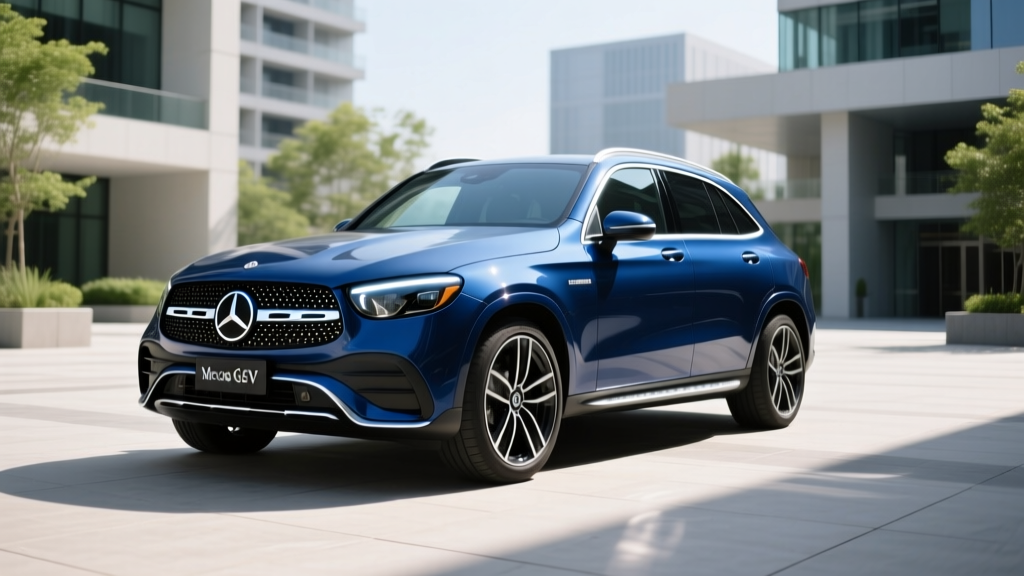
The Mercedes-Benz GLC EV (badged GLC 350 4MATIC in the U.S. on the MMA platform) targets buyers who want a compact luxury electric SUV with approximately 280–310 miles of EPA-estimated range, an ~85 kWh usable battery, and DC fast charging up to ~220 kW (10–80% in roughly 28–30 minutes). U.S. pricing is expected to start near $60,000–$65,000 before incentives. It is best suited for drivers with home Level 2 charging access who prioritize cabin refinement and highway comfort over maximum range-per-dollar. Federal §30D tax credit eligibility depends on final battery sourcing, MSRP caps, and buyer income — check the IRS clean vehicle credit page before committing.
Range, Battery, and Charging: The Numbers That Matter
The GLC EV rides on Mercedes' Modular Architecture (MMA) with an 800-volt electrical system. Mercedes has published preliminary figures for the MMA-based compact SUV family; U.S. EPA certification typically lands slightly below WLTP estimates.
| Spec | Mercedes-Benz GLC EV (Preliminary U.S.) |
|---|---|
| Usable Battery | ~85 kWh (NMC chemistry, 800V) |
| EPA-est. Range | 280–310 mi (final certification pending) |
| WLTP Range (Europe) | ~400–450 km / ~250–280 mi |
| Peak DC Fast Charge | ~220 kW |
| 10–80% DC Charge Time | ~28–30 minutes |
| Level 2 (AC) Charge Rate | 11 kW onboard charger |
| 0–60 mph | ~5.5 sec (dual motor AWD) |
| Horsepower | ~350 hp (AWD variant) |
| Drivetrain | Dual-motor AWD (4MATIC) |
Real-World Range Expectations
EPA stickers assume a mix of city and highway driving at moderate temperatures. In real-world use:
- Highway 75 mph, 70°F: expect ~260–280 miles.
- Winter (20°F), highway: expect ~200–230 miles (EVs typically lose 20–30% in cold due to cabin heating and battery resistance).
- DC fast charging taper: the 220 kW peak holds roughly to 40–50% SoC, then steps down. A 10–80% session averages closer to 150–170 kW sustained.
Preconditioning the battery via the MBUX navigation routing to a DC charger helps sustain peak power. Skipping preconditioning can add 5–10 minutes to a fast-charge session in cold weather.
EV vs. Gas GLC: What You Actually Save (and Spend)
The gas-powered GLC 300 4MATIC remains the volume seller. Here is how the two stack up on the metrics that hit your wallet.
| Metric | GLC EV (est.) | GLC 300 4MATIC (gas) |
|---|---|---|
| Base MSRP | ~$62,000 | ~$49,550 |
| EPA Efficiency | ~95 MPGe / 35 kWh/100mi | 26 MPG combined |
| Fuel/Energy Cost per Mile | $0.045 (home) / $0.14 (public DC) | $0.13 (at $3.50/gal) |
| Annual Fuel/Energy (12k mi) | $540 home / $1,680 public | $1,560 |
| Annual Maintenance (est.) | ~$400 | ~$900 |
| 5-Year Energy + Maint. | $4,700 (home) / $12,900 (public) | $12,300 |
Energy cost assumptions: $0.15/kWh residential average; $0.40/kWh public DC fast charging. Gas at $3.50/gallon. Your local utility rate and driving mix will shift these figures materially. Home-charging owners typically save $6,000–$8,000 over five years in combined energy and maintenance compared to the gas GLC. Public-charging-dependent owners, however, may break even or spend slightly more — a critical reality often glossed over in EV marketing.
Total Cost of Ownership: The 5-Year Breakdown
Purchase price is only the opening bid. Here is a realistic 5-year / 60,000-mile ownership projection.
| Category | GLC EV (Home Charging) | GLC 300 Gas |
|---|---|---|
| Purchase Price | $62,000 | $49,550 |
| Federal Tax Credit (§30D) | Up to $7,500 (if eligible) | $0 |
| Net Purchase | $54,500 | $49,550 |
| 5-Year Energy/Fuel | $2,700 | $7,800 |
| 5-Year Maintenance | $2,000 | $4,500 |
| 5-Year Insurance (est.) | $9,500 | $8,000 |
| Depreciation (est. 50%) | $27,250 | $22,000 |
| Total 5-Year Cost | ~$95,950 | ~$91,850 |
Key variables: EV insurance premiums run 10–20% higher on luxury EVs due to battery replacement costs and specialized repair networks. Depreciation for luxury EVs has been volatile — early Tesla and Audi e-tron data show steeper drops than gas counterparts, though strong residual values on the Porsche Taycan and newer BMW iX suggest the gap is narrowing. If you qualify for the full $7,500 credit and charge primarily at home, the GLC EV approaches cost parity with the gas GLC over five years.
Tax Credits and Incentives: What You Can Actually Claim
The federal §30D clean vehicle credit offers up to $7,500, but eligibility is not guaranteed for every buyer or every vehicle. For 2026, the rules include:
- MSRP cap: SUVs must be priced at or below $80,000.
- Buyer income cap: AGI must not exceed $150,000 (single), $225,000 (head of household), or $300,000 (joint).
- Battery sourcing: critical minerals and battery components must meet phased-in percentages from U.S. or FTA-partner countries — this is where many European-built EVs lose partial or full credit eligibility.
- Point-of-sale transfer: eligible buyers can apply the credit as a down-payment reduction at the dealer rather than waiting for tax filing.
- Manufacturer cap: the old 200,000-vehicle per-OEM cap was eliminated, so Mercedes is not capped.
Check the latest eligibility list on fueleconomy.gov before signing. State incentives (California, Colorado, New York, etc.) may stack on top but vary by jurisdiction — consult your state energy office or a tax professional.
Home Charging: The Make-or-Break Ownership Factor
Mercedes equips the GLC EV with an 11 kW onboard AC charger. On a 240V / 48-amp Level 2 home circuit, you recover roughly 30–35 miles of range per hour, meaning a full 10–100% charge takes about 9 hours — ideal for overnight replenishment.
| Item | Typical Cost Range |
|---|---|
| Level 2 charger (hardwired, 48A) | $400–$700 |
| Electrician (240V/50A circuit run) | $800–$2,500 |
| Permit & inspection | $100–$400 |
| Panel upgrade (if needed, 200A service) | $1,500–$3,500 |
| Total (no panel upgrade) | $1,300–$3,600 |
If your home already has a 200-amp panel with spare capacity, expect to spend $1,300–$2,500 installed. Older homes with 100-amp service may require a panel upgrade, pushing costs toward $4,000–$6,000. Always get a quote from a licensed electrician — never guess at your panel's capacity.
For apartment dwellers or those without dedicated parking, public DC fast charging is viable but expensive. At $0.40/kWh, "fueling" the GLC EV costs roughly the same as a 26 MPG gas car. The savings case for EVs collapses without access to cheap home or workplace electricity.
Common Misconceptions About the GLC EV
| Myth | Fact |
|---|---|
| "The battery will need replacing in 5 years." | Mercedes warranties the high-voltage battery for 8 years / 100,000 miles with a 70% state-of-health retention threshold. NMC degradation data from similar platforms shows ~8–12% capacity loss at 100k miles. |
| "It charges at 220 kW the whole time." | Peak rate applies only at low SoC and optimal battery temperature. Average rate over a 10–80% session is ~150–170 kW due to the charge curve taper. |
| "I'll save $7,500 no matter what." | §30D eligibility depends on MSRP, buyer income, and battery sourcing. European-built EVs face tighter critical-mineral rules. Verify before purchasing. |
| "Autopilot-style features mean self-driving." | Mercedes Drive Pilot is SAE Level 2 in the U.S. — you must remain attentive, hands near the wheel, and ready to take over immediately. Only limited Level 3 operation is approved in specific jurisdictions under narrow conditions. |
| "Range is the same year-round." | Cold weather (below 30°F) reduces range by 20–30% due to cabin heating and higher battery internal resistance. A 310-mile EPA sticker becomes ~220–250 miles in a northern winter. |
Decision Framework: Should You Buy the GLC EV?
Choose the GLC EV if:
- You have reliable home Level 2 charging (garage or dedicated driveway circuit).
- Your daily driving is under 200 miles round-trip, with occasional 300-mile road trips you're willing to break with a 25-minute DC charge.
- You qualify for the federal §30D credit (income under cap, vehicle meets sourcing rules).
- You value a quiet, torque-rich luxury cabin and MBUX tech over maximum range-per-dollar.
- You live in a moderate or warm climate where cold-weather range loss is manageable.
Choose the gas GLC 300 or a PHEV alternative if:
- You park on the street or in a garage without 240V access and cannot install a charger.
- You regularly tow (the gas GLC handles 3,500 lbs; EV towing slashes range by 30–50%).
- Your budget is firm below $50,000 and you cannot absorb the EV's upfront premium.
- You frequently drive in sub-zero climates where range loss and charging slowdowns compound.
- You want the longest possible range without stopping — the gas GLC delivers ~390 highway miles per tank.
Frequently Asked Questions
What is the real-world range of the Mercedes-Benz GLC EV?
Expect 260–280 miles in mixed driving at moderate temperatures, dropping to 200–230 miles in sustained cold-weather highway use. The EPA sticker of 280–310 miles is achievable in city-heavy, temperate conditions with preconditioning.
Does the GLC EV use NACS or CCS for charging?
Mercedes-Benz has committed to adopting the NACS (Tesla-style) connector for North American models. Early MMA-based vehicles may ship with CCS1 and include a NACS adapter; later production will feature native NACS ports. Confirm the connector with your dealer at purchase, as this affects Supercharger network access.
How long does the GLC EV battery last?
Mercedes warranties the high-voltage battery for 8 years or 100,000 miles, guaranteeing at least 70% state-of-health retention. Industry data on similar NMC packs suggests 85–92% capacity at 100,000 miles under normal use. Full replacement, if needed out of warranty, is estimated at $15,000–$22,000 based on current luxury EV battery pricing.
Can I charge the GLC EV at Tesla Superchargers?
Yes, provided the vehicle has a native NACS port or you use a CCS-to-NACS adapter approved by Mercedes. The Supercharger network remains the most reliable DC fast-charging option in the U.S., with over 30,000 stalls nationally. Confirm adapter compatibility and warranty implications with your dealer.
Is the GLC EV eligible for the $7,500 federal tax credit?
Possibly, but not automatically. Eligibility depends on the vehicle's battery sourcing compliance, your adjusted gross income, and the MSRP staying under the $80,000 SUV cap. Always verify current eligibility on irs.gov and confirm with your tax professional before relying on the credit in your purchase math.
How does the GLC EV compare to the BMW iX3 or Audi Q6 e-tron?
The Q6 e-tron (PPE platform, ~300 mi EPA, ~270 kW peak DC charge) offers slightly faster charging and a more performance-oriented drive. The BMW iX3 successor (Neue Klasse, expected 2026) targets similar range with improved efficiency. The GLC EV differentiates on cabin luxury, MBUX integration, and ride comfort rather than outright performance metrics.