The Short Answer on the 2026 Mercedes-Benz GLC EV
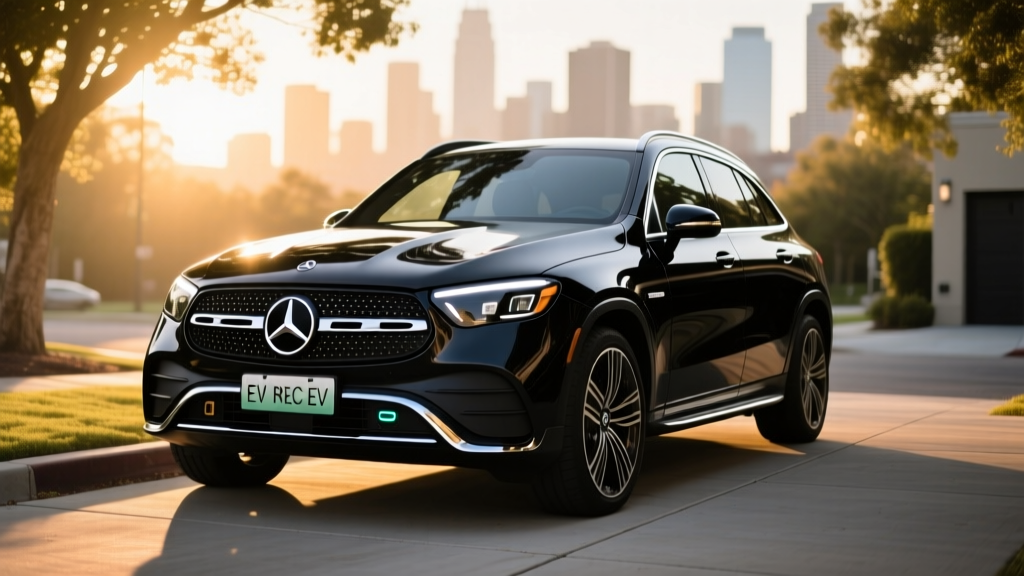
The 2026 Mercedes-Benz GLC EV (internationally known as the GLC EQ) is Mercedes' all-electric compact luxury SUV built on the dedicated MB.EA platform with an 800-volt architecture. It delivers an estimated 330 miles of EPA range from an ~85 kWh usable NMC battery, peaks at 250 kW DC fast charging (10–80% in roughly 20 minutes), and starts around $58,000 before incentives. It competes directly with the BMW iX3, Audi Q6 e-tron, and Tesla Model Y in the luxury electric SUV segment. If you want a premium electric compact SUV with genuine road-trip charging speed and Mercedes build quality, the GLC EV is a top-tier choice — but buyers should budget realistically and verify tax-credit eligibility before signing.
Range and Efficiency: EPA Sticker vs. Real-World Miles
The headline number for the 2026 GLC EV is an EPA-estimated range of approximately 330 miles for the rear-wheel-drive base model, with the all-wheel-drive 4MATIC variant rated closer to 305 miles. These figures come from the vehicle's ~85 kWh usable battery pack (roughly 95 kWh gross) using nickel-manganese-cobalt (NMC) chemistry, which Mercedes has optimized for energy density on its new MB.EA dedicated EV platform.
Real-World Range Expectations
EPA sticker: 330 miles (RWD) / 305 miles (4MATIC)
Highway driving (70–80 mph): Expect ~260–285 miles (RWD), ~245–265 miles (4MATIC)
Cold weather (below 32°F): Expect 15–25% reduction — roughly 250–280 miles (RWD)
Combined real-world average: ~275–300 miles in moderate conditions
The GLC EV's heat pump (standard on US models) helps mitigate cold-weather losses compared to EVs without active thermal management, but physics still applies. Plan road trips around 250 miles of usable range to maintain a comfortable buffer.
Efficiency lands in the neighborhood of 3.2–3.5 miles per kWh depending on conditions and driving style, which translates to roughly 85–95 MPGe combined. That puts it in line with the Audi Q6 e-tron and slightly behind the Tesla Model Y Long Range, which benefits from a lighter curb weight and extremely optimized aerodynamics.
| Specification | GLC EV RWD | GLC EV 4MATIC |
|---|---|---|
| EPA Range (est.) | 330 miles | 305 miles |
| Battery (usable / gross) | ~85 kWh / ~95 kWh (NMC) | ~85 kWh / ~95 kWh (NMC) |
| Max DC Charge Rate | 250 kW (800V) | 250 kW (800V) |
| 10–80% DC Fast Charge | ~20 minutes | ~20 minutes |
| Level 2 AC Charging | 11 kW (onboard charger) | 11 kW (onboard charger) |
| 0–60 mph (est.) | ~6.5 sec | ~5.0 sec |
| Horsepower | ~268 hp | ~375 hp |
| Drivetrain | Rear-wheel drive | Dual-motor AWD |
| Starting MSRP (est.) | $58,000 | $63,000 |
| Battery/Powertrain Warranty | 8 yr / 100,000 mi | 8 yr / 100,000 mi |
Charging Speed and Infrastructure: 800V Makes a Difference
The GLC EV's 800-volt architecture is the practical differentiator for road-trip buyers. At a compatible 250+ kW DC fast charger — such as Electrify America's 350 kW stations or Tesla Superchargers (via NACS adapter, now standard on Mercedes EVs in North America) — the GLC EV can peak at 250 kW and add roughly 180 miles of range in 15 minutes under ideal conditions.
However, real-world charging curves matter more than peak numbers. The GLC EV sustains above 200 kW roughly from 10% to 40% state of charge, then tapers progressively. From 60% to 80%, expect speeds closer to 100–130 kW. The 10–80% time of approximately 20 minutes assumes battery preconditioning is active — either triggered automatically by the navigation system routing you to a charger or manually activated. Without preconditioning, cold-soak charging can add 5–10 minutes to your session.
| Charging Level | Power | Miles of Range Added |
|---|---|---|
| Level 1 (120V household) | ~1.4 kW | ~4 miles per hour |
| Level 2 (240V home / public) | 11 kW (max onboard) | ~32 miles per hour |
| DC Fast Charge (peak) | 250 kW | ~180 miles in 15 min |
| DC Fast Charge (10–80%) | Avg ~165 kW | ~220 miles in 20 min |
At home on an 11 kW Level 2 charger (requiring a 48-amp dedicated circuit), a full charge from 10% to 100% takes roughly 8–9 hours — easily manageable with overnight charging. Installation of a home Level 2 charger typically costs $800–$2,500 depending on your electrical panel capacity and wiring distance, per U.S. Department of Energy estimates. If your home has a 200-amp panel with spare capacity, expect the lower end; older homes with 100-amp service may require a panel upgrade adding $1,500–$3,000.
GLC EV vs. Gas GLC: The Cost and Ownership Comparison
The question most cross-shoppers ask: does the electric GLC save money over the gasoline GLC 300? The answer depends on your driving volume, electricity rates, and how long you keep the vehicle.
| Cost Category | GLC EV 4MATIC | GLC 300 4MATIC (Gas) |
|---|---|---|
| Purchase Price (MSRP) | $63,000 | $49,500 |
| Federal Tax Credit (§30D) | $0–$7,500 (see below) | $0 |
| Fuel / Energy (5 yrs) | $4,200 (home charging avg) | $12,750 ($3.40/gal, 25 MPG) |
| Maintenance (5 yrs) | $2,500 | $5,200 |
| Insurance (5 yrs, est.) | $11,500 | $9,500 |
| Estimated Depreciation | $28,000 | $22,000 |
| 5-Year Total (before credit) | ~$109,200 | ~$98,950 |
| 5-Year Total (with $7,500 credit) | ~$101,700 | ~$98,950 |
The GLC EV costs more upfront but saves roughly $8,550 in fuel and $2,700 in maintenance over five years. EV insurance premiums run 15–25% higher on average, partially offsetting those savings. With the full $7,500 federal credit, the five-year gap narrows to under $3,000 — and the EV wins on daily driving refinement, instant torque, and zero tailpipe emissions.
According to fueleconomy.gov, electricity costs for EVs average roughly one-third the per-mile cost of gasoline nationally, though this varies significantly by state and whether you charge at home vs. public DC fast chargers (which can cost $0.35–$0.50/kWh in some markets).
Federal Tax Credit Eligibility: What You Need to Know
The §30D Clean Vehicle Credit offers up to $7,500 for qualifying new EVs, but eligibility for the 2026 GLC EV depends on several factors that change based on battery sourcing rules, your income, and the vehicle's MSRP. As of 2026, per IRS guidelines:
- MSRP cap: SUVs must have an MSRP at or below $80,000 — the GLC EV qualifies at its estimated $58,000–$68,000 range.
- Buyer income cap: Modified AGI must not exceed $150,000 (single), $225,000 (head of household), or $300,000 (joint filers).
- Battery sourcing: The credit splits into two halves ($3,750 each) based on critical-mineral sourcing and battery-component manufacturing requirements that tighten annually. Mercedes has been shifting supply chains, but full $7,500 eligibility is not guaranteed — verify current-year status at purchase.
- Point-of-sale transfer: You can transfer the credit to the dealer at purchase to reduce your out-of-pocket cost immediately, rather than waiting to claim it on your tax return.
Critical caveat: Battery-sourcing rules are complex and subject to annual tightening. Always confirm the GLC EV's credit status with your dealer and a tax professional before finalizing your purchase. Do not assume the full $7,500 applies.
Common Misconceptions About the GLC EV
| Myth | Fact |
|---|---|
| "The battery will need replacing in 5 years." | NMC batteries in modern EVs with active thermal management typically retain 85–90% capacity after 100,000 miles. Mercedes warranties the battery for 8 years/100,000 miles against dropping below 70% capacity. |
| "It charges as fast as the spec sheet says everywhere." | The 250 kW peak requires a compatible DC fast charger and battery preconditioning. Most public chargers deliver 50–150 kW. Expect average real-world speeds of ~165 kW during the 10–80% window. |
| "The GLC EV is just a gas GLC with a battery." | The 2026 GLC EV rides on Mercedes' dedicated MB.EA platform, not a modified gas-car chassis. This means a flat floor, optimized weight distribution, a front trunk (frunk), and better interior packaging. |
| "I'll never be able to take road trips." | With 330 miles of range and 10–80% charging in ~20 minutes, road trips require one 20-minute stop every 2.5–3 hours — comparable to rest stops on long gas-car drives. |
| "Electricity isn't really cleaner." | Even on coal-heavy grids, EVs produce fewer lifecycle emissions than comparable gas vehicles per EPA lifecycle analysis. On renewable-heavy grids, the advantage is dramatic. |
Real-World Ownership: What First-Time EV Buyers Should Know
Buying the GLC EV — or any EV — involves practical considerations that don't appear on a spec sheet:
Home charging is essential for convenience. While public charging infrastructure has expanded significantly, 80–90% of EV charging happens at home. If you live in an apartment or condo without charging access, daily life with an EV becomes substantially less convenient. Confirm your parking situation before purchasing.
Your electrical panel matters. An 11 kW Level 2 charger requires a 48-amp dedicated circuit on a 60-amp breaker. If your home's electrical panel is already near capacity — common in older homes — you may need a panel upgrade ($1,500–$3,000) or a lower-amperage charger that charges more slowly.
Cold weather affects range and charging. If you live in northern climates, plan for 15–25% range loss in winter and slower DC fast charging unless you precondition the battery. The GLC EV's heat pump helps, but it doesn't eliminate the physics of lithium-ion chemistry in cold temperatures.
Insurance costs more. EV insurance premiums run 15–25% higher than comparable gas vehicles due to higher repair costs and battery replacement risk. Get quotes before purchasing to avoid surprises.
Maintenance is lower, but not zero. You'll skip oil changes, spark plugs, and transmission fluid. But tires wear 15–20% faster on EVs due to higher curb weight and instant torque. Budget for tire rotation every 5,000–7,500 miles and plan on tire replacement sooner than your last gas car.
Decision Framework: Is the 2026 GLC EV Right for You?
Choose the GLC EV if:
- You have reliable home Level 2 charging access (garage or dedicated parking with outlet)
- You drive 10,000–20,000 miles per year and want to reduce fuel and maintenance costs
- You value a quiet, refined cabin with instant acceleration and Mercedes build quality
- You take 2–4 road trips per year and want 800V fast charging to minimize stops
- You qualify for the §30D tax credit based on income and can verify battery-sourcing eligibility
Consider the gas GLC 300 or a PHEV alternative if:
- You lack home charging access and rely entirely on street parking or apartment living
- You regularly drive 400+ miles in a single day through areas with sparse DC fast-charging infrastructure
- Your budget is firmly under $50,000 and you cannot absorb the EV premium even with tax credits
- You live in extreme cold climates (-20°F regularly) and need maximum range reliability without preconditioning logistics
Consider the GLC PHEV (if available) if:
- You want electric-only commuting (30–40 miles) but gas flexibility for long trips without charging stops
- You're not ready to commit to full electric but want to reduce daily fuel consumption
Frequently Asked Questions
What is the real-world range of the 2026 Mercedes-Benz GLC EV?
The EPA estimates 330 miles for the RWD model and 305 miles for the 4MATIC. In real-world mixed driving at highway speeds, expect 260–300 miles depending on temperature, terrain, and driving style. Cold weather (below freezing) reduces range by 15–25%.
How long does it take to charge the GLC EV at home?
On a Level 2 home charger (11 kW / 48 amps), a full charge from 10% to 100% takes approximately 8–9 hours. Overnight charging is the practical standard — plug in when you get home and wake up to a full battery every morning.
Does the GLC EV qualify for the $7,500 federal tax credit?
It may, but eligibility depends on current-year battery-sourcing requirements, your income level, and MSRP thresholds. The GLC EV's MSRP falls under the $80,000 SUV cap, but critical-mineral and battery-component rules tighten annually. Verify with your dealer and consult a tax professional, referencing the IRS §30D guidelines.
Is the GLC EV built on a dedicated EV platform?
Yes. The 2026 GLC EV uses Mercedes-Benz's MB.EA (Mercedes-Benz Electric Architecture) dedicated EV platform with an 800-volt electrical system. This is not a converted gas vehicle — it features a flat battery floor, optimized weight distribution, and a front trunk (frunk) for additional cargo.
What connector does the GLC EV use for charging?
For 2026, Mercedes-Benz EVs in North America use the NACS (North American Charging Standard) connector, which provides native access to Tesla Supercharger stations. For CCS-based public chargers, a NACS-to-CCS adapter may be required depending on station compatibility.
How does the GLC EV compare to the Tesla Model Y?
The Model Y Long Range offers comparable range (~320 miles EPA), faster acceleration, and access to the Supercharger network natively — typically at a lower starting price (~$48,000). The GLC EV counters with superior interior materials, a more traditional luxury driving experience, Mercedes' MBUX infotainment, and a more comfortable ride quality. Choose the Model Y for value and performance; choose the GLC EV for luxury refinement and brand prestige.
What happens if the GLC EV battery degrades?
Mercedes warranties the high-voltage battery for 8 years or 100,000 miles against dropping below 70% of original capacity. Based on industry data from similar NMC packs with active thermal management, most owners see 85–92% capacity retention at 100,000 miles. Full battery replacement, if ever needed out of warranty, currently costs $12,000–$18,000 depending on the pack — though prices are declining annually.