Quick Answer: Is the Mercedes-Benz G-Class EV Worth It?
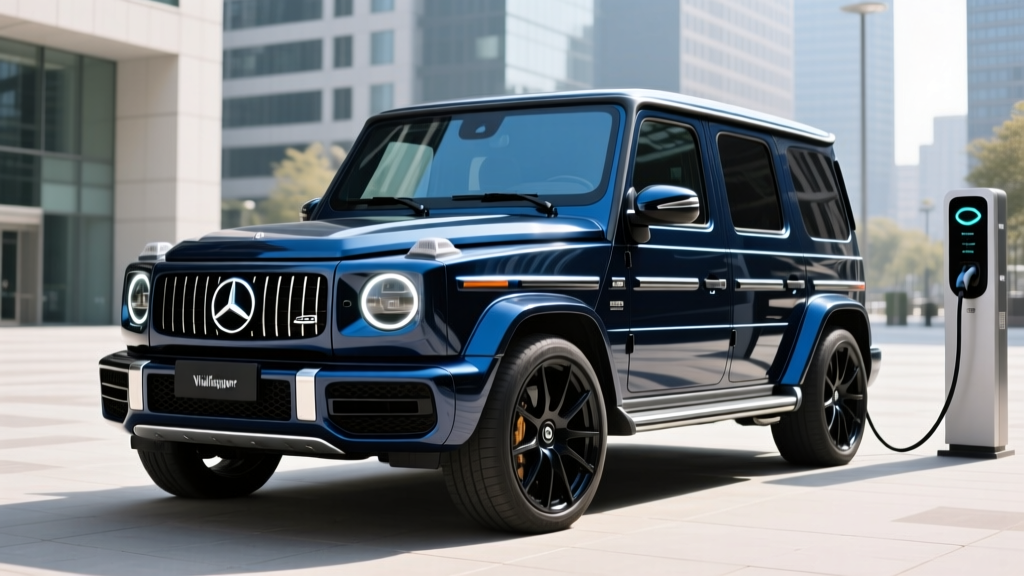
The 2026 Mercedes-Benz G 580 with EQ Technology is the electrified successor to the iconic G-Wagen, priced from approximately $164,500. It delivers an EPA-estimated 239 miles of range from a 116 kWh (usable) NMC battery pack, 579 horsepower, and a 0–60 mph time of 4.6 seconds. Compared to the gas G 550, the EV costs roughly $15,000–$20,000 more upfront but saves $2,500–$4,000 in fuel and maintenance over five years. It does not qualify for the federal §30D tax credit due to its MSRP exceeding the $80,000 SUV cap and non-US assembly. Buy it if you want silent, instantaneous torque and zero tailpipe emissions from a G-Wagen; skip it if you regularly tow heavy loads or drive in remote areas with sparse DC fast-charging infrastructure.
Range, Battery, and Real-World Efficiency
The G 580 with EQ Technology houses a floor-mounted lithium-ion NMC (nickel manganese cobalt) battery with approximately 116 kWh of usable capacity. The EPA rates it at 239 miles of combined range, with efficiency rated at roughly 58 MPGe (combined). Those figures place it behind the Rivian R1S Quad-Motor (EPA 352 mi) and slightly behind the Cadillac Escalade IQ (EPA ~300+ mi), but on par for a boxy, 6,600-pound luxury off-roader.
Real-World Range Reality Check
EPA sticker: 239 miles
Highway driving (75 mph, 70°F): Expect ~185–200 miles. The G-Class EV's brick-like aerodynamics (Cd ~0.44) punish highway efficiency far more than a sleek sedan.
Cold weather (30°F, cabin heat): Plan for ~150–170 miles. The G 580 includes a heat pump, but its massive cabin volume and cold battery chemistry losses are unavoidable.
Off-road/low-speed trail use: Range impact is minimal — regen braking and low speeds actually favor electric drivetrains.
| Specification | Value |
|---|---|
| EPA Range (combined) | 239 miles |
| Battery Chemistry / Usable Capacity | NMC / ~116 kWh |
| Peak DC Fast Charge Rate | 200 kW |
| 10–80% DC Fast Charge Time | ~32 minutes |
| Level 2 AC Charge Rate | 11 kW (onboard charger) |
| Level 2 Full Charge Time (0–100%) | ~11.5 hours |
| Horsepower | 579 hp (4 near-wheel motors) |
| Torque | 811 lb-ft |
| 0–60 mph | 4.6 seconds |
| Top Speed | 118 mph (electronically limited) |
| Towing Capacity | ~5,500 lbs (est.) |
| Curb Weight | ~6,600 lbs |
| Base MSRP (G 580) | $164,500 |
| Battery / Powertrain Warranty | 10 years / 155,000 miles (capacity retention ≥70%) |
Charging: Home Setup and Public Network Reality
The G 580's 116 kWh battery is one of the largest in any production EV. That means home charging is essential — relying solely on public DC fast chargers will be expensive and time-consuming.
| Level | Power (kW) | Miles Added per Hour | Notes |
|---|---|---|---|
| Level 1 (120V, 12A) | ~1.4 kW | ~3 mi/hr | 83+ hours for full charge. Emergency use only. |
| Level 2 (240V, 48A) | 11 kW | ~23 mi/hr | ~11.5 hours 0–100%. Overnight recharge from ~20% SoC. |
| DC Fast Charge (peak) | 200 kW | ~160 mi/hr (peak) | 10–80% in ~32 min. Tapers sharply above 80% SoC. |
kW vs kWh reminder: kW is the charge rate (like water flow from a hose). kWh is the battery capacity (like the size of the tank). The G 580 can accept up to 200 kW of power but stores 116 kWh of energy.
Charge curve reality: The 200 kW peak rate is sustained only between roughly 10–40% SoC. Above 60%, the rate drops to ~100 kW, and above 80% it falls below 50 kW. On a road trip, plan your stops around 10–80% windows — a full 0–100% DC fast charge takes closer to 65–70 minutes.
Home charging installation: With a 116 kWh battery, you need a hardwired Level 2 charger (not a 120V outlet). Expect to pay $800–$1,400 for a quality 48A charger (e.g., ChargePoint Home Flex, Tesla Wall Connector) and $1,500–$3,500 for electrician labor, depending on panel proximity. If your home has a 100A electrical panel, a $2,000–$4,000 panel upgrade to 200A may be necessary. Always hire a licensed electrician for final specs.
G 580 EV vs. Gas G 550: Cost & Capability Comparison
The most direct cross-shop for the G 580 is the gasoline Mercedes-Benz G 550. Here's how they stack up on paper and in real-world ownership:
| Attribute | G 580 with EQ Technology (EV) | G 550 (Gas) |
|---|---|---|
| Base MSRP | $164,500 | $148,250 |
| Federal Tax Credit (§30D) | $0 (MSRP exceeds $80K cap, non-US build) | $0 |
| Powertrain | 4 electric motors, 579 hp | 3.0L turbo I-6 + mild hybrid, 443 hp |
| 0–60 mph | 4.6 sec | 5.3 sec |
| EPA Efficiency | 58 MPGe combined | 14 city / 16 hwy / 15 combined MPG |
| Range | 239 mi (EPA) | ~310 mi (20.1-gal tank) |
| Annual Fuel/Energy Cost* | ~$1,550 (at $0.16/kWh avg) | ~$4,350 (at $3.80/gal, 12K mi/yr) |
| Annual Maintenance | ~$400–600 | ~$1,200–1,800 |
| Off-Road Capability | G-Turn (tank turns), electric torque vectoring | 3 locking diffs, proven mechanical system |
| Towing | ~5,500 lbs (est.) | 7,700 lbs |
*Based on 12,000 miles/year. Electricity cost varies widely by state and utility rate. Gas cost based on national average — fueleconomy.gov provides personalized estimates.
The key takeaway: The G 580 saves roughly $2,800–$3,400 per year in fuel and maintenance. Over five years, that's $14,000–$17,000 — partially closing the $16,250 MSRP gap. However, the gas G 550 still wins on towing capacity (7,700 vs ~5,500 lbs) and total range per fill-up, which matters for overlanding or remote trail use.
Total Cost of Ownership: 5-Year Breakdown
| Category | G 580 EV | G 550 Gas |
|---|---|---|
| Purchase Price (base) | $164,500 | $148,250 |
| Federal Tax Credit | $0 | $0 |
| Fuel / Energy (5 yrs) | $7,750 | $21,750 |
| Maintenance (5 yrs) | $2,500 | $7,500 |
| Insurance (5 yrs, est.) | $18,000 | $15,000 |
| Depreciation (est. 45%) | $74,025 | $59,300 |
| Total 5-Year Cost | ~$266,775 | ~$251,800 |
The G 580's higher insurance premiums (EVs typically cost 15–25% more to insure due to repair complexity and battery replacement risk) and steeper projected depreciation partially offset the fuel and maintenance savings. The gas G 550 holds value well — the G-Class historically depreciates slower than most luxury SUVs. Whether the EV closes the gap depends heavily on your local electricity rate, driving habits, and how long you keep the vehicle.
Insurance note: Get quotes before purchasing. Some insurers surcharge luxury EVs significantly. Companies like Progressive, GEICO, and specialty EV insurers (e.g., through AAA) vary widely by state and driver profile.
What First-Time EV Buyers Need to Know About the G 580
| Myth | Fact |
|---|---|
| "It qualifies for the $7,500 federal tax credit." | It does not. Under IRS §30D rules, SUVs must have an MSRP under $80,000, and the vehicle must meet battery-sourcing and final-assembly requirements. The G 580 exceeds the price cap and is assembled in Graz, Austria. |
| "239 miles of range is enough for road trips." | Real-world highway range is closer to 185–200 miles. Plan DC fast-charge stops every 150–170 miles on long trips. Check PlugShare for charger availability along your route. |
| "The battery will need replacing in a few years." | Mercedes-Benz warrants the battery for 10 years / 155,000 miles with a 70% capacity retention threshold. NMC chemistry typically loses 10–15% capacity over 150K miles in moderate climates. |
| "I can charge it from a regular wall outlet." | Level 1 (120V) adds only ~3 miles per hour. A full charge from empty would take 83+ hours. A Level 2 (240V) home charger is essentially mandatory for daily use. |
| "It's self-driving." | The G 580 uses Mercedes-Benz Driver Assistance (SAE Level 2). You must keep your hands on the wheel and eyes on the road at all times. It is not autonomous. |
SAE Automation Level: Level 2
The G 580's driver-assistance suite (Active Distance Assist DISTRONIC, Active Steering Assist, Active Lane Keeping) is SAE Level 2. The vehicle can manage speed, steering, and lane centering under certain conditions, but the driver remains fully responsible. Mercedes-Benz does offer Level 3 (Drive Pilot) in Germany and Nevada on select models, but it is not available on the G-Class platform as of 2026.
Decision Framework: Should You Buy the G 580 EV?
Choose the G 580 EV If:
- You have reliable home Level 2 charging (or can install it).
- Your daily driving is under 150 miles and you rarely tow more than 5,000 lbs.
- You value silent, instant torque and zero tailpipe emissions in a luxury off-roader.
- You want G-Turn (360° tank turns) and electric torque vectoring for trail capability.
- You plan to keep the vehicle 7+ years to absorb the higher upfront cost and depreciation.
Choose the Gas G 550 If:
- You frequently tow trailers, boats, or campers (7,700 lbs capacity vs ~5,500 lbs).
- You drive in remote areas where DC fast chargers are scarce (off-grid overlanding, rural routes).
- You lack home charging access and don't want to rely on public infrastructure.
- You want maximum resale value — the G-Class gas model has decades of proven demand.
- You regularly drive in extreme cold (below 10°F), where EV range loss of 30–40% is typical.
Consider a PHEV Alternative If:
- You want some electric-only range for city driving but gas flexibility for long trips. The BMW XM (PHEV, ~30 mi electric-only, $179K) or the upcoming Range Rover PHEV may bridge the gap, though neither matches the G-Class's off-road pedigree.
Real-World Ownership Considerations
Home charging access is make-or-break. With a 116 kWh battery, the G 580 is not practical without a Level 2 home charger. If you live in a condo, apartment, or street-parking situation without dedicated EV charging, public Level 2 chargers (typically $0.25–$0.50/kWh) will cost $29–$58 per full charge — and DC fast charging at $0.40–$0.60/kWh will cost $46–$70 per session. That erodes the fuel-cost advantage over the gas G 550 quickly.
Climate matters. In Southern California or Texas, you'll see close to EPA range most of the year. In Minnesota or Montana winters, expect 150–170 miles. The G 580's heat pump helps, but physics is unforgiving with a 6,600-lb vehicle and cold NMC chemistry.
Driving patterns. If your commute is 30–40 miles round-trip with mostly city driving, the G 580 excels — regen braking maximizes efficiency, and you'll charge every 3–4 days at home. If you drive 200+ highway miles daily, you'll be DC fast-charging constantly, which accelerates battery degradation and costs more than gas in many markets.
Off-road use. The G 580's four independent electric motors enable G-Turn (tank turns by spinning left and right wheels in opposite directions), G-Steering (tightening turning radius via inside-wheel braking), and G-Rock (a crawl mode). These features are genuinely useful on trails. However, rock-crawling and deep-mud use consume battery quickly — plan for 30–40% range loss during aggressive off-road sessions.
Frequently Asked Questions
Does the Mercedes-Benz G-Class EV qualify for any tax credits?
No. Under current IRS §30D rules, the G 580 is ineligible because its MSRP ($164,500) far exceeds the $80,000 cap for SUVs, and it is assembled outside the United States. Some states (California, Colorado, New York) offer separate EV rebates or incentives — check your state's energy office or DMV for current programs. Always consult a tax professional for eligibility guidance.
How long does it take to charge the G 580 at home?
On a Level 2 (240V, 48A) home charger delivering 11 kW, a full 0–100% charge takes approximately 11.5 hours. In practice, most owners charge from ~20% to ~80% overnight, which takes about 6.5–7 hours. A standard 120V outlet (Level 1) is impractical for daily use at ~3 miles of range per hour.
What happens if the battery degrades?
Mercedes-Benz warranties the high-voltage battery for 10 years or 155,000 miles, whichever comes first, with a capacity retention threshold of 70%. If the battery falls below 70% of original capacity within the warranty period, Mercedes will repair or replace it. Out-of-warranty replacement costs are not yet published but similar-size NMC packs in luxury EVs currently cost $20,000–$35,000 for parts and labor.
Can the G 580 tow a trailer?
Yes, but with reduced capacity compared to the gas G 550. The G 580 is estimated to tow approximately 5,500 lbs (final rating pending for 2026). Towing also reduces range significantly — expect a 35–50% range drop when towing near max capacity, similar to how gas G-Wagens lose MPG under load.
Is the G 580 the same size as the gas G-Class?
Nearly identical exterior dimensions. The battery is packaged in a flat, under-floor layout, preserving interior space and ground clearance. The G 580 is slightly heavier (~6,600 lbs vs ~5,500 lbs for the G 550), which affects handling dynamics and tire wear over time.
How does G-Turn work, and is it practical?
G-Turn spins the left-side and right-side wheels in opposite directions, rotating the vehicle 360° in place. It's useful for tight trail situations, U-turns on narrow roads, and maneuvering in deep snow or mud. It requires a flat, loose surface (dirt, gravel, snow) — using it on dry pavement causes excessive tire wear and is not recommended.