Quick Answer: Should You Buy the Mercedes-Benz G-Class Electric?
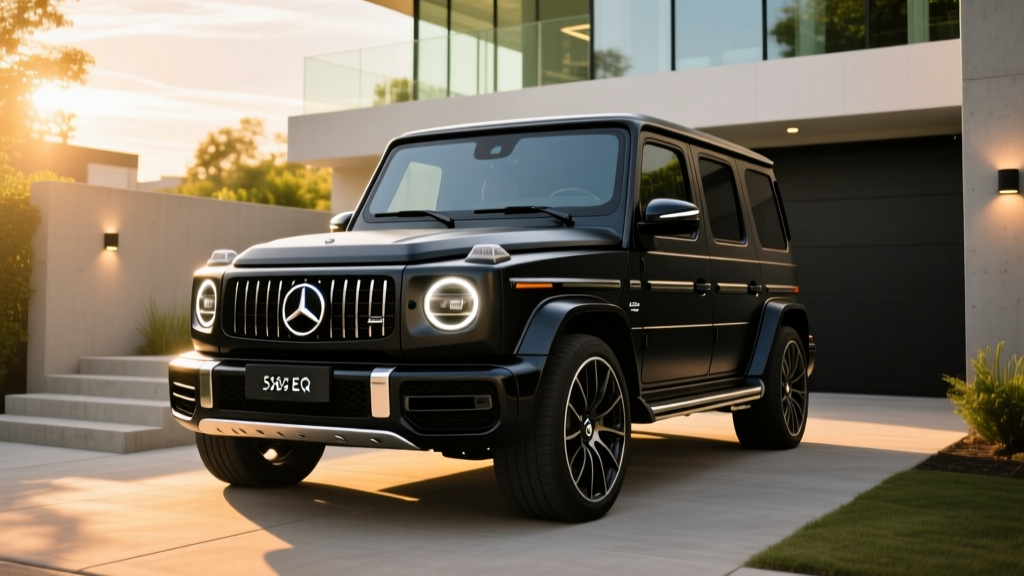
The 2026 Mercedes-Benz G 580 with EQ Technology (the electric G-Class) starts at approximately $164,900 and delivers an EPA-estimated 239 miles of range from a 116 kWh (usable) NMC battery pack. It produces 579 horsepower from four independent motors and supports DC fast charging at up to 200 kW (10–80% in roughly 32 minutes). It does not qualify for the federal §30D tax credit due to its MSRP exceeding the $80,000 SUV cap and battery-sourcing requirements. This is a luxury statement vehicle with genuine off-road capability—not a range champion. If you need 300+ miles or budget efficiency, look elsewhere. If you want an electric G-Wagen with real capability and can charge at home, it delivers.
Range, Battery, and Real-World Efficiency
The G 580 EQ uses a 116 kWh usable lithium-ion (NMC) battery mounted low in a ladder-frame chassis. The EPA rates it at 239 miles of combined range with an efficiency of approximately 52 kWh/100 miles (roughly 65 MPGe). That efficiency figure is poor by EV standards—comparable to the energy cost of moving a 6,700-pound brick, which is exactly what this is.
Real-World Range Expectations
EPA sticker: 239 miles
Highway driving (70–75 mph): Expect ~190–210 miles. The G-Wagen's boxy aerodynamics (drag coefficient ~0.52 Cd estimated) punish highway efficiency far worse than sleeker EVs.
Cold weather (below 30°F): Expect ~165–185 miles without preconditioning. NMC chemistry loses 15–25% in freezing temps, and the G-Class's massive thermal mass takes energy to heat.
Off-road/low-speed trail use: Range improves at low speeds—220+ miles is realistic on trails where aero doesn't matter.
For context, the gas-powered G 550 returns 14 MPG combined, giving it roughly 294 miles from its 21.1-gallon tank. The electric G-Class trades range for instant torque and silent trail-running capability.
| Specification | Value |
|---|---|
| EPA Range | 239 miles |
| Battery (usable) | 116 kWh, NMC chemistry |
| Efficiency | ~52 kWh/100 mi (~65 MPGe) |
| Peak DC Charge Rate | 200 kW (800V architecture) |
| 10–80% DC Fast Charge | ~32 minutes |
| Level 2 AC Charge Rate | 11 kW (~22 mi/hr) |
| Horsepower | 579 hp (4 motors) |
| 0–60 mph | 4.6 seconds |
| Curb Weight | ~6,700 lbs |
| Base MSRP | ~$164,900 |
| Federal §30D Tax Credit | Not eligible (MSRP cap + sourcing) |
| Battery Warranty | 8 years / 100,000 miles (70% retention) |
Charging Speed and Infrastructure Reality
The G 580 EQ runs on an 800-volt architecture enabling peak DC fast charging at 200 kW. Here's what that means in practice: you'll see peak rates only between roughly 10–40% state of charge. Above 60%, the charge curve tapers significantly—a reality of NMC chemistry and thermal management. A full 10–80% session takes approximately 32 minutes at a capable 350 kW charger (Electrify America, EVgo, or Tesla Supercharger with NACS adapter).
| Charging Level | Power | Miles Added Per Hour | Typical Use Case |
|---|---|---|---|
| Level 1 (120V) | ~1.4 kW | ~2–3 mi/hr | Emergency trickle only |
| Level 2 (240V, 48A) | 11 kW | ~22 mi/hr | Overnight home charging |
| DC Fast (peak) | 200 kW | ~300+ mi/hr (at peak) | Road trips, 10–80% in ~32 min |
Home charging is essential. At 11 kW Level 2, a full charge from 10% takes roughly 11 hours—feasible overnight. Without home charging, relying on public DC fast chargers for a vehicle consuming 52 kWh/100 miles becomes expensive ($0.35–$0.50/kWh at public stations = $18–$26 per 100 miles) and time-consuming.
The G 580 ships with a CCS1 connector in the US market. Mercedes-Benz has been transitioning to NACS for newer models, but verify connector type with your dealer for the 2026 model year. A CCS-to-NACS adapter enables Tesla Supercharger access where permitted.
Electric G-Class vs. Gas G 550: The Ownership Cost Breakdown
The most common question: does the electric G-Wagen save money over the gas version? The short answer is no—not in upfront cost, and only marginally in operating expenses. This is a purchase driven by driving experience, not economics.
| Cost Category | G 580 EQ (Electric) | G 550 (Gas) |
|---|---|---|
| Base MSRP | $164,900 | $149,500 |
| Federal Tax Credit | $0 (not eligible) | $0 |
| Fuel/Energy (12,000 mi/yr × 5 yrs) | $10,400 (home L2, $0.15/kWh) | $21,500 (14 MPG, $4.00/gal) |
| Maintenance (5 yrs est.) | $3,500 (no oil, fewer brake jobs) | $7,000 (oil, belts, brakes) |
| Insurance (5 yrs est.) | $18,000 | $16,500 |
| Estimated Depreciation (5 yrs) | $82,000 (50%) | $67,000 (45%) |
| 5-Year Total Cost | ~$278,800 | ~$261,500 |
The electric G-Class saves roughly $11,000–$14,000 in fuel and maintenance over five years, but loses that advantage and more to higher depreciation (luxury EVs depreciate faster than heritage gas models), higher insurance premiums, and a higher purchase price. The gas G 550 remains the financially rational choice. The electric version is for buyers who want silent, instant-torque off-roading, local zero-tailpipe-emissions driving, and the technology statement.
Performance and Capability: What Four Motors Actually Do
The G 580's four individually controlled permanent-magnet motors produce 579 hp and 811 lb-ft of torque. The 0–60 mph time of 4.6 seconds is remarkable for a vehicle weighing 6,700 pounds. But the real advantage isn't straight-line speed—it's torque vectoring.
Each wheel can be independently controlled, enabling features like the G-Turn (tank turns on loose surfaces by spinning wheels on opposite sides in opposing directions) and G-Steering (tightening the turning radius by braking inside wheels). These aren't gimmicks—they're genuinely useful on narrow trails. The electric G-Class also wades to 33.5 inches of water depth, slightly more than the gas version, thanks to sealed battery enclosures.
Mercedes' official G-Class page details the off-road modes, but real-world trail testing shows the electric version matches or exceeds the gas G-Wagen in low-speed technical terrain, where instant torque and individual wheel control shine. Where it falls short: sustained high-speed desert running, where battery thermal management limits output more aggressively than the gas engine.
First-Time EV Buyer: What You Must Know Before Ordering
Common Misconceptions About the Electric G-Class
| Myth | Fact |
|---|---|
| "It qualifies for the $7,500 federal tax credit." | It does not. The §30D credit caps SUVs at $80,000 MSRP. At $164,900, the G 580 is ineligible regardless of battery sourcing. See IRS §30D guidelines. |
| "239 miles is enough for road trips." | On the highway at 75 mph, expect ~200 miles. Plan charging stops every 2.5–3 hours on long trips. The 32-minute 10–80% charge time is acceptable but not class-leading. |
| "I can charge it anywhere." | The G 580's CCS connector works on Electrify America and most networks, but Tesla Supercharger access requires an adapter and is not universal. Verify your local infrastructure before purchasing. |
| "The battery will need replacing soon." | Mercedes warranties the battery for 8 years/100,000 miles at 70% capacity retention. NMC packs in liquid-cooled systems typically retain 85–90% at 100,000 miles based on industry data. Replacement, if ever needed, would cost $25,000–$35,000 out of warranty. |
| "It's self-driving." | The G 580 offers SAE Level 2 driver assistance (Mercedes' Driver Assistance Package with Active Distance Assist and Active Steering Assist). You must remain fully engaged. It is not autonomous. |
SAE Automation Level: Level 2
The G 580's driver-assistance systems are SAE Level 2—meaning the vehicle can control steering and acceleration simultaneously, but the driver must continuously supervise and be ready to take over immediately. Hands-on-wheel monitoring is enforced. This is not "self-driving" and does not approach Level 4 robotaxi capability.
Home Charging Setup: What It Takes and What It Costs
Charging a 116 kWh battery from a standard 120V outlet adds roughly 2–3 miles per hour—functionally useless for daily needs. A Level 2 home charger (240V, 48-amp circuit) is practically mandatory and delivers ~22 miles per hour, fully replenishing the battery overnight.
| Component | Cost Range |
|---|---|
| Level 2 charger hardware (e.g., ChargePoint Home Flex, Wallbox Pulsar) | $500–$800 |
| Electrician labor (50-amp circuit, NEMA 14-50 or hardwired) | $800–$2,500 |
| Permit and inspection | $100–$400 |
| Electrical panel upgrade (if needed for 200A service) | $1,500–$4,000 |
| Total (no panel upgrade) | $1,400–$3,700 |
| Total (with panel upgrade) | $2,900–$7,700 |
Have a licensed electrician evaluate your panel before ordering. A 116 kWh battery pulling 11 kW for 11 hours is a sustained heavy load—older 100-amp panels may not support it alongside existing household demand.
Decision Framework: Is the Electric G-Class Right for You?
Choose the G 580 EQ (Electric) If:
- You have reliable home Level 2 charging and drive mostly in urban/suburban settings
- You want silent, instant-torque off-road capability for technical trails
- You value zero tailpipe emissions for local driving and garage-friendly operation
- You're drawn to the technology statement and G-Turn/torque-vectoring features
- Budget is not your primary constraint and you accept faster depreciation
Choose the G 550 (Gas) If:
- You regularly drive long highway distances where 300+ mile range matters
- You live in an apartment or lack home charging access
- You want better long-term resale value and lower insurance costs
- You tow frequently (the gas G-Wagen's 7,700-lb tow rating exceeds the EV's)
- You prefer the heritage sound and character of the twin-turbo V8
Consider a Luxury EV Alternative If:
- Range is your top priority: the Rivian R1S offers 352–410 EPA miles at ~$80,000–$100,000
- You want three rows: the Mercedes EQS SUV provides 305 miles and seating for seven
- You want off-road EV capability at lower cost: the Rivian R1S Adventure delivers real trail chops for half the price
Frequently Asked Questions
Does the Mercedes-Benz G-Class Electric qualify for any federal tax credit?
No. The IRS §30D clean vehicle credit caps eligible SUVs at $80,000 MSRP. The G 580 EQ starts at $164,900, making it ineligible regardless of battery component sourcing or buyer income. Some states offer separate luxury-EV incentives—check your state's energy office for specifics.
What is the real-world highway range of the electric G-Class?
The EPA rates it at 239 miles combined, but the boxy aerodynamics severely hurt highway efficiency. Expect approximately 190–210 miles at sustained 70–75 mph speeds in moderate temperatures. In cold weather (below 30°F), that drops to approximately 165–185 miles without battery preconditioning.
How long does it take to charge the G 580 EQ at home?
On a 240V Level 2 charger at 11 kW, a full charge from 10% to 100% takes approximately 11 hours. Most owners will plug in overnight and wake to a full battery. On a standard 120V outlet, a full charge would take over 80 hours—impractical for regular use.
Can the electric G-Class go off-road as well as the gas version?
In low-speed technical terrain (rock crawling, mud, steep grades), the electric G-Class matches or exceeds the gas version. Instant torque at each wheel, G-Turn capability, and a lower center of gravity are genuine advantages. For sustained high-speed desert running or extreme cold expeditions, the gas version's range and refueling speed remain superior.
What will battery replacement cost if needed out of warranty?
Based on current NMC battery pricing for large packs, an out-of-warranty replacement for the 116 kWh battery would likely cost $25,000–$35,000 including labor. However, liquid-cooled NMC batteries in premium EVs typically retain 85–90% capacity at 100,000 miles, and full replacement is rarely needed. The 8-year/100,000-mile warranty covers defects and excessive degradation below 70%.
Is the G 580 eligible for Tesla Supercharger access?
As of the 2026 model year, the G 580 uses a CCS1 connector. Tesla has opened select Superchargers to non-Tesla vehicles via the Magic Dock adapter or third-party CCS-to-NACS adapters. Verify compatibility with your local Supercharger stations before relying on this network. Mercedes-Benz's own Mercedes me Charge network aggregates multiple providers.