Should You Buy a Mercedes-Benz EV in 2026?
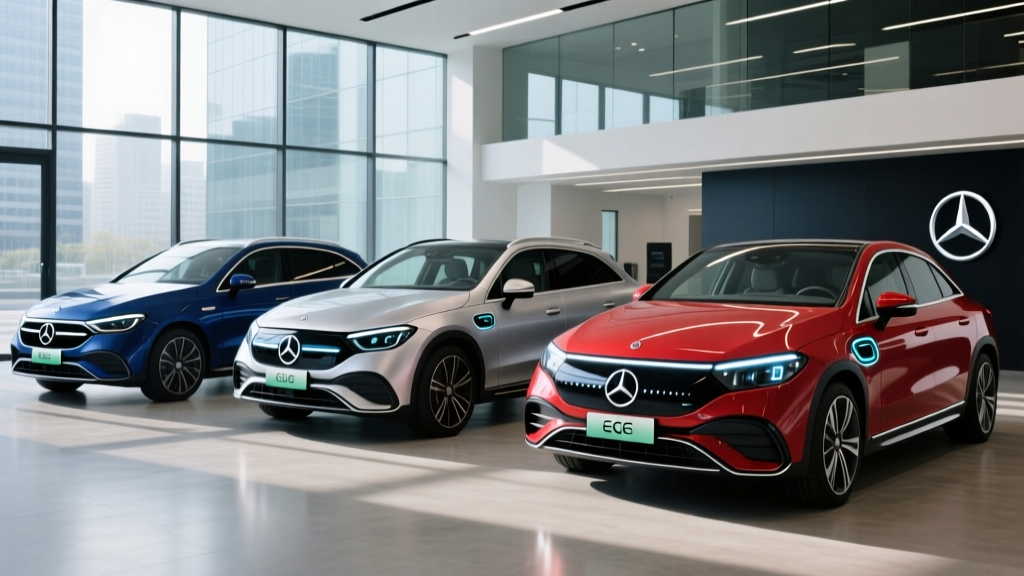
Mercedes-Benz currently sells four battery-electric models in the U.S.: the EQB (compact SUV, ~245 mi EPA, from ~$54,500), the EQE Sedan (midsize luxury, ~305 mi EPA, from ~$76,000), the EQE SUV (~279 mi EPA, from ~$79,000), and the flagship EQS Sedan (~390 mi EPA, from ~$105,550). None currently qualify for the full $7,500 federal §30D tax credit due to battery-sourcing and MSRP-cap rules, though some trims may qualify for partial credits or state-level incentives. These vehicles excel in ride refinement, cabin technology, and DC fast-charging speeds (up to 200 kW on the EQS/EQE), but they carry premium pricing, steeper depreciation than some rivals, and real-world highway range that falls 10–15% below EPA estimates. They're best suited for buyers with home Level 2 charging who prioritize luxury and tech over maximum range-per-dollar.
The 2026 Mercedes-Benz EV Lineup at a Glance
Mercedes has consolidated its EQ family after discontinuing the original EQC. Here's what's available new for the 2026 model year, with EPA data sourced from fueleconomy.gov and manufacturer specifications.
| Model | EPA Range | Battery (usable kWh) | Chemistry | Peak DC Charge | 10–80% Time | 0–60 mph | Base MSRP |
|---|---|---|---|---|---|---|---|
| EQB 300 4MATIC | 245 mi | 66.5 kWh | NMC | 100 kW | ~32 min | 7.7 sec | $54,500 |
| EQE 350+ Sedan | 305 mi | 90.6 kWh | NMC | 170 kW | ~32 min | 6.2 sec | $76,000 |
| EQE 350 4MATIC SUV | 279 mi | 90.6 kWh | NMC | 170 kW | ~32 min | 6.4 sec | $79,000 |
| EQS 450+ Sedan | 390 mi | 118 kWh | NMC | 200 kW | ~31 min | 5.9 sec | $105,550 |
| EQS 580 4MATIC SUV | 330 mi | 108.4 kWh | NMC | 200 kW | ~31 min | 4.4 sec | $120,450 |
All EQ models use nickel-manganese-cobalt (NMC) lithium-ion cells, which offer higher energy density than LFP but are more sensitive to sustained 100% states of charge. Mercedes recommends daily charging to 80–90% and reserving 100% for long trips, with battery preconditioning enabled for DC fast charging.
Real-World Range: What the EPA Sticker Doesn't Tell You
EPA range estimates assume a mix of city and highway driving at moderate temperatures. In real-world ownership, your results will vary based on speed, climate, and terrain.
EQS 450+ Sedan: EPA 390 mi → Expect ~330–350 mi on highway road trips at 70–75 mph; ~270–300 mi in sub-freezing winter conditions with cabin heat. City/regenerative driving can approach or exceed the EPA number.
EQE 350+ Sedan: EPA 305 mi → Expect ~255–275 mi highway; ~215–240 mi in cold weather.
EQB 300: EPA 245 mi → Expect ~200–215 mi highway; ~170–190 mi in cold weather. This is the lineup's range weak point for road-trippers.
Mercedes' thermal management system includes a heat pump (standard on EQS/EQE, optional on EQB), which reduces cold-weather range loss by roughly 10% compared to resistive heating. However, NMC chemistry inherently loses efficiency below 32°F, and no software can fully overcome that physics limitation.
Charging Speeds and Infrastructure Reality
Understanding the difference between kW (power, or how fast energy flows) and kWh (energy, or battery capacity) is essential. A 200 kW peak charge rate doesn't mean sustained speed — all lithium-ion batteries taper charging as they approach full capacity.
| Level | Power | Miles Added/Hour (EQS) | Typical Use Case |
|---|---|---|---|
| Level 1 (120V) | ~1.4 kW | ~4 mi/hr | Emergency/overnight top-off |
| Level 2 (240V, 48A) | ~11.5 kW | ~33 mi/hr | Home daily charging |
| DC Fast (CCS) | Up to 200 kW | ~180 mi in 15 min (EQS) | Road trips |
The EQS and EQE accept up to 200 kW on DC fast chargers, but that peak only holds between roughly 10–40% state of charge. From 40–80%, the curve tapers to 100–120 kW. This is why the 10–80% time is ~31 minutes rather than the ~18 minutes peak rate might suggest. The EQB tops out at 100 kW, making road trips noticeably slower.
Mercedes uses the CCS1 connector natively. With the industry's shift to NACS (Tesla's standard), Mercedes-Benz has committed to NACS ports on new vehicles starting with the 2025+ model year for some models, but existing CCS-equipped EQ vehicles can access Tesla Superchargers via a CCS-to-NACS adapter. Confirm your specific model year's port type with your dealer.
Mercedes-Benz EVs vs. Gas Equivalents: Cost Comparison
Let's compare the EQE 350+ Sedan against its closest internal-combustion sibling, the E 350 Sedan, over five years and 75,000 miles. Electricity priced at the U.S. average of $0.16/kWh; gasoline at $3.40/gallon.
| Category | EQE 350+ Sedan | E 350 Sedan (Gas) |
|---|---|---|
| Base MSRP | $76,000 | $62,000 |
| Estimated Federal Tax Credit | $0–$3,750* | $0 |
| Fuel/Energy (75k mi) | $2,700 | $8,500 |
| Maintenance (5 yr) | $1,800 | $4,200 |
| Insurance (5 yr avg) | $14,500 | $11,200 |
| 5-Year Depreciation (est.) | $38,000 | $24,000 |
| Total 5-Year Cost | ~$57,000–$60,250 | ~$49,900 |
*Federal §30D credit eligibility for Mercedes-Benz EVs is limited. As of 2026, most EQ models exceed the $55,000 sedan / $80,000 SUV MSRP cap, and battery critical-mineral sourcing requirements disqualify several trims. Always verify current eligibility at irs.gov before purchasing.
The EQE saves substantially on fuel and maintenance (no oil changes, fewer brake replacements thanks to regenerative braking), but the higher purchase price, steeper depreciation, and elevated insurance premiums narrow the gap. If you drive fewer than 10,000 miles per year, the gas E-Class may cost less overall. Above 15,000 miles annually, the EV's fuel savings become decisive.
Tax Credit and Incentive Reality Check
The federal §30D clean vehicle credit has strict rules for 2026:
- MSRP caps: $55,000 for sedans; $80,000 for SUVs/pickups/vans — this eliminates the EQS Sedan and most EQE/EQB trims
- Buyer income limits: $150,000 single / $300,000 joint modified AGI
- Battery sourcing: Critical minerals and battery components must meet escalating domestic/free-trade-partner thresholds — many Mercedes cells are sourced from suppliers that don't yet qualify
- Point-of-sale transfer: If eligible, the credit can be applied at the dealership to reduce your out-of-pocket cost immediately
- Leasing loophole: Vehicles leased (not purchased) may qualify for the $7,500 commercial credit passed through as a lease incentive, regardless of MSRP caps or sourcing — ask your dealer about current lease offers
Several states offer additional rebates or tax credits (California's CVRP, Colorado's Innovative Motor Vehicle Credit, etc.), but these vary by jurisdiction and income. Check your state's energy office for current programs.
Common Misconceptions About Mercedes-Benz EVs
| Myth | Fact |
|---|---|
| "All Mercedes EVs get the $7,500 tax credit." | Most 2026 EQ models fail the MSRP cap or battery-sourcing test. Leasing may be the only way to capture a credit equivalent. |
| "The EQS goes 390 miles on the highway." | EPA is a combined cycle. Sustained 75-mph highway driving yields ~330–350 miles in mild weather, less in cold or hilly terrain. |
| "EVs need no maintenance." | Tires wear 15–20% faster due to vehicle weight and instant torque. Cabin air filters, brake fluid, wiper fluid, and cabin HVAC still require service. |
| "I can charge on any 120V outlet overnight." | Level 1 adds only ~4 miles per hour. An EQS with a depleted battery would need 90+ hours on Level 1. Home Level 2 (240V) is practically mandatory for daily use. |
| "The battery will need replacing in 5 years." | Mercedes warranties the high-voltage battery for 10 years / 155,000 miles against degradation below 70% capacity. Real-world NMC degradation typically reaches only 8–12% over 100,000 miles with proper charging habits. |
Home Charging: What First-Time Buyers Must Know
Home Level 2 charging is the backbone of practical EV ownership. Without it, you'll rely entirely on public DC fast charging, which costs 2–3× more per kWh and adds wear from frequent high-rate charging.
| Item | Cost Range |
|---|---|
| Level 2 charger (48A, hardwired) | $500–$800 |
| Electrician labor (standard install) | $800–$2,000 |
| Electrical panel upgrade (if needed, 200A service) | $1,500–$4,000 |
| Permit and inspection | $100–$400 |
| Total (typical) | $1,400–$3,200 |
| Total (with panel upgrade) | $2,900–$7,200 |
The EQE and EQS have 11.5 kW onboard chargers, meaning they can accept the full output of a 48A Level 2 circuit. The EQB is limited to ~7.2 kW on Level 2, so it charges slightly slower at home. Always have a licensed electrician assess your panel capacity before purchasing equipment — a 200-amp panel with existing heavy loads (electric range, dryer, HVAC) may require an upgrade to safely add a 48A EV circuit.
Decision Framework: Which Mercedes-Benz EV Is Right for You?
Choose the EQB if: You want the most affordable entry point, need a compact SUV with optional third-row seating, primarily drive under 40 miles daily, and can charge at home. Accept that road trips will require more frequent stops due to 245-mi range and 100 kW charging.
Choose the EQE Sedan if: You want the E-Class equivalent with 300+ mile range, value a quiet and refined ride, and drive 30–60 miles daily. The 170 kW charging and 90.6 kWh battery make it the lineup's best balance of range, price, and practicality.
Choose the EQE SUV if: You need cargo space and all-wheel drive but don't want to pay EQS prices. The 279-mi range is adequate for most commutes but tighter for road trips than the sedan.
Choose the EQS Sedan if: Range is your top priority, you want S-Class-level luxury, and budget exceeds $100,000. The 390-mi EPA rating is the best in the lineup, and 200 kW charging makes road trips viable with 20-minute stops.
Choose the EQS SUV if: You need three rows, maximum cargo, and flagship performance (4.4-sec 0–60 in 580 trim). Budget accordingly — this is a $120,000+ vehicle.
Look elsewhere (Tesla Model S, Lucid Air, BMW i5) if: You prioritize range-per-dollar, want access to the full Supercharger network natively, or need a vehicle that qualifies for the full $7,500 federal purchase credit.
Frequently Asked Questions
Are Mercedes-Benz EVs reliable?
Mercedes' EQ models have average reliability ratings for the luxury EV segment. The powertrain and battery are well-proven, but MBUX software glitches and build-quality inconsistencies have appeared in J.D. Power and Consumer Reports surveys. The high-voltage battery carries a 10-year/155,000-mile warranty against degradation below 70% of original capacity.
Can I use Tesla Superchargers with a Mercedes EQ?
Yes, with a CCS-to-NACS adapter. Mercedes has been transitioning to native NACS ports on newer model years, but existing CCS-equipped vehicles can access the Supercharger network using an approved adapter. Mercedes also provides access via the Mercedes me Charge app, which aggregates Electrify America, EVgo, and ChargePoint networks.
How much does it cost to charge a Mercedes EQ at home?
At the U.S. average electricity rate of $0.16/kWh, fully charging an EQS 450+ (118 kWh battery) costs approximately $18.90. For the EQE (90.6 kWh), it's about $14.50. Compare that to $70–$90 for a tank of premium gasoline in an equivalent gas Mercedes. Most owners charge partially each night rather than from 0–100%.
Do Mercedes EQ models qualify for any tax credits?
Under 2026 IRS §30D rules, most EQ models do not qualify for the full $7,500 purchase credit due to MSRP caps and battery-sourcing requirements. However, leasing often qualifies for a pass-through commercial credit that dealers apply as a lease reduction. Check irs.gov and ask your dealer about current lease incentive structures.
What happens if the battery degrades significantly?
Mercedes warrants the traction battery for 10 years or 155,000 miles, whichever comes first, against capacity loss below 70%. If the battery falls below that threshold within the warranty period, Mercedes will repair or replace modules to restore capacity above 70%. Out-of-warranty full battery replacement costs range from $15,000 to $30,000+ depending on the model, though module-level repairs can be significantly cheaper.
Is the EQ lineup being discontinued?
Mercedes-Benz has announced it will shift future EV models back to core nameplates (e.g., the next-generation electric E-Class will be called the E-Class, not EQE). The current EQS and EQE are expected to continue through at least the 2027 model year, but future replacements may carry traditional nameplates. The EQB is anticipated to be replaced by an electric GLB under the new naming strategy.