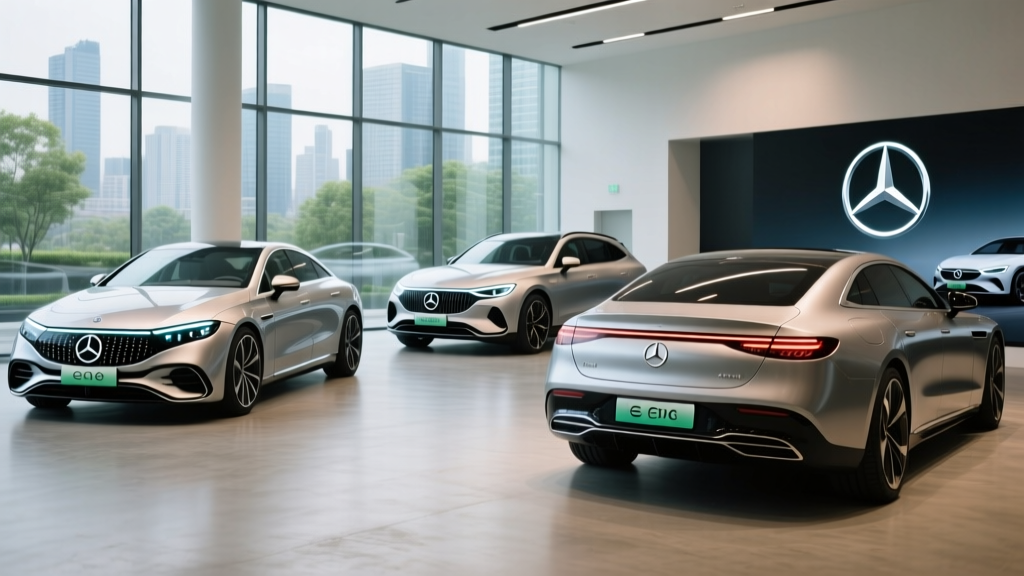
Quick Answer: A Mercedes-Benz EV car in 2026 spans four models — the EQE Sedan, EQE SUV, EQS Sedan, and EQS SUV — with EPA ranges from 279 to 390 miles, starting prices from roughly $75,000 to $120,000+, and DC fast-charging speeds up to 200 kW. None currently qualify for the full federal §30D tax credit due to battery-sourcing rules, so plan your budget around the sticker price. The best all-around pick for most buyers is the EQE 350+ Sedan: 390 miles of EPA range, a usable 90.6 kWh NMC battery, and a 10–80% DC charge in about 32 minutes.
Mercedes-Benz has spent the last half-decade building out its EQ electric sub-brand, and the 2026 lineup represents its most mature effort yet. But shopping for a Benz EV car means navigating a maze of trim levels, range figures that don't always match the real world, and luxury-EV ownership economics that differ sharply from gas-powered Mercedes models. This guide breaks down every current EQ model with exact specs, real-world range expectations, charging data, and a concrete cost framework to help you decide which one — if any — fits your life.
The 2026 Mercedes-Benz EV Lineup: Spec-by-Spec Breakdown
Mercedes currently sells four core EQ passenger vehicles in the U.S. market. Each rides on the EVA2 platform with an NMC (nickel manganese cobalt) lithium-ion battery pack. Here's how they stack up on paper:
| Model | EPA Range | Battery (Usable) | Peak DC Charge | 10–80% Time | 0–60 mph | Base MSRP |
|---|---|---|---|---|---|---|
| EQE 350+ Sedan | 390 mi | 90.6 kWh NMC | 170 kW | ~32 min | 6.2 sec | $74,900 |
| EQE 350 4MATIC SUV | 279 mi | 90.6 kWh NMC | 170 kW | ~32 min | 6.4 sec | $77,900 |
| EQS 450+ Sedan | 390 mi | 108.4 kWh NMC | 200 kW | ~31 min | 5.9 sec | $105,550 |
| EQS 450 4MATIC SUV | 330 mi | 108.4 kWh NMC | 200 kW | ~31 min | 5.8 sec | $110,000 |
Sources: EPA fueleconomy.gov, Mercedes-Benz USA press specifications. All figures reflect 2026 model year base trims.
Real-World Range: What the EPA Sticker Doesn't Tell You
EPA vs. Reality: The EQE 350+ Sedan's 390-mile EPA rating is among the best of any luxury EV sold today. But EPA tests use a blended city/highway cycle at moderate temperatures. Here's what to actually expect:
- Highway driving (75 mph, 70°F): ~310–330 miles
- Cold weather (30°F, mixed driving): ~260–290 miles (NMC packs lose roughly 20–30% in freezing temps without preconditioning)
- City/regenerative driving (60°F): ~370–395 miles — regen recapture in stop-and-go traffic can push you near or slightly above the EPA number
The larger 108.4 kWh pack in the EQS models provides a meaningful buffer. Even at 75% usable capacity in cold weather, an EQS 450+ Sedan still delivers roughly 280–300 miles — enough for most daily routines and road trips with a single DC fast-charge stop. The EQE SUV and EQS SUV, with their boxier aero profiles and higher curb weights, sacrifice 60–100 miles of range versus their sedan counterparts. If highway road trips are a regular part of your life, the sedan body style has a clear physics advantage.
Mercedes equips all EQ models with a heat pump as standard equipment, which helps mitigate cold-weather range loss compared to EVs using resistive cabin heating. Still, preconditioning the battery while plugged in before a cold-weather departure is the single most effective range-preservation habit you can adopt.
Charging Speeds and Infrastructure: What Benz EV Owners Need to Know
Charging speed is where luxury EV buyers often have unrealistic expectations. A peak rate of 170–200 kW sounds impressive, but EV charging follows a tapering curve — the battery charges fastest between roughly 10–50% State of Charge (SoC), then progressively slows to protect cell health. Here's the realistic picture:
| Charging Level | Power | Miles Added Per Hour | Use Case |
|---|---|---|---|
| Level 1 (120V household) | ~1.4 kW | ~4–5 mi/hr | Emergency/overnight trickle |
| Level 2 (240V home/work) | 9.6–11 kW | ~30–37 mi/hr | Daily overnight charging |
| DC Fast (CCS public) | 170–200 kW peak | ~500+ mi/hr (at peak) | Road trips, quick top-ups |
Level 2 home charging is where 90%+ of your charging will happen. The EQE and EQS accept up to 11 kW on AC Level 2, meaning a full 0–100% charge on the EQE's 90.6 kWh pack takes roughly 9.5 hours — easily achievable overnight on a 48-amp home wall connector. Expect to pay $800–$2,000 for a professional Level 2 home installation (equipment + licensed electrician + permit), depending on your panel capacity and run length. If your home has a 100-amp electrical panel, you may need a $1,500–$3,000 panel upgrade to support a 48-amp charger.
DC fast charging on public CCS networks (Electrify America, EVgo, ChargePoint) will get you from 10–80% in roughly 31–32 minutes. However, sustained average power is closer to 110–130 kW across the full session, not the 170–200 kW peak. Mercedes-Benz EV cars use the CCS1 connector; NACS (Tesla Supercharger) compatibility requires an adapter, which Mercedes provides or sells separately depending on the model year.
Public charging reliability remains a real concern. A J.D. Power 2025 EV Experience Index study found that roughly 1 in 5 public charging sessions encounter a failure. Benz EV owners aren't immune. Plan road trips with backup charging stops and use the Mercedes me Charge app to check real-time station status before deviating from your route.
Cost of Ownership: Mercedes EV vs. Gas Mercedes
Buying a luxury EV isn't purely about fuel savings — it's about the total cost picture over a typical 5-year ownership period. Here's a concrete comparison between the EQE 350+ Sedan and its closest gas counterpart, the Mercedes E 350 Sedan:
| Cost Category (5 Years) | EQE 350+ Sedan | E 350 Sedan (Gas) |
|---|---|---|
| Purchase Price (MSRP) | $74,900 | $62,000 |
| Federal Tax Credit (§30D) | $0 (sourcing rules) | $0 |
| Fuel/Energy (15k mi/yr) | $3,200 (home L2 @ $0.14/kWh) | $9,750 (premium @ $4.00/gal, 27 MPG) |
| Maintenance | $1,800 | $4,500 |
| Insurance (avg) | $12,500 | $9,500 |
| Estimated Depreciation | $28,000 | $22,000 |
| 5-Year Total | ~$92,400 | ~$85,750 |
Key takeaways:
- You save roughly $6,550 on energy over five years, plus ~$2,700 on maintenance (no oil changes, fewer brake replacements thanks to regen, no transmission fluid).
- You pay more upfront (~$12,900), more in insurance (~$3,000 over 5 years — EV luxury premiums are real), and likely more in depreciation.
- The net result: a Benz EV car costs roughly $6,000–$7,000 more over 5 years than its gas equivalent at current prices and without a federal tax credit.
The math flips in your favor if you have access to cheap electricity (under $0.10/kWh via time-of-use rates or solar), drive significantly more than 15,000 miles per year, or if Mercedes adjusts pricing to compete with Tesla and BMW's credit-eligible models.
Federal Tax Credit: Why Most Benz EV Cars Don't Qualify (Yet)
This is the single biggest financial disappointment for Mercedes-Benz EV shoppers in 2026. Under IRS §30D rules, a new EV can qualify for up to $7,500 in federal tax credits — but only if it meets all of the following requirements:
- MSRP cap: Sedans must be under $55,000; SUVs/pickups/vans under $80,000 (all EQ sedans exceed the cap; EQS SUV barely qualifies on MSRP alone)
- Buyer income cap: AGI under $150,000 (single), $225,000 (head of household), $300,000 (joint)
- Battery component manufacturing: ≥60% of battery components manufactured or assembled in North America (phasing up annually)
- Critical minerals sourcing: ≥80% of critical minerals extracted or processed in the U.S. or a free-trade-agreement country
- FEOC exclusion: No battery components from a "foreign entity of concern" (primarily targeting Chinese supply chains)
As of the 2026 model year, Mercedes-Benz EQ vehicles do not meet the critical-minerals and battery-component sourcing thresholds, largely because their supply chains remain heavily tied to Asian and European suppliers. This means you should budget the full MSRP without expecting a federal credit offset. Always verify current eligibility at IRS.gov's clean vehicle credit page before purchasing, as rules and manufacturer qualification status can change mid-year.
Some states offer their own rebates (California's CVRP, Colorado's state credit, etc.) that may partially offset the gap. Check your state energy office for current programs.
Common Misconceptions About Mercedes-Benz EVs
| Myth | Fact |
|---|---|
| "The battery will need replacing in 5 years." | Mercedes warranties the high-voltage battery for 10 years/155,000 miles, guaranteeing ≥70% capacity retention. Real-world NMC degradation data from similar platforms shows ~8–12% loss over 100,000 miles with normal use. |
| "I can't take road trips — charging takes too long." | A 10–80% DC fast charge in ~32 minutes aligns well with a meal/rest stop. On a 600-mile trip, plan 1–2 charge stops of 30 min each. |
| "EVs are cheaper to own than gas cars." | Lower fuel and maintenance costs are real, but higher purchase price, insurance premiums, and depreciation can negate savings — especially in luxury segments without tax credits. |
| "The EQS is just a bigger EQE." | The EQS uses a 108.4 kWh pack (vs. 90.6), offers the optional Hyperscreen dashboard, and has a significantly more refined rear-seat experience. They share a platform but target different buyers. |
| "Regenerative braking means I never use my brakes." | Regen handles most deceleration, but friction brakes are still essential for emergency stops and low-speed holding. Expect brake pad life of 100,000+ miles, but rotors still need periodic inspection. |
Battery Warranty, Longevity, and What Replacement Would Cost
Every Mercedes-Benz EV car sold in the U.S. includes a high-voltage battery warranty of 10 years or 155,000 miles, whichever comes first. The warranty guarantees that the battery will retain at least 70% of its original usable capacity. If degradation exceeds that threshold within the warranty period, Mercedes will repair or replace the pack at no cost.
Out of warranty, a full high-voltage battery replacement for an EQE or EQS currently runs between $20,000 and $35,000 including parts and labor — a sobering figure. However, this is a worst-case scenario. Industry-wide data from Recurrent Auto and other battery-health monitoring services shows that modern NMC packs with active thermal management (which all EQ models have) typically retain 85–92% capacity at 100,000 miles. The likelihood of needing a full replacement under normal ownership is low.
To maximize battery longevity:
- Set your daily charge limit to 80% and only charge to 100% when you need the full range for a trip.
- Use preconditioning (via the Mercedes me app) before DC fast charging in cold weather.
- Avoid leaving the car at very low (<10%) or very high (100%) SoC for extended periods in extreme heat.
Decision Framework: Which Benz EV Car Is Right for You?
Choose the EQE 350+ Sedan if: You want the best range-per-dollar in the Mercedes lineup, primarily drive solo or with one passenger, and your daily commute is under 100 miles round-trip. The 390-mile EPA range means you'll charge at home 2–3 times per week at most, and road trips require minimal planning.
Choose the EQE 350 4MATIC SUV if: You need cargo space, all-wheel drive for snow/ice, or prefer the elevated seating position — and you're willing to sacrifice ~110 miles of range for it. Best for families who do most driving locally and take 1–2 road trips per year.
Choose the EQS 450+ Sedan if: Budget is not the primary constraint and you want the quietest, most refined long-distance EV cruiser Mercedes makes. The 108.4 kWh pack and 0.20 drag coefficient deliver real-world highway range that few luxury EVs can match.
Choose the EQS 450 4MATIC SUV if: You need three-row seating (optional), maximum cargo volume, and flagship-level luxury — and you have reliable home Level 2 charging. This is the most expensive and heaviest option; plan for the highest insurance and energy costs in the lineup.
Consider a Mercedes plug-in hybrid (PHEV) instead if: You lack home charging access, regularly drive in areas with sparse DC fast-charging infrastructure, or want to keep your monthly payment below $1,000. The S 580e PHEV offers ~30 miles of electric-only range for daily commuting with a gas engine for unlimited road trips — no range anxiety, no charging dependency.
Frequently Asked Questions
Does Mercedes-Benz use the Tesla NACS connector or CCS?
Current 2026 Mercedes-Benz EV cars use the CCS1 connector natively. Mercedes has announced a transition to NACS for future models, and an official adapter is available for accessing Tesla Supercharger stations. Check with your dealer for adapter availability on your specific model year.
What's the actual cost to charge a Mercedes EV at home?
At the U.S. average residential electricity rate of ~$0.16/kWh, fully charging the EQE 350+ (90.6 kWh usable) costs about $14.50. That delivers roughly 390 miles of EPA range — or about $0.037 per mile. Compare that to the gas E 350 at ~$0.15 per mile on premium fuel. If you have solar or time-of-use rates with cheap overnight electricity (under $0.10/kWh), your per-mile cost drops below $0.025.
Is the Mercedes me Charge network reliable for road trips?
The Mercedes me Charge system aggregates access to Electrify America, EVgo, ChargePoint, and other networks through a single account. The aggregation is convenient, but you're still subject to the underlying network's uptime. Electrify America's reliability has improved but still sees ~10–15% session failure rates at some locations. Always have a backup stop identified on long trips, and consider a direct Electrify America or EVgo membership for better pricing.
How does a Benz EV car compare to a Tesla Model S or BMW i5?
The Tesla Model S offers more range (402 mi EPA), faster Supercharger access, and a lower starting price (~$72,990), but its interior quality and ride refinement don't match the EQE or EQS. The BMW i5 eDrive40 ($66,800, 295 mi EPA) is newer and more affordable but has notably less range than the EQE 350+. If luxury build quality and cabin isolation are your top priorities, Mercedes leads. If value and charging infrastructure matter more, Tesla wins.
Can I lease a Mercedes EV and still get a tax credit?
Under the commercial clean vehicle credit (§45W), leasing companies can claim a credit on leased EVs and may pass savings to the lessee through reduced monthly payments. This pathway has different sourcing requirements than the §30D purchase credit. Ask your Mercedes dealer's finance department whether current lease offers include any credit pass-through — this changes frequently and varies by model. Consult a tax professional for advice specific to your situation.
What should a first-time EV buyer know before purchasing a Benz EV?
Three things matter most: (1) Confirm you can install a Level 2 home charger — a 240V/48-amp circuit is ideal, and you'll need a licensed electrician to assess your panel capacity. (2) Understand that the EPA range is a best-case blended figure; budget 20–25% less for real-world highway and cold-weather driving. (3) Factor in higher insurance costs (typically 15–25% above a comparable gas Mercedes) and get quotes before signing. Home charging access is the single biggest predictor of EV satisfaction — if you can't charge at home reliably, reconsider whether a full BEV is the right move right now.
Editorial note: Pricing, tax credit eligibility, and specifications reflect 2026 model year data available at time of publication. Always confirm current figures with Mercedes-Benz USA and the IRS before purchasing. Real-world range and charging times vary based on temperature, driving style, terrain, and battery preconditioning.