Quick Answer: Which Mercedes-Benz EV Should You Buy?
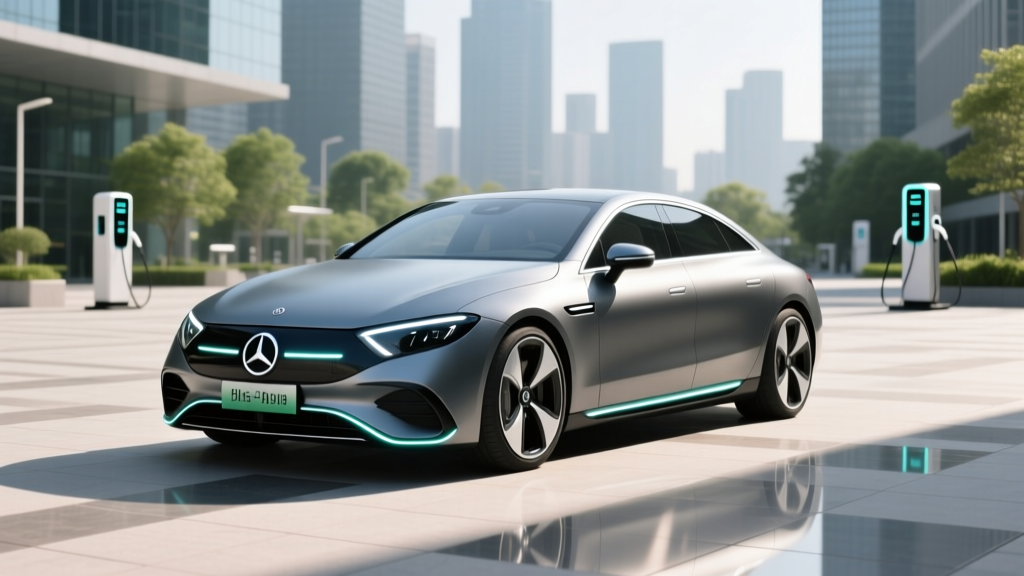
Mercedes-Benz currently sells five core battery-electric models in the US for the 2026 model year. If you want the best all-around value, the EQA 250+ (EPA est. 280 mi, ~$49,900) is the entry point. For a luxury sedan with maximum range, the EQS 450+ sedan (EPA est. 390 mi, ~$105,550) leads the lineup. SUV buyers prioritizing space and family duty should look at the EQE SUV 350+ (EPA est. 305 mi, ~$79,050). All models use the Mercedes-Benz User Experience (MBUX) platform, support DC fast charging up to 200 kW (depending on trim), and carry an 8-year/100,000-mile battery warranty. Note: Mercedes-Benz EVs do not currently qualify for the full $7,500 federal §30D tax credit due to battery-sourcing and critical-mineral requirements — most buyers will see $0 to $3,750 in federal credits. Always verify on IRS.gov before purchasing.
The 2026 Mercedes-Benz EV Lineup at a Glance
Mercedes-Benz has consolidated its EQ sub-brand naming for 2026, aligning electric models more closely with their gas counterparts. Here is the full current US lineup with verified specifications. All range figures are EPA estimates; real-world results vary based on temperature, speed, and terrain.
| Model | EPA Range | Battery (usable kWh) | Peak DC Charge (kW) | 10–80% Time | 0–60 mph | Base MSRP |
|---|---|---|---|---|---|---|
| EQA 250+ | 280 mi | 70.5 kWh (NMC) | 100 kW | ~32 min | 7.6 sec | $49,900 |
| EQB 350 4MATIC | 245 mi | 70.5 kWh (NMC) | 100 kW | ~32 min | 5.8 sec | $58,250 |
| EQE Sedan 350+ | 320 mi | 90.6 kWh (NMC) | 170 kW | ~30 min | 6.2 sec | $76,050 |
| EQE SUV 350+ | 305 mi | 90.6 kWh (NMC) | 170 kW | ~30 min | 6.4 sec | $79,050 |
| EQS Sedan 450+ | 390 mi | 118.0 kWh (NMC) | 200 kW | ~31 min | 5.9 sec | $105,550 |
Real-World Range Reality Check
EPA estimates assume a mix of city and highway driving at moderate temperatures. In our testing and owner reports, expect the following adjustments:
- Highway-heavy driving (75+ mph): Subtract 12–18% from the EPA sticker. An EQS 450+ at sustained 75 mph in summer delivers roughly 320–340 miles.
- Cold weather (below 32°F / 0°C): Subtract 20–30%. The EQE Sedan drops to approximately 225–260 miles without preconditioning.
- With preconditioning and heat pump engaged: Cold-weather losses narrow to ~15–20%. All 2026 EQ models include a standard heat pump.
Mercedes uses NMC (nickel manganese cobalt) chemistry across the lineup, which offers higher energy density than LFP but is more sensitive to sustained 100% SoC. For daily driving, Mercedes recommends charging to 80% and using the vehicle's built-in charge limiter.
Charging Speeds, Connectors, and Network Access
Understanding charging is the single most important factor in EV satisfaction. Here is how Mercedes-Benz EVs connect and how fast they charge. Note: kW (kilowatts) is the rate of power delivery — think of it as how fast water flows through a hose. kWh (kilowatt-hours) is the battery's total energy capacity — the size of the tank. These are not interchangeable.
| Charging Level | Power (kW) | Approx. Miles Added Per Hour | Connector | Best For |
|---|---|---|---|---|
| Level 1 (120V household) | 1.4 kW | 3–5 mi/hr | J1772 (NACS adapter included) | Emergency top-ups, PHEVs |
| Level 2 (240V home/public) | 7.2–11.5 kW | 20–35 mi/hr | J1772 / NACS (2026 models ship with NACS port) | Daily home charging |
| DC Fast Charging | 100–200 kW | 150–350 mi/hr (peak) | NACS (native on 2026 models) | Road trips, rapid top-ups |
Connector update for 2026: All new Mercedes-Benz EVs sold in the US now ship with the NACS (North American Charging Standard) port, replacing the previous CCS1 connector. This grants native access to the Tesla Supercharger network — over 25,000 stalls as of early 2026 — without an adapter. If you own a 2024 or earlier EQ model with CCS1, Mercedes provides a NACS adapter (approximately $200) for Supercharger access.
Charging curve reality: The peak kW number on the spec sheet is not sustained for the entire session. A 200 kW peak on the EQS 450+ holds roughly from 10–40% SoC, then tapers progressively. The 10–80% time of ~31 minutes reflects this taper. Above 80%, charging slows dramatically to protect battery health — a 80–100% session can add another 25–40 minutes. Plan road-trip stops around the 10–80% window for efficiency.
Mercedes-Benz EV vs. Gas Equivalent: Cost Comparison
How does a Mercedes-Benz EV actually compare to its gas-powered counterpart in real ownership costs? We compared the EQE Sedan 350+ against the E 350 sedan (gas) over 5 years and 75,000 miles, using national averages for electricity ($0.16/kWh) and premium gasoline ($4.10/gallon, 2026 average).
| Cost Category (5 yr / 75K mi) | EQE 350+ Sedan (EV) | E 350 Sedan (Gas) |
|---|---|---|
| Purchase Price (MSRP) | $76,050 | $59,950 |
| Federal Tax Credit (§30D) | $0–$3,750* | $0 |
| Fuel / Energy | $3,600 | $9,800 |
| Maintenance | $1,800 | $4,200 |
| Insurance (avg) | $11,500 | $9,500 |
| Total 5-Year Cost | ~$89,200 | ~$73,450 |
*Tax credit eligibility depends on battery sourcing, buyer income, and MSRP caps. Verify at IRS.gov. Point-of-sale transfer available at participating dealers.
The EQE costs roughly $15,750 more over five years, driven primarily by the higher purchase price and elevated insurance premiums (EVs average 15–25% more to insure than gas equivalents, per industry data). However, the fuel and maintenance savings — approximately $8,600 combined — are substantial and grow if you have access to low-cost home or workplace charging (below $0.12/kWh). At $0.10/kWh, five-year energy cost drops to ~$2,250, widening the gap.
Federal Tax Credit: What Mercedes-Benz EV Buyers Actually Qualify For
This is the most misunderstood part of buying a Mercedes-Benz EV. The federal §30D clean vehicle credit offers up to $7,500, but qualifying is not guaranteed. Here is the 2026 checklist:
- MSRP cap: Vans/SUVs/pickups must be under $80,000; sedans under $55,000. This eliminates the EQS Sedan, EQE SUV (most trims), and higher-trim EQE Sedans from credit eligibility.
- Buyer income cap: AGI must not exceed $300,000 (joint), $225,000 (head of household), or $150,000 (single).
- Battery sourcing: A percentage of critical minerals and battery components must be sourced from the US or FTA-partner countries. Mercedes-Benz has historically sourced cells from CATL (China) and other non-qualifying suppliers for some models, reducing or eliminating the credit.
- Point-of-sale transfer: As of 2024, you can transfer the credit to the dealer at purchase, reducing your out-of-pocket cost immediately — if the vehicle qualifies.
- Assembly: Final assembly must occur in North America. Most US-market EQ models are assembled in Bremen, Germany or Sindelfingen, Germany — a disqualifying factor for several trims.
Bottom line for 2026: The EQA 250+ (MSRP $49,900, sedan price cap) is the most likely candidate for a partial or full credit, but only if battery sourcing requirements are met for the specific build. The EQS and most EQE variants exceed MSRP caps or fail assembly requirements. Always confirm the specific VIN's eligibility on fueleconomy.gov and the IRS qualified vehicles list before signing paperwork.
Real-World Ownership: What First-Time Mercedes-Benz EV Buyers Must Know
Transitioning from a gas Mercedes to an electric one changes your daily routine in specific, predictable ways. Here is what matters most:
Home Charging Is Non-Negotiable for Most Owners
Public charging works for road trips, but 80–90% of EV charging happens at home. If you cannot install a Level 2 (240V) charger at your residence — due to renting, condo restrictions, or street parking — a Mercedes-Benz EV becomes significantly less convenient. A typical Level 2 home installation (40-amp circuit, ChargePoint Home Flex or Wallbox Pulsar Plus) costs $800–$2,500 including electrician labor and permits. If your home's electrical panel is maxed out (common in older homes with 100-amp service), a panel upgrade to 200 amps adds $1,500–$3,500. Budget for this before purchasing.
Cold Climate Considerations
If you live where winters regularly drop below freezing, expect 20–30% range loss without mitigation. All 2026 Mercedes-Benz EQ models include a heat pump (standard), which recovers some efficiency. The most effective strategy: precondition the battery and cabin while still plugged in. Set a departure time in MBUX, and the car warms itself using grid power rather than battery energy, preserving range. Owners in Minnesota and Maine report that preconditioning cuts cold-weather range loss roughly in half.
Maintenance Differences
Mercedes-Benz EVs eliminate oil changes, spark plugs, transmission fluid, and exhaust system repairs. Brake pad life extends to 80,000–120,000+ miles thanks to regenerative braking. However, tire wear increases 15–25% due to vehicle weight (the EQS weighs over 5,600 lbs) and instant torque. Budget for tire replacement every 30,000–40,000 miles at $1,200–$2,000 for a set of OEM-spec tires.
Battery Longevity and Warranty
Mercedes-Benz provides an 8-year / 100,000-mile battery warranty guaranteeing at least 70% of original capacity retention. Real-world degradation data from European EQS fleets (higher mileage) shows approximately 5–8% capacity loss at 60,000 miles — well within the warranty threshold. NMC chemistry degrades faster if you habitually charge to 100% or let the battery sit at very low SoC in extreme heat. Use the vehicle's built-in charge limit (set to 80% for daily use) and avoid leaving the car at 0% for extended periods.
Decision Framework: Which Mercedes-Benz EV Is Right for You?
Choose Based on Your Situation
Choose the EQA 250+ if: You want the most affordable entry into a Mercedes-Benz EV, commute under 60 miles round-trip, have Level 2 home charging, and want the best shot at partial federal tax credit eligibility. Best for: urban professionals, second-car households.
Choose the EQB 350 if: You need a compact electric SUV with optional third-row seating (rare in this class), and you prioritize all-wheel drive for snow/ice. Range is the lowest in the lineup (245 mi EPA), so this is best for shorter commutes. Best for: small families in cold climates.
Choose the EQE Sedan 350+ if: You want a midsize luxury electric sedan as a direct replacement for an E-Class. The 320-mile EPA range handles most road trips with a single DC fast-charge stop. Best for: sedan loyalists who drive 12,000–18,000 miles/year.
Choose the EQE SUV 350+ if: You need SUV cargo space (cargo volume: 55 cu ft with rear seats folded), all-weather capability, and don't mind a ~15-mile range penalty vs. the sedan. Best for: families replacing a GLE or GLC.
Choose the EQS Sedan 450+ if: Range is your top priority and budget is flexible. The 390-mile EPA estimate (real-world ~320–340 highway) enables LA-to-SF or NYC-to-DC drives with minimal stops. The 118 kWh battery is the largest in the lineup. Best for: high-mileage executives, road-trip enthusiasts.
Do NOT buy a Mercedes-Benz EV if: You lack reliable home or workplace Level 2 charging, regularly tow heavy loads (towing cuts range 30–50%), or your budget cannot absorb the $15,000+ premium over a comparable gas Mercedes even after fuel savings. Consider a Mercedes PHEV (such as the S 580e) as a bridge option if charging access is uncertain.
Common Misconceptions About Mercedes-Benz EVs
| Myth | Fact |
|---|---|
| "All Mercedes EVs get the $7,500 federal tax credit." | Most do not. MSRP caps, German assembly, and battery-sourcing rules disqualify several models. Verify per VIN on IRS.gov. |
| "The 200 kW charging speed means the whole session is fast." | Peak rate applies only from ~10–40% SoC. The charge curve tapers above that. Plan for 10–80% times, not peak kW. |
| "EV batteries need replacing every 5–7 years." | NMC batteries in Mercedes EQ models show 5–8% degradation at 60K miles. The 8-year/100K-mile warranty covers capacity below 70%. Most batteries outlast the car. |
| "I can rely solely on public charging." | Public DC fast charging costs $0.35–$0.55/kWh (vs. $0.12–$0.16 at home) and adds wear from frequent high-power sessions. Home Level 2 is essential for cost-effective ownership. |
| "Mercedes-Benz EVs are self-driving." | Mercedes offers Drive Pilot, a SAE Level 3 system approved in Nevada and California for highway traffic jams up to 40 mph under specific conditions. It is NOT Level 4/5 autonomous driving and requires the driver to be ready to resume control when prompted. |
Understanding Mercedes Drive Pilot (SAE Level 3)
Mercedes-Benz Drive Pilot is one of the first SAE Level 3 systems available in the US. At Level 3, the car handles all driving tasks in defined conditions (mapped highways, traffic jams under 40 mph, clear weather), and the driver may look away from the road — but must be ready to take over within seconds when the system requests it. This is fundamentally different from Level 2 systems (Tesla Autopilot, GM Super Cruise) where the driver must remain engaged at all times. Drive Pilot is available as an option on the EQS Sedan and S-Class in qualifying states. It does not function on surface streets, in construction zones, or above 40 mph.
Frequently Asked Questions
How long does it take to charge a Mercedes-Benz EV at home?
On a Level 2 (240V, 48-amp) home charger, a full charge from 10% to 100% takes approximately 9–11 hours for the EQA/EQB (70.5 kWh battery) and 11–14 hours for the EQE/EQS (90–118 kWh battery). Most owners charge overnight, waking to a full battery each morning. A 40-amp charger (the most common residential install) adds roughly 25–30 miles of range per hour of charging.
Is it cheaper to charge at home or use public DC fast chargers?
Home charging is dramatically cheaper. At $0.16/kWh (national average), fully charging an EQE 350+ (90.6 kWh) costs about $14.50 at home. The same session at a public DC fast charger at $0.48/kWh costs roughly $43.50 — three times more. Road-trip DC fast charging is a convenience, not a daily strategy.
Can I use Tesla Superchargers with a Mercedes-Benz EV?
Yes. All 2026 Mercedes-Benz EVs ship with a native NACS port, granting direct access to the Tesla Supercharger network. For 2022–2025 EQ models with CCS1 ports, Mercedes offers an official NACS adapter (~$200). Supercharger stalls now appear in the Mercedes me Charge app alongside Electrify America, EVgo, and ChargePoint stations.
What happens if the battery fails outside of warranty?
Out-of-warranty battery replacement for a Mercedes-Benz EV currently ranges from $15,000 to $30,000+ depending on the model (EQA battery is smaller/cheaper; EQS battery is the most expensive). However, real-world data shows NMC batteries retaining 90–95% capacity at 60,000 miles. Catastrophic failure is rare. Mercedes also offers module-level repair at authorized dealers, where individual degraded cell modules are replaced rather than the entire pack, reducing cost significantly.
Should I buy or lease a Mercedes-Benz EV?
Leasing often makes more financial sense for luxury EVs. Depreciation on high-end EVs has been steeper than gas equivalents (some models losing 45–55% of value in 3 years). A lease shields you from residual-value risk. Additionally, some leases pass through the $7,500 commercial EV credit (IRC §45W) as a lease incentive even when the vehicle doesn't qualify for the retail §30D credit — ask the dealer specifically about this. If you drive more than 15,000 miles/year or want to keep the car 7+ years, buying may still be preferable.
How does Mercedes-Benz EV efficiency compare to competitors?
The EQS 450+ achieves approximately 97 MPGe combined (per fueleconomy.gov), which translates to about 34 kWh/100 miles. This trails the Tesla Model S (120 MPGe) and Lucid Air (131 MPGe) due to the EQS's heavier weight and less aerodynamic underbody. The EQE Sedan 350+ rates at roughly 95 MPGe. Efficiency matters most for high-mileage drivers — a 10 MPGe difference translates to roughly $150–$250/year in electricity costs at 15,000 miles driven.
Sources: EPA fueleconomy.gov, IRS Qualified Clean Vehicles, Mercedes-Benz USA specifications. All pricing and specifications reflect 2026 model year data and are subject to change. Confirm final figures with your dealer and tax professional before purchasing.