Mercedes-Benz EQS SUV Review: Range, Three-Row Comfort & Luxury EV Living
An in-depth look at how Mercedes-Benz's flagship electric SUV performs where it matters most — from highway range and charging speed to third-row usability and everyday ownership.
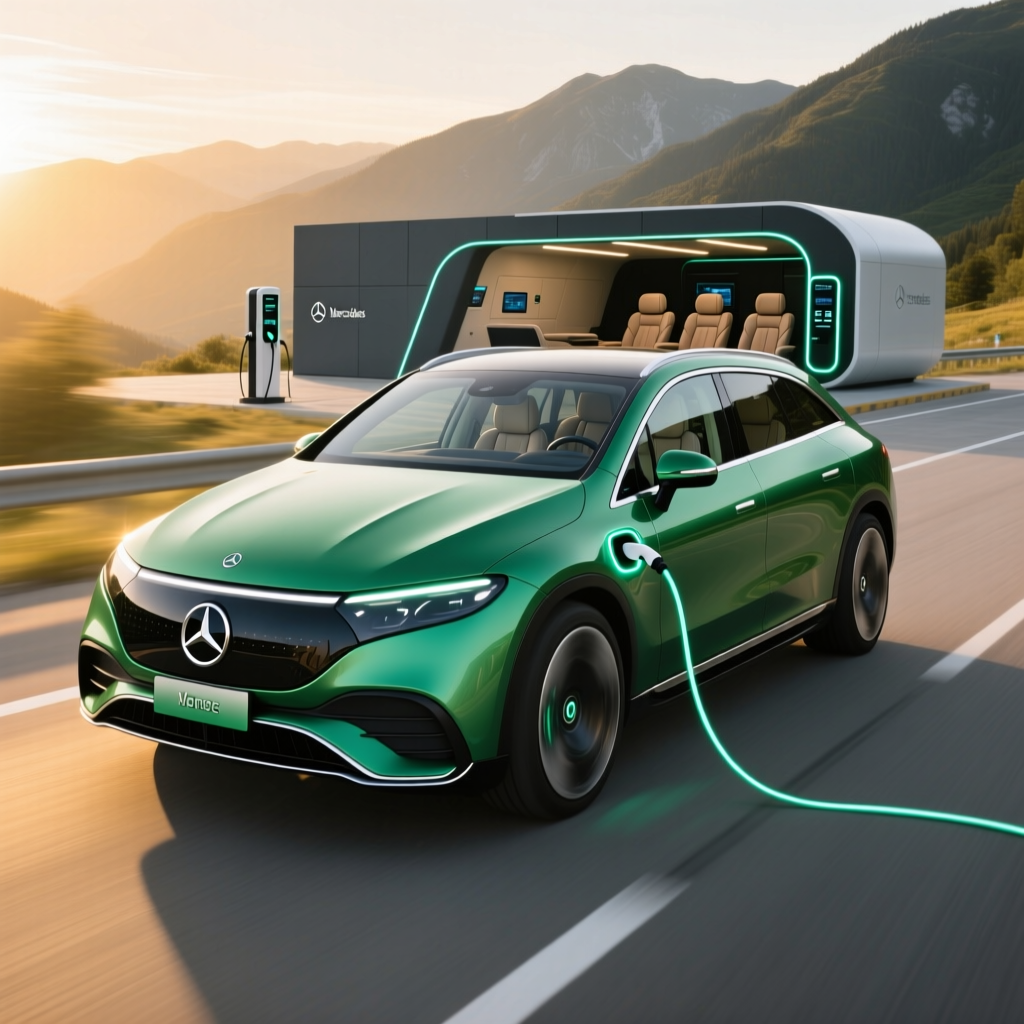
The Mercedes-Benz EQS SUV represents the pinnacle of the brand's electric vehicle ambitions. Built on the same dedicated EVA platform as the EQS sedan, this three-row luxury SUV stretches over 201 inches in length and carries a battery pack large enough to rival the longest-legged EVs on the road. But flagship status comes with flagship expectations. Buyers spending six figures on an electric SUV want to know whether the EQS SUV delivers genuine cross-country range, whether the third row is actually usable for adults, and whether the hyperscreen-laden interior justifies its premium price.
After extensive evaluation of the EQS SUV lineup — including the EQS 450+ (single-motor, rear-wheel drive), the EQS 450 4MATIC (dual-motor all-wheel drive), and the high-performance EQS 580 4MATIC — we break down every dimension that matters to EV buyers. From the best three-row electric SUVs on the market, the EQS SUV occupies a unique space: it is simultaneously one of the most technologically advanced and one of the most comfort-oriented vehicles in the segment.
Vehicle Overview: The EQS SUV at a Glance
The Mercedes-Benz EQS SUV sits at the top of the brand's electric lineup alongside the EQS sedan. It shares the modular EVA architecture, which was designed from the ground up as a dedicated electric platform — not a converted combustion vehicle. This gives the EQS SUV a flat floor, a low center of gravity, and packaging advantages that translate directly into cabin space.
Three powertrain configurations are available. The EQS 450+ uses a single rear-mounted electric motor producing 355 horsepower and 419 lb-ft of torque. The EQS 450 4MATIC adds a front motor for all-wheel drive, bumping output to 355 hp and 590 lb-ft. At the top of the range, the EQS 580 4MATIC delivers 536 hp and 633 lb-ft. All variants share the same 108.4 kWh usable battery pack (120 kWh gross), which is one of the largest battery packs fitted to any production vehicle.
Mercedes positions the EQS SUV against the BMW iX, the Audi Q8 e-tron, the Rivian R1S, and the Tesla Model X. However, its emphasis on ride comfort, sound isolation, and interior opulence gives it a distinct character compared to its more performance-focused rivals. If you are exploring luxury electric SUV comparisons, the EQS SUV consistently stands out for its limousine-like demeanor.
| Specification | EQS 450+ SUV | EQS 450 4MATIC SUV | EQS 580 4MATIC SUV |
|---|---|---|---|
| Drivetrain | RWD (Single Motor) | AWD (Dual Motor) | AWD (Dual Motor) |
| Horsepower | 355 hp | 355 hp | 536 hp |
| Torque | 419 lb-ft | 590 lb-ft | 633 lb-ft |
| Battery (Usable) | 108.4 kWh | 108.4 kWh | 108.4 kWh |
| EPA Range | 305 miles | 285 miles | 285 miles |
| DC Fast Charging (Max) | 200 kW | 200 kW | 200 kW |
| 0–60 mph | 6.5 sec | 5.8 sec | 4.3 sec |
| Seating Capacity | 5 or 7 | 5 or 7 | 5 or 7 |
| Cargo (Behind 3rd Row) | 14.4 cu ft | 14.4 cu ft | 14.4 cu ft |
| Cargo (Max) | 74.2 cu ft | 74.2 cu ft | 74.2 cu ft |
| Towing Capacity | N/A | Up to 7,500 lbs | Up to 7,500 lbs |
Real-World Range: How Far Does the EQS SUV Actually Go?
The EPA rates the rear-wheel-drive EQS 450+ SUV at 305 miles of range, while the dual-motor 4MATIC variants are rated at 285 miles. These figures place the EQS SUV among the longest-range electric SUVs available, though the sedan counterpart achieves somewhat higher numbers thanks to its more aerodynamic profile.
Independent real-world highway testing conducted by outlets such as Edmunds and Motor Trend has shown that the EQS 450+ SUV can achieve between 280 and 310 miles on a full charge at sustained highway speeds of 65–70 mph, depending on ambient temperature and terrain. The vehicle's coefficient of drag — a remarkably low 0.26 for an SUV — plays a significant role in preserving efficiency at speed.
In mixed driving that includes city, suburban, and highway segments, the EQS SUV consistently returns energy consumption figures between 2.0 and 2.4 miles per kWh. This translates to real-world ranges that closely mirror the EPA estimates, which is a welcome departure from some competitors whose real-world results fall significantly short of their sticker ratings.
Cold weather remains the great equalizer for all EVs. In freezing conditions (below 32°F), expect range to drop by approximately 20–30 percent, bringing the 450+ to roughly 210–245 miles. The EQS SUV's standard heat pump system helps mitigate this loss compared to EVs without one, and preconditioning the battery while plugged in further preserves range on cold mornings.
For buyers who regularly drive routes exceeding 250 miles, the EQS 450+ provides a comfortable buffer. For those in colder climates or who frequently carry full passenger and cargo loads, planning a charging stop on longer trips is advisable. You can explore more about managing EV range in real-world conditions in our dedicated guide.
Charging Speed & Infrastructure: Getting Back on the Road
The EQS SUV supports DC fast charging at up to 200 kW via its CCS connector. Under ideal conditions at a 350 kW charger, Mercedes-Benz states that the battery can charge from 10 to 80 percent in approximately 31 minutes. This is competitive but not class-leading; rivals like the Hyundai Ioniq 9 and the Kia EV9, which use 800-volt architectures, can achieve similar percentages in roughly 18–24 minutes.
The EQS SUV's 400-volt architecture is the reason for this gap. While 200 kW is respectable, the charging curve is the full story. The EQS SUV sustains peak charging rates for a meaningful portion of the session before tapering, which means actual charging times are often better than the peak number alone would suggest. In practice, a 10–80 percent session typically takes 32–38 minutes at a capable DC fast charger.
For Level 2 AC charging, the EQS SUV comes with a 9.6 kW onboard charger (with an optional 11 kW charger available in some markets). At 9.6 kW, a full charge from empty takes roughly 11.5 hours — easily manageable for overnight home charging. Mercedes-Benz includes access to its Mercedes me Charge network, which aggregates multiple charging providers and offers complimentary charging credits at participating networks for new vehicle owners.
One notable advantage is the EQS SUV's navigation-based battery preconditioning. When you set a DC fast charger as your destination, the vehicle automatically warms or cools the battery to optimal temperature before arrival, ensuring faster charging speeds from the moment you plug in. This feature, combined with the large battery's ability to accept high power for sustained periods, makes road-trip charging relatively painless.
For a broader look at charging infrastructure and how different EVs compare, check our complete EV charging guide.
Interior, Technology & the MBUX Hyperscreen Experience
Step inside the EQS SUV and the first thing that commands attention is the available MBUX Hyperscreen — a 56-inch curved glass panel that spans the entire dashboard. It incorporates a 17.7-inch central OLED touchscreen, a 12.3-inch driver display, and a 12.3-inch passenger display into a single, seamless unit. The visual impact is stunning, and the system's zero-layer interface means frequently used functions are always visible without digging through menus.
The MBUX infotainment system is one of the most capable in the industry. Voice control via "Hey Mercedes" handles complex, conversational commands with impressive accuracy. Wireless Apple CarPlay and Android Auto are standard, as is navigation with augmented reality overlays that project directional arrows onto a live camera feed of the road ahead. Over-the-air updates keep the system current, and Mercedes has committed to long-term software support for the platform.
Material quality is exemplary, as expected at this price point. Available Nappa leather, open-pore wood trim, and aluminum accents create an atmosphere that rivals the finest luxury sedans. The ambient lighting system offers 64 colors and multiple zones, and the available Burmester 4D surround sound system with Dolby Atmos delivers concert-hall-quality audio through 15 speakers — including exciters built into the front seats that let you feel the bass.
However, the hyperscreen is not without its critics. Some drivers find the glossy surface reflects sunlight in certain conditions, and the reliance on touch controls for climate and seat functions means fewer physical buttons than some traditionalists prefer. Mercedes has addressed some of these concerns with haptic feedback on touch surfaces and steering wheel controls that handle the most common adjustments.
Compared to the minimalist interior of the Tesla Model X or the driver-focused cockpit of the BMW iX, the EQS SUV takes a maximalist approach to technology. Whether that resonates depends on personal preference, but there is no denying the wow factor it delivers for passengers experiencing it for the first time. For more on technology-forward EVs, browse our best tech in luxury EVs roundup.
Three-Row Comfort & Cargo Practicality
The third row is where many luxury SUVs falter, and the EQS SUV is no exception to the compromises inherent in three-row packaging. However, it handles those compromises more gracefully than some rivals. The second row slides fore and aft by several inches, allowing you to prioritize either second-row legroom or third-row accessibility depending on the situation.
With the second row positioned forward, the third row offers approximately 30 inches of legroom — enough for children and shorter adults on trips under an hour. Taller passengers will find the space cramped, and the floor-mounted battery raises the floor height, creating a knees-up seating position in the third row. Headroom is adequate but not generous, and ingress and egress require some flexibility.
That said, the third row is genuinely usable for school runs, airport trips, and short excursions — which is how most families actually use a third row. The seats fold flat electrically, and Mercedes provides USB-C ports and cupholders for third-row passengers, showing attention to their comfort even in the least-favored seating position.
Cargo space behind the third row measures 14.4 cubic feet — enough for a few grocery bags or a couple of carry-on suitcases. Fold the third row and you unlock 43.2 cubic feet, sufficient for a family road trip's worth of luggage. Fold both rear rows and the EQS SUV offers 74.2 cubic feet of flat load space, which is competitive with midsize luxury SUVs in this class.
The available four-zone climate control ensures that all three rows receive adequate heating and cooling, and the panoramic sunroof floods the cabin with natural light, making even the third row feel less enclosed. For buyers comparing three-row options, our best three-row electric SUV guide breaks down how the EQS SUV stacks up against the Rivian R1S, Kia EV9, and others in terms of passenger space and versatility.
Driving Dynamics: Comfort Above All Else
The EQS SUV's driving character can be summed up in one word: serene. Mercedes-Benz has tuned this vehicle to prioritize ride comfort, noise isolation, and effortless acceleration over sporty handling. The standard AIRMATIC air suspension with adaptive damping absorbs road imperfections with the composure of a luxury sedan, and the cabin remains whisper-quiet even at highway speeds.
The available rear-axle steering system is a transformative option. It turns the rear wheels up to 10 degrees in the opposite direction at low speeds, reducing the turning circle from an unwieldy 39.4 feet to a remarkably compact 35.8 feet — comparable to a compact hatchback. This makes parking lots and urban maneuvering far less stressful than the vehicle's dimensions would suggest. At higher speeds, the rear wheels turn in the same direction as the fronts, enhancing stability during lane changes.
The EQS 580 4MATIC's 4.3-second 0–60 mph time provides genuinely quick acceleration, and even the base 450+ feels brisk thanks to the instant torque delivery characteristic of electric motors. However, the steering is light and somewhat detached, and the vehicle's substantial curb weight (nearly 6,000 pounds) is noticeable through corners. This is not a vehicle designed for canyon carving; it is designed for crossing continents in supreme comfort.
Multiple drive modes — Eco, Comfort, Sport, and Individual — adjust throttle response, suspension firmness, steering weight, and regenerative braking intensity. The regenerative braking system offers several levels of recuperation, including a one-pedal driving mode that allows the vehicle to come to a complete stop without touching the brake pedal. An intelligent auto-regen mode uses radar, camera, and navigation data to adjust recuperation in real time based on traffic and road conditions — one of the most sophisticated implementations in the industry.
For buyers who prioritize driving engagement, the BMW iX offers sharper dynamics, and the Rivian R1S delivers genuine off-road capability. But for those who value isolation from the road's imperfections, the EQS SUV is arguably the best-riding electric SUV available. See how it compares in our luxury electric SUV comparison.
Ownership Costs, Warranty & Long-Term Value
The Mercedes-Benz EQS SUV starts at a price point that places it firmly in six-figure territory, with the EQS 580 4MATIC climbing well above that. At these prices, buyers rightly expect comprehensive ownership experiences, and Mercedes delivers on several fronts.
The standard warranty includes four years or 50,000 miles of bumper-to-bumper coverage and a battery warranty of 10 years or 155,000 miles (whichever comes first), which guarantees a minimum of 70 percent battery capacity retention. This battery warranty is competitive and provides long-term peace of mind for a vehicle whose most expensive component is the high-voltage pack.
Maintenance costs are lower than those of a comparable internal combustion SUV. There are no oil changes, no spark plugs, no transmission fluid to worry about, and brake pad replacement intervals are dramatically extended thanks to regenerative braking handling the majority of deceleration. Mercedes recommends cabin air filter replacement and brake fluid checks at regular intervals, but overall maintenance is minimal.
Charging costs vary significantly based on electricity rates. Home charging at the national average of approximately $0.16 per kWh means a full charge costs roughly $17–19 — a fraction of what a comparable gasoline SUV would spend on fuel for the same distance. Public DC fast charging is more expensive, typically ranging from $0.30 to $0.50 per kWh depending on the network and location, but even at peak rates, fueling costs remain below those of premium gasoline.
Depreciation is a consideration. Luxury EVs, as a category, have experienced steeper depreciation than their gasoline counterparts, and the EQS SUV is no exception. Early adopters may see significant value loss in the first few years. Buyers who plan to lease or who intend to keep the vehicle long-term will be less affected by this trend. For more insights on the financial side of EV ownership, visit our total cost of EV ownership guide.
Pros & Cons
Pros
- Class-leading ride comfort and cabin quietness
- Impressive real-world range exceeding 280 miles in most conditions
- MBUX Hyperscreen delivers a visually stunning and functional interface
- Rear-axle steering dramatically improves low-speed maneuverability
- Massive 108.4 kWh battery with excellent long-term warranty coverage
- Genuinely usable third row for children and short-trip passengers
- Strong regenerative braking system with intelligent auto mode
Cons
- 400-volt architecture limits charging speed compared to 800V rivals
- Heavy curb weight affects handling dynamics and tire wear
- Third-row space is tight for adults on longer journeys
- High starting price with steep depreciation in early ownership years
- Touch-heavy controls may frustrate drivers who prefer physical buttons
- Hyperscreen reflections can be distracting in bright sunlight
- Limited towing availability (not available on RWD model)
Frequently Asked Questions
What is the real-world range of the Mercedes-Benz EQS SUV?
In independent testing, the EQS 450+ SUV achieves between 280 and 310 miles of real-world range at highway speeds, closely matching the EPA rating of 305 miles. The dual-motor 4MATIC variants typically deliver 260–290 miles in mixed driving against their 285-mile EPA rating. Cold weather can reduce range by 20–30 percent, so plan accordingly in winter conditions.
Is the third row in the EQS SUV suitable for adults?
The third row can accommodate shorter adults for brief trips, but it is best suited for children or occasional use. Legroom measures approximately 30 inches with the second row in a neutral position, and the raised floor creates a knees-up seating posture. For regular adult third-row passengers, larger body-on-frame SUVs or minivans offer more space.
How long does it take to charge the EQS SUV?
On a DC fast charger rated at 200 kW or above, the EQS SUV charges from 10 to 80 percent in approximately 31–38 minutes. Level 2 home charging at 9.6 kW takes about 11.5 hours for a full charge. Battery preconditioning during navigation to a charger helps optimize charging speed upon arrival.
How does the EQS SUV compare to the Tesla Model X?
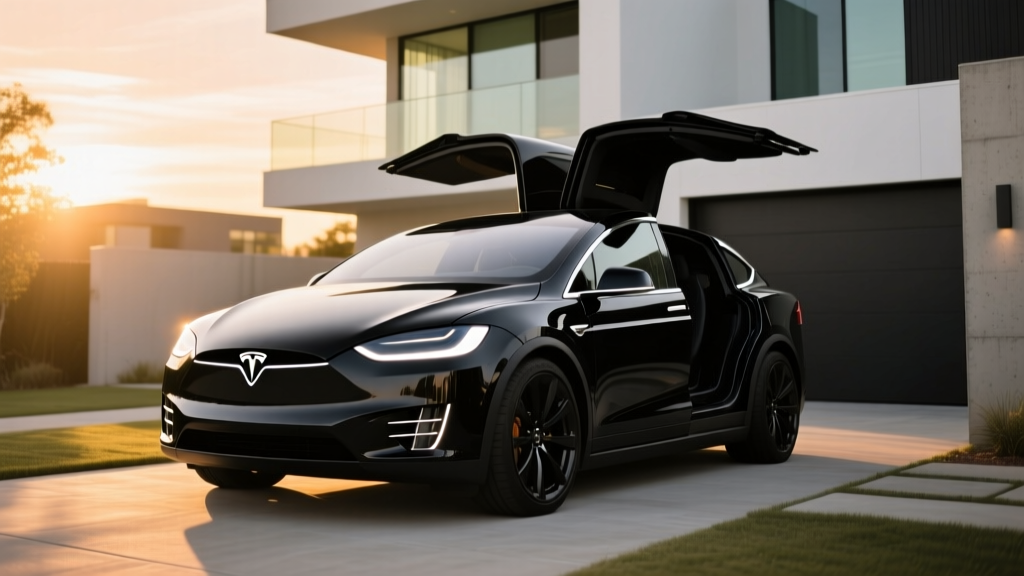
The EQS SUV prioritizes ride comfort, interior luxury, and cabin quietness, while the Model X emphasizes performance, technology novelty (falcon-wing doors), and access to the Supercharger network. The EQS SUV offers a more traditional luxury experience with superior materials and a more refined ride, while the Model X provides quicker acceleration, longer EPA range estimates in some configurations, and a more extensive proprietary charging network.
Is the MBUX Hyperscreen worth the additional cost?
The Hyperscreen is a significant upgrade over the standard dual-screen setup, offering a more immersive and visually impressive interface. It also includes the front passenger display, which allows passengers to stream media and interact with navigation without distracting the driver. For buyers who value cutting-edge technology and visual impact, it is a worthwhile option. Those who prefer simplicity may find the standard screens more than adequate.
What warranty coverage does the EQS SUV battery receive?
Mercedes-Benz provides a battery warranty of 10 years or 155,000 miles (whichever comes first), guaranteeing that the high-voltage battery will retain at least 70 percent of its original capacity. This is in line with industry standards for luxury EVs and provides confidence for long-term ownership. The standard vehicle warranty covers four years or 50,000 miles.
Final Verdict
The Mercedes-Benz EQS SUV is a masterclass in luxury electric comfort. It sacrifices some charging speed and sporting dynamics to deliver an experience that few electric vehicles can match: a quiet, cosseting, technologically advanced cabin that makes every journey feel like a first-class experience. The three-row configuration adds genuine versatility, even if the third row is best reserved for children and short trips.
For families seeking a premium electric SUV that prioritizes comfort, technology, and real-world range, the EQS SUV deserves a spot at the top of any shortlist. Buyers who value engagement, off-road capability, or rapid charging may find better options in the growing three-row EV segment. But for those who measure a vehicle by how relaxed they feel upon arrival, the EQS SUV is in a class of its own.
Explore more electric vehicle reviews and best EV picks at Auto Edge View to find the perfect electric vehicle for your lifestyle.