Quick Verdict: The Luxury EV Benchmark Under Pressure
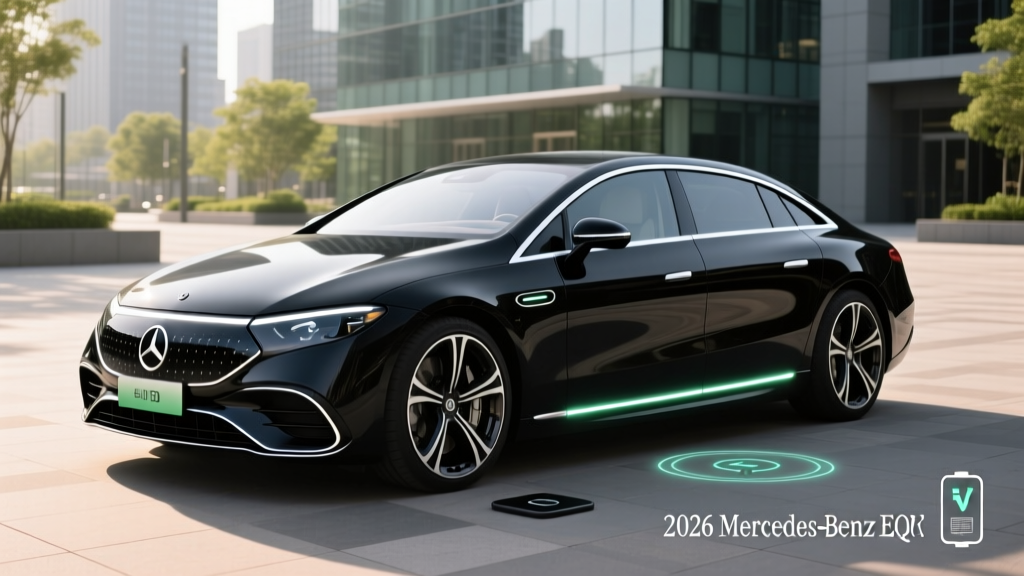
The Mercedes-Benz EQS sedan remains one of the most aerodynamically efficient and technologically ambitious electric vehicles on the market. For 2026, the EQS lineup carries forward with its 108.4 kWh usable battery (NMC chemistry), up to 390 miles of EPA-estimated range in EQS 450+ trim, and a cabin that sets the standard for EV luxury. But with rivals like the BMW i7, Lucid Air, and Tesla Model S closing gaps in charging speed and value, the EQS must earn its six-figure price tag on merit — not badge alone.
This review breaks down every number that matters: real-world range expectations, DC fast-charging curves, total cost after incentives, and whether the EQS sedan still deserves its flagship position in 2026.
Range, Efficiency, and Real-World Expectations
The EQS lineup offers three core trims, each with distinct range and efficiency profiles courtesy of single-motor RWD or dual-motor AWD configurations:
| Trim | Drivetrain | EPA Range | MPGe (Combined) | kWh/100 mi |
|---|---|---|---|---|
| EQS 450+ | RWD, 355 hp | 390 mi | 97 MPGe | 35 |
| EQS 450 4MATIC | AWD, 355 hp | 365 mi | 92 MPGe | 37 |
| EQS 580 4MATIC | AWD, 536 hp | 352 mi | 88 MPGe | 38 |
Mercedes equips the EQS with a heat pump as standard equipment, which recovers waste heat from the powertrain to warm the cabin — reducing cold-weather range loss compared to resistance-heater-equipped EVs. The navigation system also factors in temperature, terrain, and traffic when predicting remaining range, making the dashboard estimate one of the more accurate in the industry.
Battery Chemistry, Capacity, and Longevity
All 2026 EQS sedans use a 108.4 kWh usable lithium-ion battery with NMC (nickel-manganese-cobalt) cell chemistry. This is a high-energy-density pack chosen for maximum range rather than the cycle-life longevity of LFP (lithium iron phosphate) batteries found in some competitors' base trims.
NMC vs. LFP trade-offs in the EQS context: NMC delivers superior energy density (more range per kilogram), which matters in a large luxury sedan where packaging space is already allocated to cabin luxury. The trade-off is that NMC cells degrade slightly faster over thousands of charge cycles compared to LFP, and they perform best when not routinely held at 100% state of charge. Mercedes addresses this with a configurable charge limit (80% or 90% daily maximum) and a battery preconditioning system.
Battery warranty: Mercedes-Benz covers the EQS high-voltage battery for 10 years or 155,000 miles (whichever comes first), guaranteeing a minimum of 70% state of health (SoH) over that period. This exceeds the industry-standard 8-year/100,000-mile threshold and reflects confidence in the pack's thermal management system. The basic vehicle warranty is 4 years/50,000 miles, and roadside assistance runs 4 years with unlimited mileage.
Charging Speed: DC Fast Charge and Home Level 2
Charging performance is where luxury EV buyers have high expectations — and the EQS delivers solidly, though not at the bleeding edge of 2026's fastest-charging platforms.
| Charging Level | Power / Rate | Time / Miles Added | Notes |
|---|---|---|---|
| Level 1 (120V household) | ~1.4 kW | ~3–4 miles per hour | Emergency/trickle only; full charge in 3+ days |
| Level 2 (240V home/public) | 9.6 kW (onboard charger) | ~27 miles per hour; full charge in ~11.5 hours | Requires 48A circuit; NACS connector for 2026 |
| DC Fast Charge | Up to 200 kW peak | 10–80% in ~31 minutes | Peak rate sustained to ~40% SoC, then tapers |
Charging curve reality: The EQS peaks at 200 kW on a compatible DC fast charger, but like all EVs, it doesn't sustain that rate for the full session. The curve holds near 200 kW from roughly 10% to 40% state of charge, then progressively tapers — dropping to ~150 kW by 60% and ~80 kW by 80%. This is why manufacturers quote 10–80% times rather than 0–100%. If you're road-tripping and only need a 15-minute top-up from 20% to 50%, you'll see the best of the EQS's charging capability.
For 2026, the EQS adopts the NACS (North American Charging Standard) connector, granting native access to Tesla Supercharger stations (now open to non-Tesla EVs) alongside Electrify America, EVgo, and ChargePoint networks. This eliminates the need for a CCS-to-NACS adapter that early EQS owners required.
Home charging setup: The 9.6 kW onboard charger means a 48-amp Level 2 home station (such as a ChargePoint Home Flex or Tesla Wall Connector) will add roughly 27 miles of range per hour — enough to fully replenish the 108.4 kWh battery overnight in about 11.5 hours. Budget $800–$2,200 for a quality Level 2 unit plus professional installation by a licensed electrician, with potential panel-upgrade costs of $1,500–$3,000 if your home's electrical service is below 200 amps.
Performance and Driving Dynamics
| Spec | EQS 450+ | EQS 450 4MATIC | EQS 580 4MATIC |
|---|---|---|---|
| Horsepower | 355 hp | 355 hp | 536 hp |
| Torque | 419 lb-ft | 590 lb-ft | 631 lb-ft |
| 0–60 mph | 5.9 sec | 5.3 sec | 4.1 sec |
| Top Speed | 130 mph | 130 mph | 130 mph |
| Drivetrain | RWD, single motor | AWD, dual motor | AWD, dual motor |
The EQS is tuned for effortless, silent acceleration rather than sportscar aggression. Even the 450+ in RWD delivers confident highway merging and passing. The 580 4MATIC's 4.1-second 0–60 time is genuinely quick for a 5,888-pound sedan, and the instant electric torque makes it feel even faster in real-world driving. Air suspension with adaptive damping is standard, providing a pillowy ride that isolates occupants from road imperfections — exactly what this car's buyers expect.
Regenerative braking offers three levels selectable via steering-wheel paddles (D+, D, D−) plus an intelligent D-Auto mode that uses radar and navigation data to modulate regen based on traffic and upcoming terrain. One-pedal driving is possible in D− but not as aggressive as some competitors, which may disappoint drivers who prefer strong regen.
Interior, Technology, and Cargo
The EQS sedan's cabin is dominated by the optional MBUX Hyperscreen — a 56-inch curved glass panel spanning the entire dashboard, integrating a 12.3-inch instrument cluster, 17.7-inch central OLED touchscreen, and 12.3-inch passenger display. It's visually stunning and runs Mercedes' latest MBUX software with wireless Apple CarPlay and Android Auto, over-the-air updates, and a fingerprint reader for driver profiles.
Driver assistance: The EQS ships with Mercedes' Driver Assistance Package including adaptive cruise control, active lane-keeping, evasive steering assist, and Active Lane Change Assist. This is an SAE Level 2 system — the driver must remain attentive and keep hands on or near the wheel at all times. It is not autonomous driving. DRIVE PILOT, Mercedes' conditional Level 3 system (allowing hands-off, eyes-off driving under 40 mph on approved highways), remains limited in availability to specific mapped routes in Nevada and California as of 2026, and requires a separate subscription.
Passenger and cargo space:
- Front headroom: 40.4 inches | Front legroom: 41.7 inches
- Rear headroom: 38.3 inches | Rear legroom: 42.0 inches
- Trunk volume: 22.0 cubic feet (with a power-operated liftback — far more practical than a traditional sedan trunk opening)
- No front trunk (frunk) — the space houses HVAC and power electronics
The liftback design is a significant practicality win: the entire rear glass lifts, making it easy to load bulky items that wouldn't fit through a conventional sedan's trunk opening. Rear-seat passengers enjoy limousine-class legroom, though the sloping roofline cuts into headroom for occupants over 6 feet.
Pricing, Trims, and Federal Tax Credit Eligibility
| Trim | Base MSRP (2026) | As-Tested Estimate* | §30D Federal Credit |
|---|---|---|---|
| EQS 450+ Sedan | $105,550 | $112,000–$120,000 | Not eligible (MSRP exceeds $55,000 cap) |
| EQS 450 4MATIC Sedan | $108,550 | $115,000–$125,000 | Not eligible (MSRP exceeds $55,000 cap) |
| EQS 580 4MATIC Sedan | $127,350 | $135,000–$148,000 | Not eligible (MSRP exceeds $55,000 cap) |
*As-tested estimates include common options: Hyperscreen ($8,500), AMG Line exterior package, Executive Rear Seat package, and destination charges.
Some buyers may offset costs through state-level incentives (California's CVRP, Colorado's innovative motor vehicle credit, etc.), employer EV benefits, or utility-company rebates for home charger installation. These vary by jurisdiction — check your state energy office and local utility for current programs.
Pros, Cons, and Who Should Buy
Pros
- Class-leading 390-mile EPA range (450+)
- Exceptional cabin quietness and ride comfort
- MBUX Hyperscreen is a tech showcase
- 10-year/155,000-mile battery warranty
- Liftback trunk design for real cargo utility
- NACS connector for Supercharger access (2026)
- Standard heat pump for cold-weather efficiency
Cons
- No federal tax credit eligibility (MSRP cap)
- 200 kW peak DC charge rate trails rivals (Lucid Air: 300+ kW)
- Hyperscreen adds $8,500 and can be distracting
- Heavy curb weight affects tire wear and handling agility
- No frunk for additional storage
- DRIVE PILOT Level 3 availability extremely limited
- Depreciation steeper than some competitors
Who the EQS sedan suits best:
- Executive commuters who prioritize cabin silence, seat comfort, and tech prestige on daily highway drives
- Luxury sedan loyalists transitioning from the S-Class who want EV powertrain benefits without sacrificing build quality
- Road-trippers who value 350+ mile range and NACS Supercharger access for cross-country travel
Consider alternatives if: You want the fastest-charging luxury EV (Lucid Air Grand Touring), maximum performance per dollar (Tesla Model S Plaid), or a vehicle eligible for the federal tax credit (BMW i5, Mercedes EQE sedan in certain trims).
Competitor Comparison and Buying Decision
| Attribute | Mercedes EQS 450+ | BMW i7 xDrive50 | Lucid Air Grand Touring | Tesla Model S LR |
|---|---|---|---|---|
| EPA Range | 390 mi | 318 mi | 516 mi | 402 mi |
| Base MSRP | $105,550 | $106,695 | $125,600 | $74,990 |
| DC Fast Charge Peak | 200 kW | 195 kW | 300+ kW | 250 kW |
| 0–60 mph | 5.9 sec | 4.5 sec | 3.0 sec | 3.1 sec |
| Battery Warranty | 10 yr / 155k mi | 8 yr / 100k mi | 8 yr / 100k mi | 8 yr / 120k mi |
| §30D Credit Eligible | No | No | No | Yes (if income qualifies) |
The EQS wins on battery warranty length and S-Class-caliber interior refinement. The Lucid Air dominates on range and charging speed. The Tesla Model S offers the best performance value and is the only competitor here that can potentially qualify for the federal credit. The BMW i7 matches the EQS on luxury but trails on range.
- Choose the EQS if: Cabin luxury, ride comfort, and brand prestige are your top priorities, and you want the longest battery warranty in the segment.
- Choose the Lucid Air if: Maximum range and fastest DC charging are non-negotiable for your road-trip lifestyle.
- Choose the Tesla Model S if: You want supercar performance, Supercharger convenience, and potential tax-credit savings at a significantly lower price.
- Choose the BMW i7 if: You prefer BMW's driving dynamics and iDrive interface, and range is secondary to driving engagement.
Frequently Asked Questions
What is the real-world range of the 2026 Mercedes-Benz EQS sedan?
The EPA rates the EQS 450+ at 390 miles. In real-world highway driving at 70–75 mph, expect 320–340 miles. In freezing temperatures, range drops to roughly 270–300 miles depending on cabin heating use. The EQS 580 4MATIC delivers about 352 miles EPA, with real-world highway figures around 290–310 miles.
How fast does the EQS charge at home and on the road?
On a 240V Level 2 home charger (48A), the EQS charges at 9.6 kW, adding about 27 miles of range per hour and reaching a full charge in roughly 11.5 hours. On a DC fast charger, it peaks at 200 kW and charges from 10–80% in approximately 31 minutes, with the charge rate tapering significantly above 80%.
Does the Mercedes-Benz EQS qualify for the $7,500 federal EV tax credit?
No. Under current IRS §30D rules, new sedans must have an MSRP of $55,000 or less to qualify. All EQS sedan trims start well above $100,000, making them ineligible regardless of buyer income or battery sourcing. Check irs.gov for the latest rules and consult a tax professional.
Is the EQS sedan worth buying over the BMW i7 or Lucid Air?
It depends on your priorities. The EQS offers the best battery warranty (10 years/155,000 miles), the most S-Class-like luxury experience, and strong range. The Lucid Air beats it on range (516 mi) and charging speed (300+ kW). The BMW i7 is a close luxury rival with sportier handling but less range. Test-drive all three before deciding — the EQS's ride quality is difficult to replicate.
What connector does the 2026 EQS use?
The 2026 EQS sedan uses the NACS (North American Charging Standard) connector natively, providing direct access to Tesla Supercharger stations as well as Electrify America, EVgo, and ChargePoint networks without an adapter.
How long will the EQS battery last?
Mercedes guarantees the battery will retain at least 70% of its original capacity for 10 years or 155,000 miles. Based on NMC chemistry degradation data from similar packs, most owners can expect 85–90% state of health after 5 years of typical use (charging to 80–90% daily, avoiding frequent DC fast charging). Keeping the battery between 20–80% SoC for daily driving maximizes longevity.