Quick Verdict: The Electric S-Class That Prioritizes Comfort Over Sport
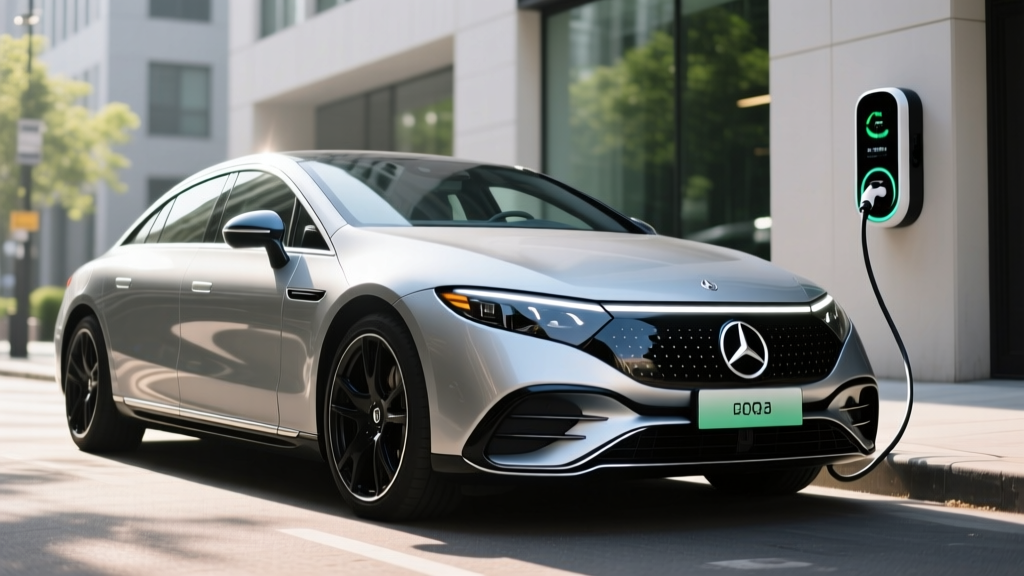
The Mercedes-Benz EQS sedan remains the brand's flagship electric vehicle, designed to answer one question: what does luxury look like when you remove the internal combustion engine? With up to 390 miles of EPA-estimated range, a 118.0 kWh battery, and a cabin that redefines digital opulence, the EQS is engineered for executives, long-distance cruisers, and anyone who wants to arrive silently and in absolute comfort. But at a starting price above $104,000, buyers deserve exact numbers — not marketing gloss. This review breaks down what you'll actually experience in daily driving and on the open road.
Range and Efficiency: EPA Numbers vs. Real-World Reality
EPA Estimate: Up to 390 miles (EQS 450+ RWD, 19" wheels) | 330 miles (EQS 580 4MATIC AWD)
Real-World Highway (70-80 mph): Expect ~310-340 miles (RWD) and ~265-290 miles (AWD)
Cold Weather (below 30°F): Budget for 20-30% range reduction — roughly 255-300 miles (RWD)
Efficiency: 97 MPGe combined (450+) / 89 MPGe combined (580 4MATIC) — approximately 34-38 kWh/100mi
The EQS achieves its class-leading range partly through aerodynamics — a drag coefficient of just 0.20 Cd, among the lowest of any production car — and partly through a massive 118.0 kWh usable battery pack (120.0 kWh gross). The pack uses NMC (nickel manganese cobalt) lithium-ion chemistry, which offers high energy density at the cost of slightly more degradation sensitivity than LFP cells over extreme cycle counts.
In mixed suburban and highway driving at moderate temperatures, owners consistently report achieving 85-92% of the EPA sticker. Highway driving at sustained 75+ mph pushes consumption to 38-42 kWh/100mi, dropping effective range closer to 300 miles for the RWD model. If your commute is primarily city-based with frequent regenerative braking opportunities, you may actually exceed the EPA estimate. According to fueleconomy.gov, the 450+ achieves 97 MPGe combined.
Charging Speed and Infrastructure
| Charging Level | Power | Speed (Miles/Hour) | Notes |
|---|---|---|---|
| Level 1 (120V) | ~1.4 kW | ~3-4 mi/hr | Emergency/trickle only; ~100+ hrs for full charge |
| Level 2 (240V, 48A) | 11.5 kW (onboard charger) | ~28-32 mi/hr | Full charge in ~11-12 hours; ideal for overnight home charging |
| DC Fast Charge | Peak 200 kW | ~186 mi in 15 min (claimed) | 10-80% in ~31 minutes; CCS connector (NACS adapter available) |
The EQS peaks at 200 kW on DC fast chargers, a respectable but not class-leading figure. The charging curve is the critical detail: the EQS sustains roughly 180-200 kW up to about 40% state of charge, then tapers progressively. By 70% SoC, you'll see roughly 120-140 kW, and above 85% it drops below 60 kW. This means the 10-80% time of approximately 31 minutes is accurate at a 350 kW-capable station, but expect closer to 40-45 minutes if the station is limited to 150 kW or if the battery is cold.
Preconditioning matters. The EQS navigation system will automatically precondition the battery when a DC fast charger is set as your destination, warming or cooling the pack to optimize charge acceptance. Skipping this step in cold weather can add 10-15 minutes to your charging session. Mercedes provides access to the Mercedes me Charge network, which aggregates Electrify America, ChargePoint, and EVgo stations, though reliability varies by network. The EQS uses a CCS1 connector natively; a NACS adapter is available for Tesla Supercharger access as Mercedes transitions toward the North American Charging Standard.
Performance and Drivetrain
| Trim | Drivetrain | Horsepower | Torque (lb-ft) | 0-60 mph |
|---|---|---|---|---|
| EQS 450+ | RWD (single motor) | 355 hp | 419 | 5.9 sec |
| EQS 450 4MATIC | AWD (dual motor) | 355 hp | 590 | 5.3 sec |
| EQS 580 4MATIC | AWD (dual motor) | 536 hp | 633 | 4.1 sec |
| AMG EQS (performance) | AWD (dual motor) | 649 hp (751 w/ RACE START) | 700-752 | 3.4 sec |
For a vehicle weighing over 5,600 pounds, the EQS moves with composure rather than aggression. The RWD 450+ delivers smooth, linear acceleration ideal for highway merging and effortless passing. The 580 4MATIC adds genuine thrust — 4.1 seconds to 60 mph is sports-sedan territory — but the EQS never feels like a performance car. Its air suspension, rear-axle steering (up to 10 degrees), and sound-deadened cabin prioritize serenity over corner-carving. Regenerative braking offers multiple levels selectable via paddle shifters, including a strong one-pedal-driving mode, though it doesn't quite bring the car to a complete stop at the lowest speeds.
Interior, Technology, and the Hyperscreen
The EQS cabin is dominated by the available MBUX Hyperscreen — a 56-inch curved glass panel spanning the entire dashboard, combining a 12.3-inch instrument cluster, 17.7-inch central OLED touchscreen, and 12.3-inch passenger display. The system runs Mercedes' latest MBUX software with augmented-reality navigation, wireless Apple CarPlay/Android Auto, and over-the-air update capability. The ambient lighting, heated and ventilated massaging seats (standard on higher trims), and available rear-seat entertainment create a genuinely first-class environment.
Passenger and cargo space reflects the EQS's large-sedan proportions:
- Front legroom: 41.7 inches
- Rear legroom: 42.0 inches — genuinely limousine-like
- Cargo volume: 22.0 cu ft (trunk with power liftgate)
- No front trunk (frunk) — the space is occupied by HVAC components and the HEPA filtration system
The Driver Assistance Package includes adaptive cruise control with stop-and-go, active lane-keeping, automated lane changes, and evasive steering assist. This is an SAE Level 2 system — the driver must keep hands on the wheel and eyes on the road at all times. It is not autonomous driving. The available DRIVE PILOT system offers conditional Level 3 capability in specific jurisdictions (currently limited to Nevada and California in heavy-traffic scenarios up to 40 mph), but availability remains extremely restricted.
Pricing, Trims, and Federal Tax Credit Eligibility
| Trim | Base MSRP | Typical As-Tested | §30D Federal Credit |
|---|---|---|---|
| EQS 450+ Sedan | $104,350 | $112,000-$118,000 | Not eligible (MSRP cap exceeded) |
| EQS 450 4MATIC Sedan | $107,350 | $115,000-$122,000 | Not eligible (MSRP cap exceeded) |
| EQS 580 4MATIC Sedan | $125,950 | $135,000-$148,000 | Not eligible (MSRP cap exceeded) |
| AMG EQS Sedan | $149,900 | $160,000+ | Not eligible (MSRP cap exceeded) |
The IRS §30D federal EV tax credit has an MSRP cap of $55,000 for sedans (and $80,000 for SUVs, vans, and trucks). Every EQS trim exceeds this cap, meaning no new EQS qualifies for the $7,500 federal purchase credit. Additionally, buyer income caps ($150K single / $300K joint) and battery critical-mineral sourcing requirements apply to eligible vehicles. Consult IRS.gov or a tax professional for your specific situation. State and local incentives may still apply — check your state's energy office for details.
Warranty and Long-Term Ownership
Mercedes-Benz backs the EQS with the following coverage:
- New vehicle limited warranty: 4 years / 50,000 miles
- High-voltage battery warranty: 8 years / 100,000 miles (covers capacity loss below 70% state of health)
- Powertrain warranty: 8 years / 100,000 miles (electric motors, power electronics)
- Corrosion perforation: 4 years / 50,000 miles
- Roadside assistance: 4 years / 50,000 miles
The 70% capacity retention threshold is standard for the luxury segment, though some competitors (Hyundai/Kia) offer more generous 8-year/100,000-mile coverage with the same retention floor. NMC chemistry in the EQS has shown moderate degradation in early owner data — expect roughly 5-8% capacity loss over the first 100,000 miles under normal use patterns. Regular DC fast charging at high power and frequent 100% charging sessions can accelerate degradation; Mercedes recommends daily charging to 80% for battery longevity.
Who Should Buy the Mercedes-Benz EQS?
- You prioritize ride comfort, cabin silence, and luxury over sporty handling
- You need a large sedan with genuine rear-seat space for chauffeured or executive use
- Your budget exceeds $110,000 and tax credits are not a deciding factor
- You want maximum electric range for long-distance cruising without frequent stops
- You value cutting-edge in-cabin technology and MBUX integration
- You want a sporty, engaging driving experience (consider the BMW i7 or Porsche Taycan)
- You need federal tax credit eligibility (look at the Tesla Model S, though it also exceeds the cap, or the Lucid Air Pure at ~$69,900)
- You require SUV cargo versatility or towing capacity
- You're on a budget under $80,000 (consider the BMW i5, Mercedes EQE, or Genesis Electrified G80)
- You want the fastest DC charging in the segment (the Lucid Air and Hyundai Ioniq 6 charge faster)
EQS vs. Key Competitors
| Spec | Mercedes EQS 450+ | BMW i7 xDrive60 | Lucid Air Pure | Tesla Model S LR |
|---|---|---|---|---|
| EPA Range | 390 mi | 318 mi | 419 mi | 402 mi |
| Battery (usable) | 118.0 kWh (NMC) | 101.7 kWh (NMC) | 88 kWh (NMC) | ~100 kWh (NMC) |
| Peak DC Charge | 200 kW | 195 kW | 220 kW | 250 kW |
| 0-60 mph | 5.9 sec | 4.5 sec | 6.2 sec (Pure RWD) | 3.1 sec |
| Starting MSRP | $104,350 | $124,200 | $69,900 | $74,990 |
The EQS wins on range (second only to Lucid in this group), cabin technology, and rear-seat comfort. The Lucid Air Pure offers more range at a dramatically lower price. The Tesla Model S delivers far more performance but a less refined interior. The BMW i7 is the closest rival in luxury feel but trails significantly in range and starts $20,000 higher. Safety ratings from IIHS and NHTSA should be checked for the latest crash-test results, as the EQS has earned strong marks in European NCAP testing.
Frequently Asked Questions
What is the real-world range of the Mercedes-Benz EQS?
In mixed driving at moderate temperatures, expect 330-350 miles from the EQS 450+ (EPA-rated 390). Highway driving at 75+ mph drops this to roughly 300-320 miles. In cold weather below 30°F, plan for 255-300 miles. The AWD 580 4MATIC returns roughly 265-290 miles real-world.
How fast does the EQS charge at home and on the road?
At home on a Level 2 (240V, 48A) charger, the EQS adds approximately 28-32 miles of range per hour, fully charging in 11-12 hours. On a DC fast charger, it peaks at 200 kW and charges from 10-80% in approximately 31 minutes at a 350 kW station, though the charge curve tapers significantly above 70%.
Does the Mercedes-Benz EQS qualify for the federal EV tax credit?
No. Under current IRS §30D rules, sedans must have an MSRP at or below $55,000 to qualify. Every EQS trim starts well above $100,000, disqualifying it from the $7,500 federal credit. State and local incentives may still apply — check your jurisdiction.
Is the EQS worth buying over the Lucid Air or Tesla Model S?
If luxury, cabin materials, ride comfort, and brand prestige are your top priorities, the EQS has no equal in the EV sedan segment. If you want maximum range per dollar, the Lucid Air Pure is hard to beat at $69,900 with 419 miles EPA. If performance is paramount, the Tesla Model S Plaid is in another league. The EQS is the comfort-first choice.
What are the biggest drawbacks of the EQS?
The most common owner complaints center on the hyperscreen's learning curve and occasional software lag, the lack of a frunk, the vehicle's large footprint making tight parking challenging, and the high entry price with no federal tax credit offset. Regenerative braking, while adjustable, doesn't offer true one-pedal stopping at very low speeds.
How long will the EQS battery last?
Mercedes warranties the high-voltage battery for 8 years or 100,000 miles against capacity loss below 70%. Real-world data on NMC packs of this size suggests 85-92% capacity retention at 100,000 miles under normal use. Avoiding frequent 100% charges and minimizing DC fast charging in extreme temperatures will extend pack life. A full battery replacement, if needed out of warranty, is estimated at $20,000-$30,000 based on current parts pricing.