Quick Verdict: Luxury EV SUV With Serious Range and Refinement
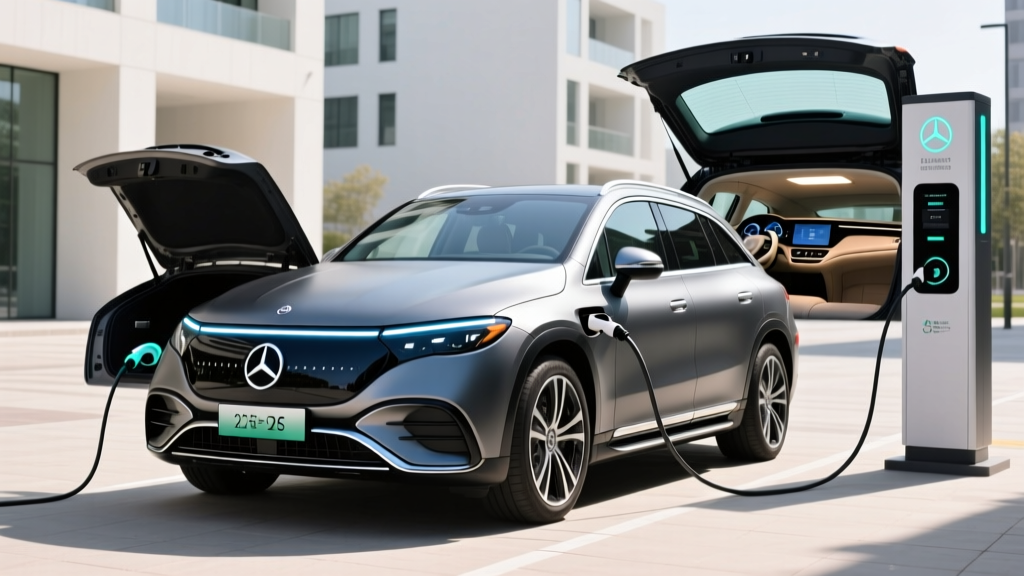
The 2026 Mercedes-Benz EQS-Class SUV remains one of the most accomplished luxury electric SUVs on the market, pairing a 108.4 kWh usable battery with up to 305 miles of EPA-estimated range and a cabin that redefines what an electric three-row vehicle can feel like. It isn't the fastest-charging or the most affordable in its segment, but for buyers who prioritize ride quality, interior craftsmanship, and long-distance electric comfort, the EQS SUV delivers in ways few rivals can match.
This review covers every spec that matters to real buyers — from DC fast-charging curves and cold-weather range loss to federal tax credit eligibility and total ownership costs. Let's get into the numbers.
Range, Efficiency, and Real-World Expectations
The EQS SUV lineup offers three main configurations for 2026, each with distinct range profiles. The rear-wheel-drive EQS 450+ SUV leads on efficiency, while the dual-motor AWD variants trade some range for traction and performance.
| Trim | Drivetrain | EPA Range | MPGe (Combined) | kWh/100 mi |
|---|---|---|---|---|
| EQS 450+ SUV | RWD | 305 mi | 85 MPGe | 39 |
| EQS 450 4MATIC SUV | AWD | 285 mi | 80 MPGe | 42 |
| EQS 580 4MATIC SUV | AWD | 285 mi | 79 MPGe | 43 |
Efficiency in the EQS SUV is respectable for a vehicle this size, though it trails lighter competitors like the BMW iX. At 39–43 kWh per 100 miles depending on trim, you're looking at roughly $0.13–$0.15 per mile at the national average residential electricity rate of $0.17/kWh — significantly cheaper than a comparable gas-powered GLS, but not the most efficient EV in the luxury segment.
Battery Specs and Chemistry
All 2026 EQS SUV models share a lithium-ion battery pack with 108.4 kWh of usable capacity (118 kWh gross). Mercedes-Benz uses NMC (nickel manganese cobalt) cell chemistry, which prioritizes energy density — the reason the EQS SUV achieves such strong range figures in a relatively aerodynamic package.
NMC chemistry offers excellent energy density but requires more careful thermal management than LFP (lithium iron phosphate) alternatives. Mercedes addresses this with a sophisticated liquid-cooling system and a battery preconditioning feature that warms or cools the pack ahead of DC fast charging or scheduled departure times. For daily use, Mercedes recommends charging to 80% State of Charge (SoC) to maximize long-term battery health, reserving 100% charges for road trips.
The battery sits within a dedicated skateboard architecture, contributing to the EQS SUV's low center of gravity and surprisingly composed handling for a 5,800-pound vehicle.
Charging Speed: DC Fast Charging and Home Level 2
Charging performance is where the EQS SUV shows both its strengths and its compromises relative to newer 800V competitors.
| Charging Level | Power (kW) | Speed / Time |
|---|---|---|
| Level 1 (120V household) | ~1.4 kW | ~3–4 miles per hour |
| Level 2 (240V home/public) | 9.6 kW | ~25 miles per hour; full charge in ~11.5 hrs |
| DC Fast Charge (CCS) | 200 kW peak | 10–80% in ~31 minutes |
The 200 kW peak DC fast-charge rate is competitive with the BMW iX but falls short of Hyundai/Kia's 800V architecture (which peaks at 240–350 kW). On a 350 kW Electrify America or Tesla Supercharger (via CCS adapter), the EQS SUV will ramp quickly to about 180–200 kW between 10–40% SoC, then taper progressively. Expect the charge curve to slow noticeably past 60%, with the 60–80% portion taking nearly as long as the 10–60% portion. This taper is typical of NMC chemistry on a 400V architecture.
For home charging, the onboard 9.6 kW charger means a full charge from empty takes roughly 11.5 hours on a 48-amp Level 2 circuit. Most owners who charge overnight from 20–80% SoC will need only 6–7 hours — easily achievable with a standard NEMA 14-50 outlet or hardwired wall connector. Mercedes includes a portable Level 2 charge cord with the vehicle.
Pro tip: Always enable battery preconditioning via the MBUX navigation system before arriving at a DC fast charger. The EQS SUV will warm the battery to optimal temperature, which can shave 5–8 minutes off your 10–80% charge time, especially in cooler weather.
Performance and Drivetrain
| Trim | Motor Config | Horsepower | Torque (lb-ft) | 0–60 mph |
|---|---|---|---|---|
| EQS 450+ SUV | Single motor (RWD) | 355 hp | 419 | 6.5 sec |
| EQS 450 4MATIC SUV | Dual motor (AWD) | 355 hp | 590 | 5.3 sec |
| EQS 580 4MATIC SUV | Dual motor (AWD) | 536 hp | 633 | 4.3 sec |
The EQS 450+ offers a relaxed, effortless character — more luxury cruiser than sport SUV. The 6.5-second 0–60 time is perfectly adequate for highway merging and daily driving, and the RWD layout gives it a slight efficiency edge. Step up to the 450 4MATIC and you gain all-wheel drive plus a meaningful torque bump (590 lb-ft), which translates to confident acceleration in rain and snow.
The EQS 580 4MATIC is the performance option, with 536 hp launching this nearly three-ton SUV to 60 mph in 4.3 seconds. It's genuinely quick, though the BMW iX M60 and Tesla Model X Plaid are quicker still. Where the EQS 580 shines is in how it delivers that performance: whisper-quiet, surgically smooth, with none of the drama you'd expect from a 5,800-lb vehicle.
All trims feature adaptive air suspension with adjustable ride height, rear-axle steering (up to 10 degrees, optional on 450+, standard on 580), and Mercedes' torque-shift all-wheel-drive management on 4MATIC models.
Pricing, Trims, and Federal Tax Credit Eligibility
| Trim | Base MSRP | As-Tested (Typical Options) |
|---|---|---|
| EQS 450+ SUV | $104,400 | $112,000–$118,000 |
| EQS 450 4MATIC SUV | $107,400 | $115,000–$125,000 |
| EQS 580 4MATIC SUV | $125,950 | $132,000–$145,000 |
Destination charges add approximately $1,150. Popular option packages include the AMG Line Exterior ($3,500), the Executive Rear Seat Package ($4,000+), and the MBUX Hyperscreen (standard on 580, optional on 450 trims at ~$3,200).
- MSRP cap: SUVs must be at or below $80,000 to qualify. Every EQS SUV trim exceeds this cap — the EQS-Class SUV does NOT qualify for the $7,500 federal EV tax credit under current IRS §30D rules.
- Income cap: Even if MSRP qualified, buyer AGI must not exceed $150,000 (single) / $300,000 (joint).
- Battery sourcing: Critical mineral and battery component requirements phase in annually; luxury imports often fail these thresholds.
- Point-of-sale transfer: Available for qualifying vehicles, but again, the EQS SUV's MSRP disqualifies it.
Source: IRS Clean Vehicle Credits. Always confirm eligibility with a tax professional before purchase.
The absence of the federal credit is a meaningful cost consideration. Buyers should investigate state-level incentives — some states offer rebates or tax credits for EVs above the federal MSRP cap — but these vary widely by jurisdiction.
Interior, Cargo, and Passenger Space
The EQS SUV is a genuine three-row luxury vehicle, though the third row is best suited for children or occasional use by adults on short trips.
| Measurement | Specification |
|---|---|
| Cargo (behind 3rd row) | 14.0 cu ft |
| Cargo (3rd row folded) | 42.0 cu ft |
| Cargo (all rear rows folded) | 74.0 cu ft |
| Front legroom | 40.7 in |
| 2nd-row legroom | 39.5 in |
| 3rd-row legroom | 28.5 in |
The second row is where the EQS SUV truly excels. Available Executive Rear Seats offer heated, ventilated, and massaging outboard positions with individual entertainment screens — a level of rear-passenger pampering that rivals the S-Class sedan. The optional MBUX Hyperscreen spans the entire dashboard (56 inches of glass), creating an immersive digital environment for front-seat occupants.
The 14 cu ft of cargo behind the third row is tight — enough for a couple of carry-ons or a week's groceries, but you'll want to fold the third row for most real hauling. With all rear seats flat, 74 cu ft is competitive with the BMW iX and slightly behind the Tesla Model X.
Driver Assistance and Technology
The EQS SUV comes equipped with Mercedes-Benz's latest Driver Assistance Package, which includes:
- Active Distance Assist DISTRONIC: Adaptive cruise control with stop-and-go, lane centering
- Active Steering Assist: Lane-keeping with highway lane-change capability
- Active Lane Change Assist: Semi-autonomous lane changes on divided highways (driver confirms via turn signal)
- Active Emergency Stop Assist: Brings the vehicle to a controlled stop if the driver becomes unresponsive
- PRE-SAFE Impulse Side: Raises the vehicle body milliseconds before a detected side impact
The MBUX infotainment system remains one of the best in the luxury segment, with natural-language voice control ("Hey Mercedes"), over-the-air updates, wireless Apple CarPlay and Android Auto, and a fingerprint reader for personalized driver profiles. The available rear-axle steering dramatically improves low-speed maneuverability, shrinking the turning circle to a sedan-like 36 feet.
Warranty Coverage
| Coverage Type | Term |
|---|---|
| New Vehicle Limited | 4 years / 50,000 miles |
| High-Voltage Battery | 8 years / 100,000 miles (70% capacity retention) |
| Powertrain (e-motors, power electronics) | 8 years / 100,000 miles |
| Corrosion Perforation | 6 years / unlimited miles |
| Roadside Assistance | 4 years / 50,000 miles |
The battery warranty guarantees that the pack will retain at least 70% of its original capacity over 8 years or 100,000 miles, whichever comes first. This is in line with BMW, Audi, and most luxury competitors, though some mainstream brands (Hyundai/Kia) offer longer 10-year/100,000-mile battery coverage. If the battery degrades below 70% within the warranty period, Mercedes will repair or replace it at no cost.
For context on long-term degradation: NMC packs in liquid-cooled applications like the EQS typically lose 8–12% capacity over the first 100,000 miles based on fleet data from similar Mercedes platforms. Owners who follow the 80% daily charge recommendation and avoid frequent DC fast charging in extreme heat can expect to stay well within the 70% threshold at 8 years.
Pros, Cons, and Who Should Buy
Pros
- Class-leading ride quality and cabin quietness
- Up to 305 miles EPA range (450+ RWD)
- Genuine three-row seating with premium 2nd-row options
- MBUX Hyperscreen is visually stunning and functional
- Rear-axle steering transforms low-speed handling
- Strong build quality and materials throughout
- Comprehensive ADAS suite standard
Cons
- No federal tax credit eligibility (MSRP exceeds $80K cap)
- 200 kW peak DC charge rate trails 800V competitors
- Third-row space is tight for adults
- Heavy at ~5,800 lbs — impacts tire wear and efficiency
- High starting price vs. Tesla Model X, BMW iX
- Touch-sensitive steering wheel controls frustrate some drivers
- Regen braking feel could be smoother in standard mode
Who the EQS SUV Suits Best
Ideal buyer: Luxury-focused families or executives who want a three-row electric SUV with S-Class-level refinement, plan to charge primarily at home, and take occasional road trips where 250+ miles of real-world range keeps stops manageable. The EQS 450+ RWD is the value pick; the 580 4MATIC is for those who want effortless passing power.
Look elsewhere if: You need maximum DC fast-charging speed for frequent road trips (consider Hyundai Ioniq 9 or Kia EV9), you want a more engaging driving experience (BMW iX), or you need the federal tax credit to make the numbers work (Tesla Model X or Rivian R1S may qualify depending on trim and sourcing).
How the EQS SUV Stacks Up Against Competitors
| Spec | Mercedes EQS 450+ SUV | BMW iX xDrive50 | Tesla Model X LR | Rivian R1S Dual-Motor |
|---|---|---|---|---|
| EPA Range | 305 mi | 324 mi | 335 mi | 321 mi |
| Battery (usable) | 108.4 kWh (NMC) | 105.2 kWh (NMC) | 100 kWh (est.) | 128.9 kWh (NMC) |
| Peak DC Charge | 200 kW | 200 kW | 250 kW | 200 kW |
| 0–60 mph | 6.5 sec | 4.6 sec | 3.8 sec | 5.0 sec |
| Base MSRP | $104,400 | $87,250 | $79,990 | $79,900 |
| Federal Credit | No (MSRP cap) | No (MSRP cap) | Partial* | Partial* |
| 3rd Row | Yes | No | Yes (optional) | Yes |
*Federal credit eligibility for Tesla Model X and Rivian R1S depends on current-year battery sourcing and buyer income. Verify at fueleconomy.gov.
The EQS SUV's advantage is unmistakably in ride quality, interior luxury, and three-row comfort. The BMW iX is more engaging to drive and starts lower; the Model X offers the longest range and fastest charging; the Rivian R1S delivers the best off-road capability and adventure versatility. None, however, match the EQS SUV's ability to make 300 electric miles feel like a first-class lounge experience.
Frequently Asked Questions
What is the real-world range of the Mercedes-Benz EQS SUV?
The EPA rates the EQS 450+ SUV at 305 miles, but real-world highway driving at 70+ mph yields approximately 255–275 miles. In cold weather (below 30°F), expect 210–230 miles. The AWD 450 4MATIC and 580 4MATIC are rated at 285 miles EPA, with real-world highway figures around 235–255 miles in moderate conditions.
How fast does the EQS SUV charge at home and on the road?
On a Level 2 home charger (240V, 48A), the EQS SUV charges at 9.6 kW, adding roughly 25 miles of range per hour and achieving a full charge in about 11.5 hours. On a DC fast charger, it peaks at 200 kW and charges from 10–80% in approximately 31 minutes, though the charge curve tapers significantly past 60% SoC.
Does the EQS SUV qualify for the $7,500 federal EV tax credit?
No. Under current IRS §30D rules, the federal clean vehicle credit caps qualifying SUVs at $80,000 MSRP. Every 2026 EQS SUV trim starts above $104,000, making it ineligible. State-level incentives may still apply — check your state's energy or DMV website for details.
Is the Mercedes EQS SUV worth buying over the BMW iX or Tesla Model X?
It depends on priorities. Choose the EQS SUV if cabin luxury, ride comfort, and three-row seating are paramount. Choose the BMW iX if you want sharper handling and a lower starting price. Choose the Model X if range, charging speed, and software features matter most. The EQS SUV is the comfort-first pick in a competitive field.
How long will the EQS SUV battery last?
Mercedes warrants the battery for 8 years / 100,000 miles at 70% capacity retention. Based on degradation data from similar NMC packs in liquid-cooled applications, owners can expect roughly 8–12% capacity loss over 100,000 miles with proper care (80% daily SoC limit, preconditioning for DC charging, avoiding prolonged storage at 100% or below 10%). Full battery replacement costs, if needed out of warranty, are estimated at $20,000–$30,000 based on current luxury EV pack pricing.
Can the EQS SUV tow?
Yes. When properly equipped with the factory towing package, the EQS 450 4MATIC and 580 4MATIC are rated to tow up to 3,500 pounds. The RWD 450+ is not rated for towing. Keep in mind that towing significantly reduces range — expect a 30–40% reduction when pulling near the maximum rating.
Sources: EPA Fuel Economy — Mercedes-Benz EQS SUV, Mercedes-Benz USA — EQS SUV, IRS — Clean Vehicle Tax Credits.