Mercedes-Benz EQE Sedan Review: Real-World Efficiency, Comfort & Performance
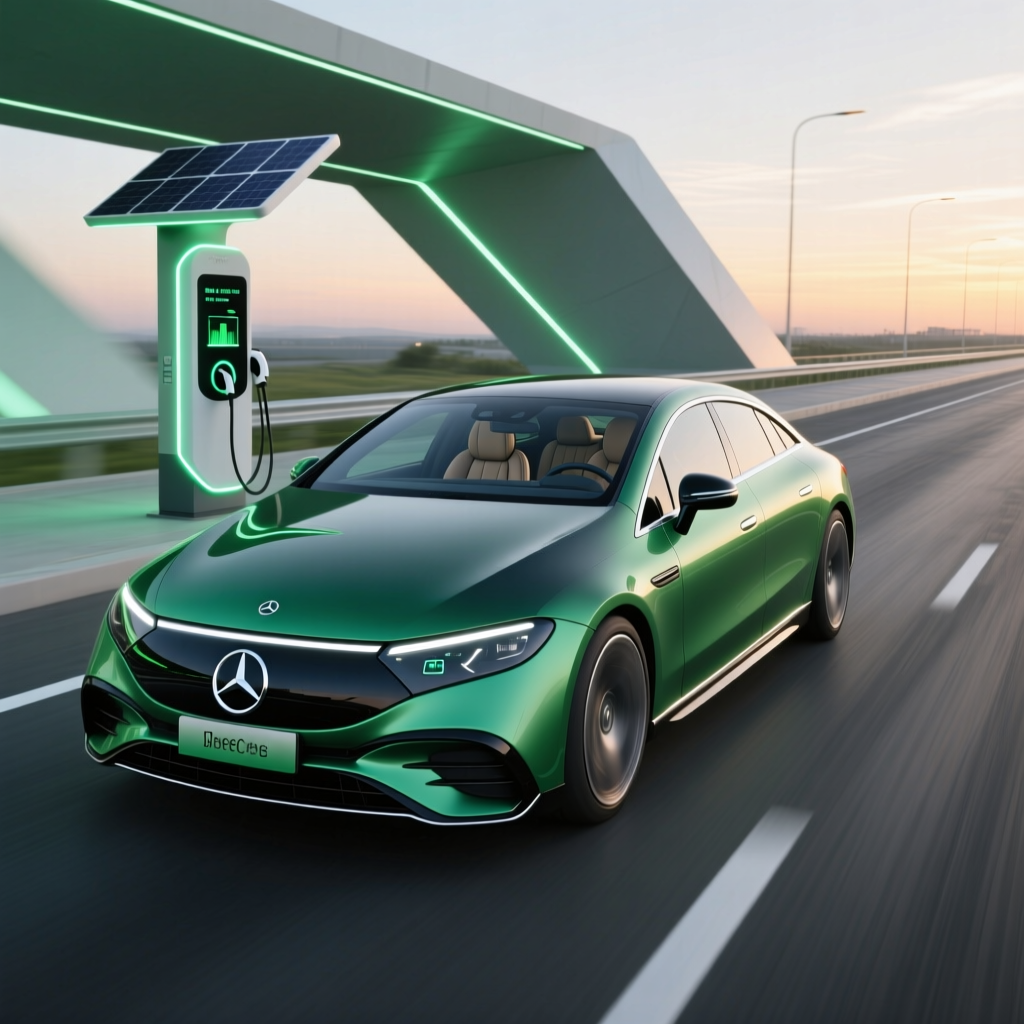
The Mercedes-Benz EQE sedan represents the brand's vision of a premium mid-size electric executive car. Sitting between the compact EQA/EQB and the flagship EQS, the EQE distills Mercedes-Benz's electric vehicle technology into a more accessible — yet still luxurious — package. With its sleek cab-forward design, advanced powertrain options, and a cabin that rivals the best in the segment, the EQE sedan aims to satisfy drivers who want cutting-edge electrification without stepping up to the full-size luxury tier.
In this comprehensive review, we examine how the Mercedes-Benz EQE sedan performs in the real world. From actual energy consumption and highway range to charging speeds, interior technology, driving dynamics, and long-term ownership costs, we cover everything you need to know before making a purchase decision. For more electric vehicle comparisons, check out our best luxury electric sedans roundup.
Vehicle Overview
The Mercedes-Benz EQE sedan is built on the company's dedicated EVA2 electric vehicle platform, the same architecture underpinning the larger EQS. This purpose-built EV foundation enables a flat floor, optimized weight distribution, and generous interior packaging. The EQE is offered in several configurations globally, including the EQE 350+ (single-motor, rear-wheel drive), the EQE 350 4MATIC (dual-motor, all-wheel drive), and the performance-oriented AMG EQE variants.
The EQE 350+ — the most popular variant for efficiency-focused buyers — produces 288 horsepower and 406 lb-ft of torque from a single rear-mounted electric motor. A usable battery capacity of approximately 90.6 kWh provides the foundation for impressive range figures. The EQE 350 4MATIC adds a front motor for all-wheel-drive traction, bumping output to 288 hp and 564 lb-ft of torque, though with a modest range trade-off. AMG variants push output well beyond 600 hp for those seeking sports-sedan thrills.
Externally, the EQE adopts Mercedes-Benz's "one-bow" design language, characterized by a smooth, arcing roofline and short overhangs. The result is a drag coefficient as low as 0.22 Cd — one of the most aerodynamic production sedans available — which plays a critical role in real-world efficiency. Inside, the cabin features the available MBUX Hyperscreen, a sweeping 56-inch curved glass panel that integrates the instrument cluster, central infotainment display, and front passenger screen into a single unit.
According to EPA ratings, the EQE 350+ achieves an estimated range of up to 305 miles on a full charge, while the EQE 350 4MATIC is rated at approximately 277 miles. These figures set the baseline, but real-world driving tells a more nuanced story.
Real-World Range & Energy Efficiency
EPA range estimates provide a useful starting point, but real-world efficiency depends on driving style, ambient temperature, terrain, and climate control usage. Independent testing and owner reports paint a detailed picture of what EQE drivers can actually expect.
In mixed driving conditions — a blend of city, suburban, and highway travel at moderate speeds — the EQE 350+ consistently delivers between 270 and 295 miles of range. Energy consumption typically falls in the range of 2.5 to 2.8 miles per kWh (or roughly 36 to 40 kWh per 100 miles), which is competitive with rivals like the BMW i5 and Audi e-tron GT. The EQE's exceptional aerodynamics help it maintain strong efficiency even at highway speeds, where many electric vehicles see significant consumption increases.
On long highway runs at sustained speeds of 70-75 mph, expect range to settle around 250 to 270 miles in mild weather. Cold weather — particularly temperatures below freezing — can reduce range by 15 to 25 percent, bringing the effective highway range down to approximately 210 to 230 miles. This is largely due to increased battery heating demands and reduced regenerative braking efficiency in low temperatures. The EQE's standard heat pump system helps mitigate these losses compared to EVs without one, but the impact remains noticeable.
City driving and stop-and-go traffic are where the EQE shines brightest. Regenerative braking recaptures energy effectively, and the car's one-pedal driving mode — activated through the steering wheel paddle shifters — allows drivers to modulate deceleration across three levels. In urban environments, achieving or even exceeding the EPA estimate is entirely possible, with some drivers reporting consumption figures as low as 3.0 miles per kWh in warm-weather city driving.
Compared to the Tesla Model S, the EQE 350+ trails slightly in maximum range but holds its own in efficiency per kWh, particularly at highway speeds where the Mercedes-Benz's aerodynamic advantage becomes apparent. Drivers prioritizing maximum distance per charge may want to explore our longest-range electric vehicles list for additional options.
Charging Speed & Infrastructure Compatibility
Charging performance is a crucial aspect of electric vehicle ownership, and the EQE sedan delivers respectable — though not class-leading — charging speeds. The vehicle supports DC fast charging at up to 170 kW via a CCS connector, which Mercedes-Benz states can replenish the battery from 10 to 80 percent in approximately 32 minutes under ideal conditions.
In real-world DC fast charging sessions, the EQE typically peaks around 155 to 165 kW in the lower state-of-charge range (10-30 percent), then progressively tapers as the battery fills. The charging curve is relatively flat through the mid-range, maintaining above 100 kW until approximately 60 percent state of charge before tapering more aggressively. A 10-to-80 percent session in moderate temperatures usually takes between 33 and 38 minutes — close to the manufacturer's claim but slightly longer in extreme heat or cold due to battery thermal management.
For Level 2 AC charging, the EQE comes standard with an 11 kW onboard charger, with an optional 22 kW charger available in some markets. On a standard 11 kW connection — common at home wallboxes and public AC chargers — a full charge from empty takes roughly 9.5 hours. The optional 22 kW charger cuts this to approximately 4.75 hours, making it a worthwhile upgrade for drivers who frequently rely on public AC charging infrastructure.
The EQE's navigation system includes intelligent route planning with automatic charging stop recommendations. When a route requires mid-journey charging, the system preconditions the battery to arrive at the charger at an optimal temperature, maximizing charging speed. This feature works seamlessly with major charging networks and is a significant advantage for road-trip planning.
One area where competitors have pulled ahead is 800-volt architecture. Vehicles like the Hyundai Ioniq 6 and Porsche Taycan use higher-voltage systems that enable faster peak charging speeds (up to 350 kW in some cases). The EQE's 400-volt system is proven and reliable, but it does limit peak charging rates compared to these newer platforms. For a detailed look at charging technology across the EV landscape, see our fastest-charging electric vehicles comparison.
Interior Comfort, Technology & Cabin Quality
Step inside the Mercedes-Benz EQE sedan, and the cabin immediately communicates luxury and technological sophistication. The available MBUX Hyperscreen dominates the dashboard, spanning the full width of the interior with three displays housed beneath a single curved glass surface. The 12.3-inch instrument cluster, 17.7-inch central OLED touchscreen, and 12.3-inch passenger display create an immersive digital environment that is both visually stunning and functionally rich.
The central infotainment system runs Mercedes-Benz's latest MBUX software with a "zero-layer" interface design. Rather than burying features in nested menus, the system places frequently used functions — navigation, media, climate controls — directly on the home screen with contextual suggestions powered by artificial intelligence. Voice control via the "Hey Mercedes" assistant is among the best in the industry, handling complex natural-language commands for navigation, climate adjustment, and vehicle settings with impressive accuracy.
Seating comfort is exceptional. The front seats offer standard heating with available ventilation and massage functions, wrapped in high-quality leatherette or optional Nappa leather. The seat cushions are firm yet supportive, well-suited to long-distance touring. Rear seat passengers enjoy generous legroom thanks to the EVA2 platform's flat floor and the EQE's 122.8-inch wheelbase. However, the sloping roofline does reduce rear headroom compared to boxier competitors, and taller passengers may find the rear seat less accommodating on long journeys.
The cabin is remarkably quiet, even by electric vehicle standards. Mercedes-Benz has employed extensive sound insulation, acoustic glass, and careful aerodynamic tuning to minimize wind and road noise. At highway speeds, the EQE's cabin is whisper-quiet, enhancing the sense of refinement and reducing driver fatigue on long trips. The available Burmester 4D surround sound system with 15 speakers and Dolby Atmos support transforms the interior into a concert-quality listening environment.
Storage practicality is adequate but not outstanding. The trunk offers approximately 15.2 cubic feet of cargo space — competitive with traditional mid-size luxury sedans but less than some EV rivals that offer hatchback or liftback designs. There is no front trunk (frunk), which is a notable omission given that many competitors provide additional front storage. For buyers who need more cargo versatility, our best electric SUVs guide covers vehicles with greater utility.
Driving Dynamics & Ride Quality
The Mercedes-Benz EQE sedan prioritizes comfort and composure over outright sportiness, delivering a driving experience that aligns with the brand's luxury touring heritage. The standard steel-spring suspension provides a supple, well-damped ride that absorbs road imperfections with authority. Opting for the available AIRMATIC air suspension elevates the experience further, offering adjustable ride height and adaptive damping that automatically responds to road conditions and driving style.
With air suspension engaged in Comfort mode, the EQE glides over broken pavement, expansion joints, and rough surfaces with an almost magical detachment. The ride quality rivals the best in the luxury sedan segment, including traditional internal-combustion competitors. Switch to Sport mode, and the suspension firms up noticeably, reducing body roll through corners and sharpening throttle response, though the EQE never feels truly sporty in the way a BMW i5 or Porsche Taycan does.
p>The EQE 350+ accelerates from 0 to 60 mph in approximately 6.2 seconds — brisk but not exhilarating by modern EV standards. The instant torque delivery from the electric motor provides strong initial acceleration and effortless overtaking ability, but the single-motor setup lacks the neck-snapping thrust of dual-motor competitors. The EQE 350 4MATIC shaves the 0-60 time to around 5.3 seconds, while AMG variants dip well below 4 seconds for supercar-rivaling performance.Steering feel is precise but light, with minimal road feedback transmitted to the driver's hands. This tuning suits the EQE's grand-touring character, making it effortless to drive in urban environments and relaxing on long highway cruises. The turning circle is impressively tight thanks to available rear-axle steering — an option that turns the rear wheels up to 10 degrees in the opposite direction at low speeds, giving the EQE the maneuverability of a compact car despite its mid-size dimensions.
Braking performance is confident and progressive. The transition between regenerative braking and the conventional friction brakes is well-managed, with none of the grabby or inconsistent pedal feel that plagues some electric vehicles. The regenerative braking system can recapture up to 220 kW of energy during deceleration, significantly extending range in hilly or stop-and-go driving conditions.
For a head-to-head comparison with one of the EQE's closest rivals, read our BMW i5 vs. Mercedes-Benz EQE comparison to see how these two German luxury electric sedans stack up across key metrics.
Ownership Costs & Value Proposition
The Mercedes-Benz EQE sedan occupies a premium position in the EV market, and its pricing reflects that positioning. Base prices for the EQE 350+ typically start in the mid-$70,000 range, with the EQE 350 4MATIC commanding a premium and well-optioned examples easily exceeding $90,000. AMG variants push the price well into six-figure territory. While this represents a significant investment, the EQE's total cost of ownership can be more favorable than comparable internal-combustion luxury sedans.
Electricity costs are substantially lower than gasoline for equivalent mileage. Based on average U.S. electricity rates of approximately $0.16 per kWh, charging the EQE's 90.6 kWh battery from empty to full costs roughly $14.50 at home. Over 15,000 miles of annual driving, this translates to approximately $550 to $650 in electricity costs — a fraction of what a similarly sized gasoline-powered sedan would consume in fuel. Public DC fast charging costs more, typically $0.30 to $0.50 per kWh, but most owners do the majority of their charging at home.
Maintenance expenses are also reduced compared to combustion-engine vehicles. There are no oil changes, spark plugs, timing belts, or transmission fluid replacements to worry about. The regenerative braking system significantly extends brake pad and rotor life, with many EV owners reporting original brake components lasting well beyond 100,000 miles. Mercedes-Benz's scheduled maintenance for the EQE primarily involves cabin air filter replacements, brake fluid checks, and tire rotations.
The EQE comes with a standard 4-year/50,000-mile limited warranty and an 8-year/100,000-mile battery warranty, which is competitive with other luxury EV manufacturers. Mercedes-Benz guarantees that the high-voltage battery will retain at least 70 percent of its original capacity throughout the warranty period, providing peace of mind for long-term ownership.
Depreciation remains a consideration. Luxury electric vehicles have historically experienced steeper depreciation than their gasoline counterparts, though this trend is gradually improving as EV adoption grows and the used EV market matures. The EQE's strong brand cachet and Mercedes-Benz's reputation for build quality may help it retain value better than some competitors, but buyers should factor depreciation into their total cost calculations.
Insurance costs for the EQE tend to be higher than average due to the vehicle's premium price, advanced technology, and specialized repair requirements. Obtaining quotes from multiple insurers before purchase is recommended. Some insurers offer EV-specific policies with discounts for home charging equipment or low annual mileage.
Pros & Cons
Pros
- Exceptional ride comfort: The available AIRMATIC air suspension delivers a supremely comfortable, isolated ride quality that ranks among the best in any luxury sedan, electric or otherwise.
- Outstanding cabin quietness: Extensive sound insulation and aerodynamic optimization create one of the quietest cabins in the EV segment, reducing fatigue on long journeys.
- Impressive aerodynamics: A drag coefficient of 0.22 Cd contributes to strong real-world efficiency, particularly at highway speeds where aerodynamic drag dominates energy consumption.
- Advanced MBUX technology: The available Hyperscreen and latest-generation MBUX software offer a visually stunning, feature-rich infotainment experience with excellent voice control.
- Tight turning circle: Available rear-axle steering dramatically improves low-speed maneuverability, making the EQE surprisingly easy to park and navigate in urban environments.
- Strong regenerative braking: Up to 220 kW of regenerative braking capacity extends range and provides flexible one-pedal driving options.
Cons
- No front trunk: The absence of a frunk is a missed opportunity for additional storage and is increasingly uncommon in the EV segment.
- Rear headroom limitations: The sloping roofline reduces rear headroom, making the back seat less comfortable for taller passengers compared to more upright competitors.
- Charging speed falls short of 800V rivals: The 400-volt architecture limits peak DC charging to 170 kW, trailing competitors with 800-volt systems that can charge at 270-350 kW.
- High starting price: Even the base EQE 350+ commands a premium price, and options packages can quickly push the cost into territory that overlaps with the larger EQS.
- Modest acceleration in single-motor form: The EQE 350+ is adequate rather than thrilling, with 0-60 mph times that lag behind dual-motor competitors in the same price range.
- Trunk space is average: The sedan's conventional trunk design offers less cargo versatility than liftback or hatchback rivals.
Key Specifications Comparison Table
| Specification | EQE 350+ (RWD) | EQE 350 4MATIC (AWD) | AMG EQE (Performance) |
|---|---|---|---|
| Drivetrain | Single Motor, RWD | Dual Motor, AWD | Dual Motor, AWD+ |
| Horsepower | 288 hp | 288 hp | Up to 677 hp (with Race Start) |
| Torque | 406 lb-ft | 564 lb-ft | Up to 738 lb-ft |
| 0-60 mph | ~6.2 seconds | ~5.3 seconds | ~3.2 seconds |
| Battery (Usable) | 90.6 kWh | 90.6 kWh | 90.6 kWh |
| EPA Est. Range | Up to 305 miles | Up to 277 miles | Up to 230 miles |
| DC Fast Charging | Up to 170 kW | Up to 170 kW | Up to 170 kW |
| 10-80% DC Charge | ~32 minutes | ~32 minutes | ~32 minutes |
| AC Charging (Standard) | 11 kW | 11 kW | 11 kW |
| Drag Coefficient | 0.22 Cd | 0.22 Cd | 0.23 Cd |
| Cargo Volume | 15.2 cu ft | 15.2 cu ft | 15.2 cu ft |
| Curb Weight (approx.) | ~5,300 lbs | ~5,500 lbs | ~5,600 lbs |
Frequently Asked Questions
What is the real-world range of the Mercedes-Benz EQE 350+ sedan?
In real-world mixed driving conditions, the EQE 350+ typically achieves between 270 and 295 miles of range, depending on temperature, driving style, and terrain. Highway driving at 70-75 mph yields approximately 250 to 270 miles in mild weather, while city driving can match or exceed the EPA's 305-mile estimate. Cold weather can reduce these figures by 15 to 25 percent. The car's exceptional aerodynamic efficiency helps it maintain strong range even at higher speeds, and the standard heat pump mitigates cold-weather losses compared to EVs without one.
How long does it take to charge the Mercedes-Benz EQE sedan?
On a DC fast charger capable of delivering 170 kW, the EQE can charge from 10 to 80 percent in approximately 32 to 38 minutes under typical conditions. A full charge on a Level 2 home charger (11 kW) takes about 9.5 hours, making overnight charging convenient for daily use. The optional 22 kW onboard charger can reduce Level 2 charging time to roughly 4.75 hours. Charging speed is affected by battery temperature, state of charge, and ambient conditions, with extreme temperatures potentially extending charging times.
Is the Mercedes-Benz EQE sedan comfortable for long road trips?
Absolutely. The EQE sedan excels as a long-distance touring car, particularly when equipped with the optional AIRMATIC air suspension. The ride is exceptionally smooth and composed, the cabin is remarkably quiet at highway speeds, and the seats provide excellent support over extended periods. The available MBUX navigation with intelligent route planning automatically suggests charging stops and preconditions the battery for optimal charging speed. With real-world highway range of 250+ miles and 30-minute fast charging stops, the EQE makes road trips practical and enjoyable.
How does the Mercedes-Benz EQE compare to the Tesla Model S?
The EQE and Model S target different buyer priorities. The Tesla Model S offers longer EPA-rated range (up to 405 miles for Long Range), faster acceleration, access to the Supercharger network, and a more minimalist tech-forward interior. The Mercedes-Benz EQE counters with superior ride comfort, a quieter cabin, more traditional luxury materials and craftsmanship, and a more intuitive infotainment interface for many users. The Model S offers a hatchback design with greater cargo versatility, while the EQE uses a conventional sedan trunk. Buyers prioritizing range and performance may lean toward Tesla, while those valuing comfort and luxury refinement may prefer the EQE. See our Tesla Model S vs. Mercedes-Benz EQE comparison for a detailed breakdown.
Does the Mercedes-Benz EQE sedan qualify for EV tax credits or incentives?
Tax credit eligibility for the EQE varies by market and is subject to change based on evolving legislation and manufacturing location requirements. In the United States, federal tax credit eligibility depends on factors including battery component sourcing, critical mineral sourcing, and the vehicle's MSRP. Because the EQE is manufactured outside the United States, it may not qualify for the full federal tax credit under current rules. However, state and local incentives — such as rebates, reduced registration fees, HOV lane access, and utility company charging credits — may still apply. Always consult a tax professional and check current incentive databases before purchasing to determine the specific benefits available in your area.
Final Verdict
The Mercedes-Benz EQE sedan is a compelling choice for luxury car buyers ready to embrace electric mobility. It delivers where it matters most for its target audience: exceptional ride comfort, a whisper-quiet cabin, sophisticated technology, and enough real-world range to handle daily commutes and road trips with confidence. The available air suspension and rear-axle steering transform the driving experience, and the MBUX Hyperscreen provides a genuinely impressive digital interface.
Its weaknesses — modest single-motor acceleration, limited cargo versatility, and charging speeds that trail 800-volt competitors — are relatively minor in the context of what the EQE does exceptionally well. This is a luxury touring sedan first and an EV second, and that prioritization shows in every mile. For drivers who value comfort, refinement, and brand prestige above all else, the Mercedes-Benz EQE sedan deserves a serious look.
Explore more of our electric vehicle reviews and best electric sedans under $80,000 to find the perfect EV for your lifestyle and budget.