Quick Verdict: A Luxury EV Cruiser That Prioritizes Comfort Over Specs
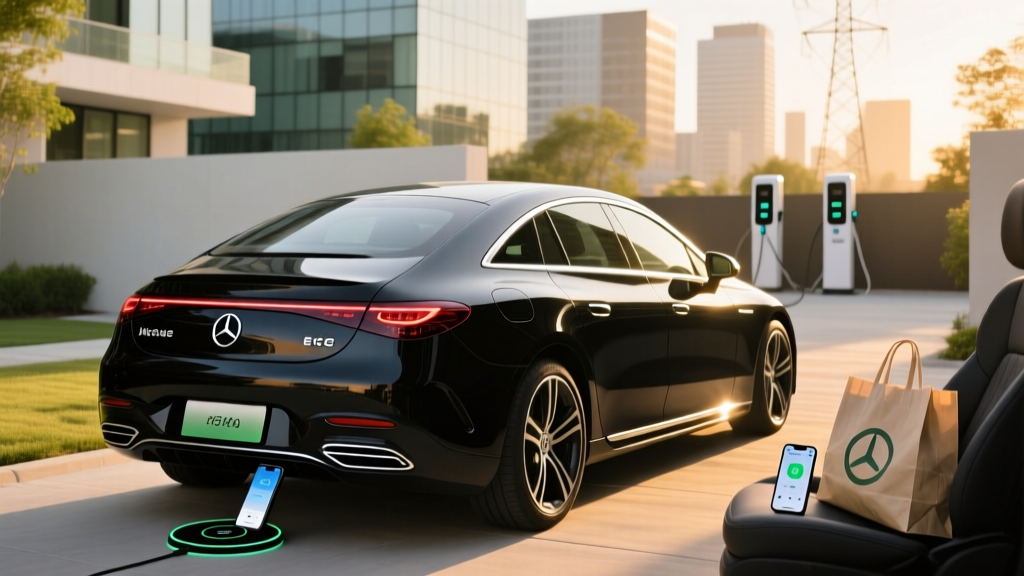
The Mercedes-Benz EQE sedan occupies a narrow but well-defined lane in the luxury EV market: it's a midsize electric executive car that trades headline-grabbing range numbers for cabin refinement, ride quality, and Mercedes' brand cachet. With EPA estimates hovering around 305 miles for the rear-wheel-drive EQE 350+ and a starting MSRP near $75,000, it undercuts the Tesla Model S on price while competing directly with the BMW i5 and Audi e-tron GT on luxury credentials.
But the EQE's story isn't just about what it offers — it's about what it costs after incentives, how it charges on a road trip, and whether its real-world range holds up outside the EPA test cycle. This review breaks down every number that matters.
Range, Battery & Efficiency: The Numbers That Matter
| Spec | EQE 350+ (RWD) | EQE 350 4MATIC (AWD) | EQE 500 4MATIC |
|---|---|---|---|
| EPA Range | ~305 mi | ~270 mi | ~270 mi |
| Battery (Usable) | 90.6 kWh | 90.6 kWh | 90.6 kWh |
| Chemistry | NMC (Nickel Manganese Cobalt) | NMC | NMC |
| Horsepower | 288 hp | 288 hp | 402 hp |
| 0-60 mph | 6.2 sec | 6.0 sec | 4.5 sec |
| Drivetrain | Rear-Wheel Drive | Dual-Motor AWD | Dual-Motor AWD |
| Efficiency (MPGe) | ~94 MPGe combined | ~86 MPGe combined | ~86 MPGe combined |
| Base MSRP | ~$74,900 | ~$77,900 | ~$87,900 |
The EQE 350+ carries an EPA-estimated 305 miles of range. In real-world highway driving at 70-75 mph, expect approximately 250-275 miles before needing a charge. In cold weather (below 30°F), range can drop 20-30%, reducing effective highway range to roughly 200-220 miles. The EQE's heat pump (standard on most trims) helps mitigate cabin-heating energy draw, but battery chemistry still loses efficiency in freezing temps. City driving with regenerative braking engaged can push range closer to or slightly above the EPA figure.
The 90.6 kWh usable battery pack uses NMC (nickel manganese cobalt) chemistry, which offers higher energy density than LFP (lithium iron phosphate) but comes with more sensitivity to sustained high-state-of-charge storage. Mercedes recommends keeping daily charge limits around 80-90% for longevity and only charging to 100% before long trips. The pack sits in a structural aluminum housing beneath the floor, contributing to the EQE's low center of gravity and composed ride.
Efficiency-wise, the EQE 350+ achieves roughly 94 MPGe combined (about 34 kWh/100 mi) per fueleconomy.gov. That's respectable for a 5,000+ lb luxury sedan but trails the BMW i5 eDrive40 (which hits ~100+ MPGe) and the Tesla Model S Long Range. The AWD variants lose roughly 8-10 MPGe to the added drivetrain mass and second motor.
Charging Speed: DC Fast Charge & Home Level 2
| Charging Level | Power / Rate | Time / Speed |
|---|---|---|
| Level 1 (120V household) | ~1.4 kW | ~3-4 mi/hr added |
| Level 2 (240V home/public) | Up to 9.6 kW (onboard charger) | ~28-32 mi/hr; full charge in ~10 hrs |
| DC Fast Charge (CCS) | Peak 170 kW | 10-80% in ~32 min; 10-100% in ~48 min |
The EQE's DC fast-charging peak of 170 kW is its most debated spec. By 2025 standards, competitors like the Hyundai Ioniq 6 (peak 240+ kW) and Lucid Air (peak 300+ kW) charge substantially faster. The EQE's charge curve holds near peak rate from roughly 10-50% state of charge, then tapers progressively — by 80%, you're seeing roughly 60-80 kW. That 32-minute 10-80% window is acceptable for highway rest stops but noticeably slower than the 18-22 minute benchmarks set by 800V-architecture competitors.
One advantage: the EQE's battery preconditioning system activates automatically when you navigate to a DC fast charger via the MBUX infotainment. This warms the battery to optimal charging temperature, which matters significantly in cold weather — without preconditioning, a cold-soaked battery might accept only 50-80 kW even at a 350 kW station.
For home charging, the 9.6 kW onboard Level 2 charger is adequate. A full overnight charge from 10% takes about 10 hours on a 48-amp Level 2 wallbox (like a ChargePoint Home Flex or Tesla Wall Connector with a CCS adapter). Most EQE owners who commute 30-50 miles daily will only need to top up 20-30% overnight, which takes 2-3 hours.
Performance, Ride Quality & Driving Impressions
The EQE 350+ delivers 288 horsepower and 391 lb-ft of instant torque to the rear wheels, reaching 0-60 mph in approximately 6.2 seconds. That's brisk for daily driving but not thrilling by luxury EV standards — the BMW i5 M Sport and Tesla Model S both hit 60 significantly faster. Step up to the EQE 500 4MATIC and the dual-motor setup pushes 402 hp with a 4.5-second 0-60 time, which feels appropriately quick for the segment.
Where the EQE genuinely excels is ride refinement. The optional AIRMATIC air suspension (standard on higher trims) delivers a pillowy, composed ride that isolates occupants from road imperfections better than almost anything in its class. Rear-axle steering (optional, up to 10 degrees) shrinks the turning radius to roughly that of a compact car, making the EQE surprisingly maneuverable in urban settings. Steering feel is light and precise, though enthusiasts may find it numb compared to BMW's calibration.
Regenerative braking offers multiple modes: D+ (coast), D (moderate regen), D- (strong regen), and D Auto (which uses radar and camera data to modulate regen based on traffic ahead). The D Auto mode is one of the best implementations in any EV — it genuinely reads traffic and adjusts seamlessly, reducing brake pedal use in stop-and-go driving.
Interior, Technology & Cargo Space
The EQE cabin is a showcase of Mercedes' current design language. The available MBUX Hyperscreen (a 56-inch curved glass panel spanning the dashboard) includes a 12.8-inch central OLED touchscreen, a 12.3-inch driver display, and a 12.3-inch passenger screen. The system runs Mercedes' latest MBUX software with wireless Apple CarPlay and Android Auto, over-the-air updates, and a fingerprint reader for driver profile switching. Voice control ("Hey Mercedes") handles climate, navigation, and media reliably.
Build quality is excellent — soft-touch materials, available Nappa leather, open-pore wood trim, and 64-color ambient lighting create a genuinely premium environment. The Burmester 3D surround sound system (15 speakers) is among the best in any vehicle at this price point.
Space is where the EQE's "bow-shaped" roofline creates trade-offs:
- Front headroom: ~39.0 inches
- Rear headroom: ~37.5 inches (tighter than expected for the wheelbase)
- Rear legroom: ~38.0 inches
- Cargo volume: ~15.2 cu ft (trunk only — no frunk due to under-hood HVAC components)
The lack of a front trunk (frunk) is a missed opportunity in an EV and reduces total cargo capacity compared to the Tesla Model S (~28 cu ft including frunk) and the Lucid Air. The trunk opening is also narrower than ideal for bulky items. For a luxury sedan, cargo is adequate but not generous.
Driver Assistance: SAE Level 2, Not Self-Driving
The EQE's Driver Assistance Package includes Active Distance Assist DISTRONIC (adaptive cruise), Active Steering Assist (lane centering), Active Lane Change Assist, and Active Brake Assist. This is an SAE Level 2 system — the driver must remain fully engaged, hands on or near the wheel, and eyes on the road at all times. The EQE does NOT offer Level 3 or Level 4 autonomous driving in the US market. Mercedes' Drive Pilot Level 3 system is available only in Germany and select markets under strict conditions.
In practice, the EQE's ADAS suite is smooth and confidence-inspiring for highway cruising. Lane centering is stable, adaptive cruise modulates speed progressively, and the lane-change assist (activated by tapping the turn signal) executes cleanly. However, the system requires periodic steering-wheel touch confirmation and will issue escalating warnings if it detects inattention. It's a competent Level 2 system — comparable to BMW's Driving Assistant Professional but a step behind GM's Super Cruise in terms of hands-free highway capability.
Pricing, Trims & Federal Tax Credit Eligibility
| Trim | Base MSRP | Federal §30D Credit | Effective Price (if eligible) |
|---|---|---|---|
| EQE 350+ (RWD) | ~$74,900 | Eligibility uncertain* | ~$74,900 |
| EQE 350 4MATIC | ~$77,900 | Eligibility uncertain* | ~$77,900 |
| EQE 500 4MATIC | ~$87,900 | Eligibility uncertain* | ~$87,900 |
- MSRP cap: Sedans must be ≤$55,000 MSRP — the EQE exceeds this cap at all trim levels
- Buyer income cap: AGI ≤$150,000 (single) / ≤$300,000 (joint)
- Battery sourcing: Critical minerals and battery components must meet phased-in US/FTA-country thresholds
- Point-of-sale transfer: Eligible buyers can transfer the credit to the dealer for an upfront price reduction
*Critical note: The EQE sedan's MSRP exceeds the $55,000 cap for sedans under §30D, making it ineligible for the new-vehicle federal tax credit at every trim level. This is a significant competitive disadvantage against the BMW i5 eDrive40 (starting ~$66,800 — but also above cap) and especially the Tesla Model 3 Long Range (~$47,740, which does qualify). Always verify current rules at IRS.gov and consult a tax professional, as regulations evolve.
Well-equipped EQE 350+ models with the AMG Line package, AIRMATIC suspension, Hyperscreen, and Driver Assistance Package can reach $85,000-$90,000. The EQE 500 with the Pinnacle Trim and Executive Rear Seat package can push past $100,000. At these prices, the absence of federal tax credit eligibility stings — buyers are paying full MSRP in a market where several competitors offer $3,750-$7,500 in federal incentives.
The EQE SUV variant (separate model) has a higher MSRP cap of $80,000 for SUVs, which may allow some trims to qualify — but the sedan does not benefit from that classification.
Warranty, Ownership Costs & Long-Term Outlook
Mercedes-Benz provides the following coverage for the EQE:
- New Vehicle Limited Warranty: 4 years / 50,000 miles
- High-Voltage Battery Warranty: 10 years / 155,000 miles (capacity retention guaranteed above ~70% State of Health)
- Powertrain Warranty: 6 years / 62,000 miles (electric drive components)
- Corrosion Protection: 4 years / 50,000 miles (surface), longer for perforation
- Roadside Assistance: 4 years / 50,000 miles, includes EV-specific tow-to-charger service
The 10-year/155,000-mile battery warranty is competitive and in line with BMW, Audi, and Tesla. The 70% SoH threshold is industry-standard — if your battery degrades below 70% of original capacity within the warranty period, Mercedes will repair or replace it. Real-world NMC degradation data from similar Mercedes platforms (EQA, EQB) suggests roughly 8-12% capacity loss over 5 years / 75,000 miles under normal use, meaning most owners should stay well above the warranty threshold.
Insurance costs for the EQE run approximately 15-25% higher than a comparable internal-combustion Mercedes E-Class, reflecting higher repair costs for aluminum body panels and the high-voltage system. Expect annual premiums in the $2,400-$3,600 range depending on location, driving record, and coverage level.
Maintenance is minimal compared to ICE vehicles — no oil changes, no spark plugs, no transmission fluid. Expect cabin air filter replacement (~$150-200), brake fluid flush every 2 years (~$150), and tire rotation. Brake pad replacement intervals are extended significantly thanks to regenerative braking — many EV owners go 80,000+ miles on original pads.
EQE vs. Key Competitors: Which Luxury EV Sedan Wins?
The EQE doesn't exist in a vacuum. Here's how it stacks up against its most direct rivals:
- Exceptional ride comfort with available AIRMATIC air suspension
- Whisper-quiet cabin at highway speeds
- MBUX Hyperscreen is visually stunning and functional
- Strong 10-year/155,000-mile battery warranty
- Rear-axle steering makes it surprisingly nimble in cities
- D Auto regen mode is best-in-class for adaptive braking
- 170 kW peak DC charging is slow for the 2025 luxury segment
- No front trunk (frunk) — cargo capacity trails rivals
- MSRP exceeds $55K sedan cap — no federal tax credit eligibility
- Real-world highway range ~250-275 mi (well below 305 EPA)
- Rear headroom is tight due to fastback roofline
- Higher insurance costs than ICE equivalent
Who Should Buy the Mercedes-Benz EQE?
- You prioritize ride comfort and cabin quietness above all else
- Your daily commute is under 60 miles round-trip (home charging covers it easily)
- You value Mercedes brand prestige and dealer service network
- You rarely take road trips exceeding 250 miles without a planned stop
- You don't need maximum cargo space or a frunk
- You road-trip frequently and want the fastest possible DC charging (consider Ioniq 6, Taycan, or Lucid Air)
- Federal tax credit eligibility is essential to your purchase math (consider Model 3 LR, Chevy Equinox EV, or Hyundai Ioniq 6)
- You need maximum rear-seat headroom or cargo versatility
- You want the longest possible EPA range (Tesla Model S or Lucid Air Grand Touring)
The EQE is ultimately a comfort-first luxury EV that rewards owners who value refinement over spec-sheet dominance. It won't win range or charging-speed comparisons, but on a quiet evening commute on smooth pavement with the Burmester system playing and the air suspension absorbing every imperfection, the EQE makes a compelling case that luxury EV ownership isn't only about the numbers.
Frequently Asked Questions
What is the real-world range of the Mercedes-Benz EQE?
The EQE 350+ is EPA-rated at approximately 305 miles. In real-world highway driving at 70-75 mph, expect 250-275 miles. In cold weather below 30°F, effective range can drop to 200-220 miles on the highway. City driving with regenerative braking can approach or slightly exceed the EPA figure.
How fast does the EQE charge at home and on DC fast chargers?
On a Level 2 home charger (240V, 48A), the EQE charges at up to 9.6 kW, adding roughly 28-32 miles of range per hour. A full charge takes about 10 hours. On a DC fast charger, it peaks at 170 kW and charges from 10-80% in approximately 32 minutes. Battery preconditioning is automatic when navigating to a charger.
Does the Mercedes-Benz EQE qualify for the federal EV tax credit?
No. The EQE sedan's MSRP starts at approximately $74,900, which exceeds the $55,000 MSRP cap for sedans under IRS §30D. This makes it ineligible for the new clean vehicle credit regardless of buyer income or battery sourcing. Always verify current rules at IRS.gov.
Is the EQE worth buying over the BMW i5 or Tesla Model S?
It depends on priorities. The EQE wins on ride comfort, cabin quietness, and luxury ambiance. The BMW i5 offers better driving dynamics, slightly better efficiency, and a lower starting price. The Tesla Model S offers far more range (~402 mi EPA), faster Supercharger charging, and a frunk — but with a less luxurious interior. None of the three sedans currently qualify for the full federal tax credit due to MSRP caps.
What is the EQE's battery warranty?
Mercedes-Benz covers the high-voltage battery for 10 years or 155,000 miles, whichever comes first, with a capacity retention guarantee of approximately 70% State of Health. If the battery degrades below this threshold within the warranty period, Mercedes will repair or replace it.
Does the EQE have a frunk (front trunk)?
No. The EQE does not have a front trunk. The space under the hood is occupied by HVAC components, the 12V auxiliary battery, and power electronics. Total cargo capacity is approximately 15.2 cubic feet in the rear trunk only.
Can the EQE tow?
The EQE sedan is not rated for towing in the US market. If you need EV towing capability, consider the EQE SUV (rated up to ~3,500 lbs when properly equipped) or the Rivian R1S / Tesla Model X.