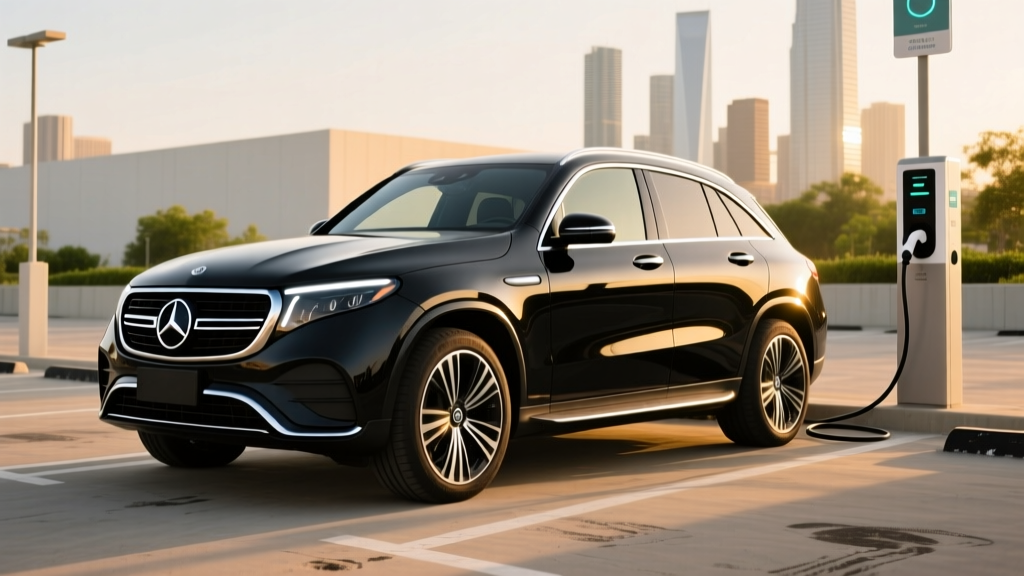
If you've been searching for a Mercedes-Benz EQC for sale, you've likely noticed this electric SUV occupies a complicated space in the EV market. Originally launched overseas as Mercedes' first dedicated battery-electric vehicle under the EQ sub-brand, the EQC was notably absent from U.S. showrooms for most of its production run. Mercedes-Benz opted to bring the larger EQE SUV and EQB to American buyers instead, leaving the EQC as an import curiosity or gray-market find. With Mercedes winding down the EQC nameplate globally in favor of the MMA-platform replacements arriving in 2025–2026, understanding what this vehicle actually delivers — and whether it's worth tracking down — requires a close look at the numbers.
This review covers the EQC's verified specifications, real-world range behavior, charging performance, and ownership economics so you can decide whether this compact luxury EV crossover deserves a spot in your garage or whether a competitor makes more sense at this price point.
Mercedes-Benz EQC Specifications at a Glance
| Specification | Value |
|---|---|
| EPA-Estimated Range | ~220 mi (estimated; no official U.S. EPA sticker issued) |
| Battery (Gross / Usable) | 80 kWh gross / ~76 kWh usable (NMC lithium-ion) |
| Drivetrain | Dual-motor AWD (4MATIC) |
| Horsepower / Torque | 402 hp / 564 lb-ft |
| 0–60 mph | 4.8 seconds (manufacturer claim) |
| DC Fast-Charge Peak | 110 kW (CCS) |
| 10–80% DC Charge Time | ~40 minutes |
| Level 2 Onboard Charger | 7.4 kW (single-phase) / 11 kW (three-phase, Europe) |
| Efficiency (WLTP) | ~2.2 kWh/mi (~45 kWh/100 km) |
| Cargo Volume (rear seats up / folded) | 17.7 cu ft / 51.5 cu ft |
| Battery Warranty (EU standard) | 8 years / 100,000 mi (62.5% SoH retention) |
| Original MSRP (EU, 2020–2023) | €66,070 (~$72,000 equivalent at launch) |
Range and Efficiency: What the EQC Actually Delivers
The Mercedes-Benz EQC was never officially certified by the U.S. EPA, which means there is no fueleconomy.gov sticker to reference. However, based on the WLTP-rated range of approximately 259 miles (417 km) and real-world testing conducted by European outlets under mixed driving conditions, a reasonable U.S. EPA-equivalent estimate lands around 220 miles. The EQC's heavy curb weight — roughly 5,345 lbs (2,425 kg) — and its relatively modest 76 kWh usable battery work against efficiency.
Real-World Range Expectations
- Mild-weather city/suburban: 215–230 miles achievable with regen-heavy driving
- Highway (70–80 mph sustained): 175–195 miles — the EQC's aerodynamics and weight penalize high-speed efficiency
- Cold weather (below 32°F / 0°C): Expect 150–175 miles. The EQC lacks a heat pump in most model years, relying on resistive cabin heating that draws heavily from the traction battery
Bottom line: plan trips around a realistic 180-mile buffer in mixed conditions, and less in winter. This is the EQC's most significant competitive weakness.
The EQC's energy consumption averages approximately 2.2 kWh per mile in mixed driving, which is thirstier than rivals like the BMW iX3 (~1.9 kWh/mi) or the Tesla Model Y (~1.6 kWh/mi). On the positive side, the NMC battery chemistry delivers consistent power delivery and predictable degradation curves compared to early-generation LFP packs, though at the cost of lower cycle life and greater sensitivity to sustained 100% SoC storage.
Charging Performance: DC Fast Charging and Home Level 2
The EQC's charging capability reflects its 2018–2019 engineering origins. While competitors have moved to 200–350 kW architectures, the EQC tops out at a 110 kW DC fast-charge peak via its CCS connector. Here's the full charging breakdown:
| Charging Method | Max Power | Time / Rate |
|---|---|---|
| Level 1 (120V household) | ~1.4 kW | ~3–4 miles per hour |
| Level 2 (240V home/public, 7.4 kW) | 7.4 kW | ~22 miles per hour; full charge in ~10–11 hours |
| DC Fast Charge (CCS) | 110 kW peak | 10–80% in ~40 minutes; sustained rate tapers significantly above 60% SoC |
The charge curve is where the EQC loses time on road trips. It holds near-peak power from roughly 10% to 50% SoC, then tapers progressively. From 80% to 100%, charging slows to a trickle — typical of NMC battery management strategies designed to protect cell longevity, but frustrating when you need those last 20% on a long drive.
For home charging, the 7.4 kW onboard charger (U.S./single-phase markets) means an overnight charge from 20% to full takes approximately 8–9 hours on a dedicated Level 2 wallbox. This is adequate for daily commuting but slower than the 11–22 kW onboard chargers found in newer luxury EVs.
Driving Dynamics, Performance, and Interior
The EQC's dual-motor 4MATIC powertrain produces 402 horsepower and a substantial 564 lb-ft of torque, delivering a 4.8-second 0–60 mph time. The front motor handles low-load cruising for efficiency, while the rear motor engages under hard acceleration or when traction demands it. The result is confident, linear acceleration that feels characteristically Mercedes — effortless rather than aggressive.
Ride quality is a genuine strength. The EQC uses a multi-link rear suspension with coil springs (no air suspension option), and the tuning prioritizes comfort over sportiness. Road noise isolation is excellent, consistent with the brand's luxury positioning. However, the 5,345-lb curb weight is noticeable in corners — the EQC feels substantial and planted rather than agile, and the regenerative braking feel is less refined than the one-pedal systems in the Hyundai Ioniq 5 or Tesla Model Y.
Inside, the EQC shares its dashboard architecture with the GLC (the ICE platform it was adapted from), meaning the dual 10.25-inch displays running the MBUX infotainment system look slightly dated compared to the hyperscreen-equipped EQE and EQS. Material quality, however, is excellent — soft-touch surfaces, real aluminum trim, and supportive sport seats are standard. Rear legroom measures 38.0 inches, adequate for adults, and the 17.7 cu ft cargo area (51.5 cu ft with seats folded) is competitive with compact luxury crossovers but smaller than the Tesla Model Y's 76 cu ft total.
Driver Assistance and Technology
The EQC comes equipped with Mercedes' Active Distance Assist Distronic (adaptive cruise control with stop-and-go), Active Steering Assist, and Active Lane Keeping Assist. These are SAE Level 2 systems — the driver must maintain hands-on-wheel supervision at all times. Unlike Tesla's FSD (Supervised) or GM's Super Cruise, the EQC does not offer hands-free highway driving or automated lane changes. It also lacks the newer Mercedes DRIVE PILOT system (SAE Level 3, available on the 2024+ S-Class and EQS in limited conditions).
ADAS Limitations — SAE Level 2
The EQC's driver-assistance suite is a hands-on, eyes-on system. It cannot navigate intersections, handle construction zones autonomously, or operate without driver engagement. Treat it as a fatigue-reducer on highway commutes, not a self-driving feature.
Pricing, Tax Credits, and Ownership Costs
Because the EQC was never officially sold in the United States, there is no U.S. MSRP to reference. In European markets, the EQC 400 4MATIC launched at approximately €66,070 and climbed to €72,000+ in higher-spec AMG Line trims before production ended. For U.S. buyers who locate a gray-market import or are considering the EQC in a market where it was sold, the effective purchase price will depend heavily on import duties, compliance modifications, and local registration rules.
| Cost Factor | Estimated Amount |
|---|---|
| EU Base MSRP (2023 model year, final production) | ~€66,070 (~$72,000 at 2023 exchange rates) |
| U.S. import compliance / modifications | $5,000–$15,000 (varies widely) |
| Federal §30D Tax Credit Eligibility | Not eligible — vehicle not sold via U.S. OEM channel; battery sourcing & MSRP caps cannot be verified per IRS §30D rules |
| Estimated Total (U.S. buyer, imported) | $77,000–$90,000+ depending on condition and compliance path |
Tax credit reality check: The federal §30D clean vehicle credit requires that the vehicle be purchased new from a U.S. OEM-authorized dealer, meet MSRP caps ($80,000 for SUVs), satisfy buyer income limits ($300,000 joint / $150,000 single), and comply with battery component and critical mineral sourcing requirements. An imported EQC will not meet these criteria. If you're cross-shopping with vehicles that do qualify, this $7,500 gap is significant.
How the EQC Compares to Rivals You Can Actually Buy
If you're considering the EQC, you should benchmark it against compact luxury EVs that are readily available in the U.S. market with full warranty support and tax credit eligibility:
| Spec | Mercedes EQC 400 | Tesla Model Y LR | BMW iX xDrive50 | Genesis GV60 Perf. |
|---|---|---|---|---|
| EPA Range | ~220 mi (est.) | 310 mi | 324 mi | 248 mi |
| Battery (usable) | 76 kWh NMC | 75 kWh (est.) | 105.2 kWh NMC | 74 kWh NMC |
| Peak DC Charge | 110 kW | 250 kW | 195 kW | 240 kW |
| 10–80% Time | ~40 min | ~20 min | ~31 min | ~18 min |
| 0–60 mph | 4.8 sec | 4.8 sec | 4.4 sec | 3.9 sec |
| Starting Price (U.S.) | N/A (import only) | ~$48,590 | ~$87,250 | ~$53,350 |
| §30D Credit Eligible | No | Partial (check sourcing) | No (MSRP cap) | Partial (check sourcing) |
The comparison is stark. The EQC's 110 kW charging ceiling and ~220-mile real-world range place it a full generation behind current competitors. The Tesla Model Y charges more than twice as fast and goes 90 miles farther on a charge at a lower price. The BMW iX, while significantly more expensive, offers 50% more range and a more modern charging architecture. Even the Genesis GV60 — which shares the E-GMP platform with the Ioniq 5 — dramatically outcharges the EQC with its 800V architecture.
Pros, Cons, and the Verdict
Pros
- Refined, quiet ride quality consistent with Mercedes luxury standards
- Strong build quality and premium interior materials
- Smooth, linear 402-hp dual-motor powertrain
- MBUX infotainment with natural voice control
- Competitive cargo space for the compact luxury segment
Cons
- ~220-mile real-world range falls well short of rivals (310+ mi available elsewhere)
- 110 kW DC fast-charging is slow by 2024–2026 standards; 40 min for 10–80%
- No U.S. sales channel — no warranty support, no tax credit eligibility
- Heavy curb weight (5,345 lbs) hurts efficiency — ~2.2 kWh/mi
- No heat pump in most model years — significant cold-weather range loss
- Adapted GLC platform, not a dedicated EV architecture — compromises packaging
Should You Buy the Mercedes-Benz EQC?
Choose the EQC if: You're in a market where it was officially sold (Europe, select Asian markets), you prioritize ride comfort and brand prestige over range, your daily commute is under 100 miles round-trip, and you have reliable home Level 2 charging.
Look elsewhere if: You're a U.S. buyer (no warranty, no tax credit, no dealer support), you take regular road trips over 200 miles, you need fast public charging, or you want access to the latest ADAS features like hands-free highway driving.
Who the EQC Suits Best
The EQC is best understood as a premium urban commuter for buyers who value Mercedes-Benz build quality and don't need long-distance range. If your typical day involves 40–80 miles of mixed driving with overnight home charging, the EQC's usable battery and comfort-oriented tuning serve well. It is not a road-trip vehicle — the combination of 220-mile range, 110 kW charging, and no access to proprietary fast-charging networks (like Tesla Superchargers) makes multi-state travel an exercise in patience.
For families, the EQC offers adequate rear-seat space and a usable cargo area, but the Tesla Model Y or Kia EV9 provide more room, more range, and faster charging for similar or less money. For towing, the EQC is rated at approximately 4,000 lbs in European markets — respectable for the segment, but the range penalty while towing is severe (expect 100–120 miles effective range with a loaded trailer).
Frequently Asked Questions
What is the real-world range of the Mercedes-Benz EQC?
In mixed driving conditions, expect approximately 200–220 miles from the 76 kWh usable battery. Highway driving at 75+ mph drops this to roughly 175–195 miles, and cold weather (below freezing) can reduce range to 150–175 miles due to resistive cabin heating and battery conditioning loads.
How fast does the EQC charge at home and on DC fast chargers?
On a Level 2 home charger (7.4 kW, 240V), the EQC adds approximately 22 miles of range per hour, with a full charge taking 10–11 hours. On a DC fast charger, it peaks at 110 kW and charges from 10–80% in roughly 40 minutes — competitive for 2019 standards but slow compared to 2025–2026 rivals charging at 200–350 kW.
Does the Mercedes-Benz EQC qualify for the U.S. federal EV tax credit?
No. Because the EQC was never sold through U.S. Mercedes-Benz dealerships, it does not meet the IRS §30D requirements for the $7,500 federal clean vehicle credit. U.S. buyers importing one should not expect any federal incentive, and state-level incentives will vary by jurisdiction — consult your state's energy office or a tax professional for specifics.
Is the EQC worth buying vs. the Tesla Model Y or BMW iX?
For U.S. buyers, no. The Model Y offers 310 miles of EPA range, 250 kW charging, Supercharger network access, and tax credit potential at a lower price. The BMW iX delivers 324 miles of range and a more modern platform, though at a higher price point. The EQC's advantages — ride refinement and interior luxury — are real but don't offset its range and charging deficits for most buyers.
What are the biggest concerns with buying a used or imported EQC?
The primary risks are: (1) no U.S. warranty coverage or dealer service support, (2) potential parts delays for collision or electrical repairs, (3) difficulty finding a qualified technician for high-voltage system work, and (4) steep depreciation given the model's discontinuation and the rapid pace of EV technology advancement.
What battery chemistry does the EQC use, and how long will it last?
The EQC uses NMC (nickel-manganese-cobalt) lithium-ion cells supplied by LG Energy Solution and CATL depending on model year. Mercedes warranties the battery for 8 years / 100,000 miles (in markets where it was sold) with a capacity retention threshold of 62.5% State of Health. Real-world NMC degradation data from similar Mercedes EQ models suggests 10–15% capacity loss over 5–7 years with normal use — meaning a 76 kWh usable pack might deliver ~65–68 kWh after 100,000 miles.
If you're searching for a Mercedes-Benz EQC for sale, approach it as a secondary vehicle or a value play in markets where it was officially distributed. For primary transportation in the U.S., the competitive landscape has moved on — and your money goes significantly further with a current-generation EV that charges faster, drives farther, and comes with the warranty and incentive support that the EQC cannot provide.