Quick Answer: Is the Mercedes-Benz Electric E-Class Right for You?
If you're researching the Mercedes-Benz electric E-Class—officially known as the EQE sedan—you're looking at a luxury midsize EV with an EPA-estimated range of up to 308 miles (EQE 350+), 288 hp, and a starting MSRP around $74,900 for 2026. It's best suited for buyers who have reliable Level 2 home charging, prioritize cabin quietness and ride comfort over outright performance, and want a luxury EV that doesn't look like a tech pod. If you regularly drive more than 250 miles in cold weather without charging access, or if you lack home charging, a plug-in hybrid E-Class or the longer-range EQS may serve you better.
What Is the Mercedes-Benz Electric E-Class?
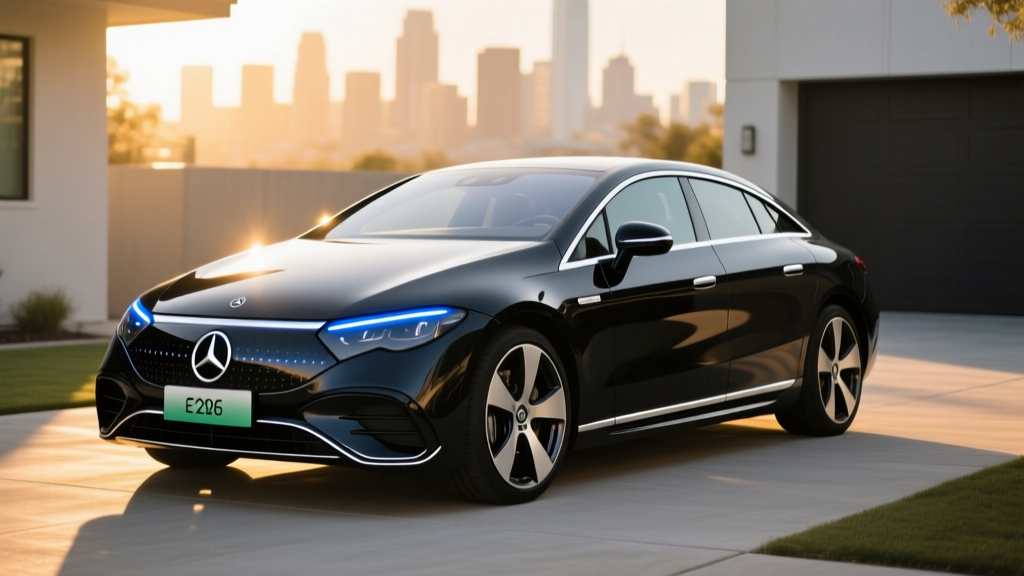
Mercedes-Benz positions the EQE sedan as the electric counterpart to its long-running E-Class. Built on the dedicated EVA2 platform (the same architecture underpinning the larger EQS), the EQE delivers a purpose-built EV experience rather than a converted gas car. For the 2026 model year, the lineup centers on the rear-wheel-drive EQE 350+ and the dual-motor all-wheel-drive EQE 350 4MATIC and EQE 500 4MATIC trims.
Unlike the gas E-Class, the EQE eliminates the transmission tunnel, enabling a flat floor and a slightly more spacious cabin feel. The 90.6 kWh usable battery pack uses NMC (nickel-manganese-cobalt) chemistry, which offers higher energy density than LFP but requires more careful long-term charging habits to minimize degradation.
Range, Efficiency, and Real-World Expectations
The EPA rates the 2026 EQE 350+ at 308 miles of combined range, with an efficiency of approximately 93 MPGe (36 kWh/100 miles). The AWD EQE 350 4MATIC drops to roughly 277 miles EPA, while the performance-oriented EQE 500 4MATIC lands near 264 miles.
Real-World Range vs. EPA Sticker
EPA estimates assume a mix of city and highway driving at moderate temperatures. In real-world conditions:
- Highway driving at 75 mph: Expect roughly 245–265 miles in the EQE 350+ before needing a charge.
- Cold weather (below 32°F): Range can drop 20–30%, putting the EQE 350+ at approximately 215–245 miles effective range.
- Mountainous terrain or aggressive driving: Further reductions of 10–15% are common.
The EQE includes a heat pump as standard equipment, which helps mitigate cold-weather losses compared to EVs without one, but physics still applies. Plan road trips around 200–220 miles between charges in winter to maintain a comfortable buffer.
Charging Speed and Infrastructure
The EQE supports DC fast charging at a peak rate of 170 kW via CCS1 (or NACS on newer models equipped with the Tesla-compatible port). On an optimal 350 kW charger, Mercedes-Benz claims a 10–80% charge in approximately 32 minutes. However, real-world charging curves tell a more nuanced story.
| Charging Level | Power (kW) | Miles Added per Hour | 10–80% Time | Best Use Case |
|---|---|---|---|---|
| Level 1 (120V household) | 1.4 kW | ~3–4 miles | ~72+ hours | Emergency top-ups only |
| Level 2 (240V home/workplace) | 9.6–11.5 kW | ~28–34 miles | ~8–9 hours | Daily overnight charging |
| DC Fast Charge | Up to 170 kW (peak) | ~200+ miles in 15 min | ~32 minutes | Road trips |
Charging curve reality: The EQE sustains peak charge rates only between roughly 10–40% state of charge. Above 60%, the rate tapers significantly to protect battery health. If you regularly fast-charge from 80–100%, expect those sessions to take far longer than the advertised 10–80% time. For daily driving, charge to 80% and use preconditioning (available via the Mercedes me app) before DC fast charging to warm the battery and optimize charge speed.
How Does the Electric E-Class Compare to the Gas E-Class?
The current W214 gas E-Class (E 350) starts around $59,000 and delivers an EPA-estimated 28 MPG combined. Here's how the numbers stack up over five years of ownership, assuming 12,000 miles annually and national average electricity/gas prices:
| Metric | 2026 EQE 350+ (Electric) | 2026 E 350 (Gas) |
|---|---|---|
| Base MSRP | $74,900 | $59,000 |
| EPA Range / Tank Range | 308 miles | ~420 miles |
| Fuel/Energy Cost (5 yr) | ~$4,200 (at $0.14/kWh) | ~$10,500 (at $3.50/gal, 28 MPG) |
| Maintenance (5 yr est.) | ~$1,800 | ~$3,500 |
| Federal Tax Credit (§30D) | Up to $7,500* | $0 |
| Estimated 5-Year Total Cost | ~$76,400** | ~$73,000 |
* Federal tax credit eligibility depends on MSRP caps (sedans must be ≤$55,000 — the EQE exceeds this), buyer income limits, and battery sourcing requirements. As of 2026, the EQE likely does NOT qualify for the new-vehicle §30D credit due to its MSRP. Consult IRS.gov and a tax professional before purchasing.
** Total cost excludes insurance, depreciation, and state incentives. The EQE typically carries higher insurance premiums ($2,800–$3,600/year vs. $2,000–$2,600 for the gas E-Class).
The verdict: The gas E-Class wins on upfront price and total cost if you don't qualify for incentives. The EQE wins on energy and maintenance savings, cabin silence, and instant torque. If you can access the used EV credit (up to $4,000 on vehicles under $25,000), a certified pre-owned EQE becomes far more compelling.
Real Ownership Costs: What First-Time EV Buyers Must Know
Annual Ownership Cost Breakdown (EQE 350+)
| Category | Annual Cost | Notes |
|---|---|---|
| Electricity (home charging) | $750–$950 | At $0.12–$0.16/kWh, 12k miles/yr |
| Public DC fast charging | $200–$600 | Varies by network; $0.35–$0.55/kWh typical |
| Insurance | $2,800–$3,600 | Higher than gas E-Class due to repair costs |
| Maintenance | $300–$500 | Tire rotation, cabin filter, wiper fluid; no oil changes |
| Tires (replacement every 25–35k mi) | $1,200–$1,800 | EV-specific tires wear faster due to weight and torque |
Home Charging Setup
Most EQE owners will need a Level 2 home charger for practical daily use. Expect to spend:
- Level 2 charger (hardware): $500–$800 (e.g., ChargePoint Home Flex, Wallbox Pulsar Plus)
- Electrician installation (240V/50A circuit): $800–$2,500 depending on panel proximity and local code
- Electrical panel upgrade (if needed): $1,500–$3,500 if your home has a 100A panel and needs 200A service
If you live in an apartment or lack dedicated parking, public charging becomes your primary option. Research your local Electrify America, EVgo, or Tesla Supercharger network reliability before committing to an EQE purchase. Apps like PlugShare and A Better Routeplanner are essential tools.
Common Misconceptions About the EQE
| Myth | Fact |
|---|---|
| "The EQE gets 308 miles no matter how I drive." | EPA is a lab estimate. Highway driving at 75 mph, cold weather, and hills reduce range by 15–30%. |
| "I'll save $7,500 on taxes when I buy it." | The EQE's MSRP exceeds the §30D sedan cap of $55,000, making it ineligible for the new-vehicle federal credit as of 2026. Lease structures may pass through a commercial credit, but this varies by dealer. |
| "Fast charging to 100% takes 32 minutes." | The 32-minute claim is for 10–80%. Charging from 80–100% can add another 25–40 minutes due to taper. Plan accordingly. |
| "EV batteries need replacing every few years." | Mercedes-Benz warranties the EQE battery for 8 years or 100,000 miles against defects and excessive capacity loss (below 70% state of health). Real-world NMC degradation is typically 10–15% over 100k miles with proper charging habits. |
| "The EQE is self-driving." | The EQE offers Level 2 driver-assistance (Drive Pilot in limited areas, Active Lane Keeping, Adaptive Cruise). You must remain engaged and hands-on in most conditions. Only Level 4 robotaxis like Waymo operate without driver supervision. |
Decision Framework: Should You Buy the Mercedes-Benz Electric E-Class?
Choose the EQE If:
- You have access to Level 2 home or workplace charging.
- Your daily commute is under 80 miles round-trip, with occasional road trips under 250 miles.
- You value cabin quietness, air suspension comfort, and MBUX tech over raw performance.
- You're willing to pay a luxury premium (~$75k+) and accept higher insurance costs.
- You live in a moderate climate or can tolerate 20–30% winter range loss.
Choose the Gas E-Class or a Hybrid If:
- You lack reliable home charging and your area has sparse public DC infrastructure.
- You regularly drive 300+ miles in a single day, especially in cold or mountainous regions.
- Upfront cost and total cost of ownership are primary concerns.
- You want the option of a plug-in hybrid (E 350e PHEV) that offers ~50 miles of electric range with a gas backup.
Consider the EQS Instead If:
- You need more than 320 miles of EPA range (the EQS 450+ reaches ~390 miles).
- You want a larger rear seat and more cargo space for family use.
Frequently Asked Questions
Does the Mercedes-Benz EQE qualify for the $7,500 federal tax credit?
As of 2026, the EQE's MSRP exceeds the §30D cap of $55,000 for sedans, making it ineligible for the new-vehicle federal tax credit. Some dealers may structure leases to pass through a commercial clean vehicle credit (§45W), but this depends on the leasing company and is not guaranteed. Always verify with your tax advisor and review current rules on IRS.gov.
How long does the EQE battery last before replacement?
Mercedes-Benz warranties the high-voltage battery for 8 years or 100,000 miles, covering defects and capacity loss below 70% state of health. With NMC chemistry, best practices include limiting daily charges to 80%, avoiding frequent DC fast charging, and using preconditioning. Most owners report 10–15% degradation over 100,000 miles, meaning a 308-mile range drops to roughly 262–277 miles. Full battery replacement (if out of warranty) costs $15,000–$22,000, though this is rare within the first decade.
Is the EQE all-wheel drive?
The base EQE 350+ is rear-wheel drive. The EQE 350 4MATIC and EQE 500 4MATIC offer dual-motor all-wheel drive, which improves traction in snow and rain but reduces EPA range by 30–45 miles due to added weight and drivetrain losses.
What's the difference between the EQE and the gas E-Class?
The EQE is a dedicated electric sedan with a 90.6 kWh battery, instant torque, and a flat floor. The gas E-Class (W214) uses a turbocharged inline-four with a mild-hybrid system, offering longer total range (~420 miles per tank) and a lower starting price. The EQE costs more upfront but saves on fuel and maintenance. The E 350e plug-in hybrid splits the difference with ~50 miles of electric-only range plus a gas engine for longer trips.
Can I tow with the EQE?
The EQE is not rated for towing in the U.S. market. If you need towing capacity, consider the EQS SUV or a plug-in hybrid SUV like the GLE 350e.