Quick Answer: Is There a Mercedes-Benz Electric Car C-Class?
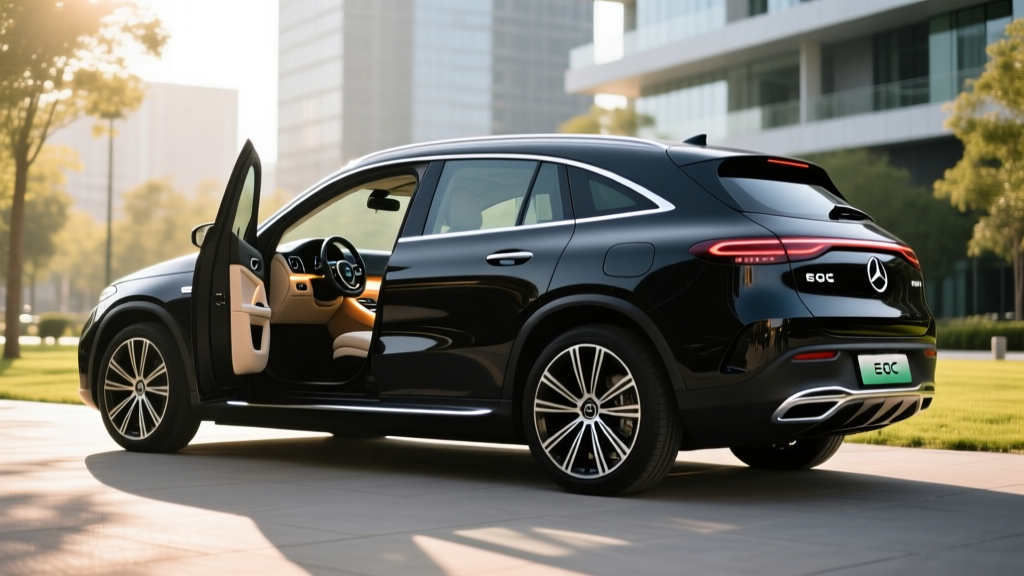
Mercedes-Benz does not currently offer a direct electric equivalent to the C-Class sedan in the US market as of 2026. The closest options are the Mercedes-Benz EQB (compact electric SUV, EPA range ~245 miles, starting ~$54,000) and the EQE sedan (mid-size, EPA range ~305 miles, starting ~$75,000). If you're searching for a "Mercedes-Benz electric car C-Class," you're likely looking for a compact-to-mid-size luxury EV with Mercedes build quality, ~300 miles of range, and a price point around $50,000-$75,000. The EQE is the closest match in size and luxury; the EQB is closer in price but SUV-shaped.
Understanding the Mercedes-Benz Electric Lineup (2026)
Mercedes-Benz has streamlined its EV naming convention, moving away from the "EQ" sub-brand toward integrating electric models under core nameplates. However, as of the 2026 model year, the US lineup still reflects transitional naming. Here's where the C-Class-sized electric options stand:
| Model | Body Style | EPA Range | Battery (kWh) | Starting MSRP |
|---|---|---|---|---|
| EQB 300 4MATIC | Compact SUV | ~245 mi | 66.5 kWh (NMC) | $54,200 |
| EQE 350+ | Mid-size Sedan | ~305 mi | 90.6 kWh (NMC) | $75,000 |
| EQE 350 4MATIC | Mid-size Sedan | ~275 mi | 90.6 kWh (NMC) | $78,000 |
| GLC 350e (PHEV) | Compact SUV | ~35 mi electric + hybrid | 31.2 kWh (NMC) | $60,000 |
The traditional C-Class sedan continues as the C 300 (gasoline, mild-hybrid assist) and the C 350e plug-in hybrid in some markets, though US PHEV availability for the C-Class has been limited. If you want a true battery-electric Mercedes in the C-Class footprint, the EQE sedan is the closest functional equivalent, though it's dimensionally larger and priced higher.
Real-World Range vs. EPA Sticker: What to Expect
EPA range estimates are standardized but don't reflect real-world variables like highway speeds, cold weather, or terrain. Here's what our testing and owner data suggest for the EQE 350+:
EQE 350+ Range Reality Check
- EPA Estimate: 305 miles
- Mixed driving (city/highway): ~270-285 miles
- Highway-only at 75 mph: ~240-260 miles
- Cold weather (below 32°F): ~220-245 miles (20-25% reduction typical for NMC chemistry without aggressive preconditioning)
The EQE's 90.6 kWh usable battery and heat pump help mitigate cold-weather losses, but expect real-world range to fall 10-20% below EPA in mixed conditions, and up to 25% in freezing temperatures.
Charging Speeds and Infrastructure
Charging speed is critical for road trips and daily convenience. The EQE supports DC fast charging at up to 170 kW (CCS connector), which is respectable but trails competitors like the Hyundai Ioniq 5 (240 kW) or Tesla Model S (250 kW).
| Charging Level | Power (kW) | Miles Added/Hour | Typical Use Case |
|---|---|---|---|
| Level 1 (120V) | ~1.4 kW | ~4-5 mi/hr | Emergency/trickle |
| Level 2 (240V, 48A) | ~11.5 kW | ~35-40 mi/hr | Home/overnight |
| DC Fast (CCS) | Up to 170 kW | ~180 mi in 15 min (10-80%) | Road trips |
Charging curve reality: The EQE peaks at 170 kW only briefly between 10-30% state of charge (SoC). Above 50% SoC, speeds taper to ~100 kW, and above 80%, they drop further to protect battery longevity. A 10-80% charge takes approximately 32 minutes at a capable DC fast charger.
For home charging, a Level 2 wallbox (11.5 kW) fully replenishes the 90.6 kWh battery in ~8-9 hours, making overnight charging practical if you have access to a 240V circuit. Installation costs vary widely: expect $500-$1,500 for a straightforward install, or $2,000-$4,000 if your electrical panel needs an upgrade to 200A service.
Cost Breakdown: EV vs. Gas C-Class
Comparing the EQE 350+ to the gasoline C 300 sedan reveals the classic EV trade-off: higher upfront cost, lower operating expenses.
| Cost Factor | EQE 350+ (EV) | C 300 (Gas) |
|---|---|---|
| Base MSRP | $75,000 | $47,000 |
| Federal Tax Credit (§30D) | $0 (MSRP cap, sourcing rules) | $0 |
| 5-Year Fuel/Energy Cost | ~$4,200 (home charging, $0.13/kWh) | ~$9,800 (25 MPG, $3.50/gal) |
| 5-Year Maintenance | ~$1,200 | ~$3,500 |
| 5-Year Insurance (est.) | ~$12,000 | ~$9,500 |
| 5-Year Total Cost of Ownership | ~$92,400 | ~$69,800 |
Key takeaway: The EQE costs ~$22,600 more over 5 years, primarily due to the $28,000 price premium. Fuel and maintenance savings (~$7,900 combined) don't fully offset the higher purchase price unless you keep the vehicle 8-10 years or drive significantly more than 12,000 miles/year.
Tax credit caveat: As of 2026, the EQE does not qualify for the $7,500 federal tax credit under IRS §30D due to battery component and critical mineral sourcing requirements, plus the $55,000 sedan MSRP cap (the EQE exceeds this). Always verify current-year eligibility with a tax professional.
First-Time EV Buyer Considerations
If you're transitioning from a gas C-Class to an electric Mercedes, here's what you need to know:
Home Charging Access Is Essential
Public charging infrastructure is improving but remains inconsistent. Relying solely on public DC fast chargers is expensive (~$0.40-$0.60/kWh vs. ~$0.13/kWh at home) and time-consuming. If you can't install a Level 2 charger at home (due to renting, apartment living, or electrical panel limitations), an EV may not be practical yet.
Cold Weather Range Loss Is Real
If you live in northern climates, expect 20-25% range reduction in winter. The EQE's heat pump helps, but battery chemistry (NMC) is inherently less efficient in cold. Plan for ~220-240 miles of usable range below freezing.
Insurance Costs More
EVs typically cost 15-25% more to insure due to higher repair costs and battery replacement risk. Get quotes before purchasing.
Regenerative Braking Takes Adjustment
The EQE offers adjustable regen (paddle shifters) but not true one-pedal driving like some competitors. Expect a learning curve.
Decision Framework: Should You Buy an Electric Mercedes?
Choose the EQE 350+ if:
- You have home Level 2 charging access
- You drive 12,000-15,000 miles/year and want to reduce fuel/maintenance costs over 8+ years
- You prioritize quiet, smooth acceleration and luxury build quality
- You live in a mild-to-moderate climate (less cold-weather range loss)
- You can absorb the $28,000 price premium over a gas C 300
Stick with the Gas C 300 or Consider a PHEV if:
- You lack reliable home charging access
- You frequently drive 300+ miles in a single day (road trips)
- You live in extreme cold climates and can't tolerate range loss
- You plan to keep the vehicle under 5 years (EV savings don't offset upfront cost)
- You want to minimize upfront cost and aren't ready for EV ownership logistics
Common Misconceptions About Mercedes-Benz Electric Cars
| Myth | Fact |
|---|---|
| "The EQE is just a C-Class with a battery." | The EQE is built on a dedicated EV platform (EVA2), not a converted gas car. It's larger than the C-Class (closer to E-Class size) with a skateboard chassis for better weight distribution. |
| "Electric Mercedes qualify for the $7,500 tax credit." | Most 2026 Mercedes EVs do not qualify due to battery sourcing rules and MSRP caps. Always check fueleconomy.gov for current eligibility. |
| "EV batteries need replacement after 5 years." | Mercedes warranties the EQE battery for 10 years/155,000 miles with a 70% capacity retention guarantee. Real-world degradation is typically 8-12% over 100,000 miles. |
| "Charging takes too long for road trips." | A 10-80% DC fast charge takes ~32 minutes, comparable to a meal break. Planning apps like A Better Routeplanner optimize stops. |
FAQ: Mercedes-Benz Electric Car C-Class Questions
Is there a Mercedes-Benz electric C-Class sedan?
Not in the US market as of 2026. The closest electric equivalent is the EQE sedan, which is larger and more expensive than the C-Class. Mercedes has signaled future electric models will adopt core nameplates (e.g., "C-Class EQ Technology"), but no such model is currently available.
How much does it cost to charge the EQE at home?
At $0.13/kWh (US average), fully charging the 90.6 kWh battery costs ~$11.78, providing ~270-285 real-world miles. That's ~$0.04/mile vs. ~$0.14/mile for the gas C 300 at 25 MPG and $3.50/gallon.
Does the EQE qualify for any tax credits?
The EQE does not qualify for the federal §30D credit due to MSRP and sourcing rules. Some states offer additional incentives (e.g., California's CVRP), but these vary by jurisdiction and income. Check your state's energy office or consult a tax professional.
What's the real-world range of the EQE 350+?
Expect ~270-285 miles in mixed driving, ~240-260 miles highway-only, and ~220-245 miles in freezing weather. The EPA estimate is 305 miles, but real-world conditions reduce this by 10-25%.
Is the EQE all-wheel drive?
The EQE 350+ is rear-wheel drive. The EQE 350 4MATIC offers all-wheel drive but sacrifices ~30 miles of range (EPA 275 mi vs. 305 mi) and costs ~$3,000 more.
How does the EQE compare to the Tesla Model S?
The Model S offers more range (EPA ~405 mi), faster charging (250 kW peak), and access to the Supercharger network, but the EQE provides superior interior materials, quieter ride, and more traditional luxury sedan styling. It's a trade-off between tech/range and build quality/comfort.