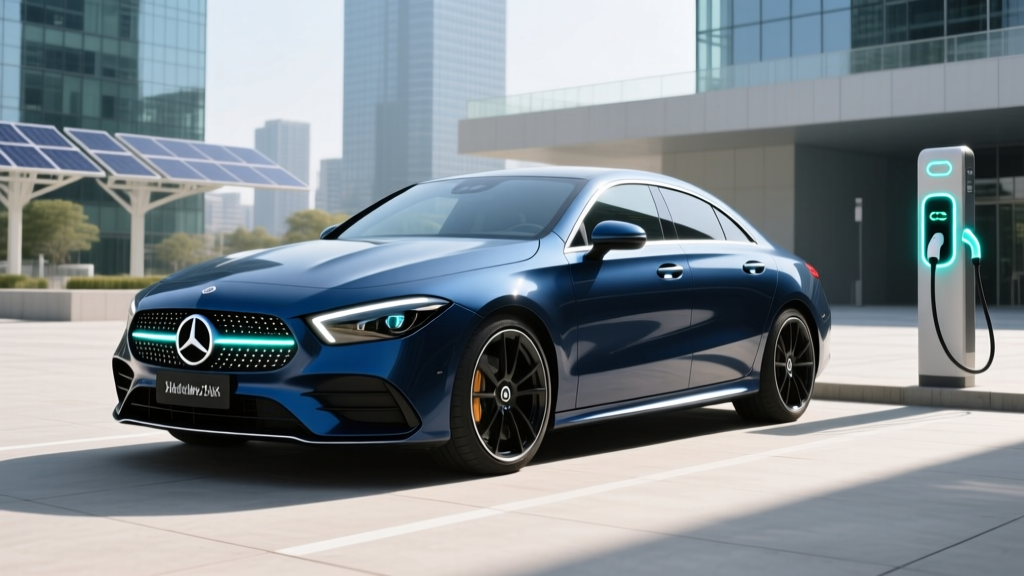
Quick Answer: The 2026 Mercedes-Benz CLA EV is a luxury compact electric sedan built on the new MMA (Mercedes Modular Architecture) platform. It offers an EPA-estimated range of approximately 372 miles from an 85 kWh usable NMC battery, DC fast charging at up to 250 kW (10–80% in roughly 17 minutes), and a starting MSRP near $48,000. It replaces the previous-generation CLA 250 sedan with a fully electric powertrain while retaining the sleek four-door coupe form factor. If you want a premium compact EV with class-leading range and Mercedes tech, the CLA EV is a strong pick — but it faces stiff competition from the Tesla Model 3, BMW i4, and Hyundai Ioniq 6.
The 2026 Mercedes-Benz CLA EV at a Glance
Mercedes-Benz introduced the production CLA EV after previewing it with the Concept CLA Class. For 2026, the CLA EV arrives as the first model on the brand's MMA platform — an 800-volt architecture shared with upcoming compact Mercedes EVs. It is positioned as the entry point to the Mercedes electric sedan lineup, sitting below the EQE and EQS in price but above the CLA's legacy gas counterpart in technology and efficiency.
| Specification | 2026 CLA EV (CLA 250e / Base) |
|---|---|
| EPA Range (est.) | ~372 miles |
| Battery (usable) | 85 kWh, NMC chemistry |
| DC Fast Charge (peak) | 250 kW (800V architecture) |
| 10–80% DC Charge Time | ~17 minutes |
| Level 2 Charge Rate | 11 kW (AC onboard charger) |
| Motor / Drivetrain | Single rear motor, RWD |
| Horsepower | ~268 hp |
| 0–60 mph | ~6.4 seconds |
| Efficiency (est.) | ~130 MPGe combined |
| Starting MSRP | ~$48,000 |
| Battery/Powertrain Warranty | 8 years / 100,000 miles |
Note: Specs reflect announced/preliminary data from Mercedes-Benz. Final EPA certification figures may vary at delivery. Always confirm with fueleconomy.gov once listed.
Real-World Range Reality: The EPA sticker says ~372 miles, but plan for ~290–320 miles on sustained highway driving at 70+ mph. In cold weather (below 32°F), expect a 15–25% reduction — that drops usable range to roughly 250–280 miles. The CLA EV's heat pump (standard on MMA vehicles) helps mitigate cabin-heating energy draw, but battery chemistry still loses efficiency in freezing temps. On road trips, realistic 10–80% charge stops will add about 230–250 miles per session.
Charging Speed and Infrastructure
The CLA EV's 800-volt electrical architecture is its standout charging feature. This allows DC fast charging at up to 250 kW — competitive with the Hyundai Ioniq 6 and Porsche Taycan, and significantly faster than the 170 kW peak of the Tesla Model 3 Long Range on V3 Superchargers.
| Charging Level | Power | Miles Added per Hour | Best Use Case |
|---|---|---|---|
| Level 1 (120V household) | ~1.4 kW | ~5 mi/hr | Overnight top-off only |
| Level 2 (240V home/public) | 11 kW | ~38 mi/hr | Daily home charging |
| DC Fast Charge | Up to 250 kW | ~155 mi in 10 min | Road trips |
A full Level 2 home charge (0–100%) takes approximately 8.5 hours with the 11 kW onboard charger. If your home electrical panel supports a 48-amp Level 2 wallbox (like the Mercedes-branded Wallbox or a ChargePoint Home Flex), you'll wake up to a full battery every morning.
Charging-curve reality: The 250 kW peak rate is sustained roughly from 10% to 45% SoC. After 60%, the rate tapers to approximately 150 kW, and above 80% it drops sharply to protect battery longevity — typical of NMC chemistry. This is why Mercedes quotes 10–80% time (~17 min) rather than a full charge figure.
CLA EV vs. Gas CLA 250: Cost and Efficiency Compared
The previous-generation CLA 250 with its 2.0L turbocharged four-cylinder was a popular entry luxury sedan. Here's how the electric CLA stacks up against that gas baseline on running costs:
| Metric | 2026 CLA EV | 2025 CLA 250 (Gas) |
|---|---|---|
| EPA Efficiency | ~130 MPGe | 30 MPG combined |
| Fuel/Energy Cost per Mile | ~$0.045 (home charging) | ~$0.13 ($3.90/gal gas) |
| Annual "Fuel" Cost (12,000 mi) | ~$540 | ~$1,560 |
| Annual Maintenance | ~$300 | ~$650 |
| Estimated Annual Insurance | ~$2,400 | ~$1,900 |
| 5-Year Total Operating Cost | ~$16,200 | ~$16,050 |
The CLA EV saves roughly $1,000/year on energy and $350/year on maintenance (no oil changes, fewer brake replacements thanks to regenerative braking). However, EV insurance premiums run 20–30% higher on average, which partially offsets those savings. Over five years, the operating costs are roughly comparable — the real financial advantage of the CLA EV comes from the federal §30D tax credit (if eligible) and state incentives.
Tax Credit Eligibility and Pricing Breakdown
Under current IRS §30D rules, the CLA EV may qualify for up to $7,500 in federal tax credits, but eligibility depends on several factors that change annually:
- MSRP Cap: Sedans must have an MSRP at or below $55,000. The base CLA EV (~$48,000) qualifies; higher trims may exceed the cap.
- Buyer Income Cap: Modified AGI must not exceed $150,000 (single) / $300,000 (joint filing).
- Battery Sourcing: Critical minerals and battery components must meet phased-in domestic/free-trade sourcing thresholds. Mercedes has been localizing supply chains, but confirm current-year eligibility at purchase.
- Point-of-Sale Transfer: The credit can be applied at the dealership as an upfront discount rather than claimed on your tax return.
Consult a tax professional for your specific situation. Rules are subject to legislative change — verify at irs.gov before purchase.
| Cost Item | Amount |
|---|---|
| Base MSRP (CLA EV) | ~$48,000 |
| Destination Fee | ~$1,150 |
| Federal Tax Credit (if eligible) | –$7,500 |
| Effective Price | ~$41,650 |
| Home Level 2 Charger Install | $500–$2,000 |
| 5-Year Energy Cost (home) | ~$2,700 |
| 5-Year Insurance (est.) | ~$12,000 |
Real-World Ownership: What First-Time EV Buyers Need to Know
Home Charging Access Is the Deciding Factor
The CLA EV is best suited for owners with reliable Level 2 home charging. If you can install a 240V wallbox (48-amp circuit preferred), daily charging becomes effortless — plug in at night, wake up with 300+ miles. Installation costs typically run $800–$1,800 depending on your panel capacity and wiring distance. If your electrical panel is maxed out at 100 amps, a panel upgrade to 200 amps can add $1,500–$3,000.
Without home charging, the CLA EV is still viable thanks to its 250 kW DC fast-charge capability — a 17-minute stop adds roughly 250 miles. But relying solely on public charging means paying $0.30–$0.48/kWh (versus ~$0.12–$0.16/kWh at home), which erases the energy-cost advantage over gas.
Cold Weather and Driving Patterns
If you live in northern climates with sustained sub-freezing winters, budget for 20–25% range loss. The CLA EV's standard heat pump helps, but NMC batteries inherently lose efficiency in cold. Preconditioning the battery before DC fast charging (automatic when you navigate to a charger via MBUX) is essential — without it, charge speeds can be 40–50% slower in cold weather.
Maintenance Differences
Expect annual maintenance around $300 versus $650+ for the gas CLA. EV-specific service includes cabin air filter replacement, brake fluid checks, tire rotation (EVs wear tires faster due to instant torque and heavier weight), and software updates. The brake pads last significantly longer thanks to regenerative braking handling most deceleration.
CLA EV vs. Competitors: Model 3, i4, and Ioniq 6
| Spec | 2026 CLA EV | 2026 Tesla Model 3 LR | 2026 BMW i4 eDrive40 | 2026 Ioniq 6 SEL |
|---|---|---|---|---|
| EPA Range | ~372 mi | ~341 mi | ~307 mi | ~361 mi |
| Battery | 85 kWh NMC | ~79 kWh NMC | ~83.9 kWh NMC | 77.4 kWh NMC |
| Peak DC Charge | 250 kW | ~250 kW | 205 kW | 240 kW |
| 10–80% Time | ~17 min | ~18 min | ~31 min | ~18 min |
| 0–60 mph | ~6.4 sec | ~4.2 sec | ~5.5 sec | ~5.1 sec |
| Starting MSRP | ~$48,000 | ~$42,000 | ~$57,000 | ~$42,500 |
| Supercharger Access | NACS (2025+) | Native | CCS + adapter | CCS + adapter |
The CLA EV's NACS port (standard for 2025+ Mercedes models in North America) gives it native access to Tesla's Supercharger network — over 20,000 stalls nationwide. This is a significant infrastructure advantage over CCS-only competitors still requiring adapters.
Decision Framework: Is the CLA EV Right for You?
Choose the Mercedes-Benz CLA EV if:
- You want maximum range in a luxury compact sedan (~372 mi EPA)
- You value Mercedes interior quality, MBUX tech, and brand prestige
- You have or can install Level 2 home charging
- You want native Supercharger access via NACS
- You qualify for the §30D credit (MSRP under $55K, income within caps)
Look elsewhere if:
- You prioritize 0–60 performance — the Model 3 LR is 2+ seconds quicker for less money
- You want the lowest entry price — the Ioniq 6 starts ~$5,500 lower with comparable range
- You live in a rural area with limited DC fast-charging infrastructure
- You prefer hands-free highway driving — BMW's Highway Assistant and GM's Super Cruise are more mature than Mercedes' current Drive Pilot in the US
Common EV Misconceptions Addressed
| Myth | Fact |
|---|---|
| "EV batteries need replacing every few years" | Mercedes warranties the CLA EV battery for 8 years/100,000 miles with a 70% capacity retention threshold. Real-world NMC degradation data shows most batteries retain 85–90% after 100K miles. |
| "The CLA EV costs more to own than gas" | With the $7,500 credit and home charging, the CLA EV can break even with a gas CLA within 4–5 years on operating costs, then pull ahead. |
| "You can't road-trip an EV" | At 250 kW DC charge speed with Supercharger access, the CLA EV adds ~250 miles in 17 minutes — comparable to a gas fill-up stop when you factor in rest breaks. |
| "EVs are worse in the cold" | Range drops 15–25% in freezing weather — real, but manageable with preconditioning and the CLA EV's heat pump. A 372-mi EPA range still leaves ~280 mi usable in winter. |
Frequently Asked Questions
Does the 2026 Mercedes-Benz CLA EV qualify for the $7,500 federal tax credit?
It may, depending on your income (under $150K single / $300K joint), the specific trim's MSRP (must be at or below $55,000 for sedans), and current battery-sourcing compliance. The credit can be transferred at point of sale as an upfront discount. Verify eligibility on irs.gov and with your dealer at purchase.
What connector does the CLA EV use — NACS or CCS?
Starting with 2025 model-year vehicles, Mercedes-Benz has adopted the NACS (Tesla-style) connector for North American models. The CLA EV will use NACS natively, providing direct access to Tesla Supercharger stations without an adapter.
How long does it take to charge the CLA EV at home?
With an 11 kW Level 2 home wallbox, a full 0–100% charge takes approximately 8.5 hours. Most owners charge from 20–80% daily, which takes about 5 hours — easily done overnight on a standard off-peak electricity rate.
Is the CLA EV self-driving?
No. The CLA EV offers Mercedes-Benz Drive Pilot, which is an SAE Level 2 driver-assistance system. You must remain attentive, keep your hands available, and be prepared to take over at any time. Drive Pilot's Level 3 capability (conditional hands-off in specific traffic-jam scenarios on approved highways) has been approved in limited US jurisdictions (Nevada, California) under strict conditions — it is not full self-driving.
What is the real-world range of the CLA EV on road trips?
Expect roughly 290–320 miles at highway speeds (70–75 mph) in mild weather. In cold weather, plan for 250–280 miles. For trip planning, use the A Better Route Planner app or MBUX's built-in route planner, which factors in elevation, temperature, and charging station availability.
How does the CLA EV compare to the old CLA 250 gas model?
The CLA EV is heavier (due to the battery), slightly slower to 60 mph than a tuned CLA 250, but offers dramatically lower running costs, more torque for city driving, a quieter cabin, and roughly 4x the EPA range in energy-equivalent terms. The trade-off is a higher starting price (offset partially by tax credits) and dependency on charging access.
Sources: Mercedes-Benz USA (mbusa.com), EPA Fuel Economy (fueleconomy.gov), IRS Clean Vehicle Credit (irs.gov). Pricing and specifications reflect announced data as of publication and are subject to change.