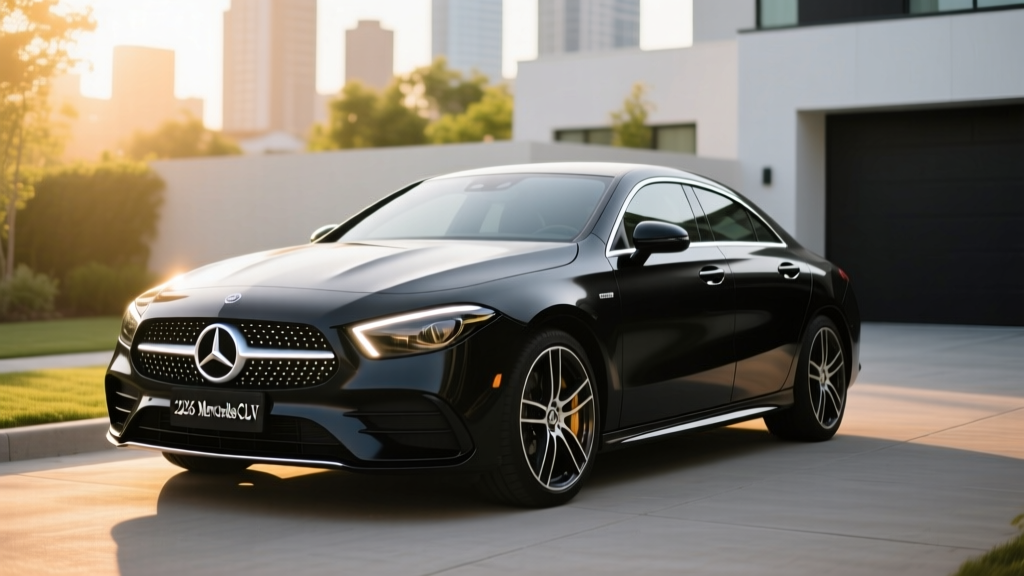
If you're researching the electric CLA from Mercedes-Benz, you're likely weighing whether this compact luxury EV delivers on its promise of 400+ miles of range, ultra-fast 800-volt charging, and premium daily usability — or whether a gas CLA or a rival like the Tesla Model 3 or Hyundai Ioniq 6 makes more financial sense. The 2026 CLA EV (built on Mercedes' new MMA platform) is the brand's entry-level electric sedan, and it arrives at a pivotal moment: federal tax credit rules under IRS §30D are tightening on battery sourcing, luxury EV MSRPs often exceed the $55,000 sedan cap, and public charging infrastructure is consolidating around NACS. This guide breaks down every number you need — range, charging speed, pricing, real-world costs — so you can decide if the electric CLA earns a spot in your garage.
Quick Answer: Is the Electric CLA Worth It?
The 2026 Mercedes-Benz CLA EV targets an EPA-estimated range of approximately 400+ miles (final EPA certification pending at launch) on an ~85 kWh usable NMC battery with 800V architecture enabling DC fast charging up to 250 kW (10–80% in roughly 17 minutes). Pricing is expected to start around $47,000–$50,000 before incentives, potentially placing base trims under the $55,000 federal tax credit MSRP cap for sedans. It competes directly with the Tesla Model 3 Long Range (~$42,990, 363 mi EPA) and the BMW i4 eDrive40 (~$57,900, 307 mi EPA). Choose the CLA EV if you prioritize Mercedes interior quality, ride refinement, and next-gen efficiency; look elsewhere if you need proven long-term reliability data or the lowest cost per mile.
Range, Battery, and Charging: The Numbers That Matter
The electric CLA is the first production model on Mercedes-Benz's Modular Architecture (MMA), an 800-volt platform designed for efficiency-first EVs. Mercedes has claimed WLTP range exceeding 750 km (~466 miles) for the most efficient variant, but US buyers should expect EPA figures closer to 380–420 miles depending on trim and wheel size, since EPA testing is roughly 20–30% more conservative than WLTP.
| Spec | Value |
|---|---|
| Battery (usable) | ~85 kWh, NMC chemistry |
| Platform Voltage | 800V |
| EPA Range (est.) | 380–420 mi (final cert. pending) |
| Efficiency (target) | ~4.0–4.5 mi/kWh (~130 MPGe est.) |
| Peak DC Charge Rate | 250 kW |
| 10–80% DC Fast Charge | ~17 minutes |
| Level 2 AC Charge Rate | 11 kW (~44 mi/hr) |
| 0–60 mph (est.) | ~5.5 sec (RWD), ~4.2 sec (AWD) |
| Drivetrain | RWD standard, AWD available |
| Battery/Powertrain Warranty | 8 yr / 100,000 mi (expected) |
Charging Speed Deep-Dive: 800V Architecture in Practice
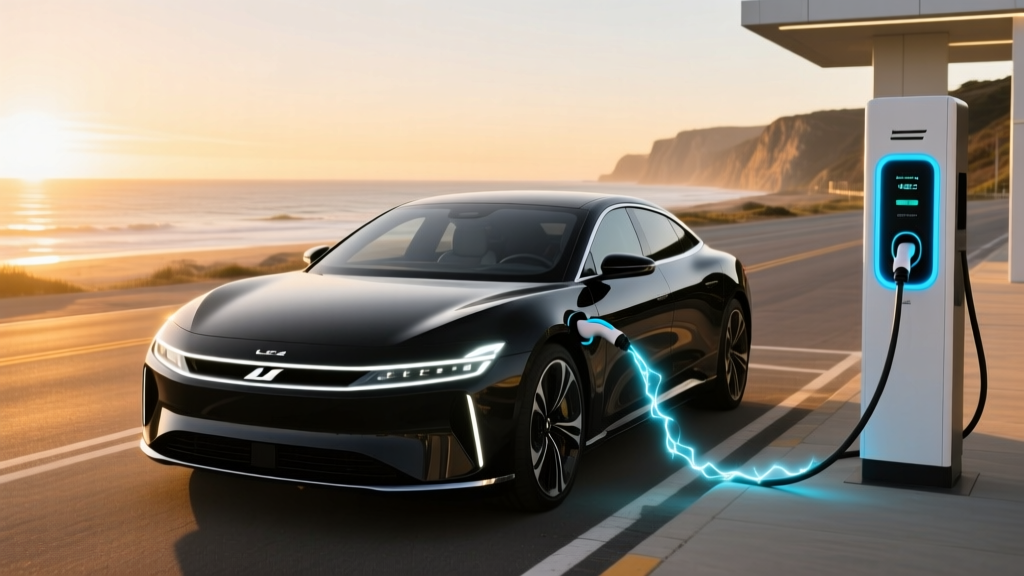
The 800-volt system is the electric CLA's biggest technical differentiator. Higher voltage means the car can accept more power at lower amperage, reducing heat and sustaining peak charge rates longer. At a 350 kW CCS/NACS DC fast charger, the CLA EV should sustain close to its 250 kW peak through the 10–50% state-of-charge window, then taper progressively. Here's what that means in real charging scenarios:
| Level | Power | Miles Added per Hour | Notes |
|---|---|---|---|
| Level 1 (120V) | 1.4 kW | ~5–6 mi/hr | Emergency/trickle only |
| Level 2 (240V, 48A) | 11.5 kW | ~46 mi/hr | Home/destination charging |
| DC Fast (350 kW station) | Up to 250 kW | ~180+ mi in 10 min | 10–80% in ~17 min |
| DC Fast (150 kW station) | Up to 150 kW | ~110 mi in 10 min | Common EA/EVgo speed |
Charging curve reality: Peak kW numbers are marketing headlines. The CLA EV's 250 kW peak will likely sustain only between roughly 10–50% SoC, tapering to ~150 kW by 60%, ~80 kW by 75%, and below 50 kW past 85%. This is normal lithium-ion behavior — charging from 80–100% can take as long as 10–80%. For road trips, plan 10–80% stops and skip topping off unless you have time to spare.
The CLA EV will ship with a CCS1 connector in the US market, but Mercedes-Benz has confirmed transition to the NACS (Tesla) standard across its lineup. Buyers should confirm the connector on their specific model year and delivery date, as the transition timeline affects which public networks you can access natively versus with an adapter.
Electric CLA vs. Gas CLA vs. Rivals: What Are You Actually Comparing?
The previous-generation gas CLA 250 started around $44,000 with a 2.0L turbo making 221 hp and earning 29 MPG combined per fueleconomy.gov. The electric CLA replaces it as Mercedes' compact entry point. Here's how the math works across a 5-year ownership horizon:
| Category | CLA EV (~$48K) | Gas CLA 250 (~$44K) | Tesla Model 3 LR (~$43K) |
|---|---|---|---|
| Purchase Price | $48,000 | $44,000 | $42,990 |
| Fed. Tax Credit (§30D) | Up to $7,500* | $0 | Up to $7,500* |
| Effective Price | ~$40,500 | $44,000 | ~$35,490 |
| Fuel/Energy (5 yr, 60K mi) | $3,600–$5,400 | $9,000–$11,000 | $3,400–$5,100 |
| Maintenance (5 yr) | $1,500–$2,500 | $4,000–$5,500 | $1,200–$2,000 |
| Insurance (5 yr est.) | $10,500–$13,000 | $8,500–$10,500 | $9,500–$12,000 |
| 5-Yr Total (est.) | $56,100–$61,400 | $65,500–$71,000 | $49,590–$54,590 |
*Federal tax credit eligibility depends on MSRP cap ($55,000 for sedans), buyer income limits ($150K single / $300K joint AGI), and battery component/critical mineral sourcing requirements. Verify current rules at irs.gov and consult a tax professional. Credit may be applied at point of sale.
Key takeaway: The electric CLA can undercut the gas CLA on total cost over 5 years, primarily through fuel and maintenance savings — but only if you qualify for the full §30D credit and charge mostly at home. The Tesla Model 3 Long Range remains the cost-efficiency benchmark, though the CLA EV trades spec-sheet dominance for interior craftsmanship, ride quality, and Mercedes brand cachet that Tesla cannot match.
Real-World Ownership: What First-Time EV Buyers Must Know
Buying the electric CLA is not just a car purchase — it's an infrastructure decision. Here are the practical realities no brochure will tell you:
Home Charging Is Non-Negotiable for Most Owners
If you cannot install a Level 2 (240V) home charger, EV ownership becomes significantly less convenient. A standard 120V outlet adds only ~5 miles of range per hour — insufficient for daily driving beyond short commutes. Budget $500–$2,000 for a quality Level 2 charger (ChargePoint Home Flex, Emporia Vue, Wallbox Pulsar Plus) plus $500–$2,500 for electrician installation, depending on whether your panel needs an upgrade to 200A service. The CLA EV's 11 kW onboard charger means you'll want a 48-amp circuit to capture full Level 2 speed.
Climate Changes the Calculus
If you live in Minnesota, Maine, or anywhere that sees sustained sub-20°F winters, plan for 25–30% range loss on cold mornings. The CLA EV's heat pump helps, but battery chemistry is chemistry — cold slows ion movement. Garage parking and preconditioning (warming the battery while plugged in before departure) are essential strategies. If cold-weather range loss would put you below your daily needs, a PHEV or a larger-battery EV may be wiser.
Insurance Costs More
EV insurance premiums run 15–25% higher than equivalent gas cars due to repair costs (battery pack damage, specialized parts, certified technician requirements). Get quotes from Geico, State Farm, and EV-specialty insurers before committing. Mercedes parts pricing will not help your premiums.
Public Charging Is Improving but Imperfect
Mercedes is building its own High-Power Charging network (targeting 10,000 chargers globally by 2027), and the CLA EV will integrate with Mercedes me Charge for seamless plug-and-charge authentication. But day-to-day, you'll also use Electrify America, EVgo, and Tesla Superchargers (with adapter, depending on connector). Reliability on non-Tesla networks has improved but still lags — expect 5–10% of sessions to have issues (broken screens, payment failures, reduced speeds).
Federal Tax Credit: Will the Electric CLA Qualify?
This is where many luxury EV buyers get tripped up. Under current IRS §30D rules, the electric CLA must clear several hurdles:
- MSRP Cap: Sedans must be at or below $55,000. If the CLA EV base trim starts at $47,000–$50,000, it likely qualifies — but higher trims or option packages pushing MSRP above $55K will disqualify that specific configuration.
- Buyer Income Cap: Modified AGI must not exceed $150,000 (single), $225,000 (head of household), or $300,000 (joint). If you're over the limit, you cannot claim the credit regardless of the car.
- Battery Sourcing: The $7,500 credit splits into two halves — $3,750 for battery component manufacturing (North America) and $3,750 for critical minerals (US or FTA-partner sourcing). Mercedes sources from a global supply chain; the exact credit amount may be $3,750 or $7,500 depending on the model year's supply chain compliance. Foreign Entity of Concern (FEOC) restrictions further limit eligibility if battery components come from prohibited entities.
- Point-of-Sale Transfer: You can transfer the credit to the dealer at purchase, reducing your out-of-pocket cost immediately — but you must still meet income and sourcing requirements, and you'll reconcile on your tax return.
Bottom line: Do not assume $7,500 off. Check the fueleconomy.gov tax credit database for the specific model year and trim, and confirm with your tax advisor before signing a purchase agreement.
Myths vs. Facts: Common Misconceptions About the Electric CLA
| Myth | Fact |
|---|---|
| "400+ miles means I'll always get 400 miles." | EPA range is a lab estimate. Highway speeds, cold weather, hills, and climate control reduce real range by 15–30%. Expect 300–350 miles in mixed real-world driving. |
| "250 kW charging means 15-minute fill-ups everywhere." | You need a 350 kW-capable station to hit peak speed. Most public chargers are 50–150 kW. At 150 kW, expect 10–80% in ~25 minutes. |
| "The battery will need replacing in 5 years." | Modern NMC batteries with active thermal management typically retain 85–90% capacity at 100,000 miles. Mercedes warranties the pack for 8 yr/100,000 mi at a minimum 70% capacity threshold. |
| "I'll save $7,500 no matter what." | Tax credit depends on MSRP, your income, and battery sourcing rules. Many luxury EVs partially or fully lose eligibility. Always verify before purchase. |
| "EVs cost more to own than gas cars." | Over 5 years, the CLA EV can save $5,000–$10,000 vs. the gas CLA in fuel and maintenance — but only with home charging and credit eligibility. Without those, the math flips. |
Decision Framework: Should You Buy the Electric CLA?
Choose the Electric CLA If:
- You have access to Level 2 home charging (garage or driveway with 240V circuit)
- Your daily commute is under 100 miles round-trip, with occasional 300+ mile road trips
- You qualify for at least $3,750 in federal tax credits (income under cap, base-trim MSRP under $55K)
- You value Mercedes interior quality, MBUX infotainment, and ride comfort over spec-sheet dominance
- You're replacing a gas CLA or similar compact luxury sedan and want to eliminate fuel stops
Look Elsewhere If:
- You live in an apartment or lack reliable home/workplace charging access
- Your income exceeds §30D limits — the Tesla Model 3 or Hyundai Ioniq 6 may offer better value without the credit
- You regularly drive 400+ miles between charging stops in extreme cold — consider a larger SUV EV or a PHEV
- You want maximum range per dollar — the Tesla Model 3 Long Range delivers 363 EPA miles at ~$43K
- You need immediate availability — confirm delivery timelines with your dealer, as early-production MMA vehicles may have limited allocation
Frequently Asked Questions
When will the electric CLA be available in the US?
The 2026 CLA EV is expected to begin US deliveries in late 2025 or early 2026. Exact timing varies by market and trim. Contact your local Mercedes-Benz dealer for allocation status and reservation availability.
Will the electric CLA have a NACS (Tesla) charging port?
Mercedes-Benz has committed to adopting NACS across its EV lineup, but the transition timeline for the CLA EV specifically depends on production date. Early units may ship with CCS1 and include a NACS adapter; later production will likely feature native NACS. Confirm with your dealer at time of order.
How does the electric CLA compare to the Mercedes EQE sedan?
The EQE is a larger, more expensive midsize luxury sedan (starting ~$75,000, ~305 mi EPA range). The CLA EV is more affordable and, thanks to MMA's efficiency focus, may actually exceed the EQE in range despite a smaller battery. Think of the CLA EV as the efficiency champion and the EQE as the space-and-comfort flagship.
What is the expected insurance cost for the electric CLA?
Expect annual premiums of $2,100–$2,600 depending on your state, driving record, and coverage level — roughly 15–25% above the gas CLA. Get quotes before purchasing to avoid surprises.
Can I charge the CLA EV on Tesla Superchargers?
If your CLA EV has a native NACS port, yes — directly. If it has CCS1, you'll need a NACS-to-CCS adapter (Mercedes or third-party) to access Tesla's Supercharger network. Tesla has opened many Supercharger locations to non-Tesla EVs via the NACS standard.
Is the electric CLA self-driving?
No. The CLA EV will feature Mercedes' latest driver-assistance suite (likely branded Drive Pilot or a variant), which operates at SAE Level 2 — meaning you must keep your hands on or near the wheel and eyes on the road at all times. Mercedes has received limited Level 3 approval in Nevada for specific highway conditions at speeds under 40 mph, but this is not full self-driving. You remain the responsible driver.