Quick Verdict: Is the Mercedes-Benz CLA EV Worth Buying?
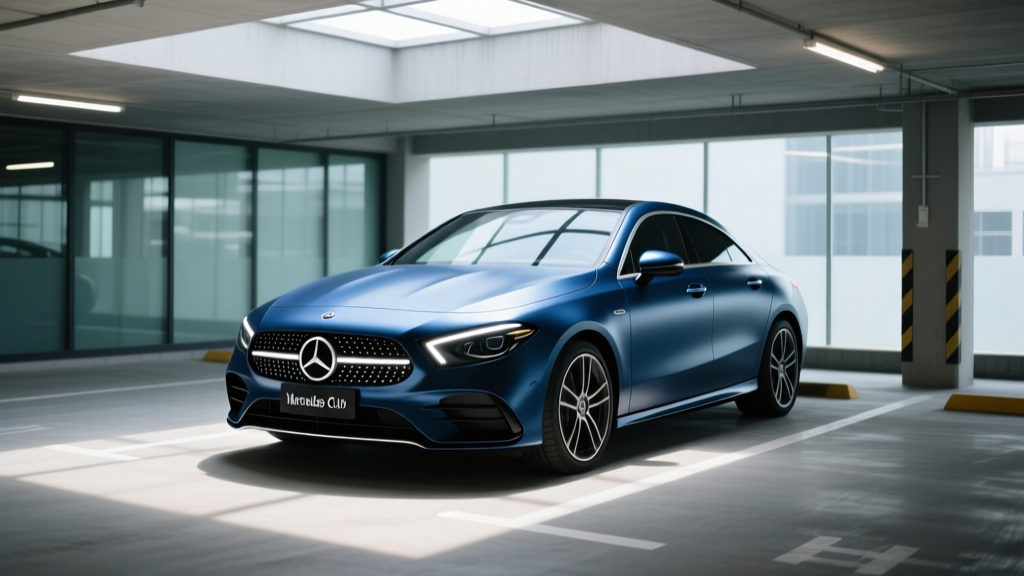
The 2026 Mercedes-Benz CLA EV is the brand's entry-luxury electric sedan built on the new MMA (Mercedes-Benz Modular Architecture) platform. Targeting an EPA range of approximately 450 miles (rear-wheel drive) with an 85 kWh usable NMC battery, it aims to out-range most compact luxury EVs. Pricing is expected to start around $48,000 MSRP before incentives. If you want a premium compact EV sedan with class-leading efficiency, 800V-class fast charging, and Mercedes interior tech — and you can charge at home — the CLA EV is a strong contender. If your budget is under $40K or you lack reliable home or workplace charging, consider a PHEV or a more affordable BEV first.
Range, Battery & Efficiency: What the Numbers Actually Mean
The CLA EV is the first production vehicle on Mercedes-Benz's MMA platform, which was engineered from the ground up for electric drivetrains. Here are the key specifications based on Mercedes-Benz's announced data and preliminary testing:
| Specification | CLA EV (RWD) | CLA EV (AWD Est.) |
|---|---|---|
| Battery Capacity (usable) | ~85 kWh (NMC) | ~85 kWh (NMC) |
| EPA Range (target) | ~450 miles | ~400 miles |
| Efficiency | ~4.2 mi/kWh (~24 kWh/100mi) | ~3.8 mi/kWh (~26 kWh/100mi) |
| Motor Output | ~268 hp (200 kW) | ~349 hp (260 kW) |
| 0-60 mph | ~6.5 sec | ~4.8 sec |
| Drivetrain | Rear-wheel drive | 4MATIC AWD |
Real-World Range Expectations
The 450-mile EPA target is impressive on paper, but real-world results depend heavily on conditions. Based on testing patterns from similar 800V-class EVs:
- Mixed driving (city/highway): Expect ~400–420 miles in moderate temperatures
- Sustained highway (75+ mph): ~340–370 miles — aerodynamic drag cuts efficiency at speed
- Cold weather (below 32°F): ~300–340 miles — battery chemistry and cabin heating reduce usable capacity by 20–30%
- Mountain/terrain driving: Regen braking on descents partially offsets climb losses, but expect ~350–380 miles
The CLA EV's 800V electrical architecture enables better thermal management than older 400V platforms, which should help mitigate cold-weather losses compared to predecessors. Mercedes has confirmed a heat pump is standard, which recovers waste heat from the drivetrain to warm the cabin — a meaningful efficiency gain in winter.
Charging Speed & Infrastructure: 800V Architecture Explained
The CLA EV uses an 800-volt electrical architecture — the same class of system found in the Hyundai Ioniq 5, Porsche Taycan, and Lucid Air. This is a significant advantage over 400V systems because it allows higher charging power with lower current, reducing heat buildup and cable weight.
| Charging Level | Power (kW) | Speed | Use Case |
|---|---|---|---|
| Level 1 (120V household) | ~1.4 kW | ~5 miles/hour | Emergency/top-up only |
| Level 2 (240V home/public) | ~11 kW (est.) | ~35–40 miles/hour | Daily home charging; full charge in ~8–9 hours |
| DC Fast Charging | Peak ~250 kW | 10–80% in ~15–18 minutes | Road trips; adds ~200 miles in 15 min |
Charging curve reality check: The ~250 kW peak rate applies only in a narrow state-of-charge window (roughly 10–30% SoC at optimal battery temperature). Above 50%, the rate tapers to ~150 kW, and above 80% it drops to under 50 kW to protect the battery. This is normal physics for NMC lithium-ion cells — the "10–80% in ~15 minutes" claim is the practical metric to plan around, not the peak number.
The CLA EV will ship with a NACS (North American Charging Standard) connector for the US market, giving it native access to Tesla's Supercharger network (over 25,000 stalls) without an adapter. It will also support CCS1 stations through the same port or adapter depending on configuration.
Pricing, Tax Credits & Total Cost of Ownership
Here's where the ownership math gets specific. The CLA EV is positioned as Mercedes-Benz's entry-luxury sedan, competing with the Tesla Model 3, BMW i4, and upcoming Audi A4 e-tron.
| Cost Factor | CLA EV (Est.) | Gas CLA 250 (Baseline) |
|---|---|---|
| Base MSRP | ~$48,000 | ~$40,000 |
| Federal Tax Credit (§30D) | Up to $7,500* | $0 |
| Effective Price After Credit | ~$40,500 | ~$40,000 |
| Fuel/Energy Cost (5 yr / 75K mi) | ~$3,800–$5,200** | ~$8,500–$10,500** |
| Maintenance (5 yr) | ~$1,200–$1,800 | ~$3,500–$4,500 |
| Insurance (5 yr avg.) | ~$9,500–$12,000 | ~$7,500–$9,500 |
| Estimated 5-Year Total Cost | ~$55,000–$59,500 | ~$59,500–$64,500 |
*Federal §30D credit eligibility depends on MSRP caps (sedans: $55,000), buyer income limits ($150K single / $300K joint), and battery component/critical mineral sourcing requirements. The CLA EV's eligibility is not confirmed for all trims — verify at IRS.gov before purchasing. Point-of-sale transfer is available at participating dealers.
**Energy costs assume $0.14/kWh home charging and $0.35/kWh public DCFC mix for EV; $3.50–$4.50/gallon gas at 28 MPG combined for gas CLA.
5-Year Cost Breakdown: EV vs Gas vs PHEV
| Category | CLA EV | Gas CLA 250 | PHEV Alternative (e.g., BMW 330e) |
|---|---|---|---|
| Purchase (after incentives) | ~$40,500 | ~$40,000 | ~$43,000 |
| Energy/Fuel (5 yr) | ~$4,500 | ~$9,500 | ~$5,800 |
| Maintenance (5 yr) | ~$1,500 | ~$4,000 | ~$3,200 |
| Insurance (5 yr) | ~$10,800 | ~$8,500 | ~$9,200 |
| Total 5-Year | ~$57,300 | ~$62,000 | ~$61,200 |
The EV pulls ahead in year 3–4 once fuel savings compound. If you charge primarily at home on off-peak electricity rates (~$0.10/kWh), the EV's energy cost drops to ~$2,800 over 5 years — widening the gap significantly.
Home Charging Setup: What You Need Before Delivery Day
Owning the CLA EV — or any EV — is fundamentally different from a gas car in one critical way: where you charge determines whether ownership is convenient or frustrating.
Home Level 2 installation requirements:
- Electrical panel capacity: You need a 200-amp service panel (standard in most homes built after 2000). Older homes with 100-amp panels may need a $1,500–$3,000 panel upgrade.
- Circuit: A dedicated 50-amp / 240V circuit (NEMA 14-50 outlet or hardwired EVSE).
- Equipment cost: Quality Level 2 chargers (ChargePoint Home Flex, Emporia Vue, Wallbox Pulsar Plus) run $400–$700.
- Electrician labor: $500–$2,000 depending on run length from panel to garage/driveway.
- Permit: $50–$200 depending on municipality.
- Total install cost: $950–$3,900 for most homes; up to $5,000+ if a panel upgrade is needed.
If you cannot install home charging (apartment, condo, street parking), the CLA EV's 450-mile range means you could charge once or twice weekly at public DCFC stations. However, public charging costs 2–3× more than home charging ($0.30–$0.48/kWh at Electrify America or Tesla Superchargers), and reliability varies by network and location. Factor this into your decision honestly.
Common Misconceptions About the CLA EV (and EVs in General)
| Myth | Fact |
|---|---|
| "The battery will need replacing in 5 years" | NMC batteries in modern EVs with active thermal management typically retain 85–90% capacity after 100,000 miles. Mercedes-Benz provides an 8-year/100,000-mile battery warranty (covering drops below ~70% capacity). Full replacement, if needed out of warranty, runs $12,000–$18,000 — but is statistically rare within the first decade. |
| "EVs are worse in cold weather" | Range does drop 20–30% in sub-freezing temps, but the CLA EV's heat pump and battery preconditioning mitigate this. Preconditioning the battery before DC fast charging is critical — it warms the cells to optimal temperature, enabling faster charging speeds. Most EVs, including the CLA, do this automatically when you navigate to a charger. |
| "I'll never find a working charger on road trips" | With NACS access, the CLA EV can use Tesla Superchargers — the most reliable DCFC network in the US with over 25,000 stalls. Plan routes using the vehicle's built-in navigation, which factors in charging stops, battery preconditioning, and charger availability. |
| "The $7,500 tax credit applies to everyone" | The §30D credit has income caps ($150K single, $300K joint AGI), MSRP caps ($55K for sedans), and battery sourcing requirements that change annually. Not all trims or configurations may qualify. Always verify current eligibility on IRS.gov and consult a tax professional. |
| "EVs cost more to insure" | Generally true — EV insurance premiums run 15–25% higher than gas equivalents due to higher repair costs and battery replacement risk. Shop quotes from EV-friendly insurers (Geico, Progressive, State Farm) before purchasing. |
Who Should Buy the Mercedes-Benz CLA EV? A Decision Framework
Choose the CLA EV If:
- You have home Level 2 charging (or reliable workplace charging) and drive under 300 miles/day
- You want a premium compact sedan with 400+ miles of range and Mercedes interior quality
- You value fast DC charging (~15–18 min 10–80%) for road trips without lengthy stops
- Your household income is under the §30D caps and the vehicle qualifies, bringing the effective price near $40K
- You want NACS-native Supercharger access without relying on adapters
Consider an Alternative If:
- You cannot charge at home or work — public-only charging is expensive and inconvenient long-term
- Your budget is firmly under $40K — look at the Chevrolet Equinox EV, Hyundai Kona Electric, or used Tesla Model 3
- You regularly tow or haul heavy cargo — the CLA EV is a compact sedan, not a utility vehicle
- You live in an extreme cold climate (< -10°F regularly) and cannot precondition — a PHEV may be more practical for winter flexibility
- You need proven long-term reliability data — the MMA platform is new for 2026; early adopters accept some risk
How the CLA EV Compares to Competitors
| Spec | Mercedes CLA EV | Tesla Model 3 LR | BMW i4 eDrive40 | Hyundai Ioniq 6 LR |
|---|---|---|---|---|
| EPA Range | ~450 mi | 363 mi | 307 mi | 361 mi |
| Battery (kWh) | ~85 | 79 | 81.5 | 77.4 |
| Peak DC Charge | ~250 kW | ~250 kW | ~205 kW | ~240 kW |
| 10–80% DCFC | ~15–18 min | ~18 min | ~28 min | ~18 min |
| Starting MSRP | ~$48,000 | ~$42,500 | ~$57,000 | ~$42,500 |
| Connector | NACS | NACS | CCS1 | CCS1/NACS* |
*Hyundai has begun transitioning to NACS for 2025+ models; verify connector at time of purchase.
The CLA EV's range advantage is significant — roughly 90 miles more than the Model 3 Long Range and 140+ miles more than the i4. That translates to fewer charging stops on road trips and more buffer in cold weather. The trade-off is a higher starting price than the Tesla and Hyundai, though the §30D credit can narrow that gap.
First-Time EV Buyer: What to Know Before You Commit
If the CLA EV is your first electric vehicle, here are the practical realities that brochures don't emphasize:
- Plan your charging before you buy. Get an electrician quote for Level 2 installation before putting down a deposit. A $2,000 install is routine; a $5,000 panel upgrade is not — know which scenario you face.
- Download charging apps now. PlugShare, ChargePoint, EVgo, and the Tesla app (for Superchargers) let you scout charger locations along your regular routes before you own the car.
- Understand the charge curve. You will rarely charge from 0–100% at a DC fast charger. The 10–80% window is the practical fast-charging zone. Above 80%, the rate drops dramatically to protect battery health. Plan road-trip stops around 10–80% charges for the fastest overall travel time.
- Budget for higher insurance. Get quotes before purchasing. The CLA EV's premium positioning and battery replacement costs push premiums above gas equivalents.
- Winter preparation matters. If you live in a cold climate, preconditioning (warming the battery and cabin while plugged in) is essential for both range preservation and fast-charging speed. Set departure times in the MBUX system to automate this.
- The federal tax credit is not guaranteed. Sourcing requirements tighten annually. Confirm the specific VIN's eligibility on fueleconomy.gov and IRS.gov before signing paperwork.
FAQ: Mercedes-Benz CLA EV Ownership
What is the real-world range of the Mercedes-Benz CLA EV?
The EPA target is approximately 450 miles for the RWD variant. In real-world mixed driving at moderate temperatures, expect 400–420 miles. Highway driving at 75+ mph reduces this to ~340–370 miles, and sub-freezing temperatures can drop range to 300–340 miles. These are estimates based on platform efficiency data; final EPA certification figures will be published closer to launch.
How long does it take to charge the CLA EV at home?
On a Level 2 home charger (~11 kW), a full charge from near-empty takes approximately 8–9 hours. Most owners charge overnight and wake up to a full battery every morning — similar to charging a phone. On a standard 120V outlet (Level 1), expect ~5 miles of range per hour, which is only practical for emergency top-ups.
Does the CLA EV qualify for the $7,500 federal tax credit?
Eligibility depends on the specific vehicle's battery sourcing, your income (capped at $150K single / $300K joint AGI), and the MSRP (sedan cap: $55,000). As a ~$48,000 sedan, the base CLA EV should fall under the MSRP cap, but battery component and critical mineral sourcing requirements may affect eligibility for certain build dates. Verify on IRS.gov and fueleconomy.gov before purchasing.
Is the CLA EV better than a Tesla Model 3?
It depends on priorities. The CLA EV targets significantly more range (~450 vs. 363 miles) and a more traditional luxury interior. The Model 3 offers a lower starting price, a more mature Supercharger-integrated ecosystem, and over-the-air update maturity. Both use NACS connectors. If range and Mercedes brand prestige matter most, the CLA EV wins. If value and proven software integration matter more, the Model 3 remains strong.
What happens if the battery degrades?
Mercedes-Benz warranties the battery for 8 years or 100,000 miles against capacity loss below approximately 70%. Modern NMC cells with active liquid thermal management typically retain 85–90% capacity at 100K miles based on data from similar platforms. If replacement is needed out of warranty, expect $12,000–$18,000 — but this is uncommon within the first decade of ownership.
Can I road-trip the CLA EV cross-country?
Yes. With NACS access to Tesla Superchargers and ~450 miles of range, you'll stop every 250–300 miles for a 15–20 minute fast charge. A coast-to-coast trip requires planning (the vehicle's MBUX navigation handles this automatically), but the infrastructure is mature enough for reliable cross-country travel in 2026.