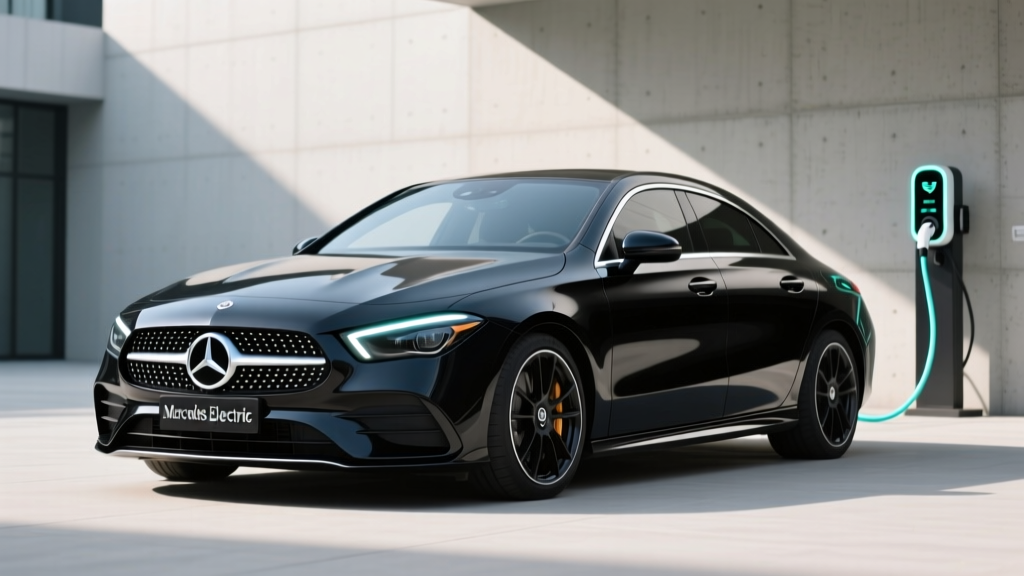
The short answer: The 2026 Mercedes-Benz CLA electric car (officially the CLA 300 EV on the MMA platform) targets an EPA-estimated range of approximately 340–360 miles, supports 800-volt DC fast charging at up to 250 kW (10–80% in roughly 20 minutes), and starts near $47,000 MSRP before incentives. It is not yet widely available at US dealerships as of early 2026—initial deliveries are expected in the second half of the year. If you need a luxury compact EV sedan today, the Tesla Model 3, BMW i4, or Polestar 2 remain in-stock alternatives.
What the Mercedes-Benz CLA Electric Car Actually Is
The CLA EV is the first production model built on Mercedes-Benz's new MMA (Mercedes Modular Architecture) platform, previewed by the Concept CLA Class shown in 2023. Unlike earlier Mercedes EQ models that adapted existing architectures, the MMA platform was designed from the ground up for electric propulsion with an 800-volt electrical system. The production sedan slots into Mercedes' compact luxury segment—traditionally the entry point into the brand—and is positioned to compete directly with the Tesla Model 3 Long Range, BMW i4 eDrive40, and the upcoming Audi A4 e-tron.
Mercedes has confirmed multiple variants for global markets. For the US, the expected launch model is the CLA 300 EV with a single rear motor, while a dual-motor all-wheel-drive variant (likely badged CLA 350 EV or AMG-lite) is anticipated for 2027. The battery uses NMC (nickel manganese cobalt) chemistry with an estimated usable capacity of approximately 85 kWh, though Mercedes has also referenced a smaller LFP (lithium iron phosphate) battery option for lower trims in some markets.
| Spec | Value |
|---|---|
| EPA Range (est.) | 340–360 miles |
| Battery (usable, est.) | ~85 kWh, NMC |
| DC Fast Charge Peak | 250 kW (800V system) |
| 10–80% DC Charge Time | ~20 minutes |
| Level 2 AC Charge Rate | 11 kW (~9 hrs 0–100%) |
| Motor | Single rear (RWD); est. 268 hp |
| 0–60 mph (est.) | ~6.2 seconds |
| Starting MSRP (est.) | ~$47,000 |
| Battery/Powertrain Warranty | 8 yr / 100,000 mi |
Real-world range reality check: The 340–360 mile EPA estimate assumes moderate temperatures and mixed driving. Expect 280–310 miles on sustained highway driving at 70–80 mph, and 240–270 miles in sub-freezing winter conditions where battery heating and cabin climate draw significant energy. Mercedes' earlier claim of 466 miles was based on the European WLTP test cycle, which inflates range by roughly 20–25% compared to the US EPA methodology.
Charging Speed and the 800V Advantage
The CLA EV's 800-volt architecture is its most significant technical differentiator in the compact luxury segment. Most competitors—the BMW i4, Polestar 2, and even the current Tesla Model 3—use 400V systems. Doubling the voltage allows the CLA to accept higher charging power with lower current, reducing heat buildup and sustaining peak charge rates longer.
At a compatible 350 kW DC fast charger (such as Electrify America's latest stalls or Tesla Superchargers with the NACS adapter), the CLA 300 EV should sustain above 200 kW through approximately 60% state of charge before tapering. This means real-world highway charging stops of 18–22 minutes to go from 10% to 80%, adding roughly 250 miles of range. By comparison, the BMW i4 eDrive40 peaks at 205 kW on its 400V system, and the Tesla Model 3 Long Range peaks around 250 kW but on the proprietary Supercharger network.
Home charging at Level 2 (240V) via an 11 kW onboard charger will replenish the battery in approximately 9 hours—adequate for overnight charging if you have a dedicated 48-amp circuit installed. Mercedes offers the Mercedes-Benz Wallbox Home at approximately $700, though any quality J1772 (or NACS, depending on final US connector choice) Level 2 unit from ChargePoint, Emporia, or Grizzl-E will work. Budget $500–$1,500 for professional installation depending on your electrical panel's capacity and the run distance from panel to garage.
| Level | Power | Miles Added per Hour | Typical Use Case |
|---|---|---|---|
| Level 1 (120V) | ~1.4 kW | ~4–5 mi/hr | Emergency / trickle |
| Level 2 (240V, 48A) | 11 kW | ~35–40 mi/hr | Home overnight |
| DC Fast Charge | Up to 250 kW | ~700+ mi/hr (peak) | Road trips, 10–80% in ~20 min |
CLA Electric vs. Gas CLA vs. Key EV Competitors
The outgoing gas-powered CLA 250 started around $43,000 and delivered approximately 29 MPG combined per fueleconomy.gov. The electric CLA trades slightly higher upfront cost for dramatically lower per-mile energy costs and zero tailpipe emissions—though total cost parity depends heavily on your local electricity rates and driving volume.
| Model | EPA Range / MPG | Est. Starting Price | DC Fast Charge | 0–60 mph |
|---|---|---|---|---|
| Mercedes CLA 300 EV (2026) | ~340–360 mi | ~$47,000 | 250 kW / ~20 min | ~6.2 sec |
| Mercedes CLA 250 (gas, outgoing) | 29 MPG combined | $43,000 | N/A | 6.3 sec |
| Tesla Model 3 Long Range AWD | 341 mi | $47,740 | 250 kW / ~18 min | 4.2 sec |
| BMW i4 eDrive40 | 301 mi | $52,200 | 205 kW / ~31 min | |
| Polestar 2 Long Range DM | 320 mi | $49,900 | 205 kW / ~27 min |
The Tesla Model 3 remains the performance-per-dollar leader with quicker acceleration and access to the mature Supercharger network. The BMW i4 offers a more traditional luxury sedan feel but falls short on range and charging speed. The CLA EV's competitive edge lies in its combination of range (if EPA estimates hold), 800V charging speed, and the Mercedes brand cachet and interior quality that buyers in this segment value.
Real Ownership Costs: 5-Year Breakdown
Purchase price is only the beginning. Here is a realistic 5-year / 75,000-mile ownership comparison assuming home Level 2 charging, a national average electricity rate of $0.16/kWh, and gasoline at $3.50/gallon.
| Cost Category | CLA 300 EV | CLA 250 (Gas) |
|---|---|---|
| Purchase Price (MSRP) | $47,000 | $43,000 |
| Federal Tax Credit (§30D) | $0–$7,500* | $0 |
| Home Charger Install | $1,200 | $0 |
| Fuel / Electricity (75k mi) | $2,400 | $9,050 |
| Maintenance (5 yr) | $1,500 | $3,800 |
| Insurance (5 yr avg.) | $12,500 | $10,500 |
| Estimated Depreciation | $18,000 | $16,000 |
| Net 5-Year Cost | $44,600–$52,100 | $66,350 |
*Federal §30D tax credit eligibility for the CLA EV is not confirmed as of early 2026. Battery component and critical mineral sourcing requirements under current IRS rules may reduce or eliminate the credit. The $55,000 MSRP cap for sedans applies—higher trims may exceed this threshold. Consult a tax professional before assuming credit eligibility.
The EV's fuel savings of roughly $6,650 over five years are substantial, but insurance premiums for luxury EVs run 15–25% higher due to specialized repair requirements and battery replacement costs. Depreciation for the CLA EV is estimated based on current luxury EV trends, which have stabilized as the market matures but remain slightly steeper than gas equivalents in the compact luxury segment.
Federal Tax Credit and Incentive Reality
The §30D Clean Vehicle Credit offers up to $7,500 for qualifying new EVs, but eligibility hinges on three factors that buyers often overlook:
- MSRP cap: Sedans must be priced at or below $55,000. A fully optioned CLA EV could exceed this—verify the specific trim's MSRP before purchase.
- Buyer income limits: Modified AGI must not exceed $150,000 (single), $225,000 (head of household), or $300,000 (joint filers).
- Battery sourcing: Increasingly strict percentages of battery components and critical minerals must be sourced from the US or FTA partners. Mercedes sources globally, and the CLA's specific compliance breakdown has not been published as of early 2026.
- Point-of-sale transfer: If eligible, the credit can be applied at the dealership as a down-payment reduction rather than waiting for a tax refund.
Several states offer additional incentives—California's CVRP, Colorado's $5,000 credit, and various utility rebates for home charger installation. Check afdc.energy.gov for your state's current programs.
Common Misconceptions About the CLA EV
| Myth | Fact |
|---|---|
| "It gets 466 miles of range." | That figure is WLTP (European). Expect 340–360 miles EPA, and 280–310 miles on real highway trips. |
| "It charges as fast as a Tesla." | Peak 250 kW is comparable, but Tesla's Supercharger network has more stalls and higher uptime. The CLA relies on Electrify America and other third-party networks in the US. |
| "The battery will need replacing in 5 years." | NMC batteries in modern thermal-managed systems degrade approximately 10–15% over 8 years. Mercedes warranties the battery for 8 years / 100,000 miles at 70% capacity retention minimum. |
| "I definitely get the $7,500 tax credit." | Not guaranteed. Sourcing rules, MSRP caps, and income limits all apply. Check the IRS VIN-lookup tool before purchasing. |
| "It's already on sale everywhere." | US deliveries are expected in H2 2026. European markets receive it first. Confirm availability with your local Mercedes dealer. |
Decision Framework: Is the CLA Electric Right for You?
Choose the Mercedes-Benz CLA EV if:
- You want a compact luxury sedan with 340+ miles of range and best-in-class 800V charging speed
- You have reliable home Level 2 charging access (garage or driveway with 240V circuit)
- You drive 10,000–15,000 miles annually and want to reduce per-mile fuel costs by ~70%
- Mercedes interior quality, MBUX infotainment, and brand prestige matter to you
- You can wait for H2 2026 US availability
Look elsewhere if:
- You need a car now—the Tesla Model 3, BMW i4, and Polestar 2 are in stock today
- You live in an apartment without charging access and your area has sparse public DC fast chargers
- You regularly drive in extreme cold (below 10°F) and cannot garage the vehicle—consider a PHEV like the Mercedes C 300e instead
- You want maximum performance per dollar—the Tesla Model 3 Performance is quicker and cheaper
- Your fully optioned budget exceeds $55,000 MSRP, which would disqualify the sedan from the §30D credit
What First-Time EV Buyers Should Know
If the CLA EV is your first electric vehicle, prepare for three ownership shifts:
1. Home charging is non-negotiable for convenience. Public charging works for road trips, but 80–90% of EV charging happens at home. Before ordering, confirm you can install a Level 2 charger. Renters and condo owners should investigate shared charging options or workplace charging before committing.
2. Plan road trips around charger locations. Use apps like PlugShare or A Better Routeplanner to map DC fast charger availability along your common routes. The CLA's 800V system makes stops short, but you still need chargers where you drive.
3. Maintenance drops dramatically. No oil changes, no transmission fluid, no spark plugs. You will still need tire rotations (EVs wear tires faster due to instant torque and heavier weight), cabin air filter replacements, brake fluid checks, and wiper fluid. Budget roughly $300/year versus $750–$1,000/year for the gas CLA.
Frequently Asked Questions
When will the Mercedes-Benz CLA electric car be available in the US?
Mercedes has targeted the second half of 2026 for initial US deliveries. European markets are receiving the vehicle first. Contact your local dealer for reservation and availability updates.
Will the CLA EV qualify for the $7,500 federal tax credit?
It is not confirmed. Eligibility depends on the specific trim's MSRP (must be ≤$55,000 for sedans), your income, and the battery's critical mineral and component sourcing. Mercedes has not published the sourcing breakdown for the US-spec CLA EV. Check the IRS clean vehicle credit page closer to launch.
How does the CLA EV compare to the Tesla Model 3?
The Model 3 Long Range offers similar EPA range (341 mi), quicker acceleration (4.2 sec 0–60), and access to the Supercharger network. The CLA EV counters with 800V charging architecture, a more traditionally luxurious interior, and the Mercedes brand. If charging infrastructure reliability is your top priority, the Model 3 still holds an advantage.
What connector does the CLA EV use?
Mercedes has not finalized the US connector for the CLA EV. The industry is shifting to NACS (Tesla's connector standard), and Mercedes has announced NACS adoption for future models. Expect either NACS native or CCS1 with a NACS adapter included.
Is the CLA EV all-wheel drive?
The launch variant (CLA 300 EV) is expected to be single-motor rear-wheel drive. A dual-motor AWD variant is anticipated for the 2027 model year.