Quick Answer: The Mercedes-Benz B-Class Electric Drive (sold 2014–2017 in the U.S.) is a used-only EV with an EPA-estimated 87 miles of range, a 28 kWh usable Tesla-sourced battery, and 177 hp. In 2026, expect to pay $9,000–$16,000 on the used market. It qualifies for the federal used-EV tax credit (§25E) of up to $4,000 if you meet income and dealer requirements. Best suited as a second car or city commuter with reliable home charging access — not a primary vehicle for highway road trips or cold-climate drivers who need range margin.
What Is the Mercedes-Benz B Electric Drive?
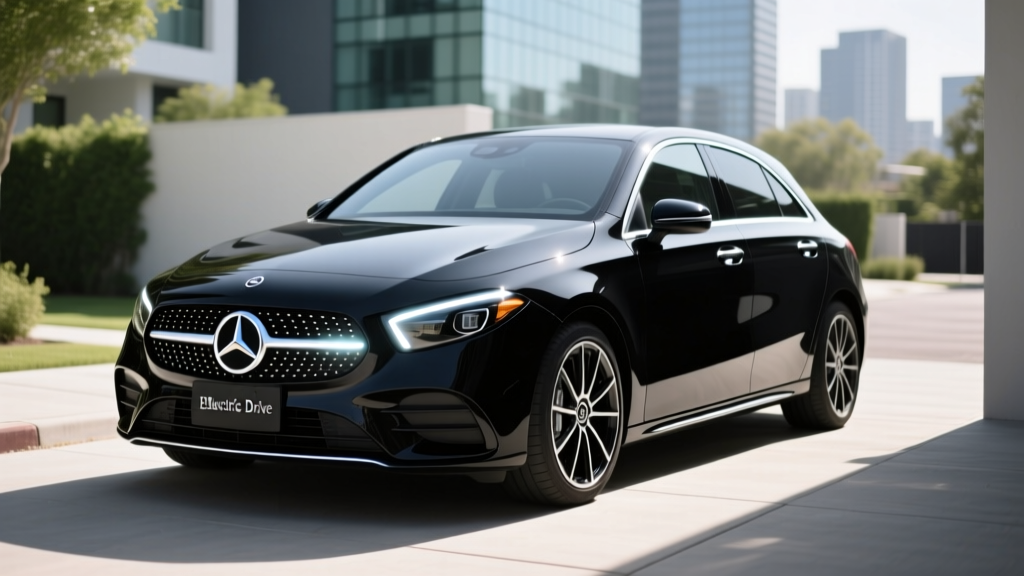
The Mercedes-Benz B-Class Electric Drive (later briefly renamed the B250e for the 2017 model year) was Mercedes' first mass-market battery-electric vehicle sold in the United States. Produced from 2014 through 2017, it was a compliance-oriented EV built on the B-Class hatchback platform with a Tesla-supplied battery and powertrain. Mercedes discontinued the model after the 2017 model year to focus on its dedicated EQ electric platform (EQA, EQB, EQE, EQS).
Because it was only sold new for four model years and has been out of production for nearly a decade, you will only find this vehicle on the used market in 2026. That changes the buying calculus significantly: lower upfront cost, different tax credit eligibility, and battery degradation that needs careful evaluation.
| Specification | Value |
|---|---|
| Model Years (U.S.) | 2014–2017 |
| EPA Range | 87 miles (2014–2015); 87 miles (2016–2017) |
| Battery (Usable) | 28 kWh (36 kWh gross, Tesla-sourced NMC) |
| Motor Output | 177 hp / 251 lb-ft torque |
| 0–60 mph | 7.9 seconds |
| EPA Efficiency | 84 MPGe combined (2016) |
| Energy Consumption | 40 kWh/100 mi |
| DC Fast Charging | Not available (Level 2 only) |
| Level 2 Charge Rate | 10 kW (onboard charger) |
| Level 2 Charge Time (0–100%) | ~3.5 hours |
| Level 1 Charge Rate (120V) | ~1.4 kW (~3 mi/hr) |
| Cargo Volume | 23.0 cu ft (rear seats up) |
| Original MSRP (2016) | $41,450 (before incentives) |
| Used Price Range (2026) | $9,000–$16,000 |
| Battery Warranty (Original) | 8 years / 100,000 miles |
Real-World Range: What to Actually Expect
The EPA sticker says 87 miles, but real-world range in a used B Electric Drive depends heavily on three factors: battery degradation, ambient temperature, and driving style.
EPA Range: 87 miles
Real-World Expectation (2026 used example): 60–78 miles in mixed driving, depending on battery State of Health (SoH). Highway-only driving at 70+ mph may drop to 55–65 miles. Cold-weather driving (below 32°F) can reduce range by 25–40%, potentially yielding as little as 45–55 miles on a full charge.
The 28 kWh usable battery uses Tesla-sourced NMC (nickel manganese cobalt) cells. After 8–12 years of service, expect some degradation. A well-maintained battery might retain 85–92% of its original capacity; a degraded one could be at 70–80%. Always request a battery State of Health reading before purchasing — a dealership with Mercedes diagnostics or a third-party EV shop can pull this data.
The B Electric Drive has no active battery thermal management system comparable to modern liquid-cooled packs. The battery relies on passive and limited active cooling, which means extreme heat exposure (prolonged parking in hot climates) and repeated high-load driving can accelerate degradation. If you live in Arizona, Texas, or the Southeast, prioritize examples with garage-kept histories.
Charging: Level 2 Only, No DC Fast Charging
This is the single biggest ownership limitation of the B Electric Drive: it has no DC fast charging capability. There is no CCS, CHAdeMO, or NACS port for rapid public charging. You are limited to Level 1 (120V household outlet) and Level 2 (240V) charging.
| Charging Level | Power (kW) | Miles Added per Hour | 0–100% Time |
|---|---|---|---|
| Level 1 (120V, 12A) | ~1.4 kW | ~3 mi/hr | ~25 hours |
| Level 2 (240V, 40A) | 10 kW (max onboard) | ~24 mi/hr | ~3.5 hours |
| DC Fast Charge | Not supported | ||
The 10 kW onboard charger is actually generous for its era — many 2014–2017 EVs shipped with 6.6 kW chargers. On a 40-amp Level 2 circuit, you can fully recharge in about 3.5 hours. However, Level 1 charging at 3 miles per hour is impractical for daily use unless your commute is under 20 miles round-trip.
Home charging is essentially mandatory for this vehicle. Relying solely on public Level 2 chargers is possible but inconvenient given the 87-mile range — you would need to charge frequently and plan around 3.5-hour sessions. If you cannot install a Level 2 charger at home or lack workplace charging, this vehicle is a poor fit.
For Level 2 home installation, budget $500–$1,800 for a quality 40-amp EVSE (like a ChargePoint Home Flex or Emporia Level 2) plus $800–$2,500 for electrician labor and permits, depending on your panel capacity and run distance. A 200-amp electrical panel is typically sufficient; older homes with 100-amp service may need a panel upgrade ($1,500–$3,000). Consult a licensed electrician for a site-specific quote.
EV vs. Gas: Cost Comparison for the B Electric Drive
How does a used B Electric Drive stack up against a comparable used gas hatchback? Let's compare it against a 2016 Mercedes-Benz B200 (gas, not sold in the U.S. — so we'll use a 2016 Audi A3 Sportback as a more realistic domestic-market comparison) over 5 years of ownership.
| Cost Category | B Electric Drive (Used) | Used Gas Hatchback (e.g., 2016 Audi A3) |
|---|---|---|
| Purchase Price | $12,000 (avg.) | $14,000 (avg.) |
| Federal Used-EV Credit (§25E) | –$4,000 (if eligible) | $0 |
| Effective Purchase | $8,000 | $14,000 |
| Fuel/Energy (15,000 mi/yr × 5 yrs) | $2,625 ($0.12/kWh, 40 kWh/100mi) | $9,375 ($3.75/gal, 30 MPG) |
| Maintenance (5 yrs) | $1,500 (tires, cabin filter, brake fluid) | $4,500 (oil, filters, brakes, spark plugs) |
| Insurance (5 yrs, avg.) | $7,500 | $7,000 |
| Battery Replacement Risk | $0–$12,000 (see below) | $0 |
| 5-Year Total (best case) | $19,625 | $34,875 |
| 5-Year Total (worst case, battery replacement) | $31,625 | $34,875 |
The energy savings are substantial. At the U.S. average residential electricity rate of ~$0.12/kWh (EIA data), the B Electric Drive costs roughly $0.048 per mile to fuel, versus $0.125 per mile for a 30 MPG gas car at $3.75/gallon. Over 75,000 miles, that's a $6,750 fuel savings.
Maintenance savings add another $3,000 over five years. EVs eliminate oil changes, spark plugs, transmission fluid, and most brake wear (regenerative braking extends pad life significantly).
The wildcard is battery replacement. A used Tesla-sourced 28 kWh pack for the B Electric Drive is rare and expensive if needed — estimated at $8,000–$12,000 including labor through independent EV shops. Mercedes dealerships may quote higher. However, many batteries are lasting well beyond 100,000 miles with moderate degradation. The original 8-year/100,000-mile battery warranty has expired on all examples by 2026, so any replacement cost falls on the owner.
The §25E Used EV Tax Credit: Up to $4,000
Because the B Electric Drive is only available used, the relevant incentive in 2026 is the IRS §25E Previously-Owned Clean Vehicle Credit, not the §30D new-vehicle credit. Here's how it works:
- Credit amount: 30% of the sale price, up to a maximum of $4,000
- Vehicle price cap: Sale price must be $25,000 or less (the B Electric Drive qualifies easily at current used prices)
- Vehicle age requirement: Model year must be at least 2 years older than the calendar year of purchase (all 2014–2017 models qualify in 2026)
- Buyer income caps: AGI must not exceed $75,000 (single), $112,500 (head of household), or $150,000 (joint filers)
- Dealer requirement: Must purchase from a licensed dealer (private-party sales do not qualify)
- Transfer at sale: Credit can be applied at point of sale to reduce the purchase price directly
- Frequency limit: One §25E credit per buyer every 3 years
On a $12,000 B Electric Drive purchased from a dealer, 30% of the sale price is $3,600 — so the credit would be $3,600, bringing your effective cost to $8,400. If you pay $14,000 or more, you'd hit the $4,000 cap.
Always confirm eligibility with a tax professional and verify current IRS rules at irs.gov, as credit parameters may change.
Common Misconceptions About the B Electric Drive
| Myth | Fact |
|---|---|
| "It's a Tesla underneath, so it has Supercharging." | The B Electric Drive uses a Tesla-supplied battery pack and drive unit, but it has no Supercharger compatibility and no DC fast charging of any kind. It charges only via J1772 Level 1/Level 2. |
| "87 miles of range is enough for anyone." | For a dedicated city commuter with home charging and a sub-40-mile round trip, yes. For anyone with variable commutes, highway driving, cold winters, or spontaneous trip needs, 87 miles (and less in real-world conditions) is a genuine limitation. |
| "The battery will need replacement soon." | NMC batteries from this era are showing 85–92% capacity retention at 80,000–100,000 miles when properly maintained. Many examples still have functional original packs. Always verify SoH before buying, but replacement is not a foregone conclusion. |
| "It qualifies for the $7,500 new EV tax credit." | The B Electric Drive has not been produced since 2017. It only qualifies for the up-to-$4,000 used EV credit (§25E), subject to income and dealer requirements. |
| "Mercedes will service the Tesla powertrain." | Mercedes-Benz dealers can perform general vehicle service, but Tesla-sourced battery and drive unit repairs require specialized knowledge. Independent EV shops are often better equipped and less expensive for high-voltage system diagnostics. |
Ownership Realities: Who Should (and Shouldn't) Buy This EV
The B Electric Drive occupies a narrow niche in 2026. It's a premium-badge, short-range, used-only EV at a budget price. Here's a practical framework for deciding if it fits your situation:
Buy the B Electric Drive if:
- You need an affordable second car for city commuting (under 40 miles round-trip)
- You have confirmed home Level 2 charging access (garage or driveway with 240V circuit)
- You live in a mild climate (limited sub-freezing driving)
- You value a premium interior and Mercedes build quality at a sub-$15,000 price point
- You can verify battery SoH above 80% before purchase
Look elsewhere if:
- This will be your only vehicle
- Your commute exceeds 50 miles round-trip or includes significant highway driving
- You live in a cold climate where winter range loss would cut usable range below 50 miles
- You cannot install or access Level 2 charging regularly
- You need DC fast charging for road trips or apartment/condo living without dedicated charging
- You want current ADAS features (the B Electric Drive has basic collision prevention but lacks modern adaptive cruise, lane-keeping, or any Level 2 driver-assist system)
For buyers who need more range but want to stay in the used EV market at a similar price point, consider these alternatives:
- 2018–2020 Chevrolet Bolt EV: 238-mile EPA range, DC fast charging capable, similar used pricing ($12,000–$18,000)
- 2016–2018 Nissan Leaf (30 kWh): 107-mile EPA range, widely available, though passive air-cooled battery has degradation concerns in hot climates
- 2017–2019 Volkswagen e-Golf: 125-mile EPA range (2017+), DC fast charging, refined driving dynamics
Pre-Purchase Checklist: What to Inspect
Before committing to a used B Electric Drive, request or verify the following:
- Battery State of Health (SoH): Ask for a diagnostic readout showing remaining capacity percentage. Below 80% SoH means significantly reduced real-world range and potential replacement cost within a few years.
- Charging history: Frequent Level 1-only charging or consistent 100% SoC storage in hot climates accelerates degradation. Ask the seller about charging habits.
- Service records: Cabin air filter, brake fluid flush, coolant checks, and 12V auxiliary battery replacement (a common maintenance item on all EVs).
- Tire condition: EVs are heavier than gas equivalents and wear tires faster. Budget $600–$1,000 for a set of quality all-season or EV-rated tires if the current set is worn.
- Recall status: Check the VIN at NHTSA.gov for any open recalls. Some B Electric Drive examples had recalls related to the onboard charger and high-voltage battery management system.
- Test drive with range observation: Drive at least 20 miles on a mix of city and highway roads and observe the energy consumption display (Wh/mi) and remaining range estimate. Compare to the EPA baseline of 40 kWh/100 mi (400 Wh/mi).
Frequently Asked Questions
Can the Mercedes-Benz B Electric Drive use Tesla Superchargers?
No. Despite using a Tesla-sourced battery and drive unit, the B Electric Drive has a standard J1772 Level 2 charge port only. It has no DC fast charging hardware and cannot connect to Superchargers, Electrify America, or any other DC network. You are limited to Level 1 and Level 2 AC charging.
What is the battery replacement cost for the B Electric Drive?
A replacement battery pack (remanufactured or used) is estimated at $8,000–$12,000 including labor at an independent EV specialist. Mercedes-Benz dealer pricing may be higher. Given the vehicle's current market value of $9,000–$16,000, a battery replacement could total the car economically. Prioritize examples with strong battery SoH to avoid this scenario.
Is the B Electric Drive safe?
The B-Class platform earned good safety ratings in its era. The EV variant carries the same structure. Check IIHS and NHTSA for specific ratings. Note that it lacks modern ADAS features like automatic emergency braking with pedestrian detection, lane-keeping assist, or blind-spot monitoring that are standard on 2024+ EVs.
How does the B Electric Drive compare to a modern budget EV?
A new 2026 Chevrolet Equus or Nissan Leaf starts around $30,000–$35,000 (before incentives) with 200+ miles of range and DC fast charging. The B Electric Drive trades range and charging capability for a dramatically lower purchase price ($8,000–$14,000 after tax credit). It's a value play for specific use cases, not a modern-EV substitute.
Does the B Electric Drive have regenerative braking?
Yes. It features multiple regen levels selectable via paddle shifters behind the steering wheel, including a strong regen mode that enables near one-pedal driving in city conditions. This extends range in stop-and-go traffic and reduces brake wear.