The Short Answer: Should You Wait for the 2027 GLC Electric?
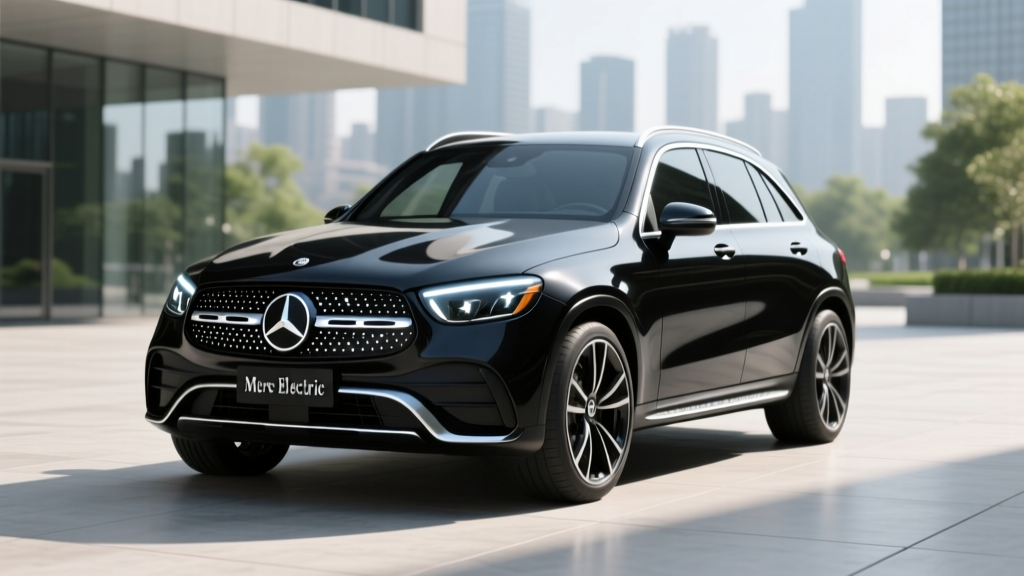
Mercedes-Benz has introduced its new 2027 GLC Electric SUV on the MMA (Mercedes-Benz Modular Architecture) platform, targeting an EPA-estimated range of roughly 300 miles, 800-volt DC fast charging up to approximately 250 kW, and a starting MSRP expected near $58,000–$62,000 before incentives. The vehicle is announced but not yet on sale — U.S. deliveries are projected for late 2026 as a 2027 model year. If you need an EV today, the BMW iX3, Genesis GV70 Electrified, or Tesla Model Y remain available alternatives. If you can wait and want a compact luxury electric SUV with Mercedes' latest MBUX tech and competitive charging speed, the GLC Electric is worth tracking — but final EPA numbers, pricing, and §30D tax-credit eligibility remain unconfirmed.
Preliminary Specs: What Mercedes Has Confirmed (and What's Estimated)
The 2027 GLC Electric is the first SUV built on Mercedes' new MMA platform, which also underpins the CLA electric sedan. The architecture supports both pure battery-electric and range-extended powertrains, though the U.S.-bound GLC Electric is expected as a full BEV. Below are the preliminary figures based on Mercedes-Benz's official announcements and industry analysis. All numbers marked with an asterisk (*) are manufacturer estimates or projections — final EPA certification may differ.
| Specification | 2027 GLC Electric (Preliminary)* |
|---|---|
| Platform | Mercedes MMA (800V architecture) |
| Battery Capacity (usable) | ~85 kWh (NMC chemistry estimated) |
| EPA Range (est.) | ~300 miles* |
| WLTP Range (Mercedes claim) | Up to ~375 miles (EU cycle, not comparable to EPA) |
| DC Fast Charge (peak) | Up to ~250 kW* |
| 10–80% DC Charge Time | ~22 minutes* |
| Level 2 AC Charging | Up to 22 kW (onboard charger) |
| Drivetrain | RWD standard; 4MATIC AWD available |
| Horsepower (est.) | ~268 hp (RWD) / ~349 hp (AWD)* |
| 0–60 mph (est.) | ~6.5 sec (RWD) / ~5.2 sec (AWD)* |
| Connector (U.S.) | NACS (native Tesla Supercharger access) |
| Battery/Powertrain Warranty | 8 years / 100,000 miles (expected, per current Mercedes EV policy) |
| Estimated Base MSRP | $58,000–$62,000* |
Real-World Range Expectations
The WLTP figure of ~375 miles sounds impressive, but the WLTP cycle is roughly 15–20% more generous than the EPA test. A realistic EPA estimate lands near 300 miles. In real-world driving, expect approximately 250–275 highway miles at 70+ mph in mild weather. In cold climates (below 30°F), plan for 200–230 miles of usable range due to battery resistance and cabin heating demands. Mercedes' standard heat pump should mitigate some cold-weather loss, but physics remains physics — no EV delivers its sticker range in sub-freezing highway driving.
Charging Speed: The 800V Advantage
The GLC Electric's 800-volt architecture is a meaningful differentiator in the compact luxury SUV segment. While many competitors still use 400V systems (limiting peak charge rates to 150 kW or less), the 800V setup enables the projected 250 kW peak rate — putting the GLC Electric in the same charging-speed tier as the Hyundai Ioniq 5 and Porsche Macan Electric.
| Charging Level | Power | Estimated Miles Added per Hour | Typical Use Case |
|---|---|---|---|
| Level 1 (120V household) | ~1.4 kW | ~4–5 miles/hr | Emergency / overnight trickle |
| Level 2 (240V home, 48A) | ~11.5 kW | ~38–42 miles/hr | Daily home charging (~7 hrs for 10–80%) |
| Level 2 (240V, max 22 kW onboard) | Up to 22 kW | ~72–78 miles/hr | Fast home/workplace charging (~3.5 hrs 10–80%) |
| DC Fast Charge (peak) | Up to ~250 kW | ~650+ miles/hr (peak) | Road trips; 10–80% in ~22 min* |
Charge curve reality check: The 250 kW figure is a peak, not a sustained rate. In practice, the GLC Electric will likely hold its highest charge rate between roughly 10–40% State of Charge (SoC), then taper progressively. Expect an average rate closer to 170–190 kW across the full 10–80% session. This is normal for all EVs and still translates to a competitive ~22-minute stop. Preconditioning the battery via the navigation system (routing to a charger) will be essential for achieving peak rates — arriving at a DC fast charger with a cold battery can cut charge speed by 30–50%.
The native NACS connector means direct access to Tesla's Supercharger network — currently the most reliable and expansive DC fast-charging network in the U.S. with over 25,000 stalls. This is a significant practical advantage over CCS-equipped rivals that require adapters for Supercharger access.
GLC Electric vs. Gas GLC: The Ownership Cost Comparison
The current gas-powered GLC 300 starts around $48,250 (2026 MSRP) and achieves an EPA-rated 26 MPG combined. Here's how a 5-year ownership comparison shapes up, assuming 12,000 miles/year, $3.50/gallon regular unleaded, and $0.14/kWh national-average residential electricity.
| Cost Factor (5 Years / 60,000 Miles) | 2027 GLC Electric (est.) | 2026 GLC 300 (Gas) |
|---|---|---|
| Purchase Price (base MSRP) | $60,000* | $48,250 |
| Federal Tax Credit (§30D) | Up to $7,500 (if eligible)** | $0 |
| Effective Purchase Price | ~$52,500* | $48,250 |
| Fuel / Energy Cost (5 yrs) | ~$3,360 (home charging) | ~$8,077 |
| Maintenance (5 yrs) | ~$1,800 (est.) | ~$4,200 (est.) |
| Insurance (5 yrs, avg) | ~$12,600 | ~$10,800 |
| Estimated 5-Year Total Cost | ~$70,260 | ~$71,327 |
Key takeaway: The GLC Electric's higher sticker price is largely offset by fuel savings, lower maintenance (no oil changes, reduced brake wear from regen), and the potential §30D credit. Break-even vs. the gas GLC likely occurs around year 3–4 if you charge primarily at home. However, insurance premiums for EVs tend to run 10–20% higher — get quotes before committing.
**§30D Tax Credit Caveats: The federal EV tax credit under IRS §30D has strict eligibility requirements including buyer income caps ($150K single / $300K joint), an $80,000 MSRP cap for SUVs, and battery critical-mineral and component sourcing rules that change annually. As of 2026, many luxury EVs have lost partial or full credit eligibility due to sourcing requirements. Mercedes-Benz has not yet confirmed whether the 2027 GLC Electric will qualify. The credit can now be transferred at point-of-sale as a discount. Always verify current eligibility at IRS.gov and consult a tax professional.
Competitive Landscape: How It Stacks Up
The compact luxury electric SUV segment is crowded. Here's how the GLC Electric's preliminary numbers compare to current rivals:
| Spec | 2027 Mercedes GLC Electric* | 2026 BMW iX3 | 2026 Genesis GV70 Electrified | 2026 Tesla Model Y LR |
|---|---|---|---|---|
| EPA Range | ~300 mi* | ~270 mi | 236 mi | 320 mi |
| Battery (usable) | ~85 kWh* | 80 kWh | 77.4 kWh | ~75 kWh |
| Peak DC Charge | ~250 kW* | 150 kW | 350 kW (peak) | 250 kW |
| 10–80% DC Time | ~22 min* | ~34 min | ~18 min | ~22 min |
| Base MSRP | ~$60,000* | ~$56,000 | ~$67,000 | ~$48,000 |
| NACS Native | Yes | No (CCS) | No (CCS) | Yes |
The GLC Electric positions itself between the value-oriented Model Y and the premium-priced GV70 Electrified. Its projected 800V charging speed and NACS connector are genuine advantages over the iX3 and GV70. The Model Y offers more range and a lower price but lacks the luxury interior and ride refinement Mercedes buyers expect.
Real-World Ownership Considerations
Specs tell only part of the story. Here's what actually determines whether the GLC Electric works in your life:
Home Charging Access
If you have a garage or dedicated parking with access to a 240V circuit, a Level 2 home charger (48A, ~$500–$800 for the unit plus $800–$2,000 for electrician installation) will cover 90%+ of your charging needs. You'll wake up every morning with a full battery, and the GLC Electric's estimated 300-mile range means most owners will charge at home 2–3 times per week. If your electrical panel is older or at capacity, budget an additional $1,500–$3,500 for a panel upgrade — get a licensed electrician's assessment before purchasing any EV.
Apartment and Street Parking
If you lack home charging access, EV ownership becomes significantly more challenging and expensive. Public DC fast charging costs roughly $0.35–$0.50/kWh (vs. $0.14 at home), nearly tripling your per-mile energy cost. Relying solely on public infrastructure also means 20–30 minute charging stops several times per week. Before ordering a GLC Electric without home charging, map your local public chargers using the Alternative Fuels Data Center and honestly assess whether the routine works for you.
Climate and Driving Patterns
The GLC Electric's heat pump should help in cold weather, but buyers in northern states should still plan for 20–30% range reduction in winter. If your daily commute is under 50 miles round-trip, this won't matter — you'll have plenty of buffer. If you regularly drive 200+ miles in freezing conditions (think: Minneapolis to Duluth in January), you'll want to plan charging stops carefully. The 800V architecture helps here: even a 15-minute DC stop can add ~120–150 miles of range.
Common Misconceptions About the GLC Electric
| Myth | Fact |
|---|---|
| "It's just a gas GLC with a battery." | The GLC Electric uses the dedicated MMA platform, engineered from the ground up for electric propulsion. It shares no powertrain components with the gas GLC, and the skateboard architecture enables a flat floor, lower center of gravity, and optimized weight distribution. |
| "300 miles of range isn't enough." | The average American drives 37 miles per day (FHWA data). A 300-mile EV covers 8 days of average driving. Range anxiety is real for road trips, but for daily use, home charging makes 300 miles more than sufficient for most households. |
| "The battery will need expensive replacement." | Modern NMC batteries with active thermal management typically retain 85–90% capacity after 100,000 miles. Mercedes' expected 8-year/100,000-mile battery warranty covers capacity below ~70%. Full battery replacements are rare and covered under warranty in most cases. Out-of-warranty replacement costs for an ~85 kWh pack would likely be $15,000–$22,000, but this is a worst-case scenario most owners will never face. |
| "It will definitely qualify for the $7,500 tax credit." | §30D eligibility depends on battery sourcing, critical-mineral origin, MSRP caps, and buyer income — all subject to annual rule changes. Do not assume credit eligibility until Mercedes confirms it and the IRS lists the vehicle. The point-of-sale transfer option means you can apply the credit as a purchase-price reduction at the dealer, but only if the vehicle qualifies at time of purchase. |
| "Electric Mercedes are unreliable." | Early EQ models had software and build-quality issues, but the MMA platform represents a generational reset. We won't have reliability data until the GLC Electric has been on the road for 1–2 years. Mercedes' current EV powertrain warranty (8 years/100,000 miles) provides substantial coverage. |
Decision Framework: Is the 2027 GLC Electric Right for You?
Choose the 2027 GLC Electric If:
- You want a compact luxury SUV with the latest Mercedes interior tech (MBUX, hyperscreen option) and can wait for late-2026 delivery.
- You have Level 2 home charging access and a daily commute under 80 miles.
- Fast DC charging speed matters to you for road trips (the 800V / ~250 kW architecture is a genuine advantage).
- You want native NACS access to Tesla Superchargers without an adapter.
- You're upgrading from a gas GLC or similar compact luxury SUV and want to electrify without changing vehicle size or driving position.
Look Elsewhere If:
- You need a vehicle now — the GLC Electric is not yet available for delivery.
- Budget is a primary concern — the Tesla Model Y Long Range offers comparable range and faster charging for ~$12,000 less.
- You lack any form of home or workplace charging and are unwilling to rely on public infrastructure.
- You need three rows of seating — the GLC Electric is a compact two-row SUV. Consider the Mercedes EQB or Kia EV9 instead.
- You regularly tow — preliminary towing capacity is expected around 3,500 lbs, which is adequate for light duty but less than many gas SUVs in this class.
Frequently Asked Questions
When can I actually buy the 2027 Mercedes GLC Electric?
Mercedes-Benz has introduced the vehicle and confirmed production timing, but U.S. deliveries are not expected until late 2026 as a 2027 model-year vehicle. Reservations and configurator access will likely open several months before delivery. Check the official Mercedes-Benz USA site for updates.
Will the GLC Electric qualify for the federal EV tax credit?
It's too early to confirm. The §30D credit requires the vehicle's battery to meet critical-mineral and component-sourcing thresholds that tighten each year. The GLC Electric's MSRP is expected to fall under the $80,000 SUV cap, and buyer income limits apply ($150K single / $300K joint). Verify eligibility at IRS.gov closer to the on-sale date, and consult a tax professional for your specific situation.
What's the difference between the MMA and the older EVA platform?
The EVA platform underpins the larger EQS and EQE. The new MMA (Mercedes Modular Architecture) is designed for compact and midsize vehicles and supports 800V charging, higher-efficiency silicon-carbide inverters, and both BEV and range-extender configurations. It's lighter, more cost-efficient, and enables faster charging than the EVA-based vehicles.
How does the GLC Electric compare to a plug-in hybrid GLC?
The current GLC 350e PHEV offers roughly 35 miles of electric-only range and 30 MPG combined once the battery is depleted. It's a good bridge option if you can't install a home charger or frequently drive 300+ miles without stopping. However, the PHEV still requires gas, oil changes, and engine maintenance. The full-electric GLC eliminates all of that and offers a smoother, quieter driving experience — at the cost of needing to plan longer road trips around charging.
What will insurance cost for the GLC Electric?
EV insurance premiums typically run 10–20% higher than equivalent gas vehicles due to higher repair costs (specialized parts, battery-safe procedures) and higher vehicle values. Expect roughly $2,400–$2,700/year for a clean-record driver, though this varies significantly by state, age, and driving history. Get quotes from at least three insurers before ordering.
Does the GLC Electric support vehicle-to-home (V2H) or vehicle-to-load (V2L)?
Mercedes has not confirmed V2H or V2L capability for the U.S.-spec GLC Electric at this time. The MMA platform technically supports bidirectional charging, but regulatory approval and hardware availability in the U.S. market are separate questions. We'll update this when Mercedes confirms U.S. features.