Quick Answer: Should You Buy a Mercedes B Electric Drive in 2026?
The Mercedes-Benz B-Class Electric Drive (sold in the U.S. for the 2014–2017 model years, later renamed the B250e) is a used-only EV in 2026. It offers roughly 87 miles of EPA range from a 28 kWh usable Tesla-sourced battery, charges at a modest 100 kW DC fast-charge peak (10–80% in about 30 minutes), and costs $8,000–$14,000 on the used market depending on mileage and battery health. It's a solid budget commuter if you have home Level 2 charging, a short daily drive, and a second car for road trips. It is not a road-trip EV, and cold-weather range drops to roughly 60–70 miles. For buyers needing 250+ miles of range or frequent DC fast charging, a newer used EV like the Chevy Bolt EUV or Hyundai Kona Electric is a better fit.
What Exactly Is the Mercedes B Electric Drive?
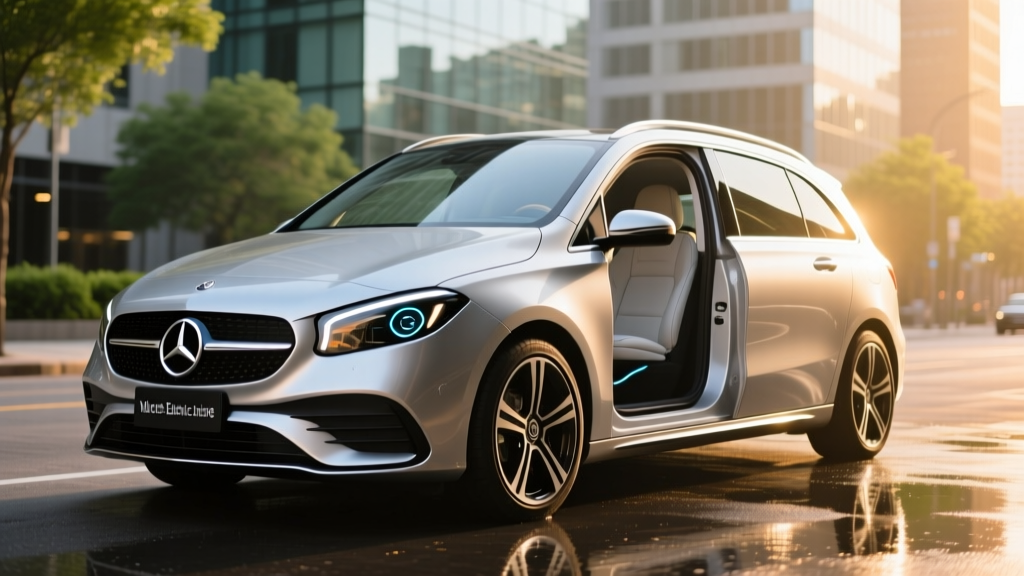
The B-Class Electric Drive was Mercedes-Benz's first mass-market battery electric vehicle sold in the United States. Introduced for the 2014 model year and discontinued after 2017, it was built on the standard B-Class hatchback platform with a powertrain supplied largely by Tesla during the companies' partnership era. The electric motor produces 177 horsepower and 251 lb-ft of torque, delivering a 0–60 mph time of approximately 7.9 seconds. The vehicle was renamed the B250e for the 2017 model year, but the hardware remained essentially identical.
Mercedes positioned the B Electric Drive as a compliance car primarily for California and other ZEV-mandate states. Total U.S. sales were limited — roughly 3,500 units over three model years — which affects parts availability and resale liquidity today.
| Specification | Value |
|---|---|
| EPA Range | 87 miles |
| Battery (Usable) | 28 kWh (NMC chemistry, Tesla-sourced) |
| EPA Efficiency | 84 MPGe combined (40 kWh/100 mi) |
| DC Fast Charge Peak | ~100 kW (CHAdeMO via adapter or CCS on later models) |
| 10–80% DC Fast Charge | ~30 minutes |
| Level 2 Charge Rate | 7.2 kW (full charge ~4.5 hours) |
| Level 1 (120V) Charge Rate | ~1.4 kW (full charge ~22 hours) |
| Motor Output | 177 hp / 251 lb-ft |
| 0–60 mph | 7.9 seconds |
| Connector | J1772 (L1/L2); CCS1 (DC, 2016–2017 models) |
| Battery Warranty (Original) | 8 years / 100,000 miles |
| Used Market Price (2026) | $8,000–$14,000 |
Real-World Range: What the EPA Sticker Doesn't Tell You
EPA Sticker: 87 miles
Real-World Expectation: 70–80 miles in mixed city/highway driving at moderate temperatures (60–80°F). Highway-only driving at 70+ mph drops this to roughly 60–70 miles. In cold weather (below 32°F), expect 55–65 miles due to the B Electric Drive's lack of a heat pump — it uses resistive cabin heating, which draws directly from the traction battery.
The B Electric Drive's 28 kWh usable battery is small by 2026 standards. For context, the current base Nissan Leaf offers 40 kWh usable, and the Chevy Bolt EV offered 65 kWh before its discontinuation. The practical implication: this is strictly a city and suburban commuter. If your round-trip commute exceeds 50 miles, you'll need mid-day charging access or a second vehicle.
According to fueleconomy.gov, the 2016 B250e achieves 84 MPGe combined. Real-world owners on forums and EV tracking sites report efficiency between 2.8 and 3.5 miles per kWh depending on driving style and climate, which aligns with the EPA's 40 kWh/100 mi figure under ideal conditions but degrades under highway or cold-weather loads.
Charging Reality: Speeds, Connectors, and Home Setup
The B Electric Drive's charging capabilities reflect its 2014–2017 engineering. Here's what to expect at each level:
| Charging Level | Power (kW) | Miles Added Per Hour | Full Charge Time |
|---|---|---|---|
| Level 1 (120V household) | 1.4 kW | ~4 miles | ~22 hours |
| Level 2 (240V, 32A) | 7.2 kW | ~22 miles | ~4.5 hours |
| DC Fast Charge (CCS1) | ~100 kW peak | N/A | 10–80% in ~30 min |
Connector note: The 2014–2015 B Electric Drive models used a CHAdeMO connector for DC fast charging (with a CCS adapter cable included by Mercedes in some markets). The 2016–2017 B250e switched to CCS1, which is far more compatible with 2026 public charging infrastructure. If you're shopping used, prioritize a 2016–2017 model to avoid CHAdeMO compatibility headaches — Electrify America and most modern networks have phased out CHAdeMO connectors.
Home charging is essential for this vehicle. Level 1 charging at 1.4 kW adds only 4 miles per hour — not viable as a daily strategy if you drive more than 30 miles. A Level 2 home charger installation typically costs $800–$2,000 (equipment + electrician + permit), assuming your electrical panel has capacity for a 40-amp circuit. If you need a panel upgrade from 100A to 200A service, add $1,500–$3,000. Always get a quote from a licensed electrician before purchasing.
The 100 kW DC fast-charge peak sounds respectable, but the B Electric Drive's charge curve tapers significantly above 60% state of charge. Expect the 60–80% portion to add roughly 10–12 minutes to your session. In practice, a 10–80% session takes about 30 minutes, adding roughly 55–60 miles of range.
Cost of Ownership: B Electric Drive vs. Gas Hatchback vs. Modern Used EV
Let's compare the real five-year costs of owning a used B250e against a comparable used gas hatchback (2017 Honda Civic Hatchback, ~32 MPG combined) and a more modern used EV (2021 Chevy Bolt EV, 259-mile range).
| Cost Category | B250e (Used, 2017) | Honda Civic Hatch (Used, 2017) | Chevy Bolt EV (Used, 2021) |
|---|---|---|---|
| Purchase Price | $11,000 | $14,000 | $16,500 |
| Fuel / Electricity (60k mi) | $2,700 (home L2 @ $0.14/kWh) | $6,750 (gas @ $3.60/gal) | $2,520 (home L2 @ $0.14/kWh) |
| Maintenance (5 yr) | $1,200 | $3,500 | $1,000 |
| Insurance (5 yr avg) | $7,500 | $6,000 | $7,000 |
| Battery Replacement Reserve | $0–$8,000* | N/A | $0** |
| Total (Best Case) | $22,400 | $30,250 | $27,020 |
| Total (Worst Case) | $30,400 | $30,250 | $27,020 |
*The original 8-year/100,000-mile battery warranty has expired on all 2014–2015 models and is expiring or expired on 2016–2017 models by 2026. Out-of-warranty battery replacement for the B250e is estimated at $6,000–$8,000 based on NMC pack pricing and limited parts availability. This is the single biggest financial risk of ownership.
**The 2021 Bolt EV's battery warranty (8 years/100,000 miles) remains active through 2029.
The B250e's electricity cost advantage over gas is real — roughly $4,050 in fuel savings over 5 years versus the Civic — but that advantage can be wiped out entirely by a single battery failure. The Bolt EV offers the same electricity savings with far less battery risk due to its still-active warranty and much larger battery (65 kWh vs. 28 kWh).
Common Misconceptions About the B Electric Drive
| Myth | Fact |
|---|---|
| "It qualifies for the $7,500 federal tax credit." | The IRS §30D credit applies only to new EV purchases. The B Electric Drive is discontinued and only available used. The used EV credit (up to $4,000 or 30% of sale price, whichever is lower) may apply if you buy from a dealer, meet income caps ($75k single / $150k joint), and the sale price is under $25,000. Consult a tax professional. |
| "The Tesla-sourced battery means Tesla-level range." | While Tesla supplied the powertrain components, the B Electric Drive uses a much smaller 28 kWh pack. The 87-mile EPA range is less than half of a 2014 Tesla Model S 60 (208 miles). |
| "I can road-trip with DC fast charging." | With only 87 miles of range and a 30-minute 10–80% charge, a 300-mile trip requires 3–4 charging stops totaling over 2 hours of charging time. This is not practical for frequent highway travel. |
| "Maintenance is basically zero." | While EVs skip oil changes and spark plugs, the B250e still requires brake fluid flushes, cabin air filter replacement, tire rotation, coolant checks, and 12V auxiliary battery replacement (every 3–5 years, ~$200–$350). Mercedes parts and labor carry a premium. |
| "Any charger will work." | 2014–2015 models with CHAdeMO connectors are increasingly incompatible with modern DC fast-charging networks. Verify the connector type before purchasing. |
Battery Health: The Critical Pre-Purchase Check
The B Electric Drive's 28 kWh NMC (nickel manganese cobalt) battery pack is the most important component to evaluate before buying. NMC chemistry offers good energy density but degrades faster than LFP (lithium iron phosphate) under high-temperature exposure and frequent DC fast charging.
Here's what to expect from a 2014–2017 pack in 2026:
- Typical State of Health (SoH): 78–90% depending on climate history, charging habits, and mileage. A vehicle from Arizona or Texas that was frequently DC fast-charged may show 75–80% SoH.
- Range at 80% SoH: Approximately 70 miles EPA-adjusted, or 55–60 miles real-world in mixed driving.
- Degradation curve: NMC batteries typically lose 10–15% capacity in the first 3–5 years, then degrade more slowly. Most B250e packs have already passed through the initial steep-degradation phase.
- Replacement cost: $6,000–$8,000 out of warranty, with limited availability. Few independent EV shops stock this specific pack, and Mercedes-Benz dealer replacement may push toward $10,000+.
Before purchasing, insist on a battery health diagnostic. Ask the seller or a Mercedes dealer to pull the State of Health percentage via OBD-II scan tool (tools like Leaf Spy won't work — this requires Mercedes XENTRY or a compatible scanner). If SoH is below 80%, negotiate the price down by at least $2,000–$3,000 to account for reduced range and future replacement risk.
Who Should (and Shouldn't) Buy the Mercedes B Electric Drive
Decision Framework: Is the B250e Right for You?
Buy the Mercedes B Electric Drive if:
- Your daily round-trip commute is under 45 miles
- You have (or can install) a Level 2 home charger
- You own or have access to a second gas or long-range EV for road trips
- You want a premium-branded commuter at a budget price ($8,000–$14,000)
- You live in a mild climate (California coast, Southeast) where cold-weather range loss is minimal
- You can verify battery SoH above 82% before purchase
Skip the B Electric Drive and consider alternatives if:
- Your daily driving exceeds 60 miles round-trip
- You rely solely on public charging (87-mile range makes this stressful)
- You live in a cold-weather state (Minnesota, Michigan, New England) where winter range drops below 60 miles
- You need a single-vehicle household solution
- You cannot verify battery health before purchase
- You want modern ADAS features — the B250e lacks automatic emergency braking, lane-keeping assist, and adaptive cruise control
Better alternatives in the $12,000–$18,000 used EV market (2026):
- 2019–2021 Chevy Bolt EV: 259-mile range, 65 kWh battery, active warranty, CCS1 charging — the strongest value proposition for budget EV buyers
- 2018–2020 Nissan Leaf (62 kWh): 212-mile range, widely available, but note CHAdeMO connector limitations
- 2020–2021 Hyundai Kona Electric: 258-mile range, 64 kWh battery, CCS1 — excellent efficiency at 120 MPGe combined
- 2017–2019 VW e-Golf: 125-mile range (2017+ models), refined driving dynamics, but still limited range
Frequently Asked Questions
Is the Mercedes B Electric Drive still being made?
No. Mercedes-Benz discontinued the B-Class Electric Drive (B250e) after the 2017 model year. It is available only as a used vehicle. Mercedes' current electric lineup includes the EQE and EQS sedans and SUVs, all built on dedicated EV platforms with 200+ mile ranges.
Can I get the used EV tax credit on a B250e?
Possibly. Under the current IRS used clean vehicle credit, you may qualify for up to $4,000 (or 30% of the sale price, whichever is lower) if: the sale price is under $25,000, you buy from a licensed dealer (not a private party), your modified adjusted gross income is under $75,000 (single) or $150,000 (joint), and you haven't claimed a used EV credit in the past 3 years. The credit can be transferred to the dealer at point of sale. Verify eligibility with a tax professional, as rules are subject to change.
How much does it cost to charge the B250e at home?
A full charge from empty to 100% uses approximately 28 kWh. At the U.S. average residential electricity rate of ~$0.16/kWh (per EIA data), that's roughly $4.48 per full charge, or about $0.05 per mile. Compare this to a 32 MPG gas hatchback at $3.60/gallon, which costs about $0.11 per mile — the B250e cuts fuel costs roughly in half.
What happens if the battery fails out of warranty?
Out-of-warranty battery replacement costs an estimated $6,000–$8,000 through independent EV shops, or $8,000–$10,000+ through a Mercedes dealer. Given that a clean-title B250e is worth $8,000–$14,000, a battery failure can total the vehicle economically. This is why pre-purchase battery health verification is non-negotiable.
Does the B Electric Drive support Tesla Superchargers?
No. The B Electric Drive uses CCS1 (2016–2017) or CHAdeMO (2014–2015) connectors and cannot physically connect to Tesla's NACS connector without an adapter. As of 2026, Tesla has opened some Supercharger stalls to non-Tesla CCS vehicles via the Magic Dock adapter, but availability is limited and the B250e's 100 kW peak charge rate means you won't benefit from V3 Supercharger's 250 kW capability. Plan to use Electrify America, EVgo, or ChargePoint DC fast-charging networks.
How does the B250e compare to a plug-in hybrid like the Toyota Prius Prime?
The 2026 Toyota Prius Prime offers 44 miles of electric-only range and 52 MPG combined on gas — eliminating range anxiety entirely at a starting MSRP of ~$33,000. If you can't install a Level 2 charger or need road-trip capability, a PHEV like the Prius Prime is a more practical choice. The B250e only makes sense if you prioritize a pure-EV driving experience at a much lower purchase price and accept the range limitations.