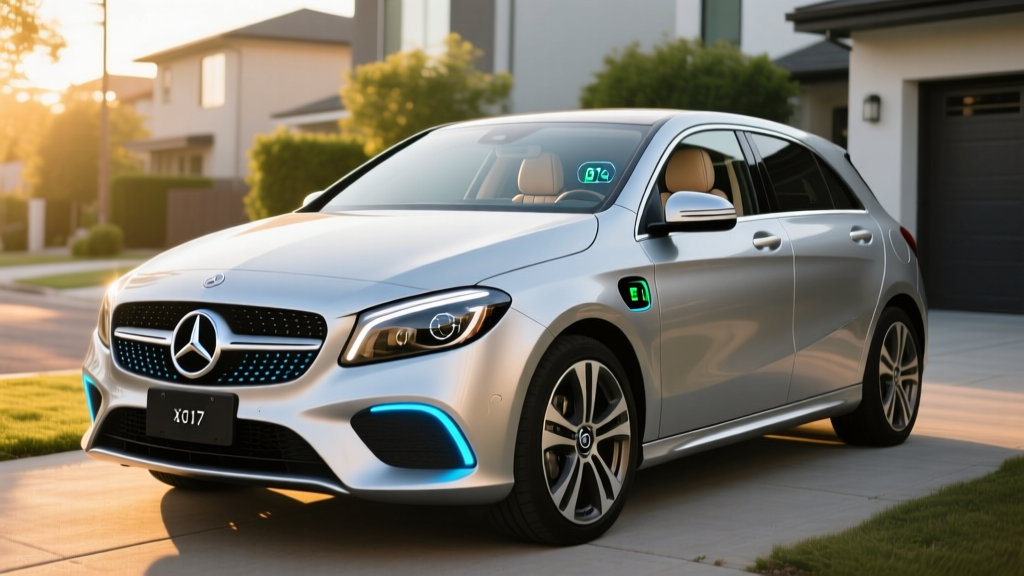
If you're searching for "Mercedes electric 2017," you're almost certainly looking at the 2017 Mercedes-Benz B-Class Electric Drive — the only battery-electric vehicle Mercedes-Benz sold in the United States that model year. Here's the practical answer up front: with an EPA-estimated 87 miles of range from a 28 kWh usable battery, the B-Class EV is a short-commute city car in 2026, not a primary vehicle for most households. It can be a bargain used-EV buy (typically $10,000–$16,000 on the used market) if you have home charging and a predictable daily route under 60 miles round-trip. But if you need highway road-trip capability or live in a cold climate, you'll outgrow it quickly.
Quick Verdict: 2017 Mercedes B-Class Electric Drive
Buy it if: You need a premium-feeling second car for city commuting, have Level 2 home charging, and find one under $14,000 with a healthy battery.
Skip it if: You need over 100 miles of daily range, want DC fast charging, live where winters drop below freezing regularly, or need federal tax credits (used EV credit of up to $4,000 under §25E may apply — see below).
What Was the 2017 Mercedes-Benz Electric Lineup?
In the US market, Mercedes-Benz offered exactly one fully electric vehicle for the 2017 model year: the B-Class Electric Drive (also badged as the B250e in some markets). This was a compliance-style EV built on the B-Class hatchback platform with a Tesla-supplied powertrain — yes, Tesla provided the electric motor and battery pack under an early partnership. Mercedes also sold plug-in hybrids globally (like the GLE 500e and S 550e), but those used different powertrains and were not sold as EVs in the US that year.
The B-Class Electric Drive was discontinued after the 2017 model year. Mercedes didn't return to the US EV market until the 2022 EQS sedan, followed by the EQE, EQB, and EQE SUV. So if you're researching a 2017 Mercedes electric vehicle, the B-Class is your only option.
| Specification | Value |
|---|---|
| EPA Range | 87 miles |
| Battery (usable) | 28 kWh (lithium-ion, NMC chemistry) |
| EPA Efficiency | 84 MPGe combined (40 kWh/100 mi) |
| Motor Output | 177 hp / 251 lb-ft torque |
| 0–60 mph | 7.9 seconds |
| Level 2 Charging (AC) | 9.6 kW max (~29 mi/hr) |
| DC Fast Charging | Not available |
| Charge Time 0–100% (L2) | ~3.5 hours |
| Original MSRP | $59,900 (before incentives) |
| Typical Used Price (2026) | $10,000–$16,000 |
| Battery Warranty (original) | 8 years / 100,000 miles |
| Drivetrain | Front-wheel drive |
Range Reality: 87 Miles EPA, But What Do You Actually Get?
The EPA-rated 87 miles was modest even in 2017. In 2026, it's far below the 250–350 mile range of new EVs like the Hyundai Ioniq 6 (361 mi EPA) or Tesla Model 3 Long Range (341 mi EPA). But for a second car or a short urban commute, 87 miles can still work — with major caveats.
Real-World Range Expectations
EPA Sticker: 87 miles
Mild weather, city driving: ~80–90 miles (regenerative braking helps in stop-and-go)
Highway at 70 mph: ~65–75 miles (small battery penalized by aero drag and no heat pump)
Cold weather (below 32°F): ~50–60 miles (no heat pump means resistive cabin heating draws heavily from the 28 kWh pack)
After 8–9 years of battery degradation: Expect 5–12% capacity loss depending on climate and charging habits, reducing real range proportionally.
The absence of DC fast charging is the B-Class EV's biggest practical limitation in 2026. You cannot meaningfully road-trip this car. A full Level 2 charge takes about 3.5 hours, and a standard 120V Level 1 outlet adds roughly 3–4 miles per hour — making a full Level 1 charge an overnight-plus affair. This car lives and dies by your home or workplace Level 2 charger.
Cost Breakdown: What Does Ownership Actually Cost?
The financial case for a used 2017 B-Class Electric Drive rests on a low purchase price and cheap home charging. Here's how the numbers work compared to a similarly priced used gas hatchback.
| Cost Category | B-Class EV (Used) | Used Gas Hatchback (~$13K) |
|---|---|---|
| Purchase Price | $13,000 | $13,000 |
| Federal Tax Credit (§25E used EV) | Up to $4,000 (if eligible)* | $0 |
| Effective Purchase | ~$9,000 | $13,000 |
| Fuel/Energy (12,000 mi/yr × 5 yr) | ~$3,600 (at $0.15/kWh) | ~$10,500 (at $3.50/gal, 28 MPG) |
| Maintenance (5 yr) | ~$1,200 | ~$3,500 |
| Insurance (5 yr avg.) | ~$7,500 | ~$6,500 |
| Estimated Depreciation | ~$4,000 | ~$5,000 |
| Total 5-Year Cost | ~$17,300 | ~$28,000 |
*The IRS §25E used EV credit provides up to $4,000 or 30% of the sale price (whichever is lower) for qualifying used EVs. The vehicle must be sold by a licensed dealer, priced at $25,000 or below, and the buyer must meet income caps ($75,000 single / $150,000 joint). The B-Class EV typically qualifies on price. Confirm eligibility with a tax professional.
The energy savings are substantial: at the US average residential rate of ~$0.15/kWh and the B-Class's consumption of about 40 kWh/100 miles, you're paying roughly 6 cents per mile to drive electric at home. A comparable gas car at 28 MPG and $3.50/gallon costs about 12.5 cents per mile. Over 60,000 miles, that's roughly $6,900 in fuel savings.
Maintenance is also lighter. There's no engine oil, no transmission fluid, no spark plugs, and regenerative braking dramatically extends brake pad life. Expect to spend on cabin air filters, wiper fluid, tire rotations, and eventually a 12V battery replacement (~$200–$350).
Charging at Home: What You'll Need
Since the B-Class EV has no DC fast charging, your home charging setup is critical. Here's what to expect:
| Level | Power | Miles Added Per Hour | Full Charge Time |
|---|---|---|---|
| Level 1 (120V household) | ~1.4 kW | ~3–4 mi/hr | ~24–30 hours |
| Level 2 (240V, 40A circuit) | 9.6 kW (max) | ~29 mi/hr | ~3.5 hours |
| DC Fast Charging | Not supported | N/A | N/A |
Level 1 charging is impractical as a daily solution unless you drive fewer than 25 miles per day and can leave the car plugged in for 8+ hours overnight. A Level 2 home charger is essentially mandatory for B-Class EV ownership.
A typical Level 2 home installation (240V, 40–50 amp circuit with a quality EVSE like a ChargePoint Home Flex or Emporia Vue) costs $800–$2,500 depending on your electrical panel's capacity and the run length from panel to garage. If your panel needs an upgrade from 100A to 200A service, add $1,500–$3,000. Always get a quote from a licensed electrician before committing to a used EV purchase.
Common Misconceptions About the 2017 B-Class EV
| Myth | Fact |
|---|---|
| "The Tesla-supplied battery means it charges at Superchargers." | False. The B-Class uses a J1772 connector for AC charging only. It has no DC fast-charge port and cannot use Tesla Superchargers, Electrify America, or any DC network. |
| "87 miles of range is useless." | Context-dependent. The average US one-way commute is ~16 miles (FHWA data). For a dedicated commuter or second car, 87 miles with nightly home charging covers most daily needs — as long as you don't need long highway stretches. |
| "The battery will need a $20,000 replacement soon." | Unlikely. NMC batteries from this era typically degrade 1–2% per year under normal use. A 2017 model in 2026 (9 years old) may have 88–92% of original capacity. The original 8-year/100,000-mile warranty has expired, but the pack should still be functional. A pre-purchase battery health check is essential. |
| "It qualifies for the $7,500 federal tax credit." | No. The §30D new-vehicle credit doesn't apply to used purchases. However, the §25E used EV credit can provide up to $4,000 if bought from a dealer and buyer income is within limits. |
| "Mercedes parts and service will be impossibly expensive." | Partially true. Mercedes-Benz service labor rates are higher than average ($150–$220/hr at dealerships). However, EVs need less routine maintenance, and independent EV-capable shops are increasingly common in metro areas. |
How Does It Compare to Modern Alternatives?
The most useful comparison isn't against 2026 EVs (which are in a completely different league) but against other used EVs in the $10,000–$18,000 range that a buyer cross-shopping a 2017 B-Class EV might consider:
| Model (Year) | EPA Range | DC Fast Charge? | Battery kWh | Typical Used Price |
|---|---|---|---|---|
| Mercedes B-Class ED (2017) | 87 mi | No | 28 kWh | $10K–$16K |
| Chevrolet Bolt EV (2017–2018) | 238 mi | Yes (55 kW CCS) | 60 kWh | $12K–$18K |
| Nissan Leaf (2018, 40 kWh) | 151 mi | Yes (50 kW CHAdeMO) | 40 kWh | $11K–$16K |
| VW e-Golf (2017) | 125 mi | Yes (50 kW CCS) | 35.8 kWh | $12K–$17K |
| BMW i3 (2017, 33 kWh) | 114 mi | Yes (50 kW CCS) | 33 kWh | $13K–$18K |
The B-Class EV has the shortest range and is the only vehicle in this group without DC fast charging. The 2017–2018 Chevrolet Bolt EV, with 238 miles of range and CCS DC fast charging, is objectively the more capable used EV for most buyers. The B-Class wins on interior quality (it's a Mercedes, after all), ride refinement, and brand cachet — but not on EV fundamentals.
Compared to keeping a gas car, the B-Class EV's per-mile energy cost is roughly half that of a 28 MPG hatchback burning $3.50/gallon gas, as noted in the cost table above. The break-even point versus a gas car is typically 2–3 years of average driving when factoring in the used-EV tax credit and fuel savings.
Decision Framework: Is the 2017 B-Class EV Right for You?
Choose the 2017 Mercedes B-Class Electric Drive if:
- Your daily round-trip driving is under 60 miles and mostly urban/suburban.
- You have access to Level 2 charging at home or work (or can install it).
- You want a premium interior and Mercedes-Benz build quality at a used-EV price.
- This will be a second vehicle, with a gas or longer-range EV available for road trips.
- You find one priced under $14,000 with a documented battery health report showing >85% State of Health.
Look elsewhere if:
- You need more than 100 miles of reliable daily range (consider a used Bolt EV or Leaf).
- You live in a cold climate where winter range drops 30–40% without a heat pump.
- You cannot install Level 2 charging at home and have no workplace charging.
- You want the option to road-trip — the lack of DC fast charging is a hard wall.
- You want federal new-EV tax credits — those apply only to new purchases; a new 2026 EV like the Chevrolet Equinox EV ($33,000 base, 319 mi range) may be more practical long-term.
What to Check Before Buying a Used 2017 B-Class EV
If you've decided the B-Class EV fits your needs, here's your pre-purchase checklist:
- Battery State of Health (SoH): Ask the seller or a Mercedes dealer to pull the battery diagnostics. Look for >85% SoH. Below 80%, negotiate a significant discount or walk away.
- Charging port and cable: Inspect the J1772 port for corrosion, loose pins, or damage. Test charging on both Level 1 and Level 2.
- Service records: Verify the car received any recall work (check NHTSA recalls by VIN).
- Tire condition: EVs are heavier than gas equivalents and can wear tires faster. Budget $600–$900 for a set of four if the current tires are near end-of-life.
- 12V battery age: The 12V auxiliary battery powers electronics and must be healthy for the car to start. Replacement runs $200–$350.
- Test drive in your actual commute: Drive the route you'll use daily. Note range consumption with HVAC on. If you arrive home with less than 20% charge in mild weather, the car won't work for your needs in winter.
Frequently Asked Questions
Can I use a Tesla Supercharger with the 2017 B-Class EV?
No. The B-Class Electric Drive has only a J1772 AC charging port. It cannot connect to Tesla Superchargers, Electrify America, or any DC fast-charging network. It is limited to Level 1 (120V) and Level 2 (240V) AC charging.
Does the 2017 B-Class EV qualify for any tax credits in 2026?
Not the $7,500 §30D new-vehicle credit — that applies only to new EV purchases. However, if you buy from a licensed dealer for $25,000 or less and your income is within IRS limits ($75,000 single / $150,000 joint), you may qualify for the §25E used clean vehicle credit of up to $4,000 or 30% of the sale price. Verify with a tax professional before purchase.
How long will the battery last?
NMC lithium-ion batteries from this era typically retain 85–92% capacity after 8–10 years under moderate use (avoiding frequent 100% charges and extreme heat exposure). The original 8-year/100,000-mile battery warranty has expired for 2017 models. Full battery replacement, if ever needed, could cost $8,000–$14,000 at a dealership, though most packs outlast the car's economic life.
Is the Tesla-supplied powertrain reliable?
The electric motor and power electronics supplied by Tesla for the B-Class have proven generally reliable in owner reports. The main concern is parts availability — since Mercedes discontinued the model, some EV-specific components may require longer lead times or dealer-only sourcing. Standard Mercedes-Benz suspension, interior, and body parts remain widely available.
What's the real cost per mile to charge at home?
At the US average electricity rate of ~$0.15/kWh and the B-Class's consumption of about 40 kWh per 100 miles, you'll spend roughly $0.06 per mile on energy. Compare that to a gas car getting 28 MPG at $3.50/gallon: about $0.125 per mile. Over 12,000 miles annually, that's roughly $780/year for electricity vs. $1,500/year for gas.
Should I buy a 2017 B-Class EV or a newer used EV instead?
If your budget stretches to $15,000–$18,000, a 2017–2018 Chevrolet Bolt EV gives you 238 miles of range and DC fast charging — dramatically more practical. The B-Class EV makes sense only if you prioritize Mercedes interior quality over range, have a very short commute, and find an exceptional deal under $12,000.