The Quick Answer on the Mercedes Electric Car B-Class
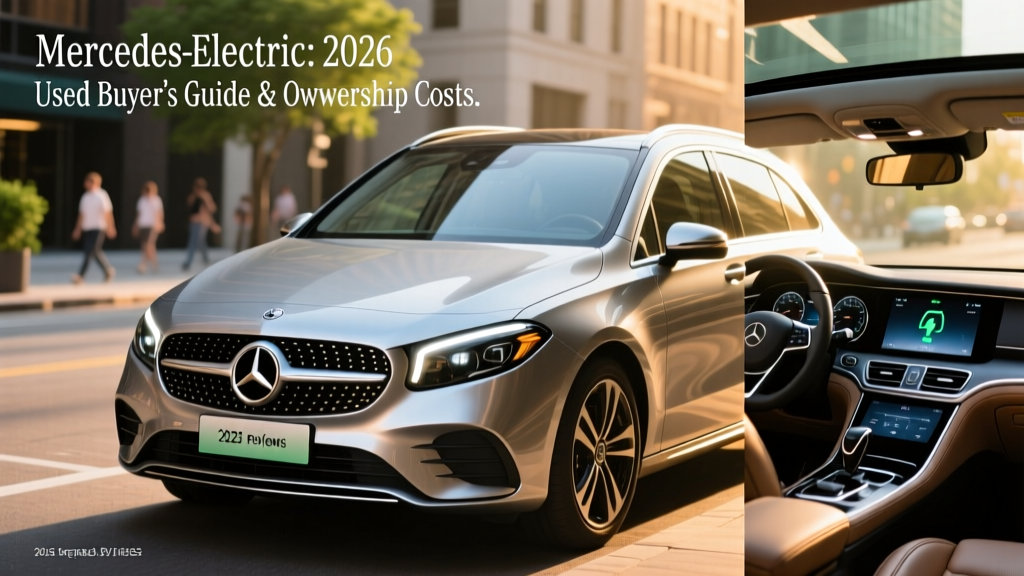
The Mercedes-Benz B-Class Electric Drive (sold as the B250e for model years 2015–2017) is a discontinued, used-market-only electric vehicle. Mercedes-Benz does not sell a new B-Class EV in 2026. If you are searching for a "Mercedes electric car B-Class," you are looking at a used compact hatchback with a 28 kWh usable Tesla-sourced battery, an EPA-rated 87 miles of range, and a 177-hp electric motor. It remains a practical city commuter for drivers with home charging and short daily routes, but its limited DC fast-charging capability, age-related battery degradation, and short range make it unsuitable as a primary long-distance vehicle. Expect to pay between $9,000 and $16,000 on the used market depending on mileage and battery state of health.
What Is the Mercedes B-Class Electric Drive (B250e)?
Introduced in the U.S. for the 2015 model year and quietly discontinued after 2017, the B-Class Electric Drive was Mercedes-Benz's first mass-market battery-electric vehicle. Rather than developing its own powertrain, Mercedes partnered with Tesla to supply the electric motor and battery pack. The result was a front-wheel-drive compact hatchback that looked and drove much like its gasoline B-Class siblings but with a fully electric drivetrain.
For 2016, Mercedes renamed the model the B250e to align with its updated naming convention, but the hardware remained essentially identical. By 2017, the model was dropped as Mercedes shifted its EV strategy toward the dedicated EQ platform that eventually produced the EQE and EQS.
If you're shopping in 2026, every B-Class Electric you find will be at least 9 years old with a battery that has seen significant calendar aging. Understanding what you're buying is critical before signing any paperwork.
B250e Specifications: Range, Battery, and Charging
| Specification | Figure |
|---|---|
| EPA Range (original) | 87 miles |
| Real-World Range (2026, estimated) | 60–75 miles (degraded battery) |
| Battery Capacity (usable) | 28 kWh (36 kWh gross) |
| Battery Chemistry | NMC (Nickel Manganese Cobalt) |
| Electric Motor Output | 177 hp / 251 lb-ft torque |
| 0–60 mph | 7.9 seconds |
| Level 2 AC Charging (max) | ~10 kW (240V, ~40A) |
| DC Fast Charging | Not available (no CCS/CHAdeMO port) |
| Level 1 Charging (120V) | ~1.4 kW (~4 miles/hour) |
| Full Level 2 Charge Time (0–100%) | ~3.5 hours |
| MPGe (combined, original EPA) | 84 MPGe |
| EPA Efficiency | 40 kWh/100 miles |
Real-World Range Reality
The original 87-mile EPA rating was modest even in 2015. In 2026, a B250e with its original battery pack will likely deliver between 60 and 75 miles on a full charge under normal conditions. Cold weather (below 40°F) can reduce that figure by an additional 20–30%, bringing effective range down to 45–55 miles. Highway driving at 70+ mph also significantly reduces range due to the vehicle's relatively high energy consumption of 40 kWh/100 miles. Always ask the seller for a battery state-of-health (SoH) reading from a Mercedes dealer diagnostic tool before purchasing.
The No-DC-Fast-Charging Limitation
The B250e's most significant practical limitation is the complete absence of DC fast charging. There is no CCS, CHAdeMO, or NACS port on this vehicle. You are limited to Level 1 (120V household outlet) or Level 2 (240V) AC charging. This means:
- Public fast chargers are unusable — you cannot stop at an Electrify America, Tesla Supercharger, or EVgo station for a quick top-up.
- Road trips are impractical — even if you plan overnight stops with Level 2 access, the limited range means frequent multi-hour charging breaks.
- Home charging is essential — without reliable Level 2 access at home or work, ownership becomes frustrating.
Used Market Pricing and 2026 Ownership Costs
The B250e exists exclusively on the used market. Pricing varies significantly based on mileage, condition, and critically, battery health.
| Cost Category | B250e (Used EV) | Comparable Used Gas Hatchback (e.g., 2016 VW Golf) |
|---|---|---|
| Purchase Price (avg.) | $11,000–$14,000 | $10,000–$13,000 |
| Annual Fuel/Energy (12,000 mi) | ~$540 (electricity at $0.15/kWh) | ~$1,440 (gas at $3.50/gal, 28 MPG) |
| Annual Maintenance | ~$300 (tires, cabin filter, fluid top-offs) | ~$700 (oil changes, filters, belts) |
| Annual Insurance (avg.) | ~$1,200–$1,500 | ~$1,000–$1,300 |
| 5-Year Total Operating Cost | ~$10,200–$11,500 | ~$13,500–$15,500 |
| Potential Battery Replacement | $8,000–$14,000 (if needed) | N/A |
Sources: EPA fueleconomy.gov for B250e efficiency data; IRS.gov for used EV credit rules.
Federal Used EV Tax Credit (§25E)
Under current IRS rules, the Used Clean Vehicle Credit (§25E) offers up to $4,000 or 30% of the sale price (whichever is lower) for qualifying used EVs. For a B250e purchased at $12,000, the maximum credit would be $3,600 (30% of $12,000). Key requirements:
- Vehicle must be purchased from a licensed dealer (private-party sales do not qualify)
- Sale price must be $25,000 or less (easily met by the B250e)
- Buyer income caps: $75,000 single / $112,500 head of household / $150,000 joint
- Vehicle must be at least two model years old (all B250e examples qualify)
- Credit is non-refundable and can only be claimed once per vehicle VIN
Consult a tax professional to verify eligibility, as IRS rules are subject to change.
B250e vs. Gas and Hybrid Alternatives
At this price point, B250e shoppers are often cross-shopping used gas hatchbacks and older hybrids. Here's how they compare for a city-heavy commuter:
| Factor | 2016 Mercedes B250e | 2016 Toyota Prius (HEV) | 2016 VW Golf (Gas) |
|---|---|---|---|
| Used Price (avg.) | $12,000 | $13,000 | $11,000 |
| Combined Efficiency | 84 MPGe | 52 MPG | 28 MPG |
| Annual Fuel Cost (12K mi) | ~$540 | ~$780 | ~$1,440 |
| Range per Fill/Charge | 60–75 mi (degraded) | 580+ mi | 380+ mi |
| Home Charging Needed? | Yes, essential | No | No |
| Road-Trip Capable? | No | Yes | Yes |
| Maintenance Cost | Low | Moderate | Moderate–High |
| Reliability Risk | Battery degradation | Hybrid battery (low) | Engine/transmission |
The B250e wins on per-mile energy cost and driving smoothness but loses decisively on range flexibility and long-term battery risk. The Prius remains the pragmatic choice for buyers who need range versatility without plugging in.
Battery Health: The Critical Used-EV Question
The B250e's 28 kWh usable NMC battery is now at least 9 years old. Lithium-ion batteries degrade through both cycle use and calendar aging, and NMC chemistry is particularly susceptible to capacity loss when frequently charged to 100% or exposed to sustained heat.
| Myth | Fact |
|---|---|
| "The battery will need replacing soon on any 9-year-old EV." | Not necessarily. Many NMC packs retain 75–85% capacity at 9–10 years with moderate use. However, a SoH below 70% should trigger concern. |
| "Mercedes will replace the battery under warranty." | The original 8-year/100,000-mile battery warranty has expired or is expiring for 2015–2016 models. 2017 models may have residual coverage through 2025 only. |
| "A replacement battery costs more than the car." | Often true. A refurbished or new B250e battery pack can cost $8,000–$14,000 installed, frequently exceeding the vehicle's market value. |
| "I can just charge it to 100% every day." | Charging to 100% daily accelerates NMC degradation. For longevity, charge to 80% for daily use and reserve 100% for longer trips. |
Pre-Purchase Battery Inspection Checklist
- Request a dealer SoH diagnostic — A Mercedes-Benz dealer can run a battery health report showing current capacity vs. original. Walk away if SoH is below 70%.
- Check for dashboard warnings — Any battery or drivetrain warning lights indicate unresolved issues.
- Review charging history — Cars charged primarily on Level 1 or stored at very low/high SoC for extended periods may have accelerated degradation.
- Test real-world range — Charge to 100% and drive a mixed route. If the car cannot complete 65+ miles, the battery is significantly degraded.
- Verify warranty status — Contact Mercedes-Benz with the VIN to check remaining powertrain/battery warranty.
Who Should (and Shouldn't) Buy a B250e in 2026
Decision Framework
Buy the B250e if:
- Your daily round-trip commute is under 45 miles
- You have reliable Level 2 home charging (240V garage or driveway access)
- You own or have access to a second gas/hybrid vehicle for longer trips
- You want a premium-badge EV at a bargain entry price
- You live in a mild climate (extreme cold exacerbates range loss)
- You qualify for the $4,000 used EV tax credit, bringing effective cost below $10,000
Skip the B250e if:
- You need a single vehicle for both commuting and road trips
- You rely on apartment or street parking without charging access
- Your commute exceeds 50 miles round-trip (especially in cold climates)
- You cannot afford a potential $8,000+ battery replacement
- You want DC fast charging for any public-charging flexibility
- You prefer a current-generation EV with modern ADAS, OTA updates, and 250+ mile range
Modern Alternatives to Consider
If the B250e's limitations give you pause, several newer used EVs offer dramatically more range and practicality at modest price premiums:
- 2019–2021 Chevrolet Bolt EV — 238–259 miles EPA, DC fast charging, $14,000–$20,000 used, eligible for $4,000 used credit
- 2018–2020 Nissan Leaf (40 kWh) — 149–151 miles EPA, CHAdeMO DC charging, $12,000–$17,000 used
- 2020–2022 Hyundai Kona Electric — 258 miles EPA, DC fast charging, $17,000–$23,000 used
- 2021+ Tesla Model 3 (Standard Range) — 263+ miles EPA, Supercharger access, $22,000–$28,000 used
All of these alternatives offer DC fast charging, substantially more range, and younger batteries with better longevity outlook.
Frequently Asked Questions
Is the Mercedes B-Class Electric still being made?
No. The B-Class Electric Drive (B250e) was discontinued after the 2017 model year. Mercedes-Benz replaced its EV strategy with the dedicated EQ lineup (EQA, EQB, EQE, EQS). As of 2026, there is no new B-Class EV available. Any listing you see is for a used vehicle.
Can I fast-charge the B250e on a road trip?
No. The B250e does not have a DC fast-charging port (no CCS, CHAdeMO, or NACS connector). It is limited to Level 1 (120V) and Level 2 (240V) AC charging only. This makes road trips impractical due to the 60–75 mile real-world range and 3.5-hour full-charge time.
What does it cost to charge a B250e at home?
At the U.S. average residential electricity rate of approximately $0.15/kWh, a full 28 kWh charge costs about $4.20. Over 12,000 miles of annual driving (at 40 kWh/100 miles), your annual electricity cost is roughly $540 — about one-third the cost of fueling a comparable gas hatchback.
How long will the B250e battery last?
The NMC battery in the B250e is already 9–11 years old in 2026. Expect 70–85% state of health depending on usage patterns and climate. At 70% SoH, effective range drops to approximately 60 miles. Battery replacement costs $8,000–$14,000, which often exceeds the car's value. Budget for potential replacement if you plan to keep the vehicle long-term.
Do I qualify for a tax credit buying a used B250e?
You may qualify for the IRS §25E Used Clean Vehicle Credit of up to $4,000 (30% of sale price). Requirements include buying from a licensed dealer, meeting income caps ($75K single / $150K joint), and the vehicle sale price being $25,000 or less. Verify current eligibility at IRS.gov and consult a tax professional.
Is the B250e a good first EV?
It can be — but only for a very specific buyer profile: someone with home Level 2 charging, a short commute, a second vehicle for trips, and a tight budget who wants a premium brand. For most first-time EV buyers, a used Chevrolet Bolt EV or Hyundai Kona Electric offers far more practicality with 250+ mile range and DC fast charging at a comparable price after tax credits.