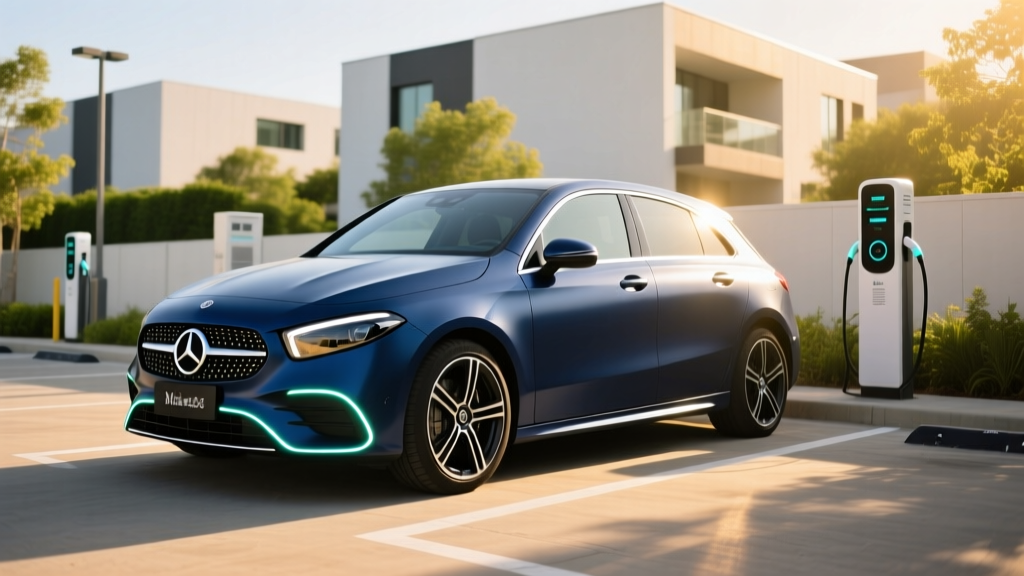
The Quick Answer: Is the Mercedes-Benz B-Class Electric Worth It in 2026?
Bottom line: The Mercedes-Benz B-Class Electric Drive (originally sold as the B250e for model years 2014–2017) is a discontinued model with no 2026 successor. If you're shopping for one today, you're looking at the used EV market. Expect an EPA range of 87 miles from its 28 kWh usable battery, a 10 kW onboard AC charger, and no DC fast charging capability. Prices on the used market range from roughly $9,000–$16,000 depending on mileage and battery health. It qualifies for the up-to-$4,000 used EV tax credit (IRS §25E) if you meet income requirements and the sale price is under $25,000. It makes sense only as a short-commute city car for buyers with reliable home Level 2 charging.
If you've landed on this page searching for a "Mercedes-Benz B-Class Electric," you likely want to know whether this compact electric hatchback can serve as a practical daily driver in 2026. The honest answer requires separating what the B-Class Electric was designed to do from what modern EV buyers expect. This guide covers every number that matters—range, charging, real-world ownership costs, and how it stacks up against both current EVs and the gas-powered vehicles it was meant to replace.
Mercedes-Benz B-Class Electric: Key Specs at a Glance
The B-Class Electric Drive was Mercedes-Benz's first mass-market battery-electric vehicle, built in partnership with Tesla (who supplied the powertrain). It was sold in the U.S. for only three model years before being discontinued. Here are the hard numbers:
| Specification | Value |
|---|---|
| Model Years Available (U.S.) | 2014–2017 |
| EPA Range | 87 miles |
| Battery Capacity (Usable) | 28 kWh (NMC chemistry) |
| Battery Capacity (Gross) | 36 kWh |
| EPA Efficiency | 84 MPGe combined |
| Motor Output | 177 hp / 228 lb-ft torque |
| 0–60 mph | 7.9 seconds |
| Onboard AC Charger | 10 kW (Level 2) |
| DC Fast Charging | Not available |
| Level 2 Charge Time (0–100%) | ~3.5 hours at 240V/40A |
| Level 1 Charge Time (120V) | ~22+ hours |
| Original MSRP (2017) | $59,900 (before incentives) |
| Used Market Price (2026 est.) | $9,000–$16,000 |
| Drivetrain | Front-wheel drive |
| Cargo Volume | 22.2 cu ft (rear seats up) |
The Tesla-sourced drivetrain gave the B-Class Electric respectable acceleration for its era, but the 28 kWh usable battery is the defining limitation. By 2026 standards—where the EPA lists compact EVs like the Chevrolet Equinox EV at 319 miles and the Hyundai Kona Electric at 261 miles—87 miles is severely limiting for anything beyond a dedicated commute vehicle.
Real-World Range: What to Actually Expect
EPA Sticker: 87 miles
Real-World Expectation: 65–80 miles in mixed driving; as low as 50–60 miles in cold weather (below 30°F) or sustained highway speeds above 70 mph.
The EPA's 87-mile figure assumes a mix of city and highway driving at moderate temperatures. In practice, several factors compress that number significantly:
- Cold weather: The B-Class Electric uses resistive cabin heating rather than a heat pump. In freezing temperatures, expect a 25–35% range reduction. A 30°F morning commute that should take 20 miles of range may consume 27–30 miles worth.
- Highway driving: EVs are least efficient at sustained high speeds. At 75 mph on the interstate, expect closer to 65–70 miles of range.
- Battery degradation: After 8–10 years, NMC batteries typically retain 75–85% of original capacity. A 2015 model with moderate degradation may deliver only 60–70 usable miles on a full charge in ideal conditions.
- Accessory load: Air conditioning, seat heaters, and infotainment draw from the traction battery. Heavy A/C use in summer can knock off 5–8 miles of range.
Before purchasing, request a battery health report from the seller or a Mercedes-Benz dealer. The car's onboard display shows estimated range, but a diagnostic scan reveals actual State of Health (SoH)—the percentage of original capacity remaining. Aim for a car with 85%+ SoH to maintain usable daily range.
Charging Reality: No DC Fast Charging Is the Dealbreaker
This is the single most important thing a first-time EV buyer needs to know about the B-Class Electric: it cannot DC fast charge. There is no CCS connector, no CHAdeMO port, and no NACS adapter option. The car is limited to:
| Charging Level | Power (kW) | Miles Added per Hour | Full Charge Time |
|---|---|---|---|
| Level 1 (120V household) | ~1.4 kW | ~4–5 mi/hr | ~22+ hours |
| Level 2 (240V, 32A) | ~7.7 kW | ~25 mi/hr | ~4 hours |
| Level 2 (240V, 40A+) | 10 kW (max) | ~32 mi/hr | ~3.5 hours |
| DC Fast Charging | Not supported | ||
What this means in practice:
- Home charging is mandatory. Without a Level 2 home charger, Level 1 charging from a standard 120V outlet adds only about 4–5 miles per hour—barely enough to replenish a daily commute overnight.
- Road trips are impractical. You cannot pull into an Electrify America, Tesla Supercharger, or EVgo station and add range in 20–30 minutes. Every stop requires a multi-hour Level 2 session.
- Public Level 2 charging is your only public option. ChargePoint and similar networks offer Level 2 stations, but you'll still wait 2–3 hours for a meaningful charge.
If you live in an apartment without charging access, or if your daily round-trip commute exceeds 50 miles with no opportunity to charge at work, the B-Class Electric is not a viable primary vehicle.
Cost Breakdown: Purchase, Charging, Maintenance, and Insurance
Buying a used B-Class Electric in 2026 is primarily a budget-conscious play. Here's the full cost picture:
Purchase Price and Tax Credit
Used B-Class Electric models typically sell for $9,000–$16,000. Under the IRS §25E used clean vehicle credit, you may qualify for 30% of the sale price, up to $4,000, if:
- The sale price is $25,000 or less
- Your modified adjusted gross income is under $75,000 (single) / $150,000 (married filing jointly)
- The vehicle is at least 2 model years old (all B-Class Electric models qualify)
- You purchase from a licensed dealer (private-party sales don't qualify)
- You haven't claimed the used EV credit in the prior 3 years
On a $12,000 purchase, the credit would be $3,600, bringing your effective cost to $8,400. This credit can be transferred to the dealer at point of sale as an immediate discount. Consult a tax professional to confirm your eligibility.
Charging vs. Fueling Costs
| Cost Category | B-Class Electric | Comparable Gas Car (30 MPG combined) |
|---|---|---|
| Energy Cost per Mile | $0.04–$0.06 (home charging at $0.14/kWh) | $0.11–$0.13 (at $3.40/gal) |
| Annual Fuel/Energy (12,000 mi) | $480–$720 | $1,320–$1,560 |
| Annual Savings vs. Gas | $600–$1,080/year | |
| Oil Changes | $0 | $150–$250/year |
| Brake Wear (regen extends life) | Minimal | $200–$400 every 40k mi |
The energy savings are real but modest given the car's limited range—you simply can't drive enough miles to rack up massive savings. At 8,000–10,000 miles per year (realistic for an 87-mile-range car), annual charging costs hover around $400–$600 with home Level 2 charging.
Insurance and Maintenance
- Insurance: Expect $1,200–$1,800/year depending on your profile. Used EVs don't carry the insurance premiums of new $60,000+ EVs, but Mercedes-Benz parts costs keep rates above average for compacts.
- Maintenance: Minimal routine maintenance—cabin air filter, brake fluid checks, tire rotation. Budget $200–$400/year. The Tesla-sourced drivetrain has proven reliable, but any high-voltage system repair outside warranty is expensive.
- Battery replacement risk: If the 28 kWh pack fails outside warranty, replacement costs are estimated at $8,000–$14,000—potentially exceeding the car's value. The original battery warranty was 8 years/100,000 miles; most 2014–2017 models are now past warranty.
B-Class Electric vs. Gas Car vs. Modern Used EV
To put the B-Class Electric in context, here's how it compares against a typical gas compact and a modern used EV with DC fast charging:
| Factor | Mercedes B-Class Electric (Used) | Gas Compact (e.g., Honda Civic) | Modern Used EV (e.g., 2021 Chevy Bolt EV) |
|---|---|---|---|
| Purchase Price | $9,000–$16,000 | $14,000–$20,000 | $14,000–$19,000 |
| EPA Range | 87 mi | ~400 mi (12.4 gal tank) | 259 mi |
| DC Fast Charging | No | N/A (gas station) | Yes (CCS, 55 kW) |
| Annual Fuel/Energy Cost | $480–$720 | $1,320–$1,560 | $480–$720 |
| Maintenance/Year | $200–$400 | $500–$800 | $200–$400 |
| Used EV Tax Credit | Up to $4,000 | None | Up to $4,000 |
| Road Trip Capable | No | Yes | Yes (with planning) |
| Cold-Weather Practicality | Poor (50–60 mi range) | Good | Fair (~190 mi) |
The B-Class Electric wins on upfront cost after the tax credit and delivers a premium interior that outclasses most budget compacts. But it loses decisively on range, road-trip flexibility, and future-proofing. A used 2021 Chevy Bolt EV or 2020 Nissan Leaf Plus (226 miles EPA) costs a few thousand more but eliminates range anxiety entirely.
Common Misconceptions: Facts vs. Myths
| Myth | Fact |
|---|---|
| "It's a Tesla underneath, so it charges at Superchargers." | The B-Class Electric uses a Tesla-sourced motor and battery, but it has a standard J1772 AC charging port. It cannot use Tesla Superchargers or any DC fast charger. |
| "87 miles is enough for anyone's commute." | The average U.S. one-way commute is ~16 miles (U.S. Census Bureau), but 87 miles leaves almost no buffer for detours, errands, climate control, or battery degradation. Real usable range is often 60–75 miles. |
| "The battery will need replacing soon." | NMC batteries degrade gradually. A well-maintained B-Class Electric battery at 80% SoH still delivers ~70 miles of range. Complete failure is uncommon; gradual capacity loss is the norm. |
| "I can charge it at any public station." | Only Level 2 (AC) stations with a J1772 connector. All DC fast chargers (CCS, CHAdeMO, NACS) are physically incompatible. |
| "It qualifies for the $7,500 federal tax credit." | The §30D new-vehicle credit no longer applies. The §25E used-vehicle credit offers up to $4,000, subject to income caps, dealer purchase requirements, and the $25,000 sale-price cap. |
Decision Framework: Should You Buy the B-Class Electric?
Buy the Mercedes-Benz B-Class Electric if:
- Your daily round-trip driving is under 45 miles and predictable
- You have garage or dedicated parking with Level 2 (240V) charging at home
- You live in a mild climate (rarely below 30°F) or have a second vehicle for winter
- You want a premium-badge compact EV at the lowest possible entry price
- You'll use it as a second car for commuting and errands, not road trips
- You can purchase from a dealer for under $25,000 to qualify for the §25E credit
Look elsewhere if:
- Your commute exceeds 50 miles round-trip
- You cannot install a Level 2 charger at home (Level 1 is impractical as primary charging)
- You need a single-vehicle household that handles road trips and long drives
- You live in a cold climate with frequent sub-freezing temperatures
- You want DC fast charging for flexibility and future-proofing
- You're concerned about out-of-warranty battery replacement costs exceeding the car's value
If the B-Class Electric doesn't fit your needs, consider these alternatives in a similar budget range: the used Chevrolet Bolt EV (259 mi range, DC fast charging, ~$14,000–$19,000), the used Nissan Leaf Plus (226 mi, CHAdeMO DC charging, ~$12,000–$17,000), or the used Hyundai Kona Electric (258 mi, CCS DC charging, ~$16,000–$21,000). All three offer substantially more range and DC fast charging capability.
First-Time EV Buyer Checklist
If the B-Class Electric (or any used EV) is your first electric car, verify these before signing:
- Home charging access: Confirm you can install a 240V Level 2 charger. Budget $500–$2,000 for a quality Level 2 unit (e.g., ChargePoint Home Flex, Emporia Vue) plus $300–$1,500 for electrician installation. A panel upgrade to 200A can add $1,500–$3,000 if needed.
- Battery health check: Have a dealer or EV-specialist shop run a diagnostic to confirm State of Health. Walk away from anything below 80% SoH.
- Charging cable included: The B-Class Electric came with a Level 1 (120V) cord. Confirm the seller includes it; a replacement costs $200–$350.
- Tax credit eligibility: Confirm the dealer participates in the IRS point-of-sale credit transfer program for §25E. Not all dealers are registered.
- Warranty status: The original 8-year/100,000-mile battery warranty has expired on all model years. You are self-insuring the high-voltage system.
- Local incentives: Check your state and utility for additional rebates on used EV purchases or home charger installations. These vary by jurisdiction—visit your state energy office or utility website for current programs.
Frequently Asked Questions
Why was the Mercedes-Benz B-Class Electric discontinued?
Mercedes-Benz treated the B-Class Electric as a compliance car to meet California's zero-emission vehicle (ZEV) mandate. As the company shifted strategy toward dedicated EV platforms (the EQ lineup launched with the EQC in 2019), the adapted B-Class platform was retired after the 2017 model year. There is no direct 2026 successor—the closest current Mercedes-Benz equivalent is the EQB compact electric SUV, starting around $54,000 new.
Can I use a Tesla Supercharger with the B-Class Electric?
No. Despite the Tesla-sourced powertrain, the B-Class Electric has a standard J1772 AC charging port and no DC fast charging hardware. Tesla Superchargers deliver DC power and require either a native NACS connector (on Tesla vehicles) or a CCS-to-NACS adapter (on newer CCS vehicles with Supercharger access agreements). The B-Class Electric is compatible with neither.
How long does the battery last before needing replacement?
NMC batteries in the B-Class Electric typically retain 75–85% capacity after 8–10 years. At 80% State of Health, you'd have roughly 70 miles of EPA range. Complete battery failure is rare; gradual capacity loss is the norm. However, if replacement is needed, expect $8,000–$14,000 for a refurbished or new pack—potentially more than the car is worth.
Is the B-Class Electric safe?
The B-Class earned good ratings from the IIHS in its era and includes standard stability control, multiple airbags, and Mercedes' PRE-SAFE collision preparation. However, it lacks modern ADAS features like automatic emergency braking, lane-keeping assist, and adaptive cruise control that are now standard on most 2026 vehicles.
What's the total cost of ownership over 5 years?
Assuming a $12,000 purchase (after the $3,600 used EV credit on a $12,000 sale), 10,000 miles/year, home charging at $0.14/kWh, and no major battery failure: expect roughly $5,000–$6,000 in energy, insurance, and maintenance over 5 years, plus the purchase price. That puts 5-year total cost around $17,000–$18,000. A comparable gas car at $16,000 with 30 MPG would cost roughly $24,000–$26,000 over the same period—making the B-Class Electric cheaper to own if the battery holds up.
Does the B-Class Electric qualify for any 2026 federal tax credits?
It does not qualify for the §30D new-vehicle credit (the car is discontinued). It may qualify for the §25E used clean vehicle credit: up to $4,000 (30% of sale price) if purchased from a dealer for $25,000 or less, subject to buyer income caps ($75,000 single / $150,000 joint). Always verify current rules with the IRS or a tax professional, as incentive structures can change.