Quick Answer: Is the Mercedes B-Class Electric Drive Worth Buying in 2026?
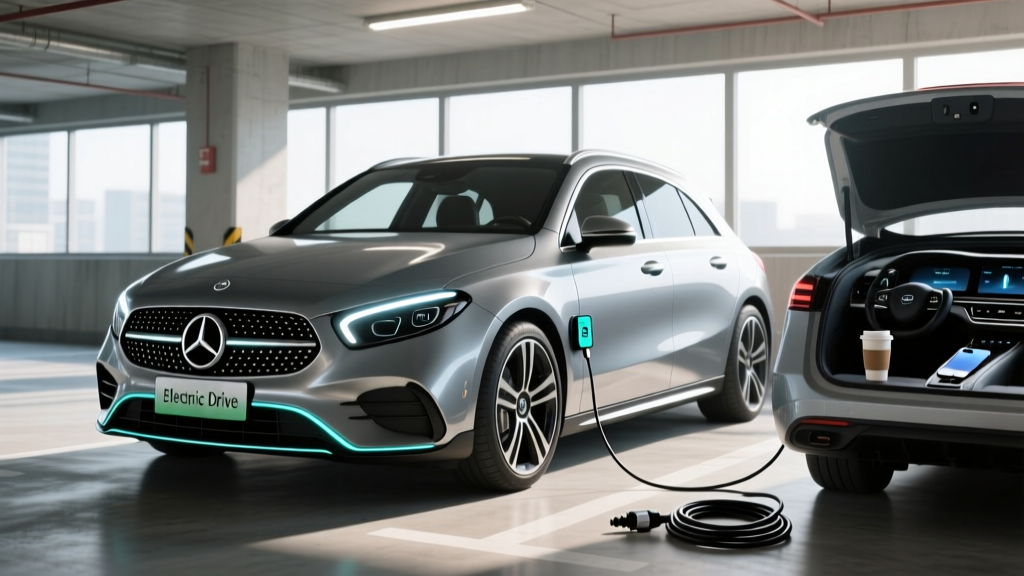
The Mercedes B-Class Electric Drive (sold 2015–2017, later renamed B250e) is a discontinued early-era EV with an EPA-rated 87 miles of range, a 28 kWh usable battery (Tesla-sourced), and DC fast charging that peaks around 50 kW. In 2026, it only makes sense as a second car or city commuter if you have reliable home Level 2 charging, a short daily drive under 50 miles round-trip, and can find one under $12,000. It does not qualify for the federal §30D new-EV tax credit since it is no longer in production, but buyers may be eligible for the used clean vehicle credit (up to $4,000) if the sale price is under $25,000 and income limits are met.
What Is the Mercedes B-Class Electric Drive?
Mercedes-Benz introduced the B-Class Electric Drive for the 2015 model year as its first mass-market battery-electric vehicle sold in the United States. The powertrain was developed in partnership with Tesla, using a Tesla-supplied AC induction motor and a 36 kWh gross (28 kWh usable) lithium-ion battery pack mounted low in the chassis. For the 2017 model year, Mercedes renamed the car the B250e and bumped the EPA range slightly to 100 miles with a software-enabled range extension, though most early 2015–2016 examples carry the 87-mile EPA sticker. Production ended after the 2017 model year, and Mercedes pivoted to the EQ lineup built on dedicated EV platforms.
This matters for buyers in 2026 because the B-Class Electric Drive is now a used-only purchase with no manufacturer updates, no new warranty support beyond what remains from the original 8-year/100,000-mile battery warranty, and technology that has been surpassed by every modern EV on the market. Understanding exactly what you're getting — and what it costs to own — is essential before signing any paperwork.
Range, Battery, and Charging: The Numbers That Matter
The B-Class Electric Drive's specifications reflect 2015-era EV engineering. Here are the exact figures every prospective buyer needs:
| Specification | 2015–2016 B-Class ED | 2017 B250e |
|---|---|---|
| EPA Range | 87 miles | 100 miles (range+ mode) |
| Battery (Gross / Usable) | 36 kWh / 28 kWh | 36 kWh / 28 kWh |
| Battery Chemistry | NMC (Tesla-sourced) | NMC (Tesla-sourced) |
| Motor Output | 177 hp / 251 lb-ft | 177 hp / 251 lb-ft |
| 0–60 mph | ~7.9 seconds | ~7.9 seconds |
| Level 1 Charging (120V / 1.4 kW) | ~4 mi/hr | ~4 mi/hr |
| Level 2 Charging (240V / 7.2 kW) | ~22 mi/hr, full in ~4 hrs | ~22 mi/hr, full in ~4 hrs |
| DC Fast Charge (CHAdeMO) | Peak ~50 kW, 10–80% in ~35 min | Peak ~50 kW, 10–80% in ~35 min |
| EPA Efficiency | 84 MPGe combined | 84 MPGe combined |
| Original MSRP (Base) | $41,450 | $42,400 |
Real-World Range Reality
The EPA sticker says 87 miles (2015–2016) or 100 miles (2017 with range+ mode). In practice, expect 65–75 miles of usable range on a mix of highway and city driving in moderate temperatures. In cold weather (below 40°F), range drops an additional 20–30%, meaning a worst-case winter range of roughly 50–60 miles before the battery is depleted. The B-Class ED lacks a heat pump — it uses resistive cabin heating, which draws heavily from the pack. If your daily round-trip commute exceeds 50 miles, this car will cause daily range stress.
Charging on DC fast stations tops out at approximately 50 kW via the CHAdeMO connector. Note that CHAdeMO infrastructure has been shrinking in the U.S. as networks standardize on NACS and CCS1. Before buying, verify that CHAdeMO-equipped fast chargers exist along your regular routes. Many newer Electrify America and Tesla Supercharger stations do not offer CHAdeMO natively, though adapters exist at additional cost.
How the B-Class Electric Drive Compares to Gas and Modern EVs
To put this early EV in context, here's how it stacks up against a comparable gas hatchback and a modern budget EV:
| Metric | 2016 B-Class ED (Used) | 2026 Honda Civic Hatchback (Gas) | 2026 Chevrolet Bolt EV (Used/New) |
|---|---|---|---|
| Price (approx.) | $9,000–$13,000 | $28,000–$32,000 | $18,000–$28,000 |
| Range / Tank | 87 mi (EPA) | ~430 mi (12.4 gal) | 259 mi (EPA) |
| Fuel/Energy Cost per Mile | ~$0.04 (home L2, $0.13/kWh) | ~$0.12 ($3.40/gal, 34 mpg) | ~$0.04 (home L2) |
| Annual Fuel Cost (12k mi) | ~$480 | ~$1,440 | ~$480 |
| Maintenance (Annual Est.) | ~$200 | ~$600 | ~$250 |
| Fast Charge / Refuel Time | ~35 min (10–80%) | ~5 min | ~30 min (10–80%) |
| Cargo Space | 22.6 cu ft | 24.5 cu ft | 16.6 cu ft |
The B-Class ED wins on per-mile energy cost — roughly one-third the fuel expense of a gas Civic — but loses badly on range and charging infrastructure convenience. A modern used Bolt EV or a 2026 Nissan Leaf offers nearly three times the range for a modest price premium, making them far more versatile daily drivers. The Mercedes badge and interior quality are genuine advantages, but they don't add electrons to the battery.
Total Cost of Ownership: The Real Financial Picture
Buying a cheap used EV can seem like a bargain until you factor in the full ownership equation. Here's a realistic 5-year cost projection for a B-Class Electric Drive purchased at $11,000 with 60,000 miles:
| Cost Category | 5-Year Total (Est.) | Notes |
|---|---|---|
| Purchase Price | $11,000 | Used, private party or dealer |
| Used EV Tax Credit (§25E) | –$4,000 | If eligible: income < $75k single/$150k joint, price < $25k, dealer sale |
| Net Purchase Cost | $7,000 | After credit applied at point of sale |
| Home Level 2 Charger Install | $800–$1,800 | 240V/40A circuit; panel upgrade may add $1,500+ |
| Electricity (5 yrs, 60k mi) | $2,400 | At $0.13/kWh, ~30 kWh/100 mi |
| Maintenance (5 yrs) | $1,200 | Tires, cabin filter, brake fluid, wipers |
| Insurance (5 yrs) | $6,500–$8,500 | Mercedes premiums run 15–25% above average |
| Depreciation (5 yrs) | $3,000–$4,000 | Resale est. $3,000–$4,000 in 2031 |
| Estimated 5-Year Net Cost | $14,900–$18,900 | Including purchase, charging, insurance, maintenance, depreciation |
Compare this to a used 2020 Toyota Corolla Hybrid purchased for $18,000: higher fuel costs (~$5,400 over 5 years) but lower insurance, no charger installation, and far less depreciation risk. The B-Class ED is cheaper to fuel but more expensive to insure and carries battery-age risk that the Corolla does not.
Battery Degradation and Replacement Risk
The B-Class ED's NMC battery was robust for its era, but these packs are now 8–11 years old. Expect 10–20% capacity loss depending on climate history and charging habits. A car originally rated for 87 miles may realistically deliver 70–78 miles when new to you, less in winter. Mercedes' original battery warranty was 8 years/100,000 miles with a capacity retention threshold of 70%. Most examples have now aged out of warranty.
Out-of-warranty battery replacement for the B-Class ED is difficult and expensive — estimates range from $8,000 to $14,000 if a pack can be sourced at all, since Mercedes no longer manufactures this specific configuration. This is the single largest financial risk of ownership and the reason a pre-purchase battery health check (State of Health reading via OBD-II scanner) is non-negotiable.
Common Misconceptions About the B-Class Electric Drive
| Myth | Fact |
|---|---|
| "It's a Tesla underneath, so it's just as good." | While the motor and battery were Tesla-sourced, the pack is 28 kWh usable (vs. 85+ kWh in a contemporary Model S). Range and charging speed are a fraction of any Tesla. |
| "87 miles is enough for anyone's commute." | The average U.S. one-way commute is ~16 miles (U.S. Census Bureau), but errands, detours, climate control, and cold weather can consume 40–50% of rated range. Daily flexibility is severely limited. |
| "I can charge it at any public station." | The B-Class ED uses CHAdeMO for DC fast charging and J1772 for Level 2. CHAdeMO ports are being phased out at many U.S. networks. Verify local availability before committing. |
| "Maintenance is basically free on an EV." | EVs eliminate oil changes and spark plugs, but tires wear 20–30% faster due to instant torque and heavier curb weight (~3,900 lbs). Cabin air filters, brake fluid flushes, 12V battery replacement, and suspension components still need attention. |
| "I'll get the $7,500 federal tax credit." | The §30D new-vehicle credit does not apply to discontinued models. The §25E used-EV credit offers up to $4,000 (30% of sale price, max $4,000) if purchased from a dealer for under $25,000 and buyer income is within limits. |
Real-World Ownership: What First-Time EV Buyers Must Know
If you're considering the B-Class Electric Drive as your first EV, these practical realities will determine whether ownership is a pleasure or a burden:
Home Charging Is Essential, Not Optional
With only 87 miles of range, relying on public charging is impractical for daily use. You need a Level 2 home charger (240V, 32–40 amps) to wake up with a full battery every morning. Installation typically costs $800–$1,800 for the electrician work and equipment, but if your home's electrical panel needs an upgrade to support a new 40-amp circuit, add $1,500–$3,000. Always get a licensed electrician's assessment before purchasing the car. Level 1 (standard 120V outlet) adds only ~4 miles per hour — roughly 48 miles overnight — which barely covers a typical commute with no margin.
Climate Is a Dealbreaker
If you live in a region with harsh winters (Minnesota, New England, mountain states), the B-Class ED's resistive heating and small battery make it a poor choice. Cold weather reduces range by 20–30% and charging speeds slow further when the battery is cold — the B-Class ED lacks active battery thermal preconditioning for DC fast charging. Owners in mild climates (Southern California, Florida, Texas) will have a far better experience.
Driving Patterns Must Match the Car
This EV works best as a dedicated commuter for a single driver with a predictable sub-40-mile round-trip and access to home charging. It does not work for families who need one car to handle school runs, grocery trips, and weekend highway drives. Spontaneous 100-mile day trips are simply off the table without meticulous planning and CHAdeMO charger availability along the route.
Decision Framework: Should You Buy the B-Class Electric Drive?
Buy it if ALL of these are true:
- Your daily round-trip driving is under 50 miles, year-round
- You have (or can install) a Level 2 home charger on a 240V circuit
- You live in a mild-winter climate where temperatures rarely drop below 35°F
- This is a second vehicle — you have a gas or hybrid car for longer trips
- You can find one under $12,000 with a verified battery State of Health above 85%
- You qualify for the §25E used-EV credit (income under $75k single / $150k joint, dealer purchase under $25,000)
Skip it and look at a modern used EV (Bolt, Leaf, Ioniq 5) if ANY of these are true:
- Your daily driving regularly exceeds 50 miles round-trip
- You need one car to do everything — commuting, road trips, family duty
- You live in a cold-winter state with extended sub-freezing temperatures
- You cannot install a Level 2 charger at home
- The battery State of Health is below 80% or cannot be verified before purchase
- You want access to modern DC fast-charging networks (NACS/CCS) without adapter hassles
Frequently Asked Questions
Can I still get parts and service for the Mercedes B-Class Electric Drive?
Mercedes-Benz dealerships can still service the B-Class ED for standard maintenance (brakes, suspension, cabin electronics). However, high-voltage battery and powertrain-specific parts are increasingly scarce. Not all Mercedes service centers have technicians certified for this specific EV platform. Before buying, call your nearest Mercedes dealer and confirm they can service a B-Class Electric Drive and provide a battery health diagnostic.
Is the Tesla-sourced powertrain reliable?
The Tesla AC induction motor in the B-Class ED is generally robust — induction motors have few moving parts and rarely fail. The battery pack is the primary concern. NMC chemistry degrades with age, heat exposure, and repeated DC fast charging. At 8–11 years old, capacity loss of 10–20% is typical. The bigger risk is that Mercedes and Tesla no longer jointly support this specific pack configuration, making replacement difficult and expensive.
How much does it cost to charge at home versus a public station?
At the U.S. average residential electricity rate of ~$0.16/kWh (EIA), fully charging the 28 kWh usable battery costs approximately $4.50, giving you roughly 70–85 real-world miles. That's about $0.05–$0.06 per mile. Public DC fast charging at networks like EVgo or Electrify America typically costs $0.30–$0.48/kWh, pushing the per-mile cost to $0.10–$0.15 — still cheaper than gas but significantly more than home charging.
Does the B-Class Electric Drive qualify for any tax credits in 2026?
It does not qualify for the §30D new clean vehicle credit since it is no longer in production. However, the §25E used clean vehicle credit may apply: it provides 30% of the sale price up to $4,000 if you buy from a licensed dealer, the sale price is $25,000 or less, the vehicle is at least two model years old, and your modified adjusted gross income is under $75,000 (single), $112,500 (head of household), or $150,000 (joint). The credit can be transferred to the dealer at point of sale as an immediate price reduction. Consult a tax professional to confirm your eligibility.
What should I check before buying a used B-Class Electric Drive?
Request a battery State of Health (SoH) reading via an OBD-II diagnostic tool — anything below 80% SoH is a red flag. Inspect for corrosion on the charge port (especially the CHAdeMO pins). Check service records for 12V auxiliary battery replacement (these fail every 3–5 years and leave the car unable to start even with a full high-voltage pack). Test all three drive modes (Economy, Sport, Range+) and verify regenerative braking engages smoothly. Finally, confirm the title is clean and the car has not been in a major collision that could compromise the under-floor battery enclosure.