The Quick Answer
The Mercedes-Benz B-Class Electric Drive (sold in the U.S. for model years 2015–2017) is a discontinued, used-market-only EV in 2026. With an EPA-rated range of just 87 miles (2015–2016) or 92 miles (2017), a 28 kWh usable battery (Tesla-sourced), and DC fast charging capped at roughly 50 kW, it functions best as a low-mileage commuter or second car. Expect to pay $10,000–$16,000 on the used market depending on mileage and battery state of health (SoH). It does not qualify for the federal §30D new-EV tax credit, and the used-EV credit (§25E) maxes out at $4,000 with strict income and dealer-sale requirements. If you need more than 90 miles of daily range or highway capability, look at a newer used EV like the Chevy Bolt (259 mi EPA) or Hyundai Kona Electric (258 mi EPA) instead.
What the B-Class Electric Drive Actually Is
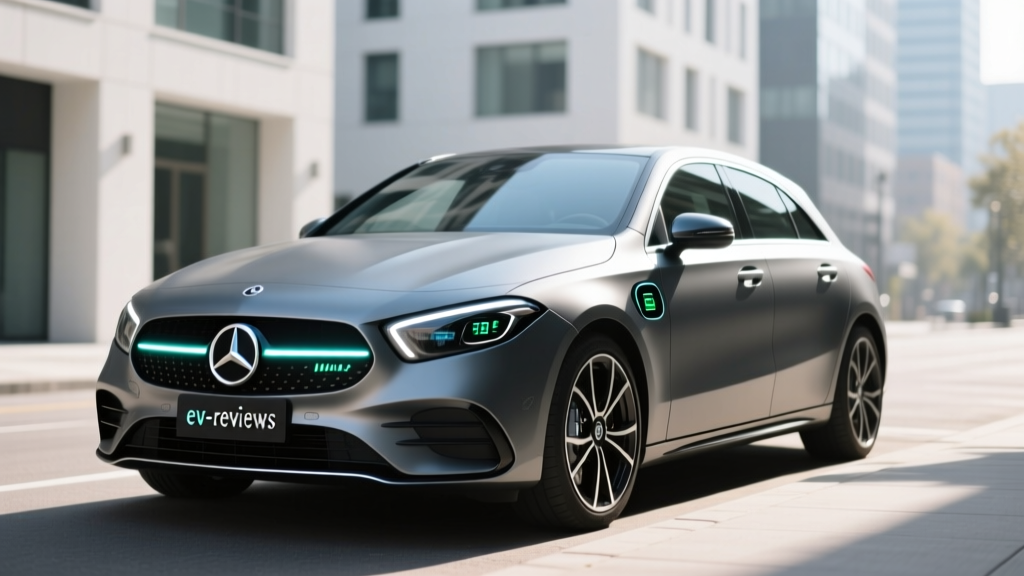
Introduced for the 2015 model year, the B-Class Electric Drive was Mercedes-Benz's first mass-market battery-electric vehicle sold in the United States. Rather than develop its own powertrain from scratch, Mercedes partnered with Tesla to supply the electric motor and battery pack — a 36 kWh gross / 28 kWh usable lithium-ion pack paired with a 177 hp (132 kW) AC induction motor. The car was built on the standard B-Class platform, which was originally designed for internal-combustion engines, meaning the battery was packaged under the floor in a space not optimized for EV architecture.
The vehicle was sold through the 2017 model year and then discontinued as Mercedes pivoted to its dedicated EQ electric sub-brand. Total U.S. sales were modest — roughly 3,000 units across all three model years — making it a niche find on the used market today.
Range, Efficiency, and the Real-World Reality
EPA Range vs. What You'll Actually Get
| Metric | 2015–2016 | 2017 |
|---|---|---|
| EPA Range | 87 miles | 92 miles |
| EPA Efficiency | 84 MPGe (40 kWh/100mi) | 85 MPGe (39 kWh/100mi) |
| Real-World Highway (70 mph) | ~65–75 miles | ~70–78 miles |
| Real-World Cold Weather (30°F) | ~55–65 miles | ~60–68 miles |
Sources: fueleconomy.gov, real-world owner reports.
The 87–92 mile EPA sticker was uncompetitive even in 2015, and it's a significant limitation in 2026. For context, the current-generation Hyundai Kona Electric delivers 258 miles EPA from a 64.8 kWh pack, and even the base Nissan Leaf offers 149 miles. Highway driving at sustained speeds and cold-weather operation both erode the B-Class Electric Drive's range substantially — expect a 20–30% reduction in either scenario, which can push effective range below 65 miles.
The car does feature a heat pump for cabin climate control (a notable efficiency advantage over resistive heating), but the small battery capacity is the fundamental bottleneck. Battery degradation on these Tesla-sourced NMC packs has generally been moderate — owners reporting 8–15% capacity loss after 8–10 years is common, meaning a 2015 model may now deliver only 74–80 miles EPA-equivalent on a full charge.
Charging Speeds: Level 2 at Home, Limited DC Fast Charging
Understanding charging requires distinguishing between kW (power — the rate of energy flow, like water pressure) and kWh (energy — total capacity, like tank size). The B-Class Electric Drive's charging capabilities reflect its 2015-era technology:
| Charging Level | Power (kW) | Connector | Time / Rate |
|---|---|---|---|
| Level 1 (120V household) | ~1.4 kW | J1772 | ~20+ hours for full charge; ~3 mi/hr |
| Level 2 (240V home/public) | Up to 10 kW | J1772 | ~3.5 hours 0–100%; ~23 mi/hr |
| DC Fast Charge | ~50 kW peak | CHAdeMO (add-on option) or CCS (later) | ~30 min 10–80%; not all units equipped |
Critical note: DC fast charging was not standard on all B-Class Electric Drive models. Early 2015 units often shipped without it, and it was an optional package. Before purchasing a used example, physically verify the DC charge port is present. Without DCFC, this car is strictly a home-and-destination charger — you cannot realistically road-trip it.
The 10 kW Level 2 onboard charger is actually a bright spot — it's faster than many competitors from the same era (the 2015 Nissan Leaf was limited to 6.6 kW). With a home Level 2 installation, you'll wake up to a full charge every morning, which is the intended use case for this vehicle.
Battery Health, Warranty, and Replacement Cost
The B-Class Electric Drive uses a Tesla-supplied NMC (nickel-manganese-cobalt) lithium-ion battery with liquid thermal management. The liquid cooling system is a significant advantage over the passively cooled Nissan Leaf packs of the same era, which suffered accelerated degradation in hot climates.
Mercedes originally warranted the battery for 8 years / 100,000 miles against defects and excessive capacity loss (typically defined as falling below 70% of original capacity). For a 2015 model, that warranty expired in 2023. For a 2017 model, it expires in 2025. This means any 2026 purchase is likely out of battery warranty unless an extended warranty was purchased and transferred.
| Item | Detail |
|---|---|
| Battery Chemistry | NMC (Tesla-sourced) |
| Gross / Usable Capacity | 36 kWh / 28 kWh |
| Thermal Management | Liquid cooled and heated |
| Original Warranty | 8 yr / 100,000 mi |
| Expected Degradation (8–10 yr) | 8–15% capacity loss |
| Replacement Cost (est.) | $12,000–$18,000 (refurbished/new) |
Before purchasing, request a battery state-of-health (SoH) report from a Mercedes-Benz dealer or use an OBD-II diagnostic tool compatible with the BMS (Battery Management System). An SoH reading below 80% should significantly reduce what you're willing to pay, as a replacement pack can cost $12,000–$18,000 — potentially exceeding the car's total value.
Cost of Ownership: B-Class Electric Drive vs. Gas Equivalent
Let's compare the used B-Class Electric Drive against a typical gas-powered compact luxury hatchback (like a used Audi A3 or Mercedes A-Class) over a 5-year ownership period, assuming 10,000 miles per year and national average energy prices.
| Cost Category | B-Class Electric Drive (Used) | Gas Compact Hatchback (Used) |
|---|---|---|
| Purchase Price | $12,000–$16,000 | $18,000–$25,000 |
| Federal Tax Credit | Up to $4,000 (§25E used-EV credit, income-capped) | $0 |
| Annual Fuel/Energy (10k mi/yr) | ~$400 (home charging at $0.14/kWh) | ~$1,500 (gas at $3.40/gal, 28 MPG) |
| 5-Year Fuel/Energy Total | ~$2,000 | ~$7,500 |
| Annual Maintenance | ~$300 (tires, cabin filter, fluid top-offs) | ~$800 (oil, filters, brakes, belts) |
| 5-Year Maintenance Total | ~$1,500 | ~$4,000 |
| Insurance (annual avg.) | ~$1,400 | ~$1,200 |
| 5-Year Insurance Total | ~$7,000 | ~$6,000 |
| 5-Year Total Cost | ~$17,500–$21,500 (net of credit) | ~$35,500–$42,500 |
Assumes home Level 2 charging access, national avg. electricity rate of $0.14/kWh per EIA data, and gas at $3.40/gal. Actual costs vary by region and driving pattern.
The savings are substantial on fuel and maintenance — roughly $8,000 over five years — but they hinge on home charging access at residential electricity rates. Public DC fast charging at $0.35–$0.50/kWh would narrow the gap considerably, and the B-Class's limited range means you'd need to charge more frequently on longer trips.
Common Misconceptions About the B-Class Electric Drive
| Myth | Fact |
|---|---|
| "It's a Tesla underneath." | Only the battery and motor were Tesla-sourced. The vehicle platform, interior, software, and chassis are entirely Mercedes-Benz. Tesla does not service these vehicles. |
| "It qualifies for the $7,500 federal tax credit." | The §30D new-EV credit is only for new vehicles. As a used purchase, you may qualify for the §25E used-EV credit (up to $4,000 or 30% of sale price), subject to income caps ($75k single / $150k joint) and a sale price under $25,000. Must be purchased through a licensed dealer. See IRS §25E guidelines. |
| "87 miles of range is enough for anyone's commute." | The average U.S. commute is ~16 miles one-way (Census Bureau), but errands, detours, climate control, and cold weather all erode range. If your round-trip exceeds 60 miles, you'll need to charge during the day. |
| "The battery will need replacing soon." | Liquid-cooled NMC packs from this era typically retain 85–92% capacity after 8–10 years. While not immune to degradation, catastrophic failure is rare. Always verify SoH before purchase. |
| "It charges on Tesla Superchargers." | It does not. The B-Class uses J1772 for AC charging and CHAdeMO or CCS for DC — none of which are natively compatible with Tesla's NACS connector without an adapter, and Supercharger access for non-Tesla vehicles remains limited. |
Who Should (and Shouldn't) Buy a B-Class Electric Drive in 2026
Decision Framework
Choose the B-Class Electric Drive if:
- Your daily round-trip driving is under 50 miles and you have reliable home Level 2 charging
- You want a premium-brand EV at a low used-market price (under $15,000)
- This will be a second car in a multi-vehicle household
- You value the Mercedes interior quality, ride comfort, and quiet cabin
- You live in a mild climate where cold-weather range loss is minimal
Look elsewhere if:
- You need more than 80 miles of reliable daily range
- You lack home charging access and would rely on public infrastructure
- You regularly drive in sub-freezing temperatures (range drops to 55–68 miles)
- You want DC fast charging as standard (verify before buying — many units lack it)
- You want current-model-year tech, warranty coverage, or over-the-air updates
- You want to road-trip the vehicle beyond a single charge radius
Better alternatives in the $12,000–$20,000 used-EV range:
- 2017–2023 Chevy Bolt EV — 238–259 mi EPA, CCS DCFC standard, widely available, ~$12,000–$18,000 used
- 2019–2023 Hyundai Kona Electric — 258 mi EPA, CCS DCFC, ~$16,000–$22,000 used
- 2018–2023 Nissan Leaf Plus — 212–226 mi EPA, CHAdeMO DCFC, ~$14,000–$20,000 used (note: passively cooled battery)
Performance and Driving Impressions
The Tesla-sourced powertrain produces 177 horsepower and 228 lb-ft of torque, delivering a 0–60 mph time of approximately 7.9 seconds. That's respectable for a compact luxury hatchback and noticeably quicker off the line than the gas-powered B250 (7.1 seconds to 60 but with less low-end punch). Electric torque delivery is immediate, making the B-Class Electric Drive feel sprightly in city driving and merging situations.
Top speed is electronically limited to 100 mph. Regenerative braking is moderate — it offers two levels of regen selected via paddle shifters, but it does not enable true one-pedal driving like a Chevy Bolt or Nissan Leaf in its strongest mode. The ride quality, sound insulation, and interior materials are genuinely Mercedes-grade — a cut above the Leaf, Bolt, and most sub-$20,000 EVs you'll find on the used market.
Cargo space is 19.7 cubic feet behind the rear seats (51.4 cu ft with seats folded), competitive with the segment. The car seats five, though the rear middle seat is tight. Standard equipment includes leather upholstery, dual-zone climate control, a power liftgate, and Mercedes' COMAND infotainment system (which feels dated by 2026 standards but is functional).
Pre-Purchase Checklist for a Used B-Class Electric Drive
- Verify DC fast-charge capability — check for the CHAdeMO or CCS port alongside the J1772 port. Many 2015 models shipped without it.
- Request a battery SoH report — either from a Mercedes dealer diagnostic or an OBD-II reader. Target SoH above 85%.
- Check for recall campaigns — verify all recalls (including any battery-related service actions) were completed via NHTSA's recall lookup.
- Inspect the charging cable and inlet — look for heat damage, corrosion, or loose pins on the J1772 connector.
- Confirm warranty status — most 2015–2017 models are out of the 8-year/100,000-mile battery warranty in 2026. Factor a potential $12,000–$18,000 replacement into your risk calculation.
- Test all drive modes — the car offers Economy, Economy Plus, and Sport modes that alter throttle response and climate-control power draw. Verify they all function.
- Check service history — coolant flushes for the battery thermal management system should have been performed on schedule.
Frequently Asked Questions
Is the Mercedes B-Class Electric Drive still being made?
No. Mercedes-Benz discontinued the B-Class Electric Drive after the 2017 model year. The company shifted its EV strategy to the dedicated EQ platform, launching models like the EQE and EQS. The B-Class Electric Drive is only available on the used market.
Can I get the $7,500 federal tax credit on a used B-Class Electric Drive?
No. The §30D new clean vehicle credit applies only to new EV purchases. For used EVs, the §25E credit offers up to $4,000 (or 30% of the sale price, whichever is less) if you meet income requirements (under $75,000 single / $150,000 joint AGI), buy through a licensed dealer, and the sale price is under $25,000. The vehicle must be at least two model years old. Check current rules at IRS.gov.
How long does the battery last on a B-Class Electric Drive?
Based on owner data and the pack's liquid-cooled design, expect 8–15% capacity loss over 8–10 years. A well-maintained 2017 model in 2026 might retain 85–90% of its original 28 kWh usable capacity. Complete battery failure is uncommon, but out-of-warranty replacement costs $12,000–$18,000 if needed.
Can the B-Class Electric Drive use Tesla Superchargers?
No. The B-Class Electric Drive uses J1772 for Level 2 AC charging and CHAdeMO (or CCS on some units) for DC fast charging. Tesla's NACS connector and Supercharger network are not natively compatible. While adapters exist for some connector combinations, Tesla has not opened Supercharger access broadly to non-Tesla vehicles with CHAdeMO or older CCS connectors.
What's the real-world range in winter?
In temperatures around 30°F, expect a 20–30% range reduction due to battery chemistry slowdown and cabin heating demand. A 2017 model rated at 92 miles EPA may deliver only 60–68 miles in cold conditions. The heat pump helps mitigate cabin-heating losses compared to resistive heaters, but the small 28 kWh battery is the limiting factor.
Is it worth buying over a newer used Chevy Bolt or Kona Electric?
Only if you prioritize Mercedes interior quality and ride comfort over range and practicality. The Bolt (259 mi EPA) and Kona Electric (258 mi EPA) offer roughly three times the range, standard DC fast charging, and more modern infotainment — typically for similar or slightly higher used prices. For most buyers, the Bolt or Kona is the more rational choice.