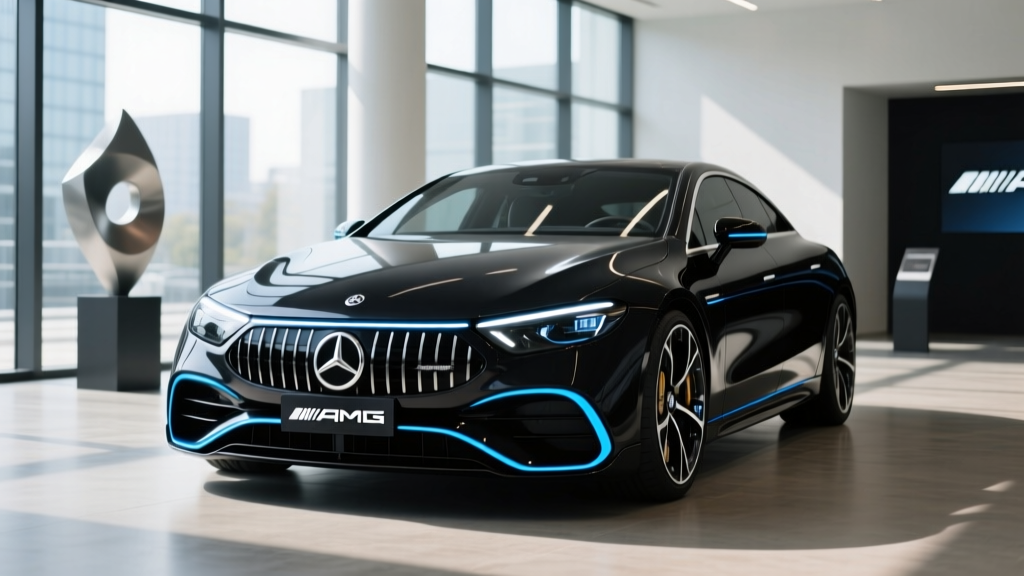
Quick Answer: Is a Mercedes-AMG EV Worth It in 2026?
If you want a luxury performance EV with 500+ horsepower, a refined ride, and daily-driver practicality, the 2026 Mercedes-AMG EQE and EQS sedans deliver — but expect to pay $105,000–$150,000+ before options, absorb steep insurance premiums ($3,500–$5,500/year), and accept real-world highway range of roughly 220–280 miles (below the EPA sticker). These models do not qualify for the federal §30D new EV tax credit due to MSRP caps and battery-sourcing rules. If your priority is track-focused performance and six-figure budgets aren't a concern, the AMG EVs are compelling. If you want value or maximum range, rivals like the Porsche Taycan, Lucid Air, or Tesla Model S Plaid may serve you better.
Which Mercedes-AMG EVs Can You Actually Buy in 2026?
Mercedes-AMG's electric lineup in the U.S. centers on two sedan platforms built on the EVA2 architecture. Both use dual-motor all-wheel drive with AMG-specific tuning, torque vectoring, and performance-oriented thermal management.
| Spec | 2026 AMG EQE Sedan | 2026 AMG EQS Sedan | 2026 AMG EQE SUV |
|---|---|---|---|
| Trim | EQE 43 / EQE 53 | EQS 53 | EQE 43 / EQE 53 |
| Horsepower | 469 hp / 617 hp | 649 hp (751 w/RACE START) | 469 hp / 617 hp |
| 0-60 mph | 4.0s / 3.2s | 3.4s (w/RACE START) | 4.2s / 3.3s |
| Battery (usable) | 90.6 kWh NMC | 107.8 kWh NMC | 90.6 kWh NMC |
| EPA Range | ~230–255 mi | ~277–305 mi | ~215–240 mi |
| Max DC Fast Charge | 170 kW | 200 kW | 170 kW |
| 10-80% DC Time | ~32 min | ~31 min | ~32 min |
| Level 2 Rate | 9.6 kW (AC) | 9.6 kW (AC) | 9.6 kW (AC) |
| Starting MSRP | ~$106,900 | ~$149,050 | ~$110,000 |
| Drivetrain Warranty | 4 yr / 50,000 mi | 4 yr / 50,000 mi | 4 yr / 50,000 mi |
| Battery Warranty | 8 yr / 100,000 mi (70% SoH) | 8 yr / 100,000 mi (70% SoH) | 8 yr / 100,000 mi (70% SoH) |
Sources: Mercedes-Benz USA, fueleconomy.gov. Specs reflect 2026 model year; verify with your dealer for mid-year revisions.
Real-World Range vs. EPA Sticker
The EQS 53's EPA rating of up to 305 miles is measured under mixed city/highway conditions. In real-world highway driving at 70-75 mph, expect 250–270 miles. In cold weather (below 32°F), plan for 200–230 miles due to cabin heating demands and reduced battery efficiency. The EQE 53 sedan typically delivers 190–220 miles on the highway. These figures assume you're driving in AMG's Sport or Sport+ mode; Comfort mode with lighter throttle use can reclaim 10-15% efficiency.
Mercedes-AMG EV vs. Gas AMG: The Cost Comparison
The most common cross-shopping decision is the AMG EQS 53 versus the gasoline Mercedes-AMG S 63 E Performance (a plug-in hybrid V8). Here's how five-year ownership stacks up for a buyer driving 12,000 miles/year.
| Cost Category (5-Year) | AMG EQS 53 (EV) | AMG S 63 E Performance (PHEV) |
|---|---|---|
| Base MSRP | $149,050 | $182,000 |
| Federal Tax Credit (§30D) | $0 (exceeds MSRP cap) | $0 (exceeds MSRP cap) |
| Energy/Fuel (12k mi/yr) | $4,800 (home L2, $0.14/kWh avg) | $14,200 (premium gas + some EV miles) |
| Maintenance | $2,200 | $5,800 |
| Insurance (avg) | $22,500 ($4,500/yr) | $20,000 ($4,000/yr) |
| Estimated Depreciation | $68,000 | $75,000 |
| 5-Year Total Cost | ~$246,550 | ~$297,000 |
The EV saves roughly $50,000 over five years, driven primarily by the lower purchase price, reduced fuel and maintenance costs, and slightly better depreciation trajectory. However, the EQS 53's insurance runs 10-15% higher than the gas S 63 due to expensive EV body-panel repairs and battery replacement risk. Your actual numbers depend heavily on local electricity rates, driving style, and whether you can charge at home.
Charging Costs and Infrastructure: What AMG EV Owners Actually Spend
Mercedes-AMG EVs are heavy, powerful vehicles with wide tires — they are not efficiency champions. The EQS 53 averages about 35–38 kWh/100 miles (roughly 77-83 MPGe combined), and the EQE 53 runs 40–44 kWh/100 miles. That's roughly 50% more energy per mile than a Tesla Model S or Lucid Air.
| Charging Scenario | Cost per Full Charge (EQS 53, 108 kWh) | Cost per Mile |
|---|---|---|
| Home Level 2 ($0.14/kWh) | $15.12 | $0.053 |
| Home Level 2 ($0.28/kWh, CA peak) | $30.24 | $0.106 |
| Public DC Fast ($0.48/kWh avg) | $51.84 | $0.181 |
| Mercedes me Charge Network ($0.31/kWh) | $33.48 | $0.117 |
If you charge exclusively at home on a national-average rate of $0.14/kWh, fueling the EQS 53 costs about $1,000/year at 12,000 miles. Rely solely on public DC fast chargers and that jumps to $2,100–$3,400/year. Home charging access is the single biggest economic variable.
DC Fast Charging Reality
The EQS 53 peaks at 200 kW on a compatible DC fast charger, but that peak is sustained only briefly between roughly 10-30% State of Charge (SoC). The charge curve tapers significantly above 50% and drops sharply past 80%. A 10-80% session takes about 31 minutes at a 350 kW Electrify America or EVgo station, but a 10-95% session will take closer to 50-55 minutes. Preconditioning the battery via the navigation system (setting a DC charger as your destination) is essential to hit peak charge rates — without it, expect 30-40% slower charging in cold weather.
Tax Credits, Incentives, and the AMG EV Problem
Here's the uncomfortable truth for Mercedes-AMG EV buyers: none of these vehicles qualify for the $7,500 federal §30D new EV tax credit. There are two disqualifying factors:
- MSRP Cap: The §30D credit applies only to sedans priced below $55,000 and SUVs/vans/trucks below $80,000. Every AMG EV far exceeds these limits.
- Battery Sourcing: Even if pricing qualified, the critical-mineral and battery-component sourcing requirements (phased in through 2025-2026) eliminate most Mercedes-Benz vehicles manufactured outside North America.
- Buyer Income Cap: The credit phases out for individuals earning above $150,000 AGI ($300,000 joint filers) — a threshold many AMG buyers exceed.
Some state-level incentives may apply. California's Clean Fuel Reward and similar programs in New York, Colorado, and Massachusetts offer $1,000–$4,000 in rebates that are not income-capped or MSRP-capped. Check your state's energy office for current programs. Always consult a tax professional regarding credit eligibility — rules under IRS §30D are complex and subject to change.
First-Time AMG EV Buyer: What You Must Know Before Signing
| Common Misconception | Fact |
|---|---|
| "AMG EVs are self-driving" | Mercedes' DRIVE PILOT is an SAE Level 2 system (Level 3 only in limited approved zones in NV/CA at under 40 mph). You must remain engaged and supervising at all times in normal driving. |
| "300-mile EPA range means 300 real miles" | Highway driving, cold weather, and Sport mode reduce range 15-30%. Plan trips around 220-260 usable miles. |
| "I can charge anywhere fast" | AMG EVs use CCS1 connectors (NACS adapter available). Peak 170-200 kW requires 350 kW stations; many public chargers max out at 50-150 kW. |
| "EV maintenance is zero" | Tire replacement on AMG EVs runs $1,800-$3,200 every 15,000-25,000 miles due to weight and torque. Cabin air filters, brake fluid, coolant, and wiper service still apply. |
| "The battery will need replacing soon" | Mercedes warranties the pack for 8 years/100,000 miles at 70% capacity retention. NMC degradation data from similar EVA2 packs shows ~8-12% loss over 100,000 miles under normal use. |
Home Charging Setup
You'll want a 48-amp Level 2 home charger (like the ChargePoint Home Flex or Mercedes-Benz Wallbox) on a 60-amp dedicated circuit. At 9.6 kW, a full EQS 53 charge from 10% takes roughly 10-11 hours — fine for overnight, but means you can't fully recharge in a short stop. Installation costs range from $800–$2,500 depending on panel proximity, or $3,000–$5,500 if your home needs a 200-amp panel upgrade. Get a quote from a licensed electrician before purchasing the vehicle.
Decision Framework: Should You Buy a Mercedes-AMG EV?
Choose the AMG EQS 53 if:
- You want a 650+ hp luxury sedan with daily-driver comfort and can budget $150K+
- You have reliable home Level 2 charging access
- Your typical daily driving is under 150 miles with occasional 250-mile road trips
- You value MBUX Hyperscreen, air suspension, and AMG track modes over maximum efficiency
Choose the AMG EQE 53 if:
- You want AMG performance in a smaller, ~$107K package
- You accept 190-220 miles of real highway range
- You prioritize driving dynamics over rear-seat luxury
Look elsewhere (Porsche Taycan, Lucid Air, Tesla Model S) if:
- Real-world range above 300 miles is a priority (Lucid Air Grand Touring: 516 mi EPA)
- You want faster peak DC charging (Taycan: 320 kW peak, 10-80% in ~18 min)
- You need to stay under $100K (Tesla Model S: ~$80K base)
- Federal tax credit eligibility matters to your purchase decision
Frequently Asked Questions
How long does a Mercedes-AMG EV battery last?
Mercedes warranties the high-voltage battery for 8 years or 100,000 miles (whichever comes first) with a minimum 70% state-of-health guarantee. Based on EVA2 platform data, NMC packs in AMG models typically degrade 8-12% over the first 100,000 miles with normal charging habits. Avoiding routine DC fast charging above 90% SoC and keeping the battery between 20-80% for daily use extends longevity. A full battery replacement (if out of warranty) is estimated at $25,000–$35,000 for the EQS.
Can I charge a Mercedes-AMG EV at a Tesla Supercharger?
Yes. Mercedes-Benz offers a NACS adapter for CCS1-equipped vehicles, granting access to Tesla's Supercharger network (V3 250 kW and V4 stalls). However, AMG EVs are capped at their onboard maximum (170-200 kW), so you won't see Tesla-level speeds. Expect 10-80% in roughly 32-35 minutes at a V3 Supercharger.
Is the AMG EQS 53 faster than the gas AMG S 63?
In straight-line acceleration, they're very close. The EQS 53 with RACE START hits 0-60 in 3.4 seconds (751 hp burst), while the S 63 E Performance PHEV does it in 3.2 seconds. The electric AMG delivers instant torque with no turbo lag, making it feel quicker in real-world passing maneuvers below 60 mph. Above 100 mph, the gas V8's power advantage becomes more evident.
What's the real cost to insure a Mercedes-AMG EV?
Expect $3,500–$5,500 per year depending on your state, driving record, and coverage level. AMG EVs carry higher premiums than non-AMG EQ models due to performance classification, expensive carbon-fiber and aluminum body panels, and specialized EV repair requirements. Shop quotes from carriers experienced with luxury EVs (e.g., Hagerty, Chubb, or PURE) — standard insurers sometimes overprice these vehicles.
Do AMG EVs hold their value?
Depreciation on luxury EVs remains steep — the EQS 53 is projected to lose 45-55% of its value over five years, consistent with other six-figure luxury EVs. This is slightly worse than the gas S-Class but comparable to the Porsche Taycan and BMW i7. Leasing (with Mercedes-Benz Financial) can mitigate depreciation risk and often includes maintenance packages.